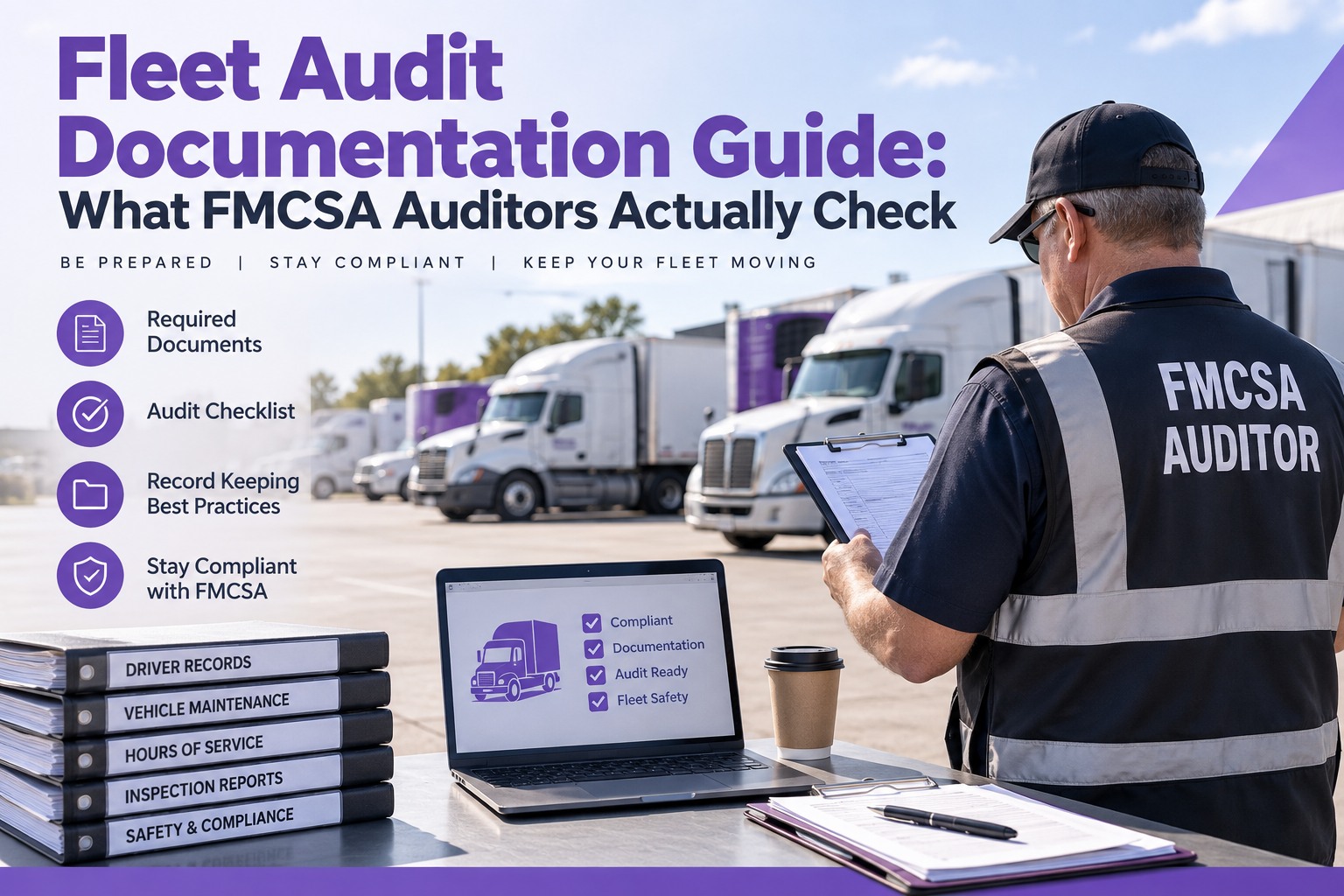
An audit doesn't test whether your trucks are safe — it tests whether you can prove it on paper. The officer names a driver, a date, a vehicle, and asks for the file. If it's there, complete, and still inside its retention window, you pass. If it's missing or was thrown out six months too early, the clean inspection behind it doesn't matter. This is the full list of what to keep, how long, and where the maintenance side fits. Start free and keep your inspection and maintenance records audit-ready in one place.
Fleet Compliance Records · Checklist & Retention
Fleet Compliance Documents: Required Records & Checklist Guide
Every fleet compliance document has two jobs: exist, and survive long enough to be produced on demand. Miss either and it's a finding — even when the underlying work was done right. Truck Inspection & Maintenance Management Software keeps the vehicle-and-maintenance half of that file — DVIRs, maintenance records, inspection reports — logged against each unit, retained on its clock, and export-ready the moment an auditor asks.
4 categoriesdriver, vehicle, hours, incident & insurance
Every doc, a clockeach record has its own retention window
Produce on demandstored-but-unreachable counts as missing
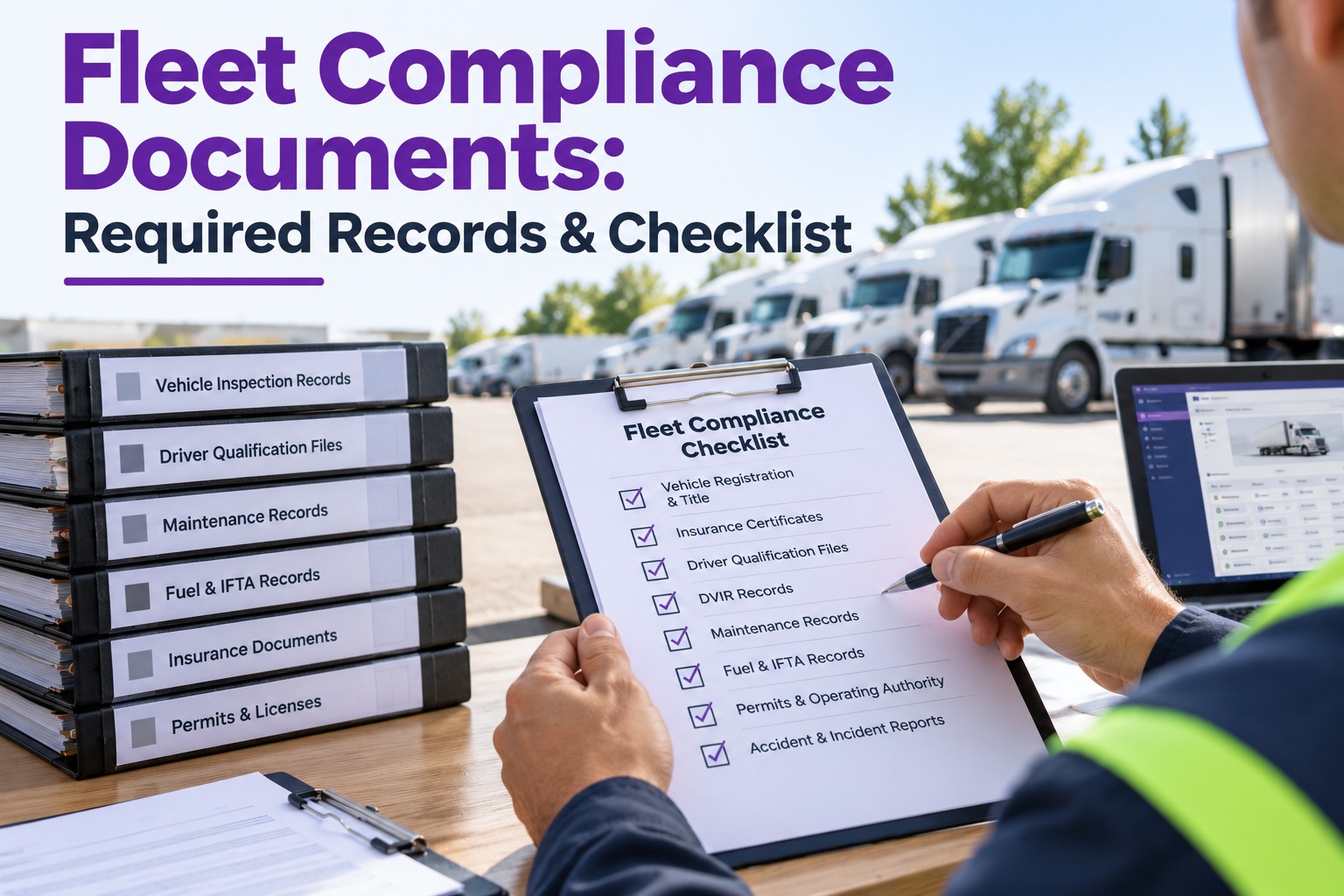
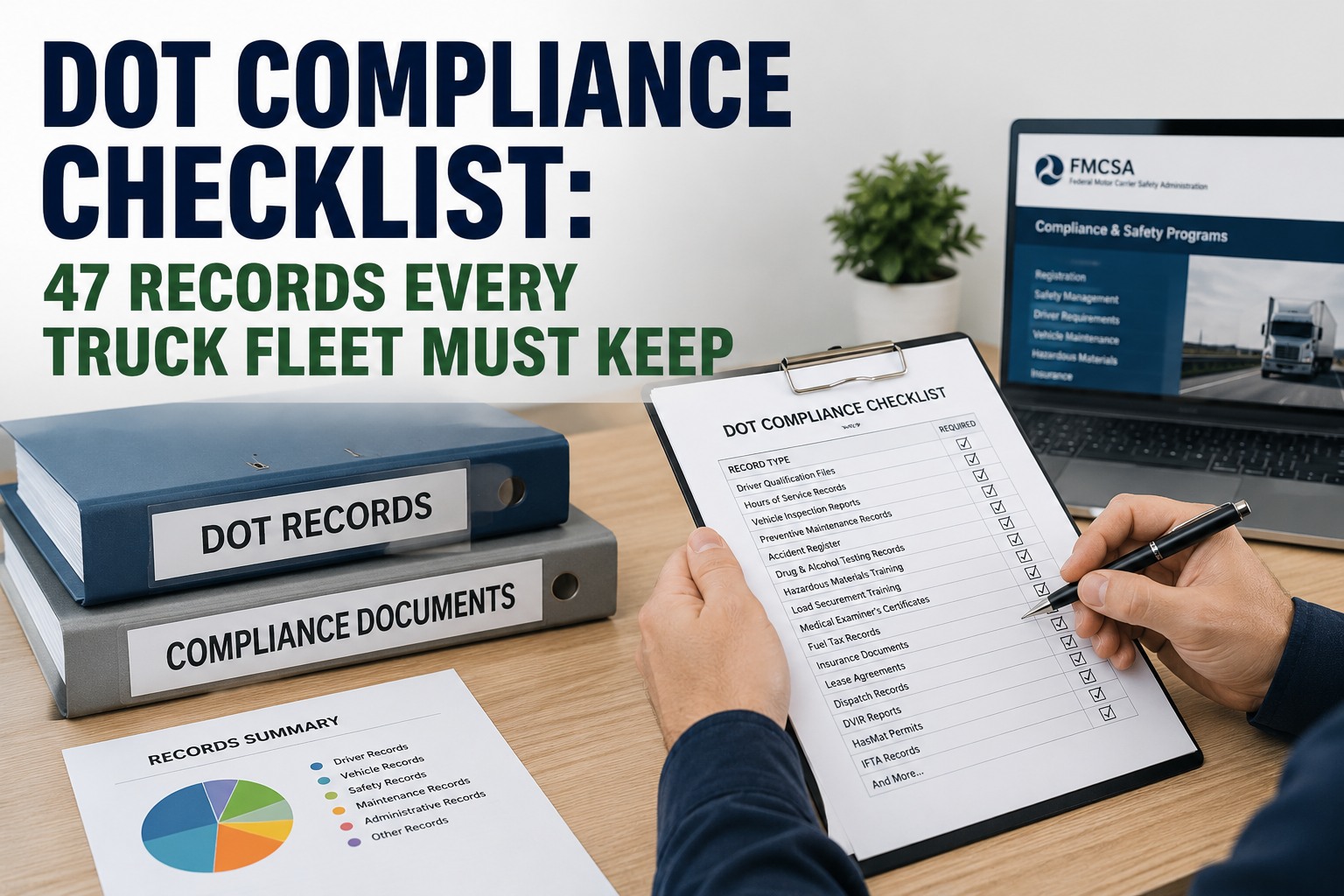
The Master Compliance Document Checklist
Fleet records fall into four buckets. Work down each one — if every box is a yes and every file is inside its retention window, you're ready for an audit before it's announced. Retention periods reflect 49 CFR; confirm the current rule and any state requirements for your operation.
DRDriver files
Driver Qualification File (DQF)Application, driving record, road test, medical certificate, and annual review for each driver.
Employment + 3 yrs · 391.51
Medical examiner's certificateCurrent DOT medical card, kept in the DQF and current at all times.
Keep current · 391.43
Drug & alcohol testing recordsPre-employment, random, and post-incident results and program documentation.
Up to 5 yrs · 382.401
VHVehicle & maintenance
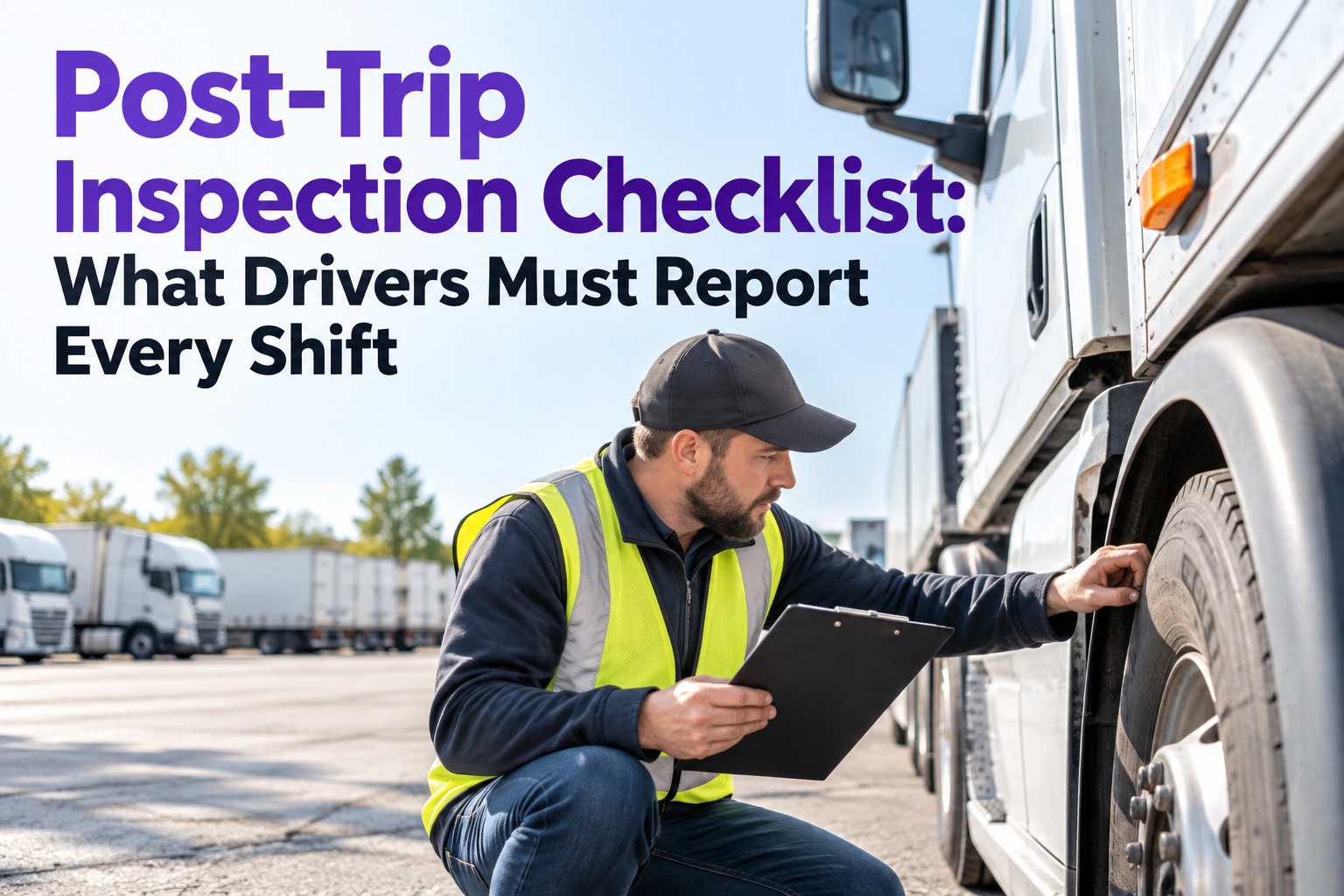
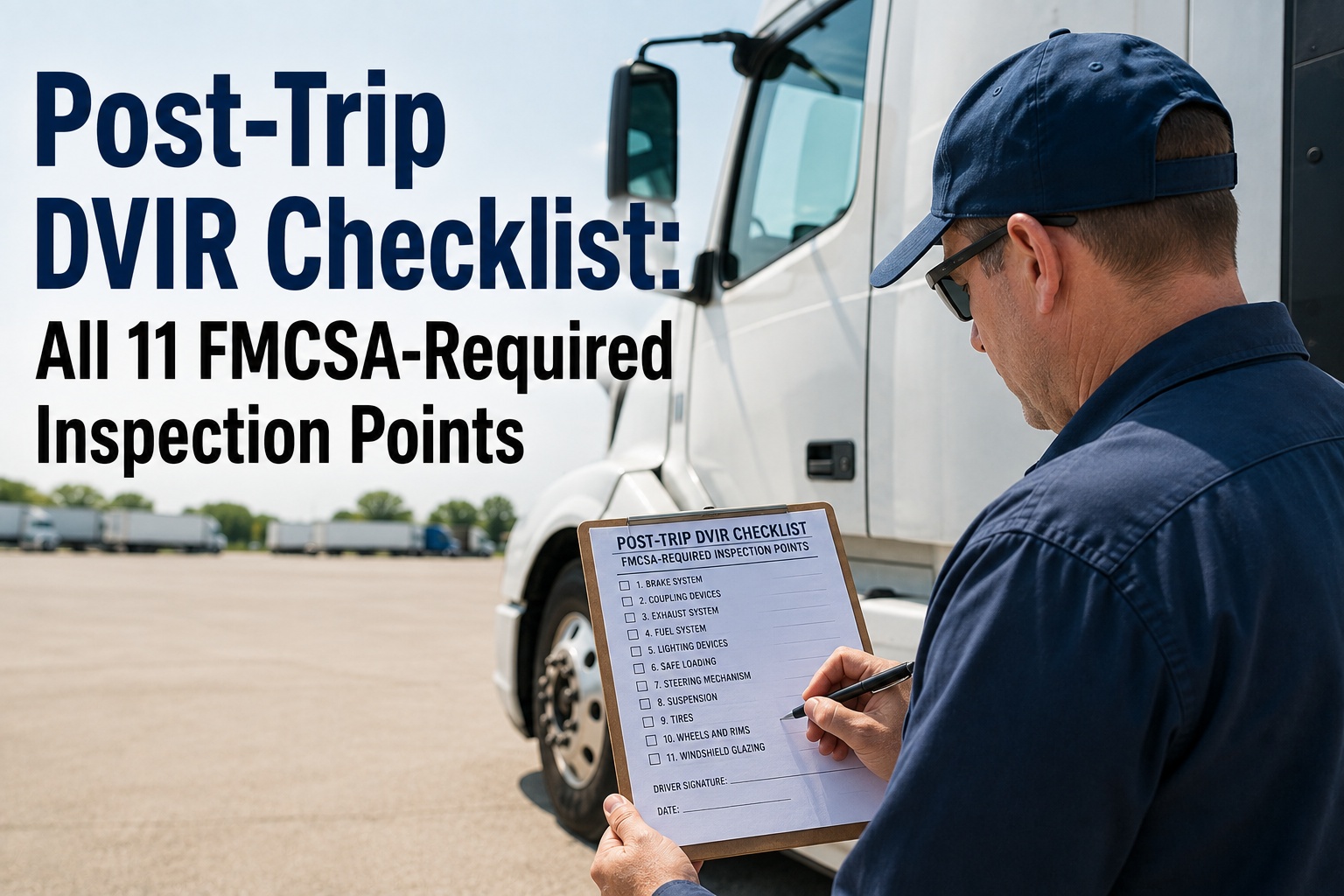
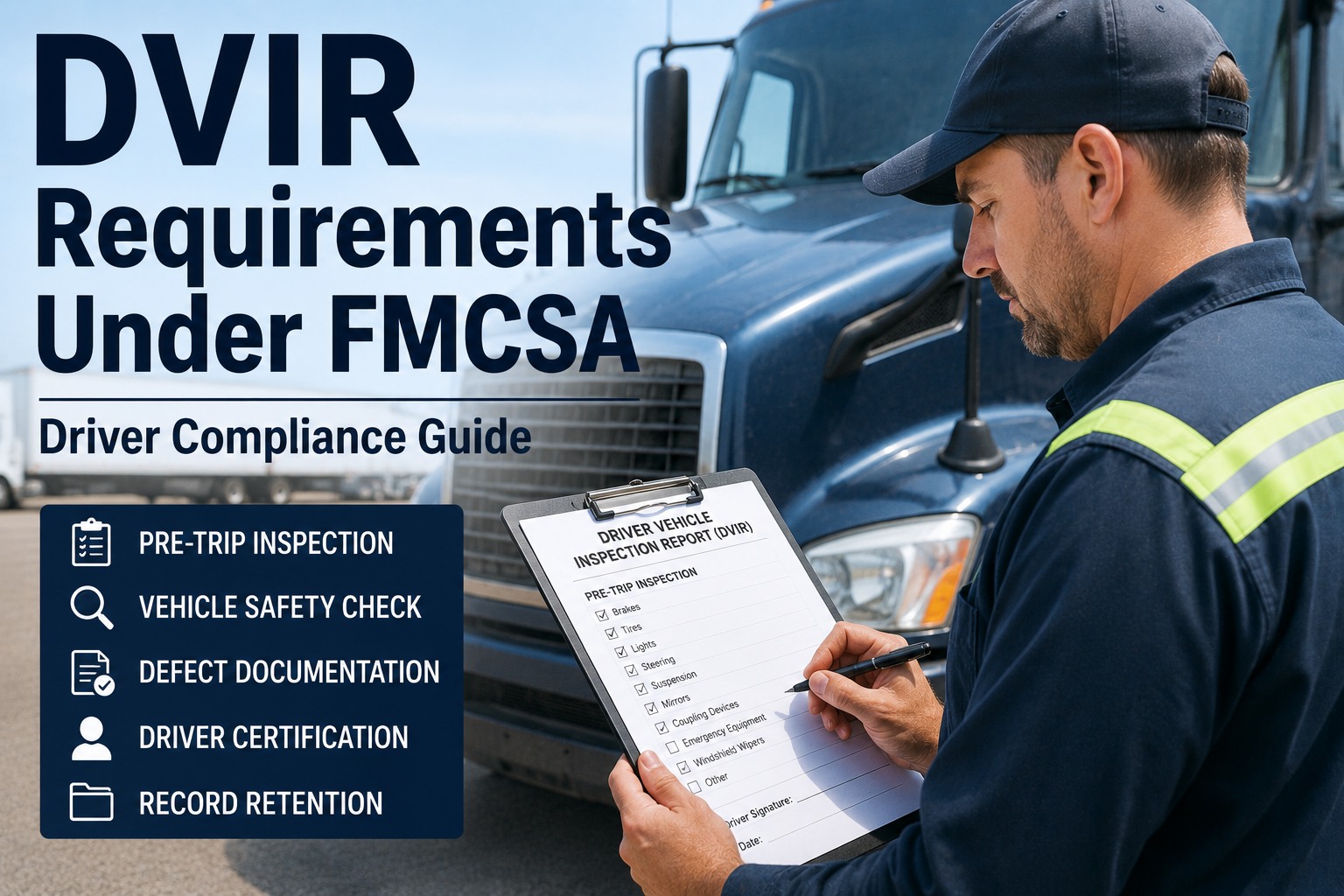
Driver Vehicle Inspection Reports (DVIR)Daily pre- and post-trip reports, with the repair and next-driver acknowledgment where a defect is noted.
3 months · 396.11
Vehicle maintenance recordsService history, repairs, and the maintenance schedule for each unit, tied to its identity.
1 yr + 6 mo after · 396.3
Annual / periodic inspection reportThe yearly inspection against Appendix A, with proof of a qualified inspector.
14 months · 396.21
Inspector qualification recordProof the person who signed the annual inspection was qualified to.
Employment + 1 yr · 396.19
HRHours & ELD
Records of Duty Status (RODS)ELD logs and the supporting documents that back them, with a backup copy on a separate device.
6 months · 395.8
ELD malfunction recordsDocumentation of any device malfunction and the paper logs kept while it was down.
With RODS · 395
INIncident & insurance
Accident register & filesA register of accidents plus the supporting file for each, per the required contents.
3 yrs each · 390.15
Insurance & financial responsibilityCurrent proof of the required coverage and filings for the operation.
Keep current
The Retention Clocks at a Glance
The single most common finding isn't a missing document — it's one that was discarded too early. These are the windows that matter most, shortest to longest. When in doubt, keep it longer.
3 months
DVIRsDriver vehicle inspection reports — 396.11
6 months
RODS & supporting docsHours-of-service records — 395.8
14 months
Annual inspectionPeriodic inspection report — 396.21
1 yr + 6 mo
Maintenance recordsPer unit, after it leaves your control — 396.3
3 years
Accident files · DQFAfter the accident, or after driver termination
Up to 5 yrs
Drug & alcoholPositive results and refusals — 382.401
Where Fleets Lose Points
An auditor rarely finds a fleet that does no maintenance. They find fleets that can't prove the maintenance they did. These five gaps account for most of it — and every one is a documentation problem, not a mechanical one.
✕
Discarded too earlyA record thrown out before its retention window closed. The work was done; the proof is gone.
✕
Incomplete filesA DQF missing the annual review, or a DVIR missing the repair acknowledgment that closes the chain.
✕
Can't be produced fastRecords that exist somewhere but take days to assemble from scattered folders and inboxes.
✕
Not tied to the unitMaintenance records that can't be matched to the specific vehicle or driver they belong to.
✕
No qualified-inspector proofAn annual inspection on file with nothing to show the signer was qualified to perform it.
The Maintenance Half, Always Ready
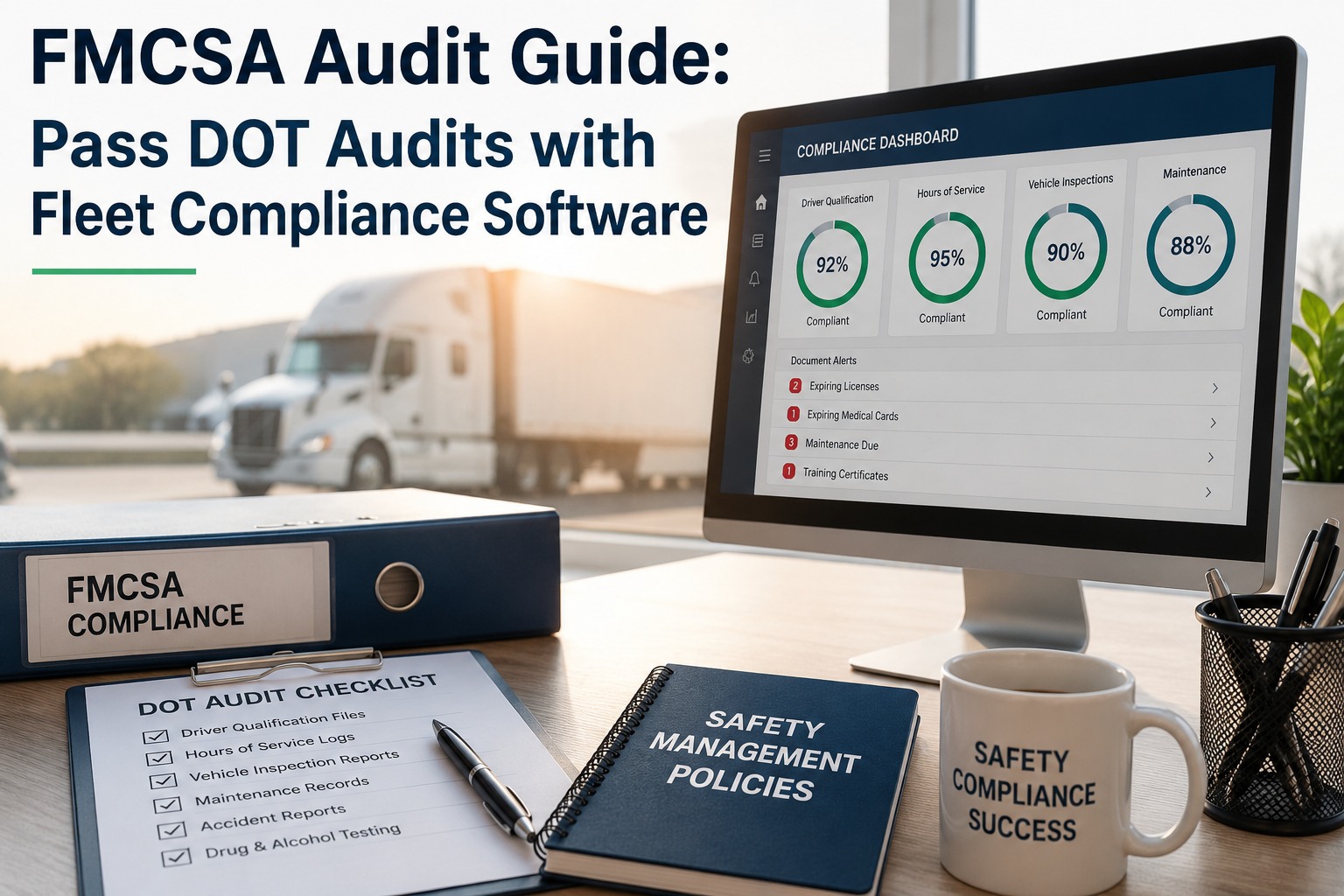
Truck Inspection & Maintenance Management Software covers the vehicle-and-maintenance documents on this checklist: DVIRs, maintenance records, annual inspection reports, and inspector qualification. Each is logged against its unit, held on its retention clock, and exported clean on demand — so when an auditor asks for a truck's history, the answer is one search, not a filing-cabinet hunt. It's one part of your full compliance file, and the part that's usually hardest to keep straight.
How Truck Inspection & Maintenance Software Keeps You Ready
Staying audit-ready on the maintenance side comes down to the records being complete, tied to the right unit, and retrievable. Here's how the software holds each of those.
DVIRs captured and keptDaily inspection reports logged on the driver's phone and retained, with the defect-and-repair chain intact.
Maintenance tied to the unitEvery service and repair recorded against its specific vehicle, so the history is always matched to the right truck.
Inspection reports on fileAnnual inspection records held with the inspector's identity and qualification alongside.
Retention trackedRecords held for the right window, so nothing on the maintenance side gets discarded too early.
Produced in one searchA unit's full inspection and maintenance history exports cleanly when an official asks.
Photos as evidenceDefect photos and proof-of-repair captured against the record, not stored loose.
Frequently Asked Questions
What documents does a fleet need to keep for DOT compliance?
They fall into four groups. Driver files — the Driver Qualification File, medical certificate, and drug and alcohol testing records. Vehicle and maintenance — DVIRs, maintenance records, the annual inspection report, and proof the inspector was qualified. Hours and ELD — Records of Duty Status and supporting documents with a backup copy. And incident and insurance — the accident register and files, plus current proof of financial responsibility. Each document has its own retention window, and a complete, retrievable file across all four is what an audit checks.
Start free and keep the vehicle-and-maintenance group audit-ready.
How long do I keep fleet maintenance records?
Under 49 CFR 396.3, vehicle maintenance records must be kept for one year while the vehicle is under your control, and for six months after it leaves your control. The record should cover the vehicle's identity, the maintenance schedule, and a history of inspections, repairs, and services performed. The related documents run on their own clocks: DVIRs are kept three months under 396.11, and the annual periodic inspection report is kept fourteen months under 396.21. Keeping maintenance history longer than the minimum is common, because it also supports warranty claims and resale value.
How long must DVIRs be retained?
Driver vehicle inspection reports must be kept for three months from the date the report was prepared, under 49 CFR 396.11. Where a defect was noted, the retained report should also show the repair and the next driver's acknowledgment that the defect was corrected or that no correction was needed — that chain is what auditors most often find broken. Many fleets keep DVIRs longer than three months because they double as useful maintenance history, but three months is the compliance floor.
What's the difference between the retention periods?
Each record type runs on its own clock, which is exactly why fleets trip up. The short ones are vehicle-side: DVIRs at three months and RODS at six months. The annual inspection report sits at fourteen months. Maintenance records run one year plus six months after a vehicle leaves your control. The long ones are people- and incident-side: accident files and the Driver Qualification File at three years, and positive drug and alcohol results up to five. The safe rule is to track each document to its own window and, when unsure, keep it longer rather than shorter.
Can I keep fleet compliance documents digitally?
Yes. Electronic records are widely accepted for fleet compliance as long as they're complete, accurate, and can be produced on demand when an official asks. Digital storage actually solves the two most common findings — records discarded too early and records that can't be retrieved fast enough — because retention can be tracked automatically and a file pulled in seconds instead of assembled from folders. The key is that whatever system holds them keeps the records tied to the right vehicle or driver and ready to export in a usable form.
Keep It · Complete It · Produce It
Be Ready Before the Audit Is Announced.
Compliance isn't the inspection — it's the file that proves the inspection happened, kept complete and inside its window. Truck Inspection & Maintenance Management Software keeps the vehicle-and-maintenance half of that file — DVIRs, maintenance records, inspection reports, and inspector qualification — logged per unit, retained on its clock, and exported in one search. Walk the checklist above, close the maintenance gaps here, and an audit becomes a formality.
Free to start. Retention periods reflect 49 CFR — confirm current rules and state requirements; not legal advice.