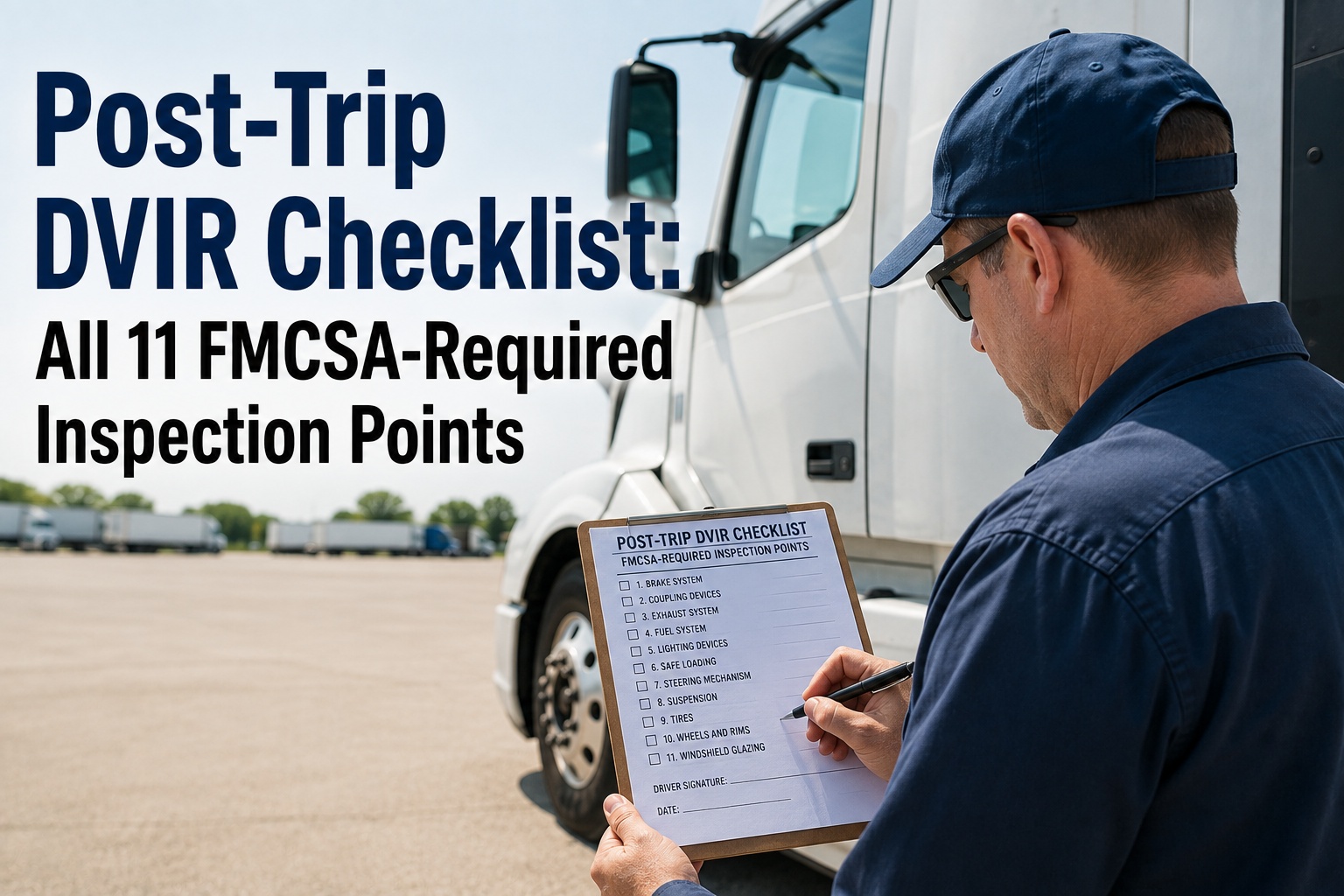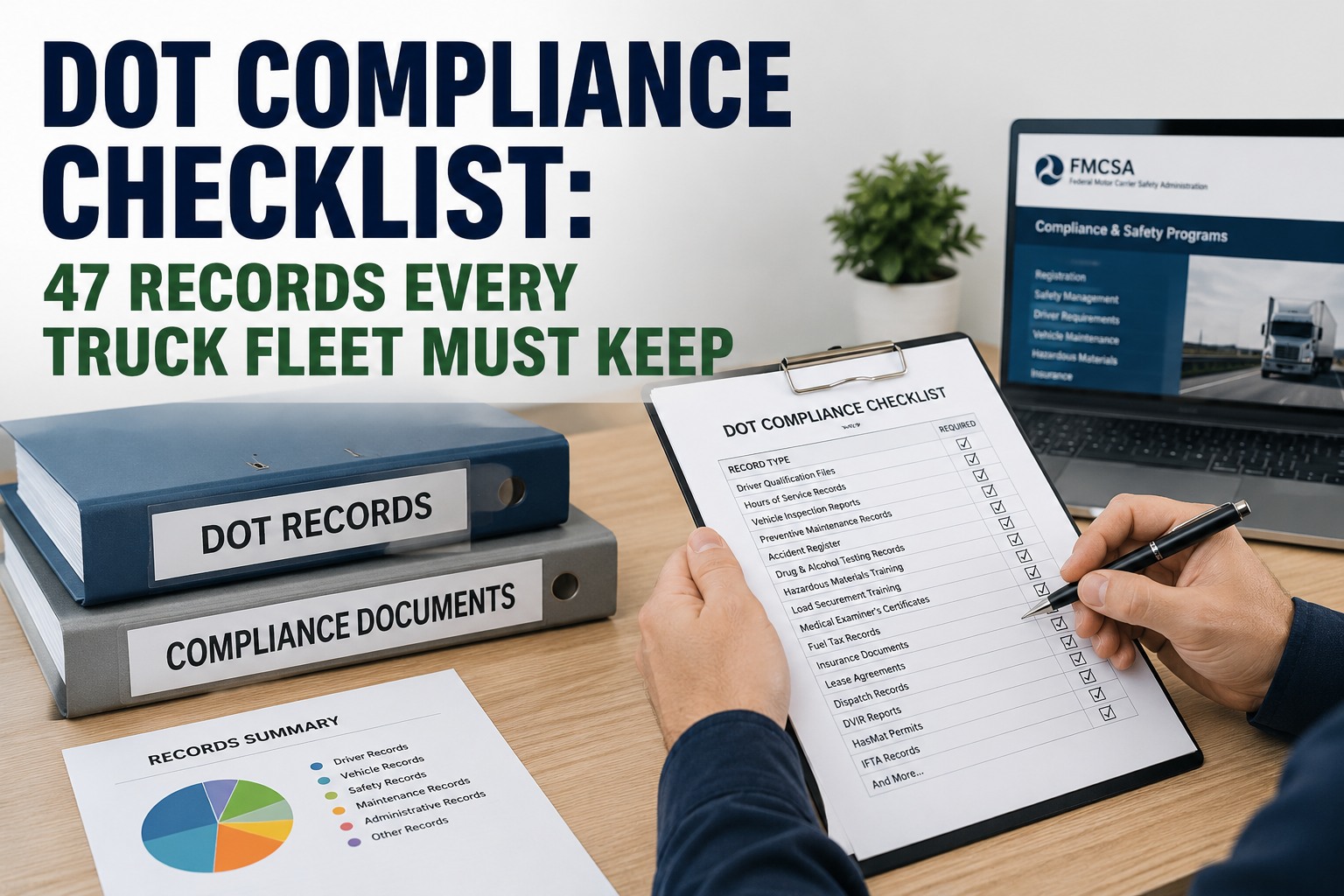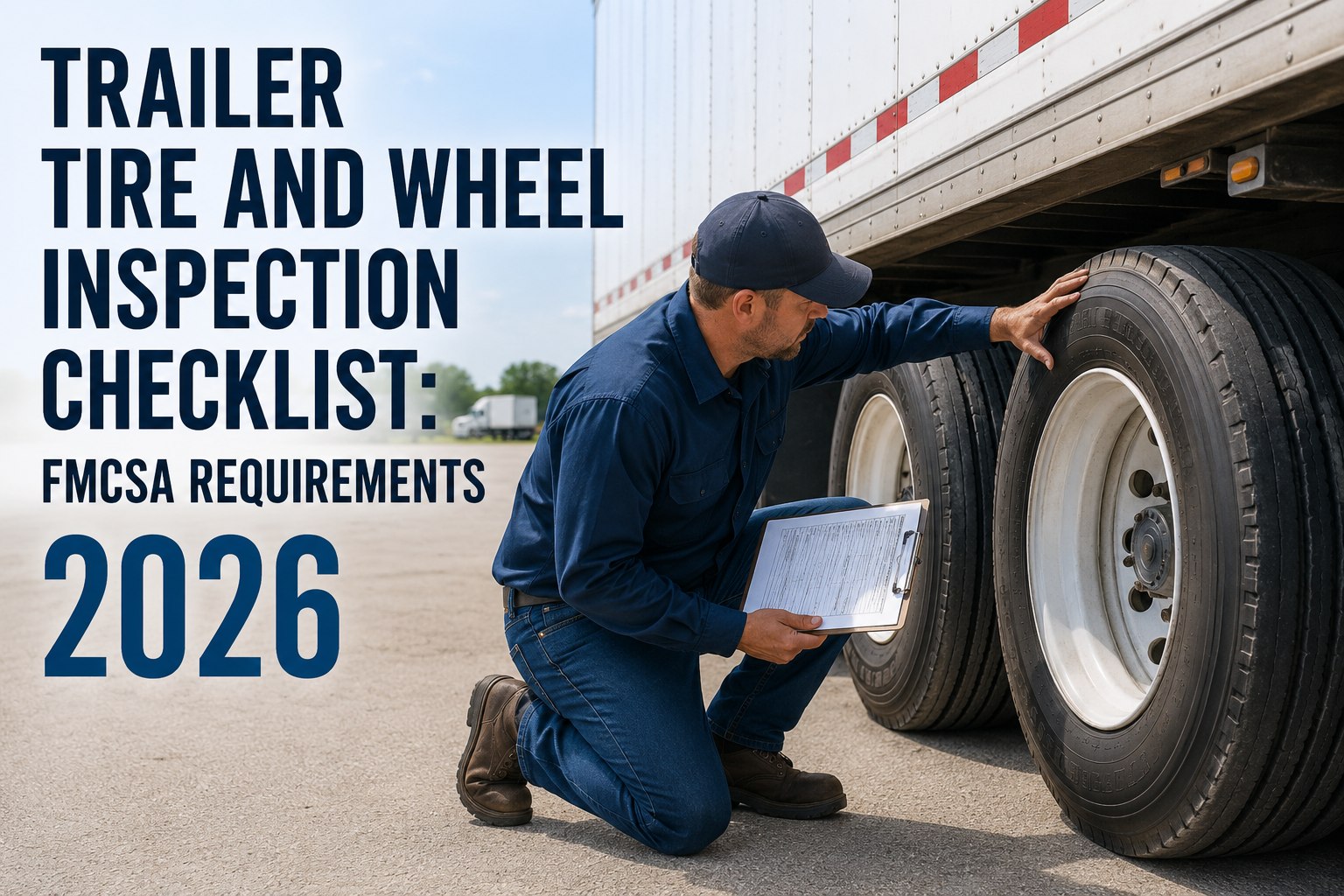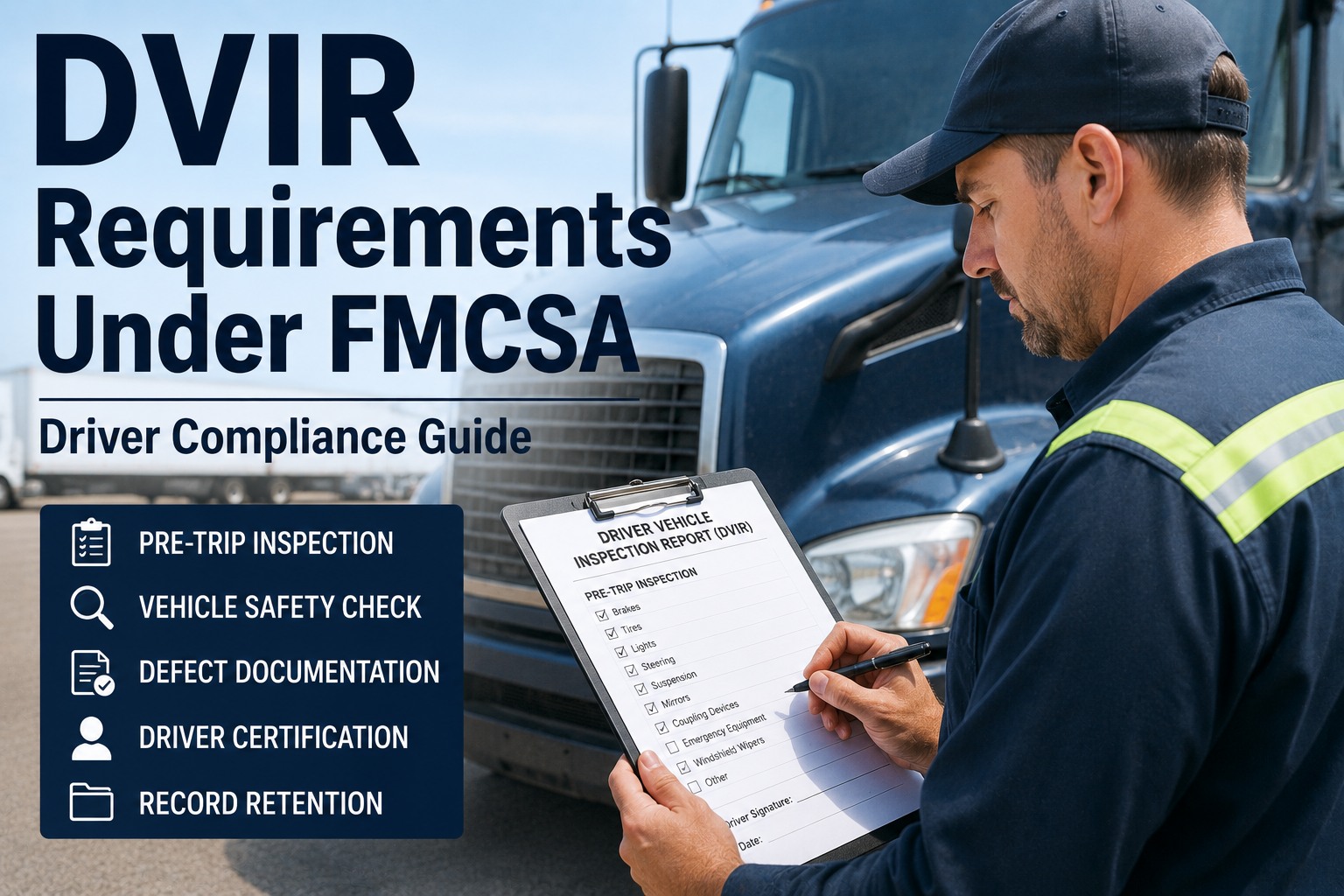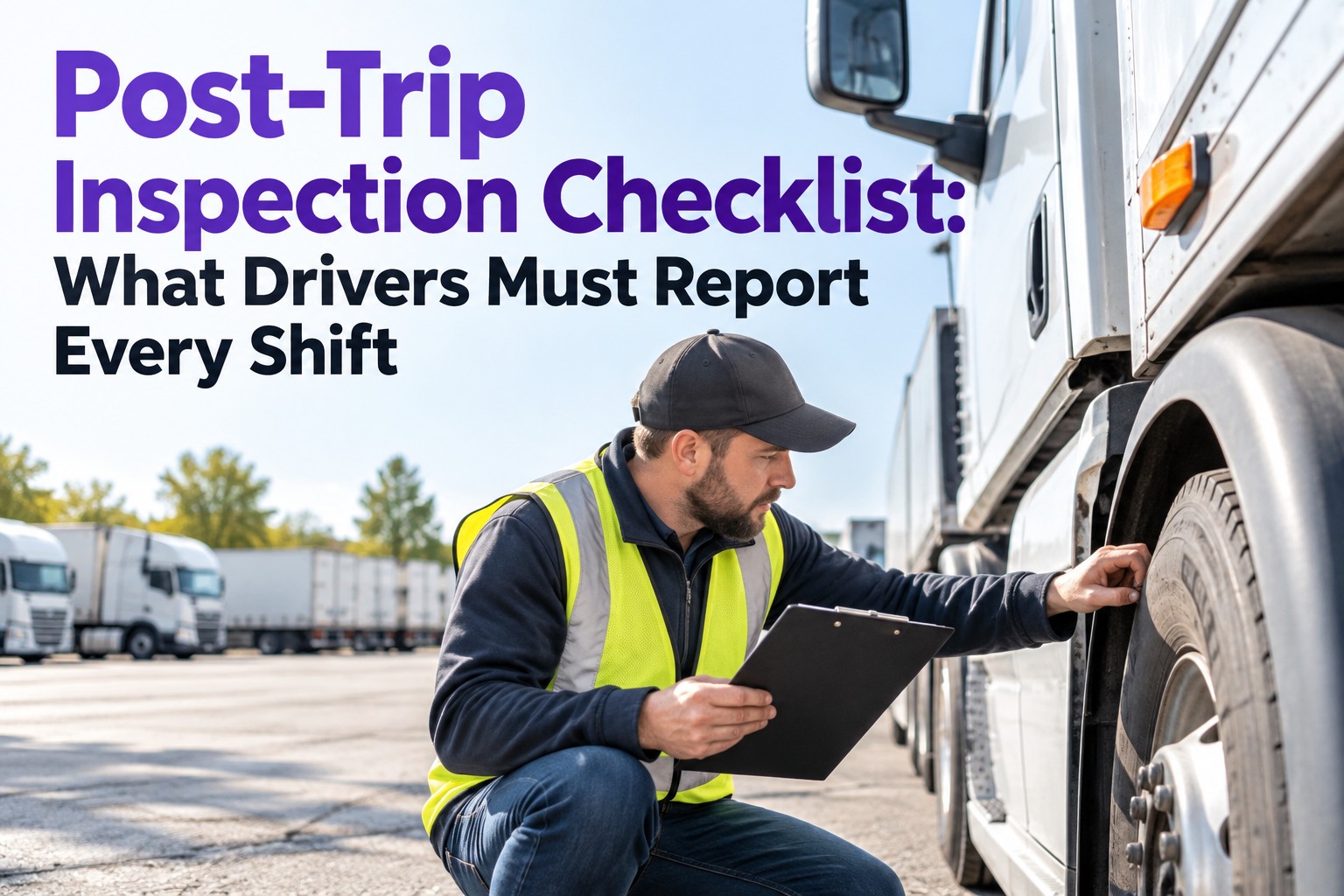
The pre-trip gets the attention, but the post-trip is where the catch happens. A driver who just ran the truck all day knows what changed — the pull to the right, the soft pedal, the light that flickered on the last leg. Reporting it at end of shift gives the shop all night to fix it, instead of the next driver finding it on the highway at 6 a.m. FMCSA builds this into law under 49 CFR §396.11 and §396.13: a written DVIR covering eleven components, a three-signature chain, and penalties reaching five figures for dispatching an unrepaired defect. This checklist walks the post-trip the way a careful driver does — and how Truck Inspection & Maintenance Management Software (TIM) turns each report into a dated, routed, audit-ready record. Start free and run your post-trip DVIR on any phone.
The Driver Who Ran the Truck All Day Knows What's Wrong With It. The Post-Trip Is When They Say So.
You want defects caught at end of shift, when the shop has all night to fix them — not found by the next driver on the road. The post-trip DVIR is the mechanism, and the three-signature chain is where most fleets break down. TIM closes the loop: run the walkaround on a phone, photograph a defect, and it opens a work order and blocks dispatch until the repair is certified. Every defect logged gets a first response within 4 hours — acknowledged, graded, and assigned.
Pre-Trip vs. Post-Trip — Same Truck, Different Job
They aren't duplicates. The pre-trip confirms the truck is safe to start the day; the post-trip captures what a full shift of operation revealed. The post-trip is the one that feeds the shop — because a driver who just drove the truck is the best sensor a fleet has for what's failing.
Confirms the vehicle is safe to operate before it rolls. Catches overnight issues and the prior driver's unrepaired defects.
Reports what a full day of operation revealed — the pull, the noise, the soft pedal. Feeds the defect straight to the shop overnight.
The 11 Components Every Post-Trip DVIR Must Cover
FMCSA doesn't leave the list to interpretation. Under §396.11, the report must address these eleven elements — the systems that decide whether the truck stops, steers, and stays visible. Walk them in order at end of shift.
The Three-Signature Chain — Where Most Fleets Break Down
A DVIR isn't done when the driver signs it. §396.11 and §396.13 build a chain of custody: three signatures that move a defect from discovery to certified repair to the next driver's confirmation. The third link is the one most commonly broken — and it's the one that puts a truck back on the road with an unrepaired fault.
At end of shift, the driver notes any defect with a description and its severity — or certifies no defects found. Their signature opens the record.
A mechanic or official certifies the defect was repaired — or that repair wasn't necessary — on the original report. The truck can't be dispatched until a safety defect is fixed and certified.
The following operator reviews the prior DVIR and signs to confirm before driving. The most commonly broken link — and the one that matters most for safety.
What It Costs to Skip It — the Penalties Are Real
The post-trip isn't a paperwork ritual. FMCSA attaches serious penalties to a missing report or a dispatched defect, and a documented, retained DVIR is the record that protects the carrier in an audit or a liability claim.
Per-day exposure for a report that should have been filed and wasn't.
The truck can't legally go out until the defect is fixed and certified.
Keep the report, repair certification, and driver review under §396.11(a)(4).
A Paper DVIR Can't Block a Dispatch. TIM Can.
TIM runs the post-trip on the driver's phone: walk the 11 components, photograph a defect on the spot, and it opens a work order and holds the unit out of dispatch until the repair is certified — enforcing the three-signature chain automatically. The whole record (report, repair, next-driver review) lands in a searchable archive that exports in minutes when an auditor asks, and the March 2026 rule makes electronic DVIRs with digital signatures explicitly compliant.
Frequently Asked Questions
Catch It at End of Shift — Not on the Road at 6 a.m.
Eleven components, a three-signature chain, and a DVIR that writes itself. Run the post-trip on a phone, photograph the defect, block dispatch until it's fixed, and keep a 90-day record that stands up at an audit or a claim.