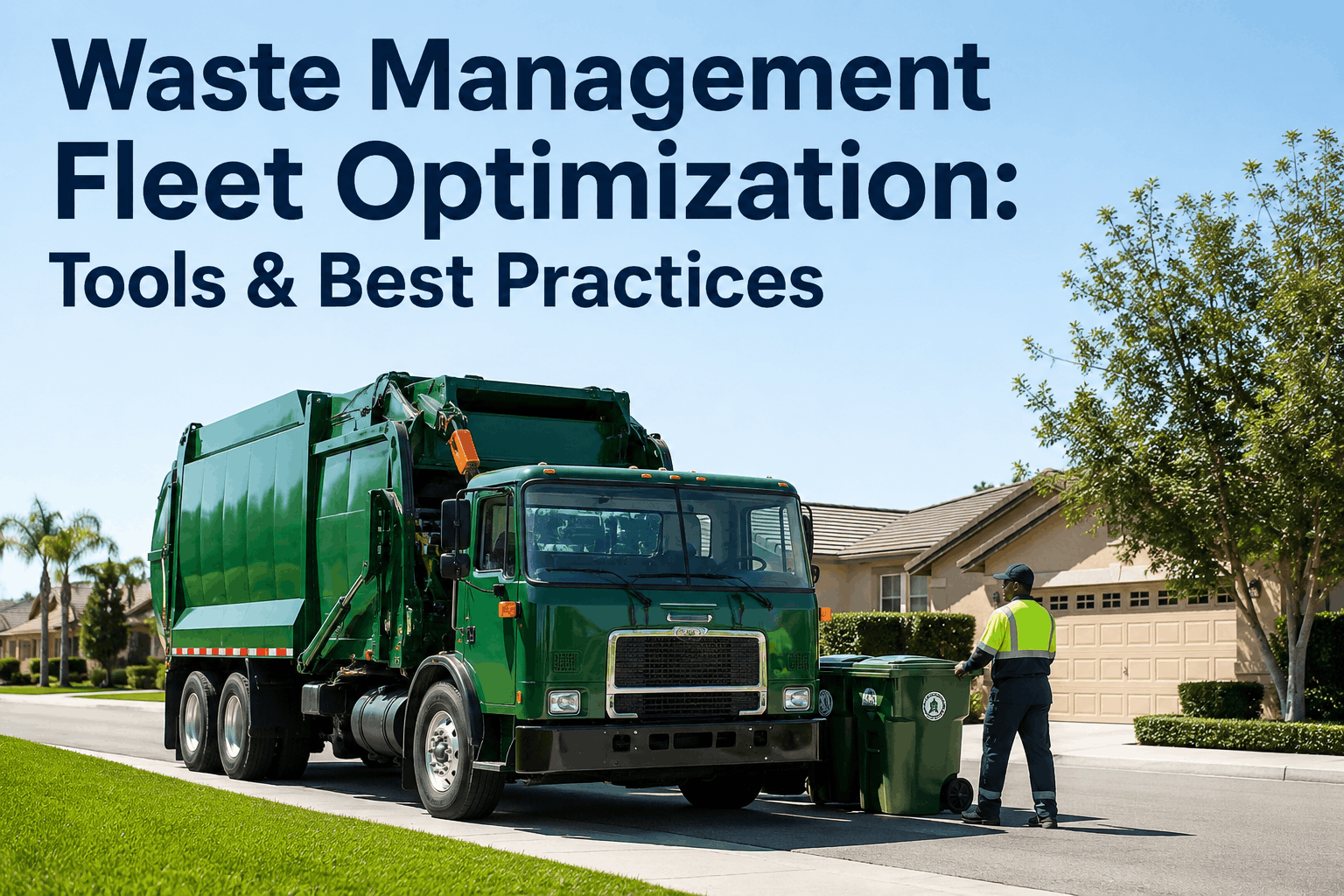
Waste collection vehicles operate in conditions that accelerate wear faster than almost any other fleet category. Constant stop-start cycles, PTO engagement for compaction, hydraulic lift cycling, and gross weight at near-limit on urban roads — refuse trucks fail hydraulically at 3x the rate of line-haul trucks. A single mid-route hydraulic failure costs $2,000-$8,000 in emergency repair plus the cascade of missed pickups, customer complaints, and overtime. Yet most waste fleets in 2026 still run on paper DVIRs, mileage-based PM (which ignores hydraulic cycles entirely), and reactive maintenance philosophies. Truck Inspection & Maintenance is purpose-built for refuse operations: cycle-based PM tracking, hydraulic-specific inspection templates, PTO hour monitoring, and DOT + EPA + municipal compliance in one platform. A 47-truck municipal benchmark showed 32% downtime reduction in 90 days and 25-40% operational cost reduction after deployment. This guide explains why generic fleet tools fail in waste operations and how to optimize your refuse fleet with the right software architecture. Talk to our team for a waste fleet walkthrough.
Waste Management Fleet Optimization: Tools & Best Practices
Cycle-based PM. Hydraulic-specific DVIRs. Truck Inspection & Maintenance handles refuse-fleet reality.
Why Generic Fleet Software Fails on Refuse Trucks
A platform built for trucking cannot manage waste collection vehicles. The duty cycle is fundamentally different. Here are the five gaps Truck Inspection & Maintenance closes that generic tools miss:
The 5 Refuse Vehicle Types & Their Critical Components
Each refuse vehicle class has distinct high-wear components and failure modes. Truck Inspection & Maintenance auto-loads the correct PM template and DVIR checklist based on vehicle type:
Rear Loaders
Critical components: Packer blade hydraulics, hopper lip, tailgate seal/latch, compactor body. PM trigger: every 5,000 packer cycles or 30 days — whichever comes first.
Front Loaders
Critical components: Fork arms, fork pivots, container engagement hydraulics, body hinge cylinders. PM trigger: every 3,000 lift cycles or 21 days. High-stress lift mechanism.
Side Loaders (ASL)
Critical components: Automated arm assembly, grabber jaws, side-reach hydraulics, body integrity. PM trigger: every 4,000 arm cycles. Arm mechanism = highest failure point.
Roll-Off Trucks
Critical components: Hoist cylinders, cable assembly, container locks, sub-frame. PM trigger: every 250 container drops or 45 days. Cable inspection at every PM-A.
Recycling & Sweepers
Critical components: Conveyor systems, vacuum systems, brush assemblies, sorting hydraulics. PM trigger: hours-based. Brush wear measurement at every PM-A.
The Cycle-Based PM Framework
Refuse trucks need multi-trigger PM that goes beyond mileage. Truck Inspection & Maintenance uses 4-trigger logic: whichever threshold hits first wins. No service window slips through:
The Refuse Truck DVIR — What Goes Beyond Standard
A generic CDL pre-trip doesn't catch refuse-specific defects. Truck Inspection & Maintenance's refuse DVIR templates add the items that prevent mid-route failures:
Lights, brakes, tires, mirrors, fluids, hoses, belts — the FMCSA-required 11 components every CDL inspection covers. These remain in our checklists.
Visible leaks at pumps/cylinders/hoses, fluid level, pressure gauge reading at idle. The #1 source of mid-route failure — caught in 30 seconds before leaving the yard.
Packer blade integrity, hopper damage, tailgate seal, compactor body cracks. Photos required if any anomaly detected. Pattern detection across fleet over time.
Fork condition (front-loaders), arm articulation (side-loaders), cable wear (roll-offs). Vehicle-type-specific items load automatically based on truck class.
PTO engagement test, emergency stop function, rear camera, backup alarm. Critical safety items for residential collection routes. Required by most municipal contracts.
Compactor body shots, hydraulic gauge reading, any defects photographed. Truck Inspection & Maintenance attaches photos to the DVIR and routes defects to work orders.
Stop running refuse fleet maintenance on spreadsheets
Truck Inspection & Maintenance handles cycle-based PM, hydraulic-specific DVIRs, PTO hour tracking, and refuse-fleet compliance in one platform. 32% downtime reduction in 90 days, benchmark fleets. Sign up free to deploy on your first 3 trucks today.
The Hydraulic Failure Math — Why Cycle PM Pays Off
The single biggest cost driver in waste fleet operations is hydraulic failure. The math between catching it preventively vs reactively is brutal. Truck Inspection & Maintenance's cycle-based PM closes the gap:
The compound cost: Mid-route failures also generate missed pickups, customer complaints, overtime, and rescue tow charges. The "real" reactive cost is typically 1.5-2x the repair number. Truck Inspection & Maintenance's cycle-PM catches issues at the $200-$1,200 stage.
Route Optimization — Where Waste Fleet Software Multiplies Value
Beyond maintenance, refuse fleet software must handle route complexity that generic platforms can't. Residential routes have 800-1,200 stops; commercial routes integrate container weight limits and access constraints:
The Compliance Stack Waste Fleets Navigate
Refuse fleets operate under more regulatory frameworks than any other fleet category. Truck Inspection & Maintenance handles all five compliance dimensions in one platform:
Standard DOT compliance: HOS, ELDs, DVIRs (49 CFR 396), annual periodic inspection (396.17), driver qualification files. Same as any commercial fleet.
Emission standards for refuse vehicles, waste disposal documentation, hazardous waste handling. Pre-2010 trucks face increasingly tight restrictions.
Worker safety for technicians and drivers. PTO safety, lockout/tagout procedures, hydraulic system safety training. OSHA 1910 framework applies.
Local contract requirements — noise restrictions, route timing, weight limits, environmental reporting. Highly variable by city. Truck Inspection & Maintenance tracks per-contract requirements.
State-specific licensing, waste hauler permits, recycling reporting. Quarterly or annual filing requirements vary by jurisdiction.
One-click export of all compliance documentation across frameworks. DOT, EPA, OSHA, and municipal audits handled from one platform — typically 8-12 hours saved per audit.
The ROI Math for Refuse Fleets
Industry data from waste fleet deployments of Truck Inspection & Maintenance shows consistent results across operations. The savings stack across multiple categories:
How Truck Inspection & Maintenance Delivers for Waste Fleets
Built for the specific duty cycle of refuse operations, our platform combines every workflow your waste fleet needs:
Frequently Asked Questions
Refuse trucks have fundamentally different duty cycles — 800-1,200 stops per shift, constant PTO engagement for hydraulics, gross weight near limit on urban roads. They fail hydraulically at 3x the rate of line-haul trucks. Generic OTR software tracks mileage-based PM but ignores cycle-based wear entirely. Truck Inspection & Maintenance ships with refuse-specific templates, cycle-PM logic, and waste-focused DVIRs out of the box. Contact our specialists for a waste-fleet walkthrough.
Mid-route hydraulic failures — averaging $2,000-$8,000 per incident. Worst offenders: compactor pump failures ($6K-$8K), lift arm hydraulic systems ($4.5K-$7.5K), and tailgate cylinders ($3K-$5.5K). Catching these at the $200-$1,200 preventive stage through cycle-based PM in Truck Inspection & Maintenance saves typically 5-17x per event.
Industry benchmark: 32% downtime reduction in 90 days. A 47-truck municipal fleet deploying Truck Inspection & Maintenance achieved this through cycle-PM enforcement, hydraulic-specific DVIRs, and defect-to-repair routing in 4 hours vs 3 days on paper. Sign up free to start your own 90-day downtime reduction program.
Each refuse vehicle type has cycle-count thresholds: rear loaders every 5,000 packer cycles, front loaders every 3,000 lift cycles, side loaders every 4,000 arm cycles, roll-offs every 250 container drops. Truck Inspection & Maintenance counts cycles automatically via telematics integration or PTO sensors. When threshold hits, work order auto-creates — no manual tracking required.
Five simultaneously: FMCSA (DOT, HOS, DVIRs), EPA (emissions, waste disposal), OSHA (worker safety, hydraulic systems), municipal contracts (local requirements), and state regulations (waste hauler permits). Truck Inspection & Maintenance handles all five in one platform with one-click audit exports per framework — typically saving 8-12 hours per audit cycle.
Yes. EV refuse trucks are entering fleets at scale with major fleets committing to electric collection by 2030. Truck Inspection & Maintenance tracks battery state, charge scheduling, range planning, and traditional maintenance data in one dashboard. EV-specific PM templates ship pre-built. Talk to our team for EV fleet planning.
Every refuse truck PM scheduled. Every route protected.
Truck Inspection & Maintenance handles cycle-based PM, hydraulic-specific DVIRs, route optimization, and multi-framework compliance for rear loaders, front loaders, side loaders, roll-offs, and sweepers. Free for up to 3 trucks. 32% downtime reduction benchmark in 90 days.