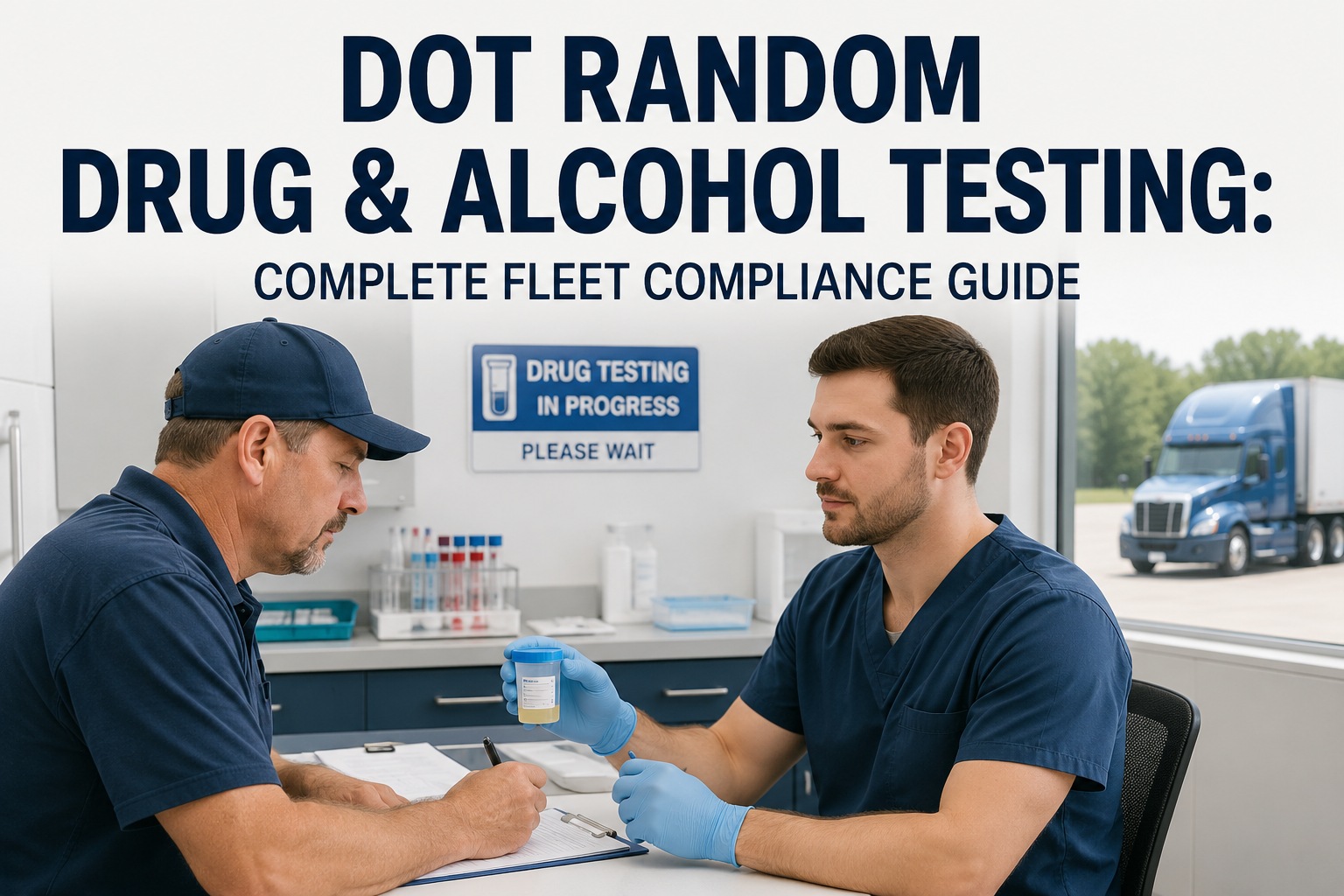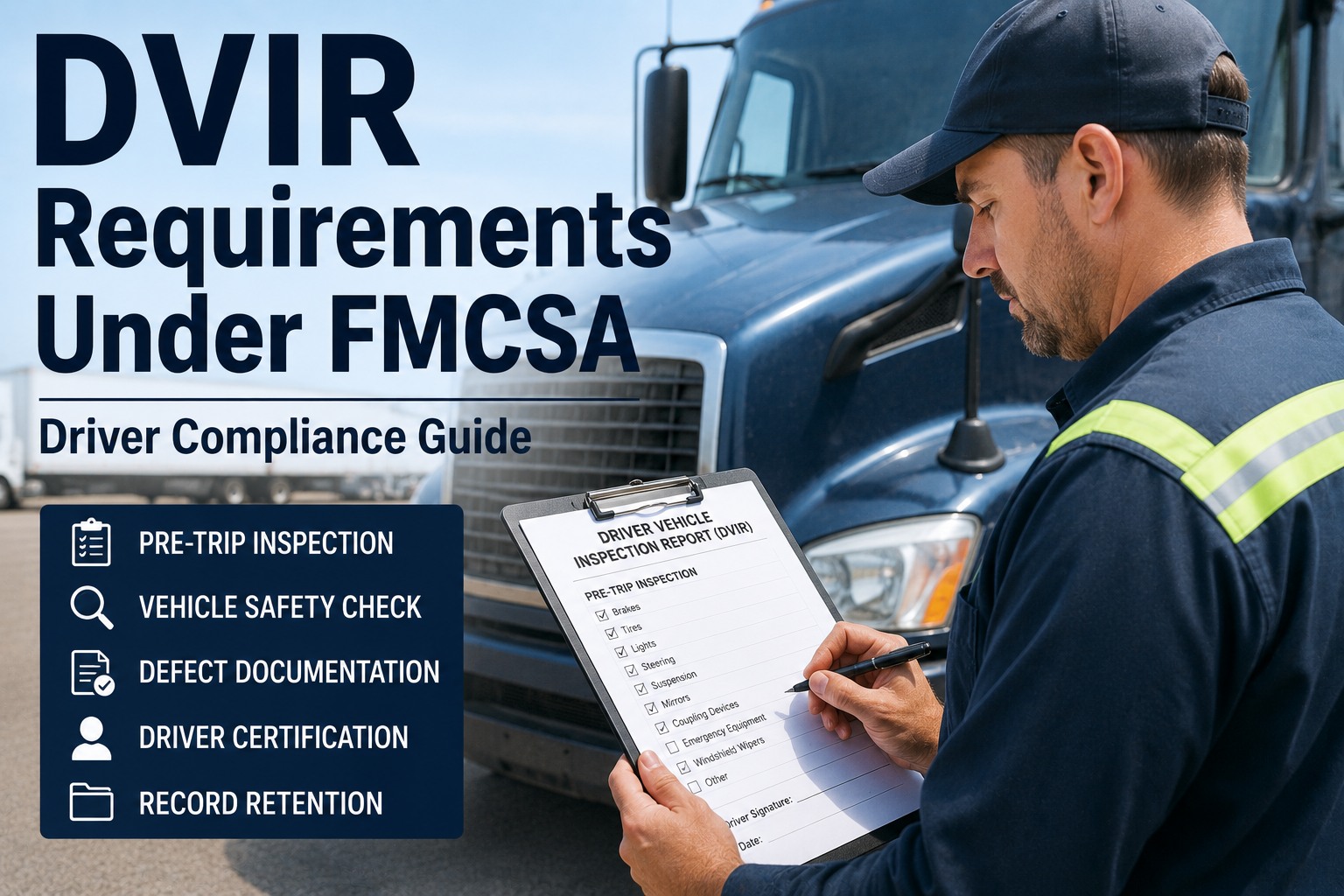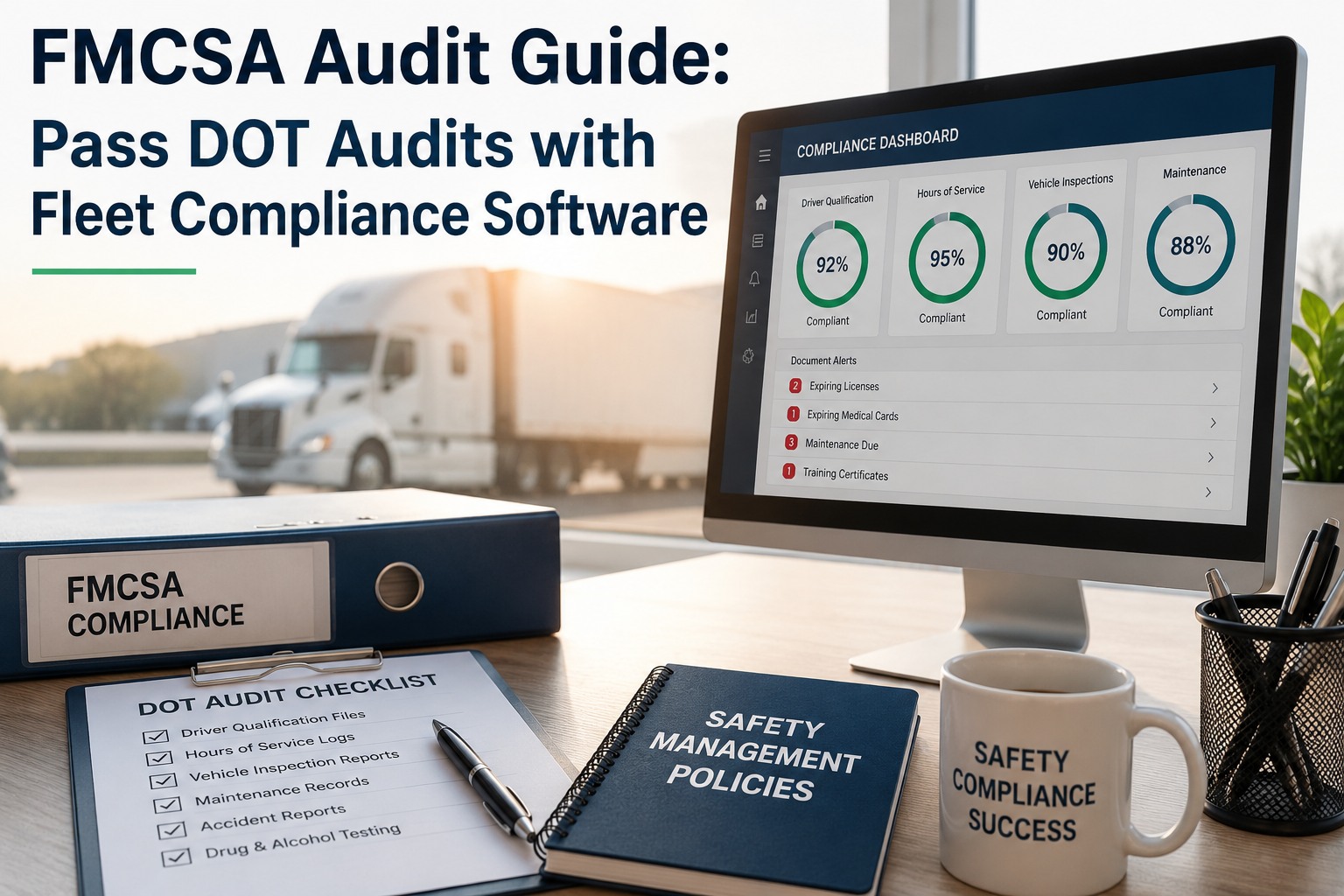
The FMCSA Drug and Alcohol Clearinghouse changed one of trucking's oldest problems overnight — before January 2020, a driver who failed a drug test could quietly walk to the next carrier and start driving again the same week. Today, every CDL violation is federally recorded, every employer can see it before hiring, and since November 2024's Clearinghouse-II rule, states must downgrade the CDL itself the moment a driver enters prohibited status. As of January 2026, over 200,000 CDL drivers sit in prohibited status — roughly 1 in 30 registered drivers. Missing a single pre-employment query or a single annual query is one of the most common — and most avoidable — audit findings for carriers. This guide walks through the entire employer compliance loop: who's in scope, how to register, the difference between limited and full queries, the 3-business-day violation reporting rule, the return-to-duty process, and how digital record-keeping through Truck Inspection & Maintenance turns Clearinghouse compliance from an audit landmine into a routine, documented workflow.
FMCSA Drug & Alcohol Clearinghouse Guide for Motor Carriers
Registration, queries, reporting, return-to-duty — every employer requirement in one place.
What Is the FMCSA Clearinghouse — And Why It Matters
The Clearinghouse is a secure federal database that stores every drug and alcohol program violation by CDL holders — positive tests, refusals, and program violations all get recorded. Under 49 CFR §382.701, employers must query it before any new CDL driver performs safety-sensitive functions, and annually for every current driver. Under the Clearinghouse-II final rule effective November 2024, prohibited status now triggers automatic CDL downgrade at the state DMV within 60 days — closing the loophole where prohibited drivers could relocate and re-license in another state.
Who's In Scope
Motor Carriers
Every trucking company employing CDL drivers — from single-truck LLCs to national fleets. Must register, query, and report.
Owner-Operators
Must register as both employer and driver, and designate a C/TPA to manage the testing program. Self-employment doesn't exempt anyone.
C/TPAs
Consortium/Third-Party Administrators managing testing programs report on behalf of employers. Same deadlines apply.
MROs & SAPs
Medical Review Officers report verified test results. Substance Abuse Professionals report RTD process milestones.
State DMVs
Must query Clearinghouse before issuing, renewing, or upgrading any CDL/CLP. Prohibited status triggers automatic downgrade.
CDL Drivers
Must register to give electronic consent for employer queries. Can view own records anytime — free and unlimited.
The 5-Step Employer Compliance Loop
Clearinghouse compliance is not a one-time task — it's a continuous loop that runs from the moment you hire a driver until the moment they leave. Every step has a specific 49 CFR citation and a specific documentation requirement. Miss any step and you accumulate audit findings that compound during an FMCSA compliance review:
Register on the Clearinghouse
Every motor carrier with a USDOT number must register at clearinghouse.fmcsa.dot.gov. Owner-operators register as both employer and driver. Designate an authorized C/TPA if using one. Registration is free.
Run Pre-Employment Full Queries
Before any new CDL driver performs a safety-sensitive function, run a full query with the driver's electronic consent. No query = no driving. This replaces the old previous-employer inquiry process for the drug/alcohol history portion.
Run Annual Limited Queries
Every current CDL driver gets a limited query at least once every 12 months. Requires one-time general consent (paper or electronic). If a limited query returns a hit, you have 24 hours to obtain full consent and run a full query.
Report Violations Within 3 Days
Positive tests, refusals, and other program violations must be reported by close of the third business day after you obtain the information. C/TPAs may report on your behalf, but the legal responsibility stays with the employer.
Retain All Records for 3+ Years
Every query, consent form, violation report, and RTD document must be retained for at least 3 years — some records longer. Digital storage with GPS-tagged, timestamped audit trails is now the FMCSA-preferred format.
Limited vs Full Query — When to Use Each
The Clearinghouse recognizes two distinct query types, and using the wrong one at the wrong moment is a common compliance failure. Both cost the same $1.25 flat fee, but they differ dramatically in what information they surface and what consent they require:
Common Audit Finding
The single most common Clearinghouse finding in new entrant audits and compliance reviews is a missing pre-employment query on an otherwise clean driver — no violation, just no documented query. It's an entirely avoidable violation that costs carriers thousands in penalties every year.
What Counts as a Violation
Understanding what gets reported is the difference between a compliant fleet and one accumulating unreported violations. The Clearinghouse records five categories of program violations — and importantly, a refusal to test counts exactly the same as a failed test:
Positive DOT Drug Test
Verified positive by the MRO for any of the DOT 5-panel substances (marijuana, cocaine, opiates, amphetamines, PCP), or expanded panel substances.
Alcohol Test 0.04 or Higher
Confirmed breath alcohol concentration of 0.04 or greater during any DOT-mandated test — pre-employment, random, post-accident, or reasonable suspicion.
Refusal to Test
Failing to appear, walking off, adulterating a sample, or otherwise obstructing a required test. Legally identical to a positive result — same prohibited status.
Actual Knowledge of Use
Employer's actual knowledge that a driver used drugs or alcohol while on duty, on-call, or within four hours of duty — documented observation, arrest, or admission.
Pre-Employment Test No-Show
A prospective driver who fails to complete the pre-employment testing process after starting it. Same treatment as a refusal.
Clearinghouse queries need documented driver files
Every query and every consent form must be retained for at least 3 years — and produced within minutes when a DOT auditor asks. Truck Inspection & Maintenance stores your driver qualification files digitally alongside inspection records, with GPS-tagged, timestamped audit trails that make FMCSA compliance reviews a formality instead of a fire drill. Sign up free for up to 3 vehicles.
The Return-to-Duty Journey
Once a violation is recorded, the driver enters prohibited status and cannot perform any safety-sensitive function until the entire federally mandated Return-to-Duty process is complete. Under the Clearinghouse-II tightened rules, SAPs must report each milestone by close of the next business day. The journey has four sequential stages — the driver cannot skip, appeal, or shortcut any of them:
SAP Initial Assessment
Driver selects a qualified Substance Abuse Professional and completes an initial clinical evaluation. SAP prescribes education, treatment, or both. Must be reported to Clearinghouse by close of next business day.
Complete Education / Treatment
Driver completes all SAP-prescribed education and treatment. Timeline varies — a few weeks to several months depending on the prescribed program. Cost typically $1,000+ paid by the driver.
SAP Determines RTD Eligibility
Driver returns to SAP for follow-up evaluation. If SAP determines successful compliance, driver is eligible for the return-to-duty test. Must be reported to Clearinghouse by close of next business day.
Negative RTD Test + Follow-Up Plan
Employer administers a directly observed RTD drug test. Negative result removes prohibited status. Driver then completes the SAP-prescribed follow-up testing plan — minimum 6 unannounced tests over 12 months.
Penalties & Enforcement — What Non-Compliance Costs
FMCSA penalty amounts are adjusted annually for inflation under the Federal Civil Penalties Inflation Adjustment Act. In 2025, some carriers accumulated penalties exceeding $125,000 across multiple Clearinghouse violations during a single compliance review. Here's what the real cost structure looks like when compliance breaks down:
Missing Pre-Employment Query
Per-driver penalty. Every unqueried driver is a separate violation. Common finding in new entrant audits.
Missing Annual Query
Per-driver, per-year violation. Fleets with 100+ drivers can rack up dozens of findings from a single audit.
Late Violation Reporting
Beyond the 3-business-day window. Under Phase-II enforcement, late reporting is a finable offense with stricter thresholds.
Allowing Prohibited Driver to Drive
Highest-severity violation. Triggers immediate carrier scrutiny and can lead to unsatisfactory rating and out-of-service orders.
Failure to Retain Records
Every query, consent, and RTD document must be kept 3+ years. Missing records treated as if the query never happened.
CSA Score Impact (2026)
Beginning 2026, drug/alcohol violations are included in the Unsafe Driving CSA BASIC — affecting insurance rates and load contracts for years.
The Employer Compliance Checklist
Print this. Laminate it. Post it in every safety manager's office. This is the exact sequence a DOT auditor will walk through during a compliance review — every checkbox is a documented artifact they expect to see:
Frequently Asked Questions
Who has to register with the FMCSA Clearinghouse?
Every motor carrier employing CDL drivers, every owner-operator (as both employer and driver), every C/TPA, every MRO, and every SAP. CDL drivers themselves also register to give electronic consent for employer queries. State DMVs query the Clearinghouse before issuing or renewing any CDL.
What's the difference between a limited and full query?
A limited query returns a simple yes/no — does the driver have any Clearinghouse information? It uses one-time general consent and is used for annual checks. A full query returns complete violation details and RTD status, requires electronic consent through the Clearinghouse, and is required for every pre-employment check and any time a limited query returns a hit.
How long does a violation stay in the Clearinghouse?
Five years from the date of the violation determination, or until the successful completion of the follow-up testing plan — whichever is later. During that entire window, every employer that queries the driver's record will see the violation, even if the driver has completed RTD and returned to safety-sensitive work.
How quickly must employers report violations?
Employers or their designated C/TPAs must report violation information by close of the third business day following the date they obtained the information. Under Clearinghouse-II tightened enforcement, late reporting is a finable offense with stricter thresholds. SAPs and MROs face even shorter deadlines — by close of the next business day. Talk to our team about digital reporting workflows.
Does a refusal to test count the same as a failed test?
Yes. A refusal is reported and treated as a violation carrying identical prohibited status. Refusal includes failing to appear, walking off, adulterating a sample, or otherwise obstructing a required test. The driver enters the same return-to-duty process as a positive test — there is no shorter path.
How does Truck Inspection & Maintenance help with Clearinghouse compliance?
Truck Inspection & Maintenance stores driver qualification files digitally alongside inspection and maintenance records — every query result, every consent form, every RTD document with GPS-tagged, timestamped audit trails. When a DOT auditor asks for evidence of a query on driver X in month Y, the answer arrives in one click instead of a shoebox search. Sign up free to see the workflow.
Clearinghouse compliance runs on records — and records run on Truck Inspection & Maintenance.
Every pre-employment query, every annual limited query, every consent form, and every RTD document sits in one digital driver qualification file — GPS-tagged, timestamped, and audit-ready. Free for up to 3 vehicles with no hardware and no contracts. Set it up in 10 minutes and stop worrying about the next compliance review.