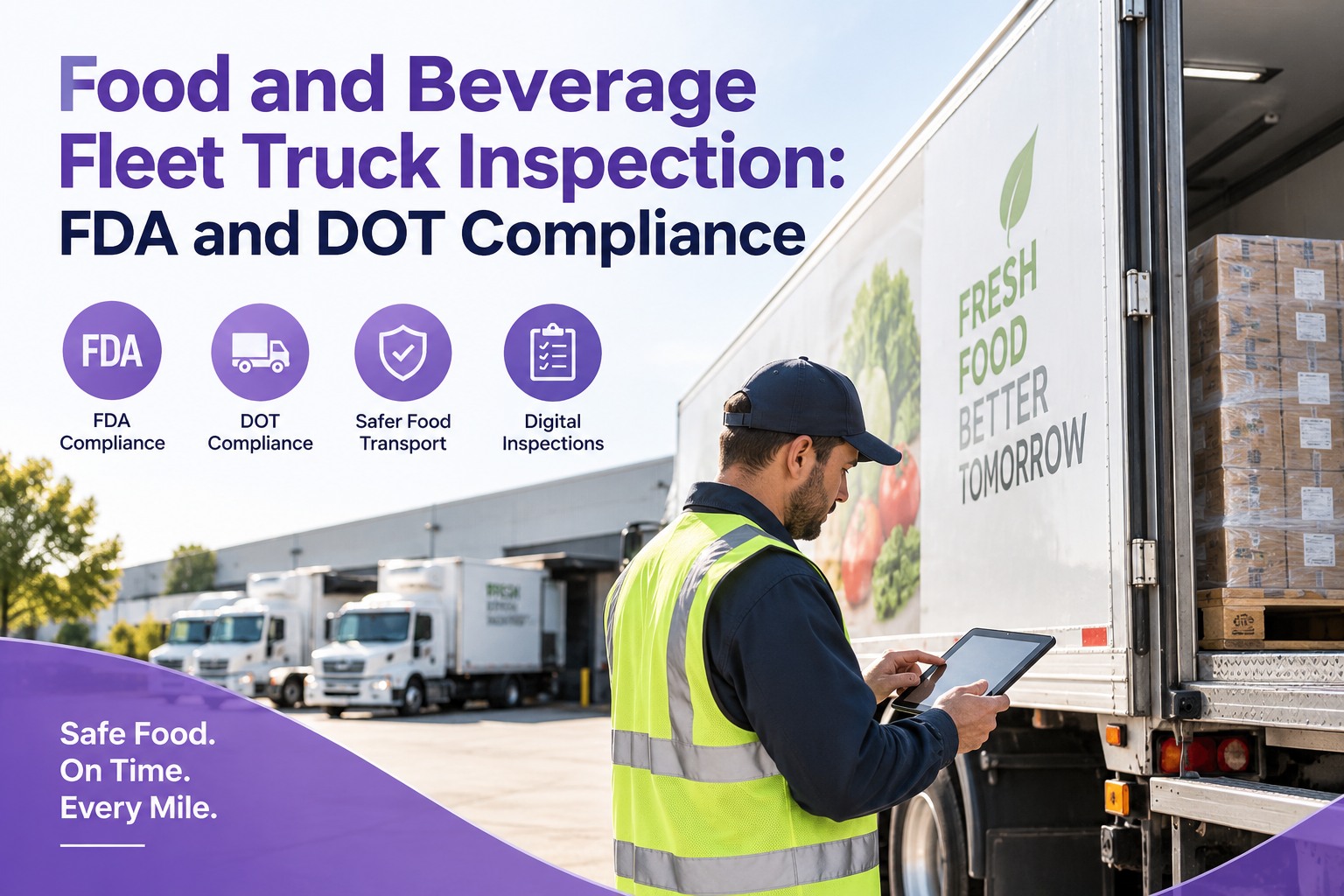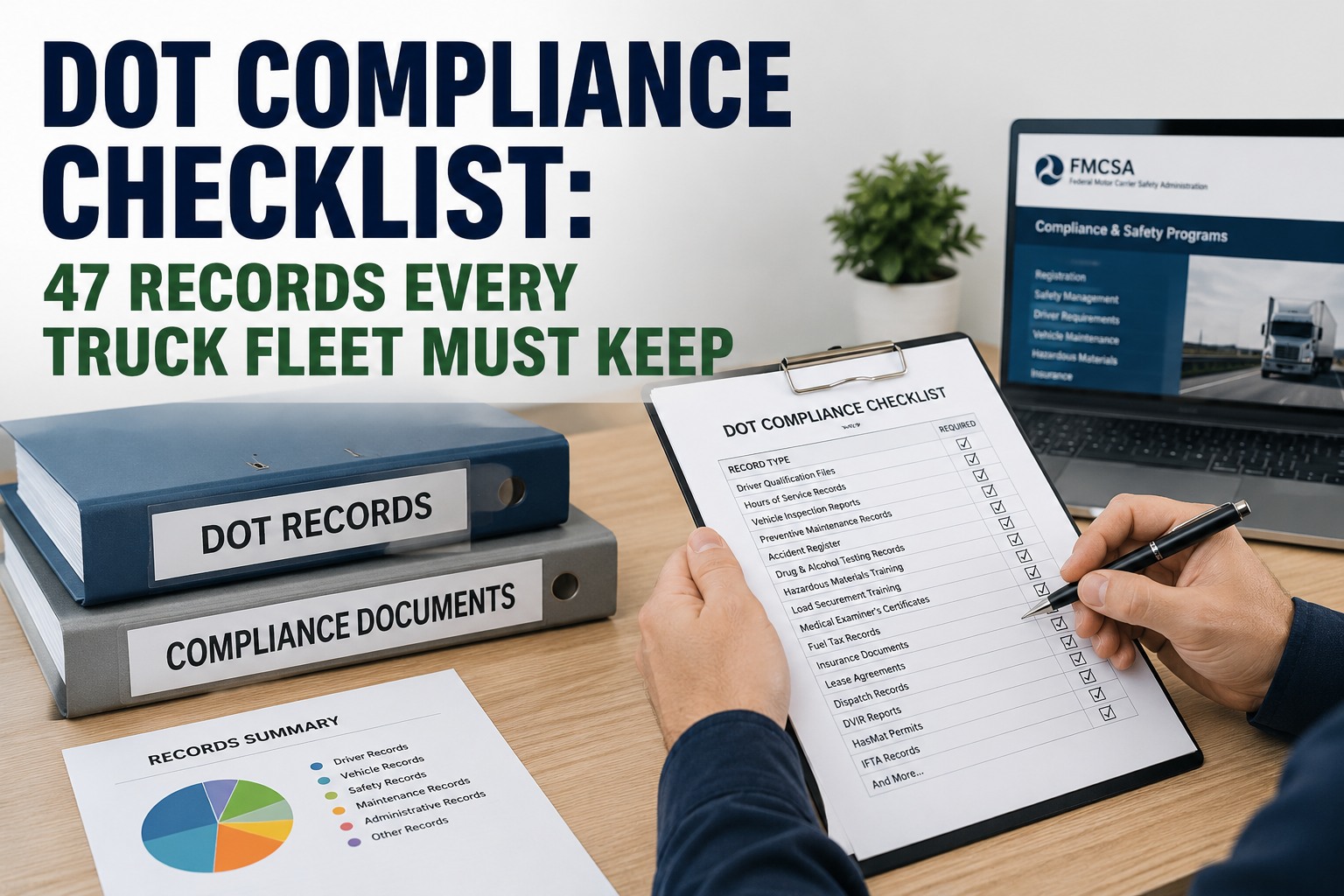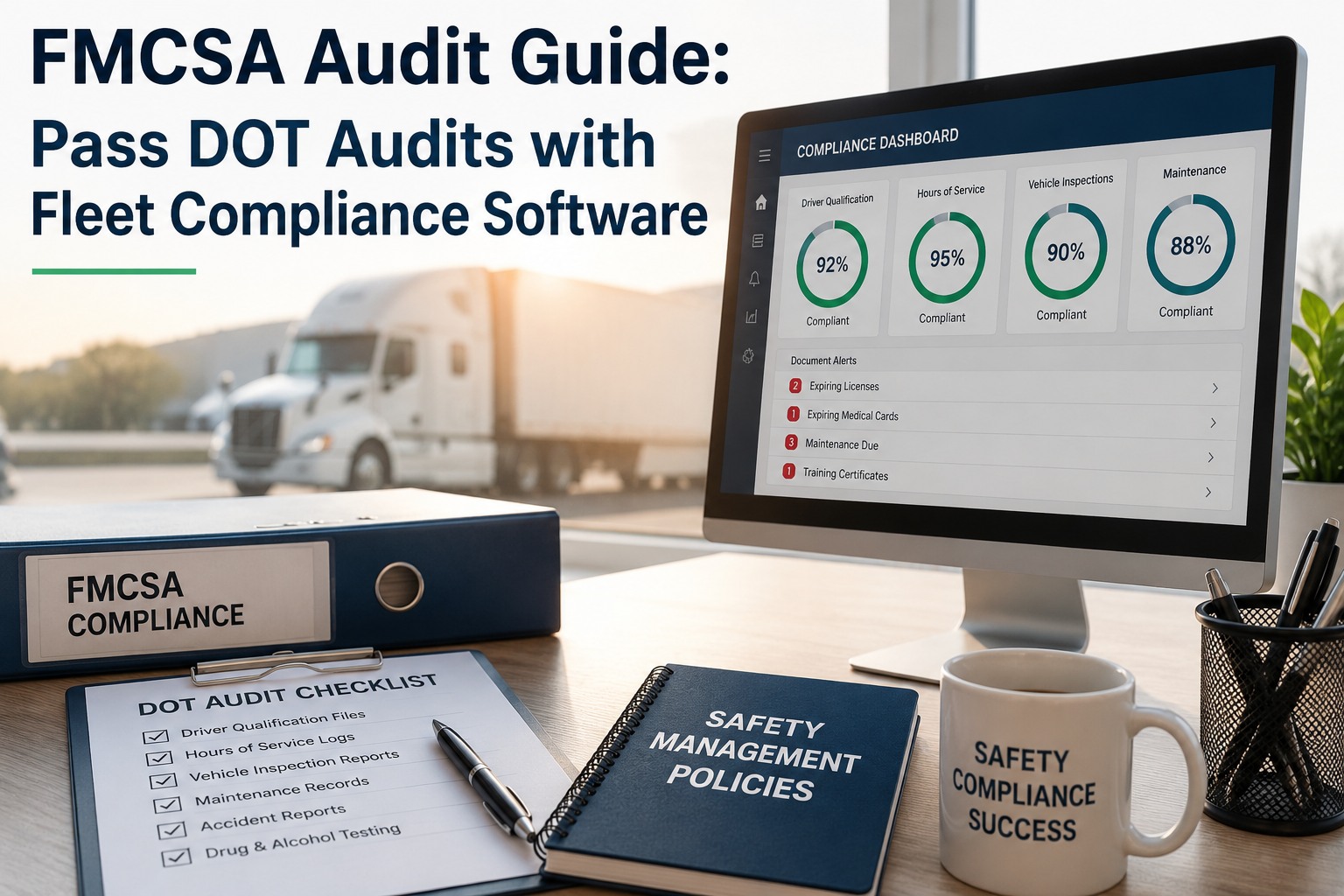
For a food transportation fleet, HACCP isn't a factory-floor concept you can leave behind at the loading dock — the truck is part of the food safety chain, and the cold box rolling down the interstate is a critical control point in its own right. Hazard Analysis and Critical Control Points is the systematic, preventive framework that identifies biological, chemical, and physical hazards and establishes the controls that keep food safe from production through delivery. Its seven principles culminate in one operational reality: records. The monitoring logs, deviation reports, corrective actions, and audit trails that prove the cold chain held are only practical to maintain at scale with software — manual paper records, inconsistent checks, and delayed corrective actions are exactly where compliance breaks down. This guide explains how the seven HACCP principles apply on the road, the transport critical control points that matter, the must-have software features, and how it all connects to your reefer temperature logs. Truck Inspection & Maintenance captures the in-transit monitoring and records that feed your HACCP plan. Talk to our team for a walkthrough.
HACCP Compliance Software for Food Transportation
Seven principles, the transport CCPs, and audit-ready records on the road.
The 7 Principles — On the Road
HACCP's seven principles were written for food production, but every one maps directly onto transportation. Software's job is to operationalize them — turning a written plan into continuous, provable practice. Here's how each principle lives in a food fleet.
Hazard analysis
Identify biological, chemical & physical hazards in transport — temperature abuse, cross-contamination, contamination from the cargo area.
Identify CCPs
Pinpoint the control points on the road: loading temperature, cold-storage maintenance in transit, and delivery handoff.
Set critical limits
Define the temperature thresholds each cargo must stay within — the numeric line between safe and unsafe.
Monitor
Continuously measure temperature against limits — automatically, with timestamps, not a clipboard check twice a day.
Corrective actions
When a limit is breached, the plan must specify the action, who's responsible, and how it's documented — triggered instantly.
Verification
Independently confirm the system works — sensor calibration, record review, and audits by someone other than the monitor.
Recordkeeping
Maintain the plan, CCP logs, deviation & corrective-action records, and verification docs — the audit trail that proves it all.
The Transport Critical Control Points
Most of a food fleet's HACCP risk concentrates at three control points. Get continuous monitoring and documentation right at each, and you've covered the heart of in-transit food safety. Start a free account to capture these checks digitally.
Loading / Receiving Temp
Verify and document product and compartment temperature at load — the baseline that proves the cold chain started intact. A warm load fails before it leaves.
Cold Storage in Transit
Continuously maintain and monitor the reefer against critical limits throughout the run — the longest and highest-exposure control point.
Delivery Handoff
Record temperature at unload so the receiver has contemporaneous proof the limit held end-to-end — and you're protected in a dispute.
The 6 Must-Have Features
These six capabilities turn a HACCP plan from paperwork into continuous, audit-ready protection. Score every platform against them. Reach our team to see how in-transit monitoring fits your plan.
Continuous CCP monitoring
Sensors measure temperature at each control point continuously, comparing every reading against programmed critical limits — no gaps between manual checks.
Real-time deviation alerts
The moment a critical limit is breached, designated personnel are alerted instantly — enabling corrective action before product is lost.
Corrective-action workflows
Capture the required action, responsible person, and documentation for every deviation — exactly as the HACCP plan specifies.
Verification & calibration logs
Track thermometer/sensor calibration and record reviews — Principle 6 evidence, by someone independent of monitoring.
Searchable audit records
Tamper-proof, timestamped logs searchable by lot, date, CCP, and status — the audit trail an inspector or customer can pull instantly.
Lot traceability & FSMA link
Trace product by lot and connect to FSMA 204 Critical Tracking Events — essential when a deviation triggers a recall investigation.
Capture the in-transit CCP — automatically
Truck Inspection & Maintenance digitizes loading, in-transit, and delivery temperature checks with timestamps, photo gates, and instant deviation flags routed into corrective-action records — the monitoring and recordkeeping your HACCP plan demands. No hardware to start, no contracts. Sign up free and make HACCP records effortless.
Why Manual HACCP Breaks Down
The reason fleets fail HACCP audits is rarely a bad plan — it's the execution gap between the plan and the records. Paper and spreadsheets create exactly the failure modes auditors look for. Software closes each one. Talk to our team about closing these gaps.
- Gaps between twice-a-day clipboard checks
- Deviations found too late to act
- Records lost, illegible, or backdated
- No independent verification trail
- Slow, painful audit retrieval
- Continuous monitoring, no gaps
- Instant alerts enable real-time correction
- Tamper-proof, timestamped records
- Built-in calibration & verification logs
- Searchable audit trail in seconds
Frequently Asked Questions
Does HACCP apply to food transportation, not just production?
Yes. HACCP is a farm-to-consumption framework, and transportation is part of the chain — the refrigerated truck is itself a critical control point. The same seven principles apply: you identify transport hazards (temperature abuse, cross-contamination), set critical limits, monitor continuously, take corrective action on deviations, verify the system, and keep records. Catering and institutional foodservice transport explicitly require mobile HACCP compliance documentation. Start a free account to capture in-transit records.
What are the critical control points in transport?
Three main ones: loading/receiving temperature verification (proving the cold chain started intact), cold-storage maintenance in transit (the longest, highest-exposure point), and the delivery handoff (documenting the limit held end-to-end). At each, you verify temperature against critical limits and document it. Continuous automated monitoring covers the in-transit point that manual checks leave exposed between readings. Talk to our team about transport CCPs.
What records does HACCP require?
Principle 7 requires the HACCP plan itself, CCP monitoring records showing temperatures and times, deviation and corrective-action records, and verification records including calibration documentation. These must be maintained to demonstrate the system functions and food safety is assured. They're only practical to keep at scale with software that timestamps every reading automatically — creating the audit trail manual logs can't reliably match. Sign up free to keep records audit-ready.
How does HACCP software handle a temperature deviation?
When monitoring detects a reading outside the critical limit, the system immediately alerts designated personnel and triggers the corrective-action workflow your plan specifies — what action to take, who is responsible, and how the incident is documented. That speed is the whole point: catching a deviation in real time lets you correct it before product is compromised, rather than discovering it on a paper log after the load is delivered. Contact us about corrective-action workflows.
How does HACCP software relate to my reefer logs?
They're complementary. Your reefer's temperature data is the raw monitoring input; HACCP software gives it structure — comparing readings to critical limits, alerting on deviations, routing corrective actions, and storing everything as searchable, verifiable records tied to your plan. A good inspection-and-monitoring platform captures loading, in-transit, and delivery readings and turns them into the documented CCP evidence an auditor wants. Start free to connect monitoring and records.
How does HACCP connect to FSMA 204?
They reinforce each other. HACCP controls the hazards; FSMA 204, the Food Traceability Rule, requires lot-level tracking of Critical Tracking Events for foods on the FDA's Food Traceability List, with compliance phased through 2026. When a CCP deviation triggers a recall investigation, lot traceability lets you trace product forward and backward through the chain — turning your HACCP corrective-action records and traceability data into a fast, defensible response. Contact us about traceability.
Make every CCP continuous and every record audit-ready.
Truck Inspection & Maintenance digitizes loading, in-transit, and delivery temperature checks, flags deviations in real time, routes corrective actions, and stores tamper-proof searchable records — operationalizing the HACCP plan your food fleet runs on. Free for up to 3 vehicles, no hardware, no contracts.