A hazmat leak is the one fleet event where the clock, not the cleanup, is what gets you fined. The material on the ground is a problem you can contain — but the notification duties it triggers run on hard federal deadlines that start the moment a driver has knowledge of the release, and a late call to the National Response Center can cost more than the spill itself. The trap is that the rules overlap: the same leak can trigger a DOT transportation-incident report, an EPA reportable-quantity notification, and a separate state-agency call, each with its own threshold and its own timeline. Most drivers and even many fleet managers don't carry those thresholds in their heads, so the reportable event gets treated like a routine cleanup — and the missed notification becomes the violation. This guide lays the whole protocol out on a single clock: what to do in the first minutes, who to call and when, how to run the cleanup, and what to file afterward. Truck Inspection & Maintenance captures the leak on a mobile DVIR, routes it instantly, and timestamps every step so the notification record writes itself — start a free trial or contact our team.
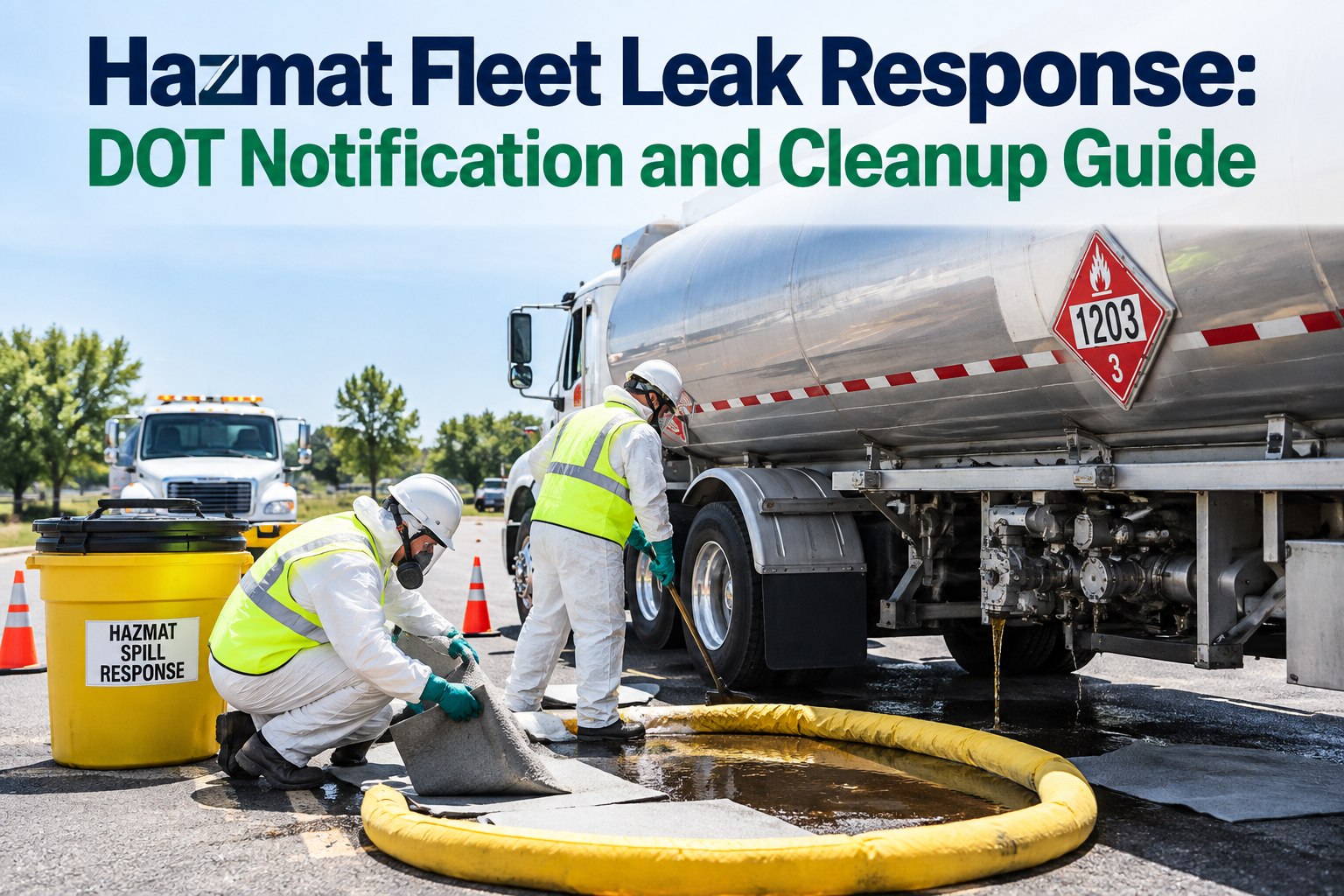
Hazmat Fleet Leak Response: DOT Notification & Cleanup Guide
The material is the hazard. The clock is the violation. Every notification duty starts the moment a driver knows there's a leak — here's the whole protocol on one timeline.
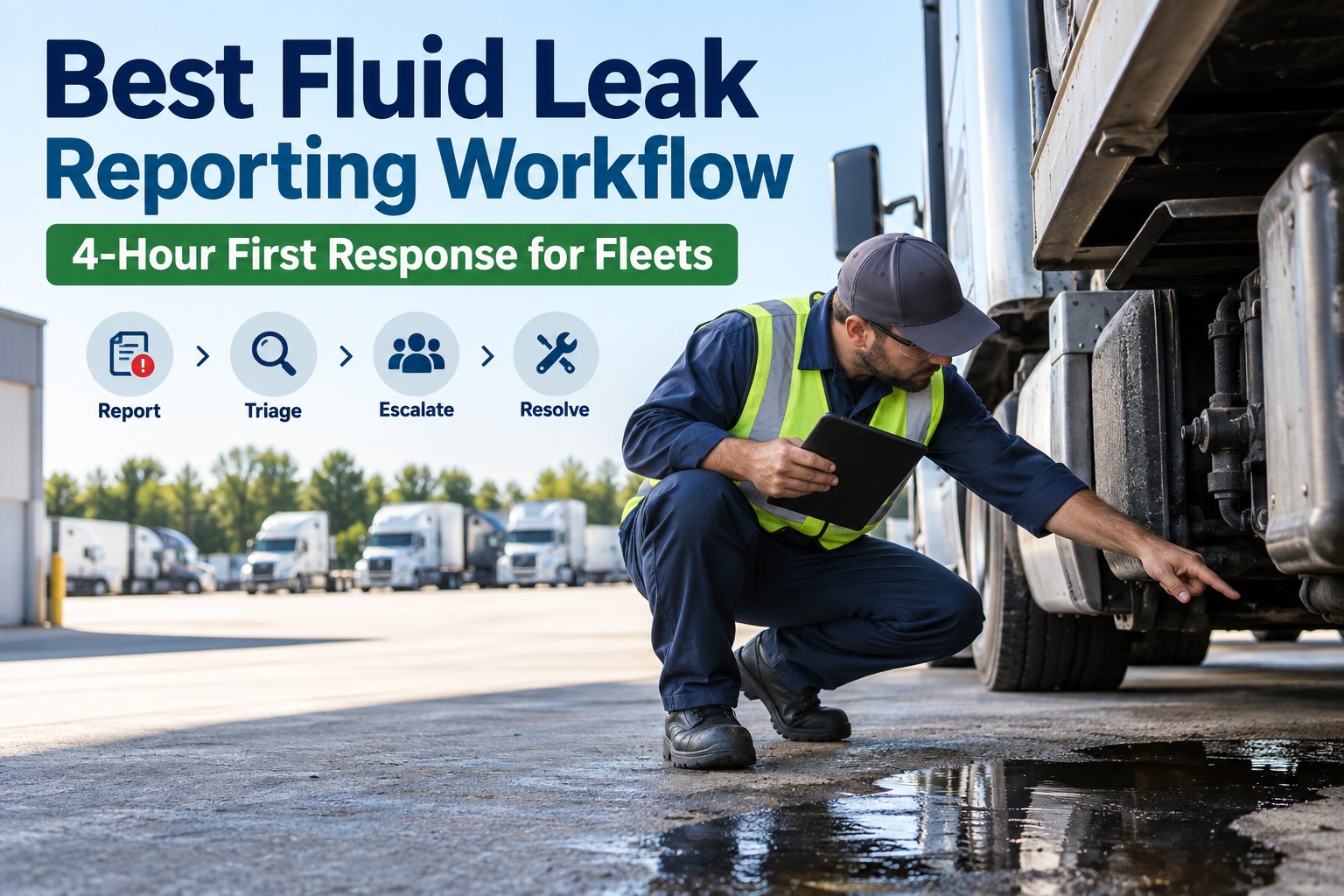
Step 1 — The First Minutes on Scene
Before any phone call, the scene has to be made safe. These actions come first, in order — notification follows once the immediate danger is controlled:
A leak logged on a phone at minute zero is a notification record that writes itself. Start a free trial and put the protocol in every driver's pocket.
Step 2 — Who to Call, and When
This is where fleets get caught. One leak can trigger three separate notification duties, each on its own trigger and timeline. Here's the whole call tree:
The Rule Behind Every Deadline — The Clock Starts at "Knowledge," Not at Cleanup
Every hazmat notification deadline runs from the moment the person in possession has knowledge of the release — not from when the mess is cleaned up, not from when a manager gets around to it, and not from when someone finally looks up the threshold. That's why "we were busy handling the spill" is never a defense for a late call. The reportable-quantity determination and the NRC notification have to happen in parallel with the physical response, not after it. The single most common — and most expensive — hazmat failure isn't a botched cleanup; it's a reportable release that got treated as routine and never called in. A protocol that puts the material ID, the RQ check, and the phone numbers in the driver's hand at minute zero is what keeps the clock from beating you. Start a free trial and make the notification step impossible to skip.
Step 3 — When Is It Even Reportable?
Not every drip is a federal incident — but the trigger set is broader than most drivers assume. A release is reportable when any of these is true:
That last one matters: DOT builds in a judgment trigger, so "it didn't quite hit the RQ" is not automatically a pass. When it's close, the defensible move is to call.
Step 4 — The Cleanup, Done Right
Once the scene is safe and notifications are moving, the physical cleanup runs on its own disciplined sequence:
The leak that gets logged the second it's found is the leak whose notification clock you never lose.
Capture the event on a mobile DVIR with photos and time stamps, route it instantly to the right people, and keep an audit-ready record of every notification and repair — so the paperwork stops being the thing that gets you fined. Start a free trial or talk to our team.
Step 5 — The Records That Close It Out
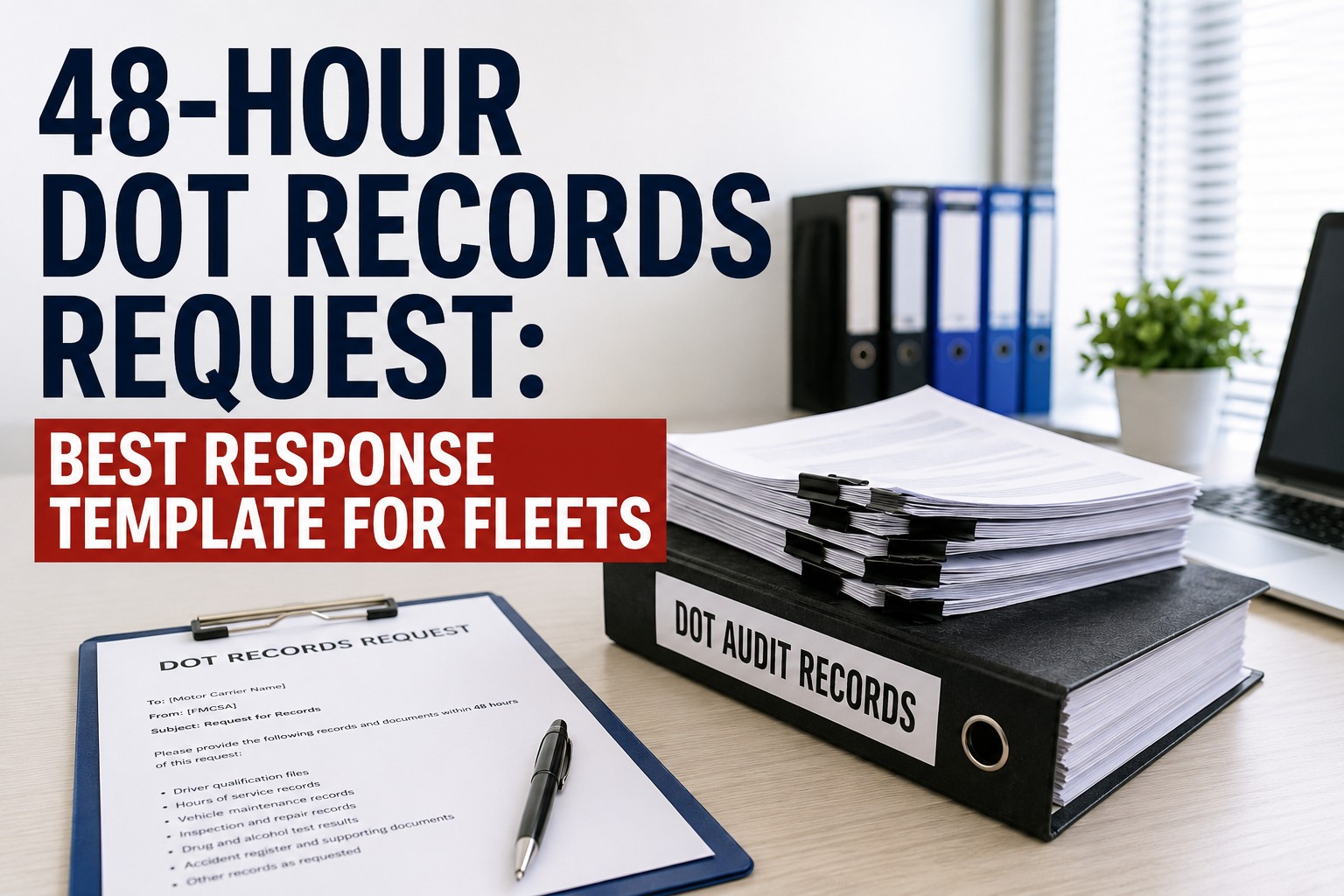
The event isn't over when the cleanup is. The documentation is what stands up in an audit — and DOT requires it be kept:
Every timestamp, notification, and repair in one audit-ready file. Start a free trial and stop reconstructing incidents from memory.
Frequently Asked Questions
When must a hazmat leak be reported to the DOT?
Under 49 CFR 171.15, the carrier must phone the National Response Center as soon as practical and no later than 12 hours when the hazmat causes a death or hospitalization, a 1-hour-plus public evacuation, a 1-hour-plus closure of a major route or facility, or when the person in possession judges it warrants notice. A written report on Form DOT F 5800.1 follows within 30 days.
What's the difference between the DOT and EPA reporting duties?
DOT (49 CFR 171.15/171.16) governs transportation incidents and uses the death/injury/evacuation/closure triggers. EPA (40 CFR 302.6, under CERCLA) requires an immediate NRC call whenever a release meets or exceeds the material's reportable quantity in 24 hours. One leak can trigger both — plus a separate state notification.
What number do I call to report a hazmat release?
The National Response Center at 1-800-424-8802 is the primary federal line for both DOT and CERCLA notifications. Many states also require an immediate call to a state warning center or local emergency authorities, so your response plan should list the right state number for every lane you run.
What is a reportable quantity (RQ)?
An RQ is the amount of a specific hazardous substance that, once released within a 24-hour period, triggers a mandatory immediate report to the NRC under CERCLA. RQs are substance-specific, so the material's identity and the released quantity together determine whether the threshold is met.
How long must hazmat incident records be kept?
Keep the full incident file — the log, Form DOT F 5800.1, notification records, and cleanup and disposal manifests — for at least three years to support audits and regulatory reviews. The written 5800.1 report itself is filed within 30 days, with a one-year follow-up in certain circumstances.
How does Truck Inspection & Maintenance help with leak response?
It captures the leak on a mobile DVIR with photos and time stamps the moment a driver finds it, routes it instantly to the shop and safety lead, and keeps an audit-ready record of every notification and repair — so the reportable event never gets treated as routine and the paperwork is ready for a DOT review. Start a free trial or contact us.
The spill is a cleanup. The missed notification is the violation. Run the protocol on one clock and neither one beats you.
Capture the leak the second it's found, run the material-ID and RQ check in parallel with the response, hit every notification deadline, and keep a three-year audit-ready file — all from one system dispatch, drivers, and the shop share.