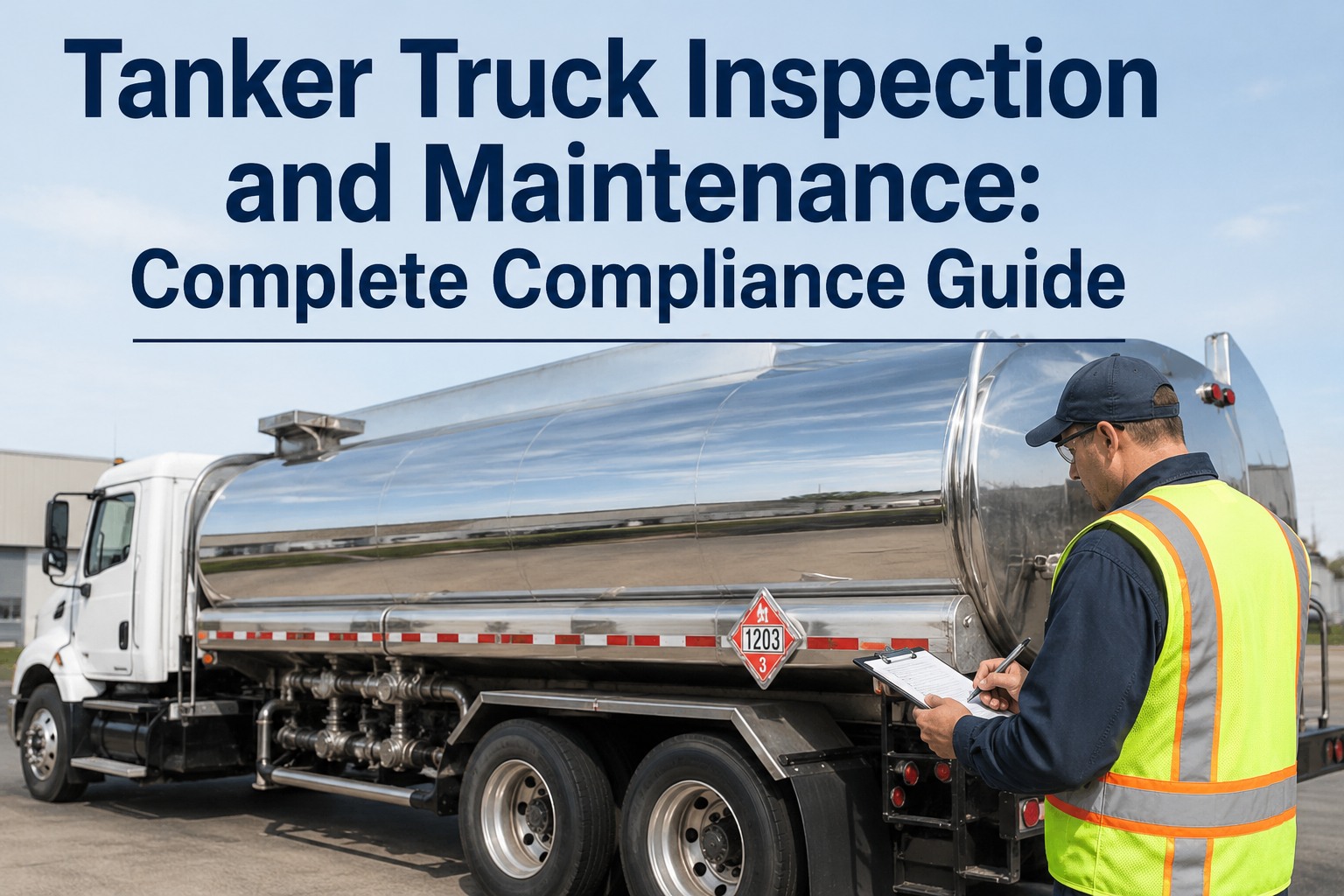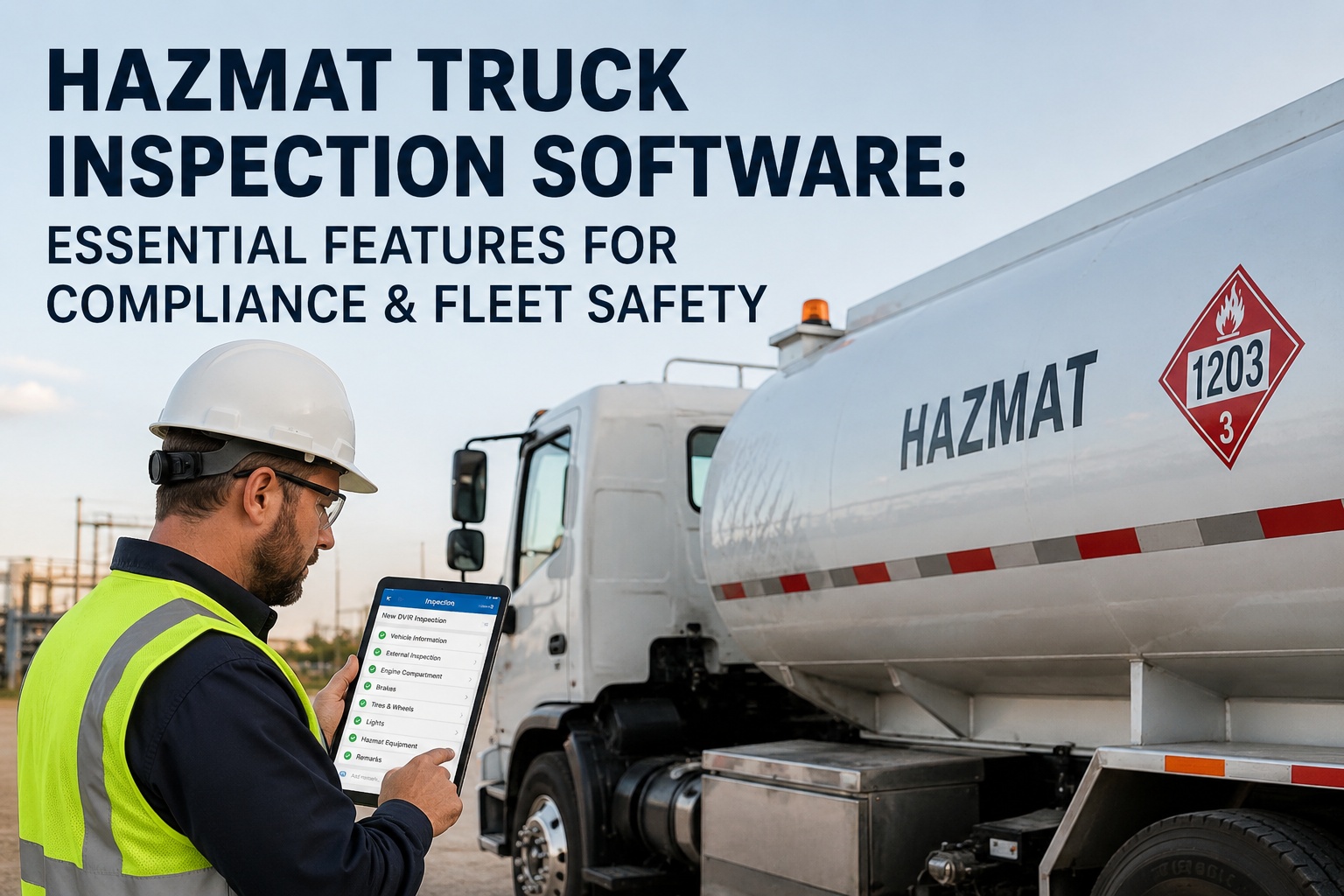
Hazmat fleets carry the highest regulatory load of any commercial transportation segment. A single crude oil hauler, frac sand truck, or fuel transport falls under 49 CFR Parts 107, 172, 173, 178, 180 for hazardous materials, FMCSA Parts 383, 391, 392, 395, 396 for driver and vehicle compliance, and PHMSA for pipeline-adjacent operations — simultaneously. The penalty stack is unforgiving: civil violations run $100 to $25,000 each, missed DVIRs cost up to $1,270/day, undocumented defect repairs up to $15,420, and falsification carries criminal exposure. Paper-based hazmat inspection workflows leak compliance at every step. The FMCSA's February 19, 2026 final rule (Docket FMCSA-2025-0115) explicitly authorized electronic DVIRs effective March 23, 2026 — removing the last ambiguity and making digital inspection software the operational standard for hazmat fleets. This guide covers the 10 essential features hazmat-specific inspection software must have to satisfy DOT, PHMSA, OSHA, and EPA simultaneously, what to look for in a platform built for oil & gas operations, and the ROI math for a mid-size hazmat fleet. Start your free trial and run hazmat inspections on software built for oil & gas.
Hazmat Truck Inspection Software
10 essential features for DOT, PHMSA, OSHA, and EPA compliance on tank trucks, frac fleets, and oilfield service vehicles.
Why Hazmat Fleets Need Specialized Inspection Software
Generic fleet DVIR tools handle the FMCSA mechanical checklist but miss the hazmat-specific items that actually drive citations: cargo tank certification expiration, placarding accuracy, emergency discharge controls, hazmat endorsement tracking, shipping paper compliance. A platform built for hazmat treats these as first-class — not afterthoughts. The four agencies driving requirements:
DOT / FMCSA
Daily DVIR mandate, annual inspections, driver qualification, ELD/HOS, electronic DVIR rule effective March 23, 2026.
PHMSA
Hazardous materials classification, packaging, placarding, cargo tank specifications, periodic inspection (180.407, 180.409).
OSHA
Process safety management (PSM), mechanical integrity, employee training, hazard communication. Strong wellsite emphasis.
EPA
SPCC plans, spill prevention controls, hazardous waste manifests, emissions reporting. Field releases trigger immediate notifications.
The 10 Essential Features — What Hazmat Fleets Actually Need
Every vendor claims "FMCSA-compliant" — but only a few actually handle the hazmat-specific workflow that oil & gas, frac, fuel, and chemical fleets run daily. The 10 features below are the working set:
Hazmat-Specific DVIR Templates
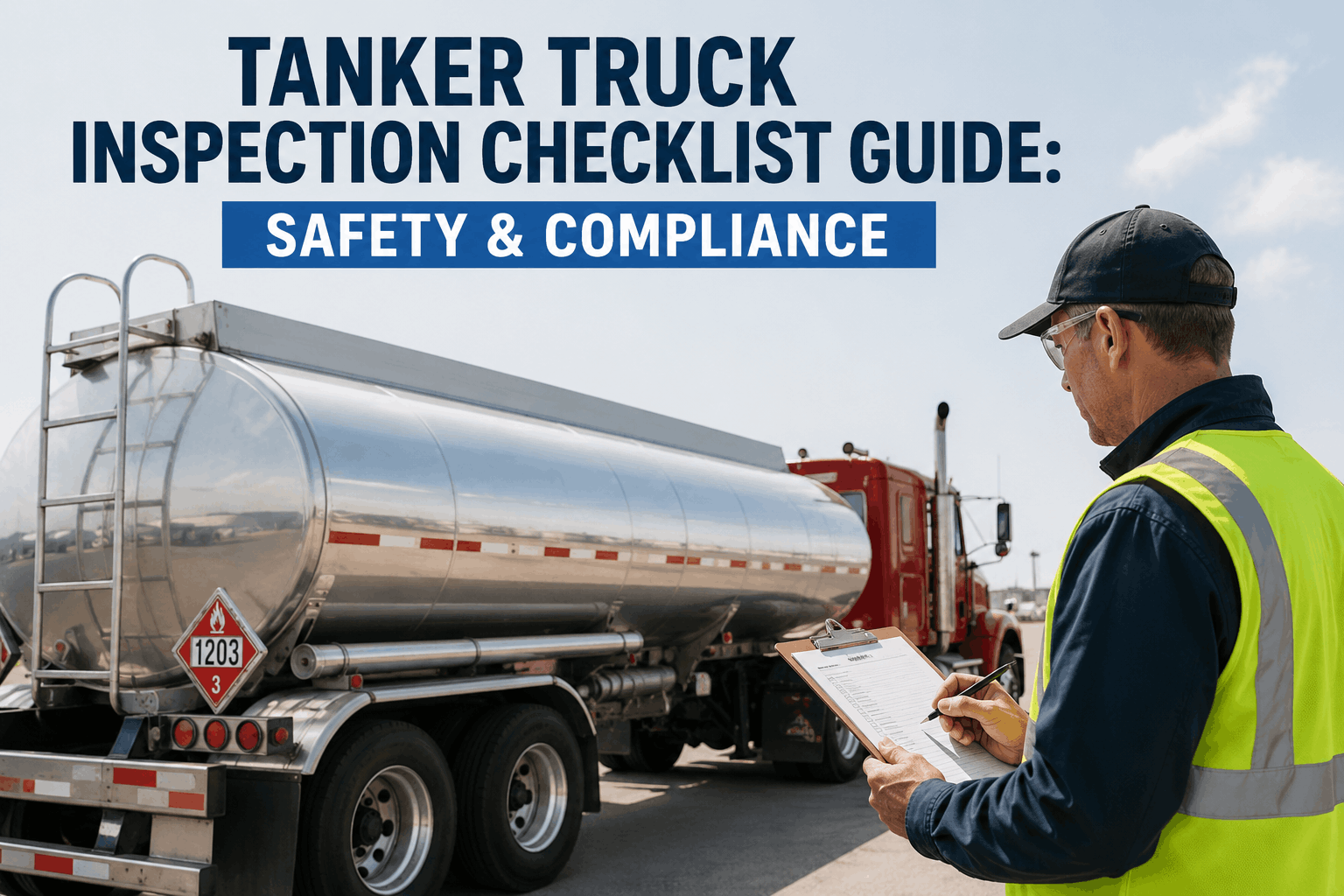
Pre-loaded checklists for tank trucks, vacuum trucks, frac pumps, kill trucks, crude haulers, fuel transports — each covering vehicle items + hazmat items (placards, emergency discharge, dome covers).
Offline DVIR Capability
Full inspection completion without cellular at remote well sites and lease roads. Data syncs automatically when connectivity returns. Non-negotiable for oilfield operations.
Photo + GPS + Timestamp per Defect
Every defect captured with photographic evidence, geo-location, and tamper-evident timestamp. The audit-defense difference between "checkbox" and "verified inspection."
Hazmat Endorsement Tracking
Automated tracking of CDL Hazmat (H) and Tanker (N) endorsements, medical cards, TWIC cards, drug test cycles. Expiration alerts block dispatch on lapsed credentials.
Cargo Tank Certification Calendar
180.407 (annual external visual), 180.409 (5-year hydrostatic), leakage tests, thickness testing. Auto-schedule based on tank type and last test date. Missing test invalidates certification.
3-Signature Defect-to-Repair Chain
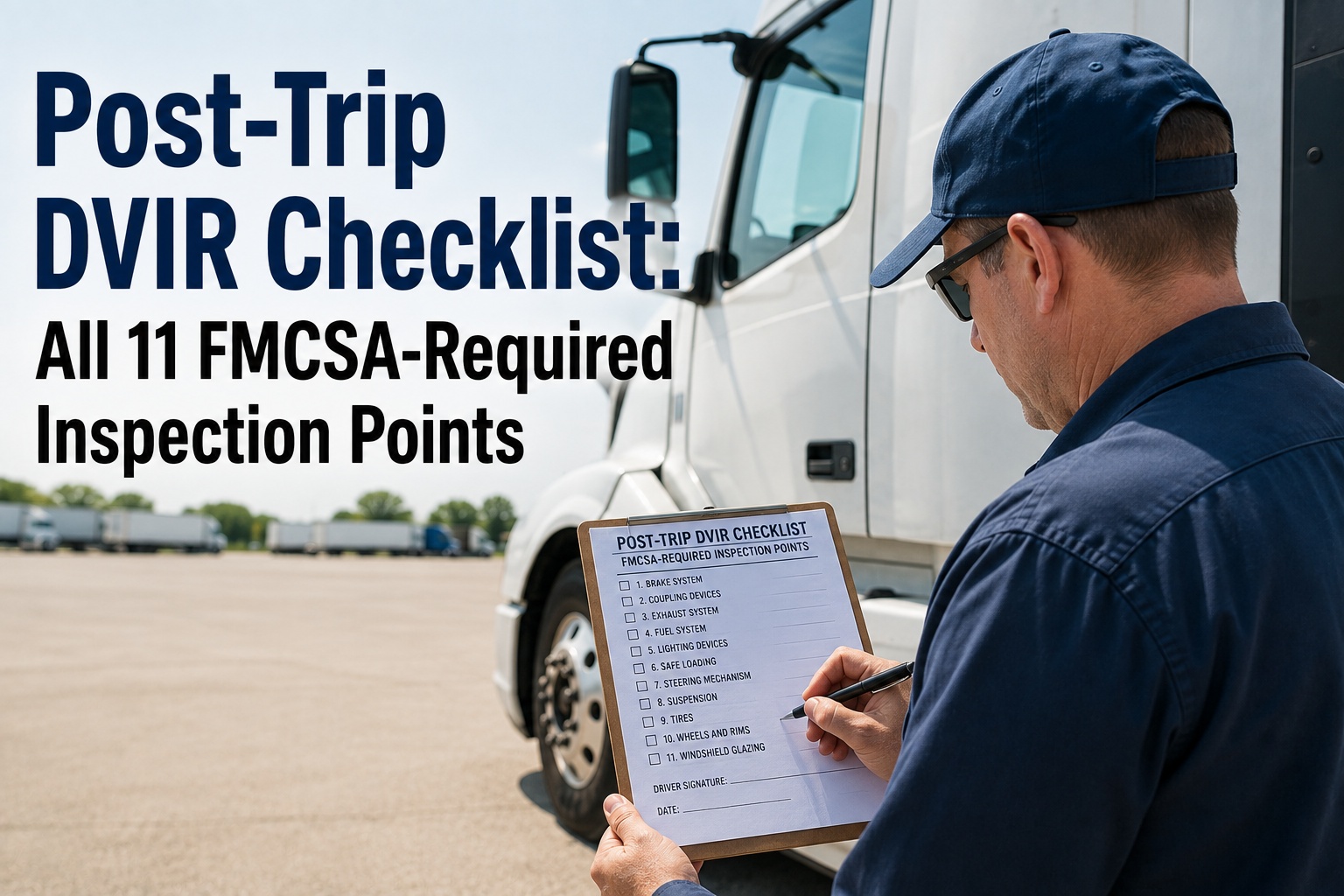
FMCSA-mandated workflow: driver reports → mechanic acknowledges & repairs → next driver confirms. Software enforces the chain digitally so no link breaks.
One-Click Audit Export
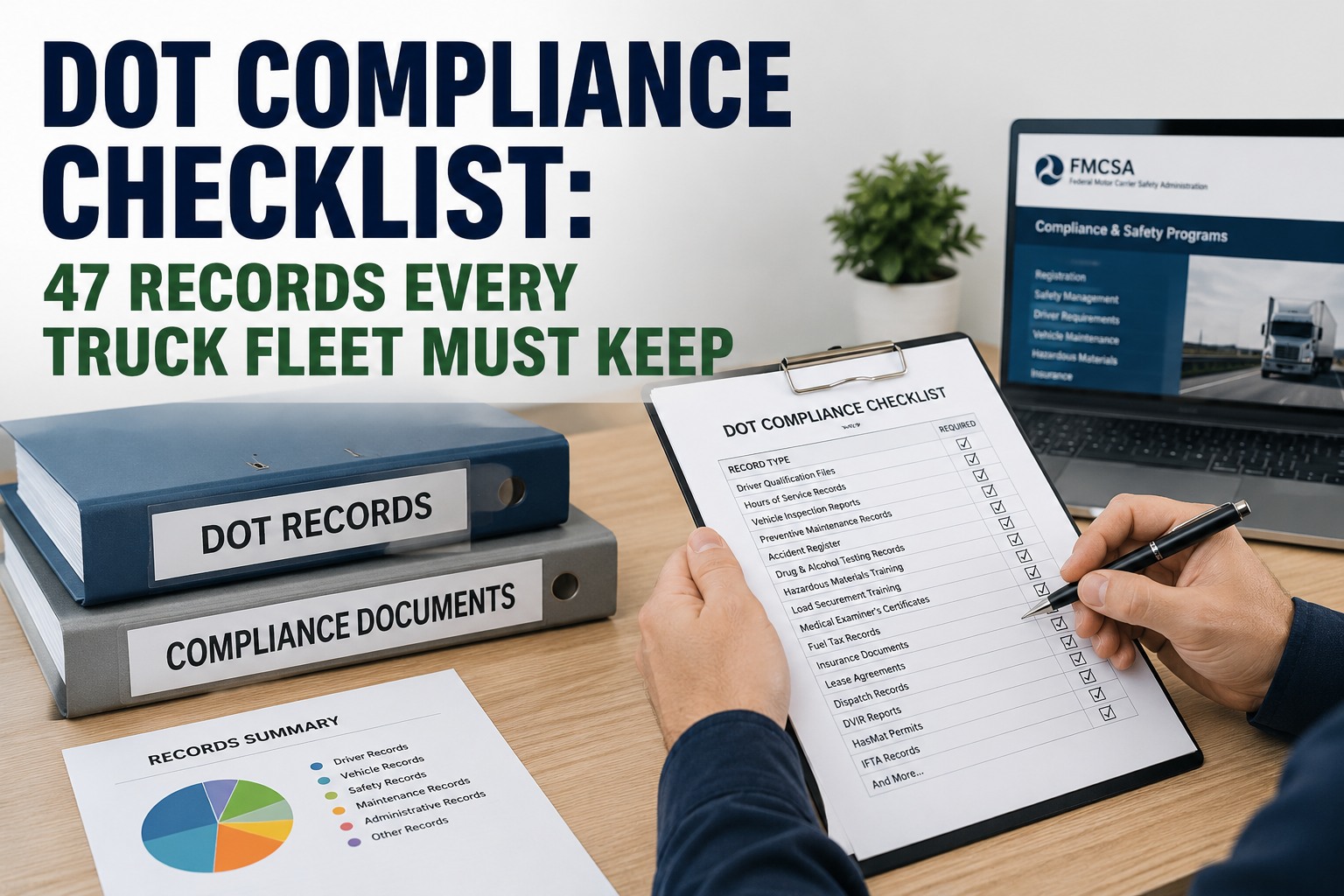
Generate complete FMCSA / PHMSA / OSHA compliance package for any vehicle, driver, or date range in under 60 seconds. The difference between passing audit and adverse inference.
Telematics & ELD Integration
Connects to Geotab, Samsara, Verizon Connect, Motive — consolidates ELD data, GPS, engine diagnostics into one compliance view. Avoids ripping and replacing existing hardware.
Defect Trend Analytics
Recurring defects by component, vehicle, driver, route. Surface wear patterns before they cause roadside violations. Critical for CSA Vehicle Maintenance BASIC scoring.
Spill / Incident Workflow
EPA SPCC compliance, immediate notification workflows for releases, hazardous waste manifest tracking, response action documentation. Field incidents go from text-message chaos to controlled workflow.
Built for oil & gas. All 10 features included.
Truck Inspection & Maintenance covers every hazmat-specific feature on this list — DVIR templates for tank trucks, offline capability, photo evidence, certification tracking, audit export. Free for up to 3 vehicles. Contact support to plan your hazmat fleet rollout.
Paper DVIR vs Digital Hazmat Inspection — Side-by-Side
The FMCSA's 2026 eDVIR final rule didn't ban paper — but the cost of staying on paper for a hazmat fleet has become operational, not theoretical. Compare the two on the dimensions that matter for audit defense and incident response:
Legal — but Operationally Exposed
Audit-Ready Compliance
Hazmat-Specific Compliance Items the Software Must Track
Beyond the FMCSA 11-item checklist, hazmat operations carry compliance items that paper systems routinely miss. The platform must track each — by vehicle, by driver, by tank, by load:
The Hazmat Fleet ROI — 20 Tank Trucks, Year 1
Hazmat ROI math is unusually defensible because every avoided incident is a documented, regulated, dollar-quantified event. The numbers below are for a 20-truck oil & gas / hazmat operation — typical mid-size crude or fuel hauler:
Frequently Asked Questions
Is electronic DVIR legal for hazmat fleets in 2026?
Yes — explicitly. The FMCSA's final rule (Docket FMCSA-2025-0115) published February 19, 2026 and effective March 23, 2026 authorizes electronic DVIRs across all motor carriers including hazmat. ATA, OOIDA, and National Tank Truck Carriers all supported the rulemaking. Paper DVIRs remain legal, but eDVIRs are now the operational standard.
What's the most important hazmat-specific feature in inspection software?
Cargo tank certification calendar tracking (49 CFR 180.407 / 180.409). A lapsed external visual or hydrostatic test invalidates the tank certification — meaning the truck is operating illegally regardless of how clean the DVIR is. Manual calendar tracking misses these. Software-enforced auto-alerts at 90/60/30 days before expiration is the audit-defense difference.
Does the software need to work offline at remote well sites?
Absolutely. Hazmat fleets operating in the Permian, Bakken, Eagle Ford, Marcellus and other basins regularly inspect at lease-road sites with no cell signal. Offline-capable apps complete the full DVIR — photos, signatures, defect logs — and sync automatically when connectivity returns. Without offline mode, drivers either skip documentation or submit incomplete reports, both creating audit exposure. Sign up free to test offline mode at your sites.
What's the typical implementation timeline for hazmat fleets?
48-72 hours for digital DVIR deployment, 2 weeks for full hazmat-specific templates, endorsement tracking, and integration with existing ELD/telematics. Most platforms run a fixed-scope onboarding — no months-long customization required. First measurable compliance and documentation improvements within 30-60 days.
What's the penalty exposure for a hazmat fleet running paper DVIRs?
Significant. Failure to complete a DVIR carries up to $1,270/day. Falsifying a defect = up to $12,700. Failing to repair a reported defect = up to $15,420. Hazmat-specific violations (placarding, cargo tank certification, endorsement lapses) layer on top with civil penalties up to $25,000 per violation. The full penalty stack for an audit-flagged paper fleet can run six figures inside a single review cycle.
How does Truck Inspection & Maintenance support oil & gas specifically?
The platform includes pre-built DVIR templates for tank trucks, vacuum trucks, frac pumps, kill trucks, and crude haulers. Cargo tank certification calendars (180.407, 180.409) with auto-alerts. Hazmat (H) and Tanker (N) endorsement tracking with dispatch blocking on expiration. Offline-capable mobile app for remote sites. Spill/incident workflows for SPCC compliance. One-click audit export for FMCSA, PHMSA, OSHA, EPA. Talk to our team for oilfield-specific configuration.
Run hazmat fleet inspections on software built for them.
Truck Inspection & Maintenance covers all 10 essential features — hazmat DVIR templates, offline capability, photo evidence, endorsement tracking, cargo tank calendars, 3-signature chain, audit export. Free for up to 3 vehicles. No hardware. No contracts.