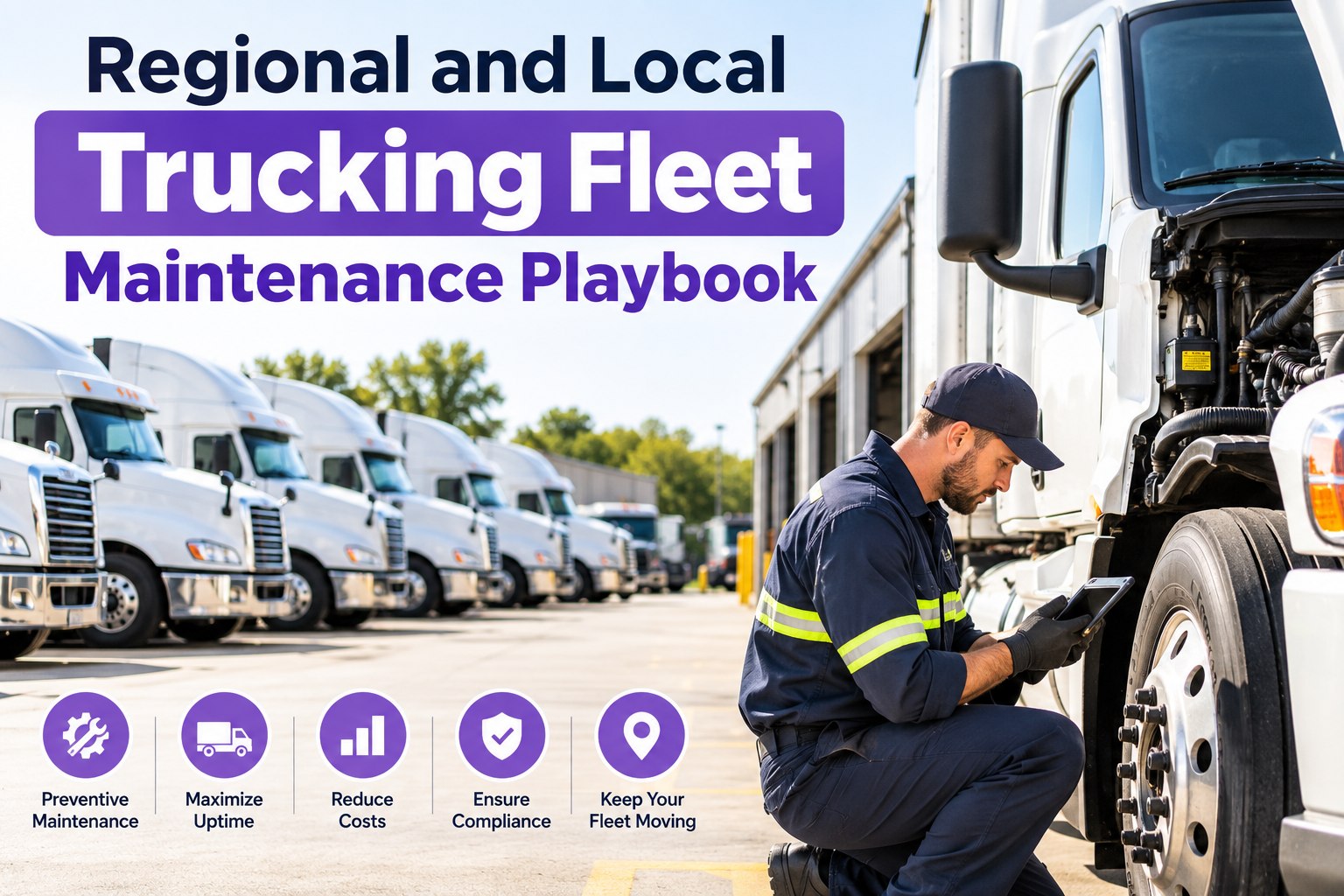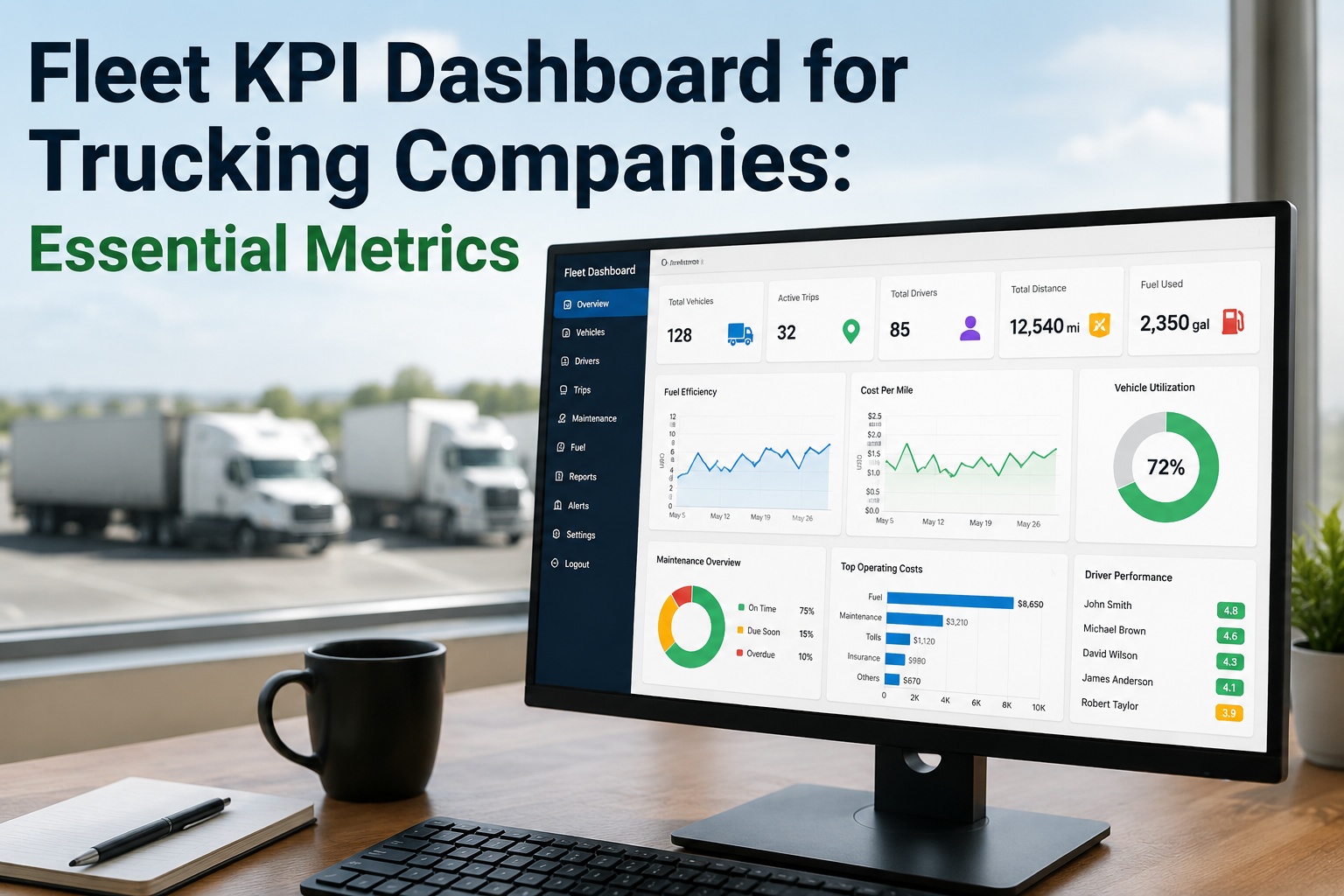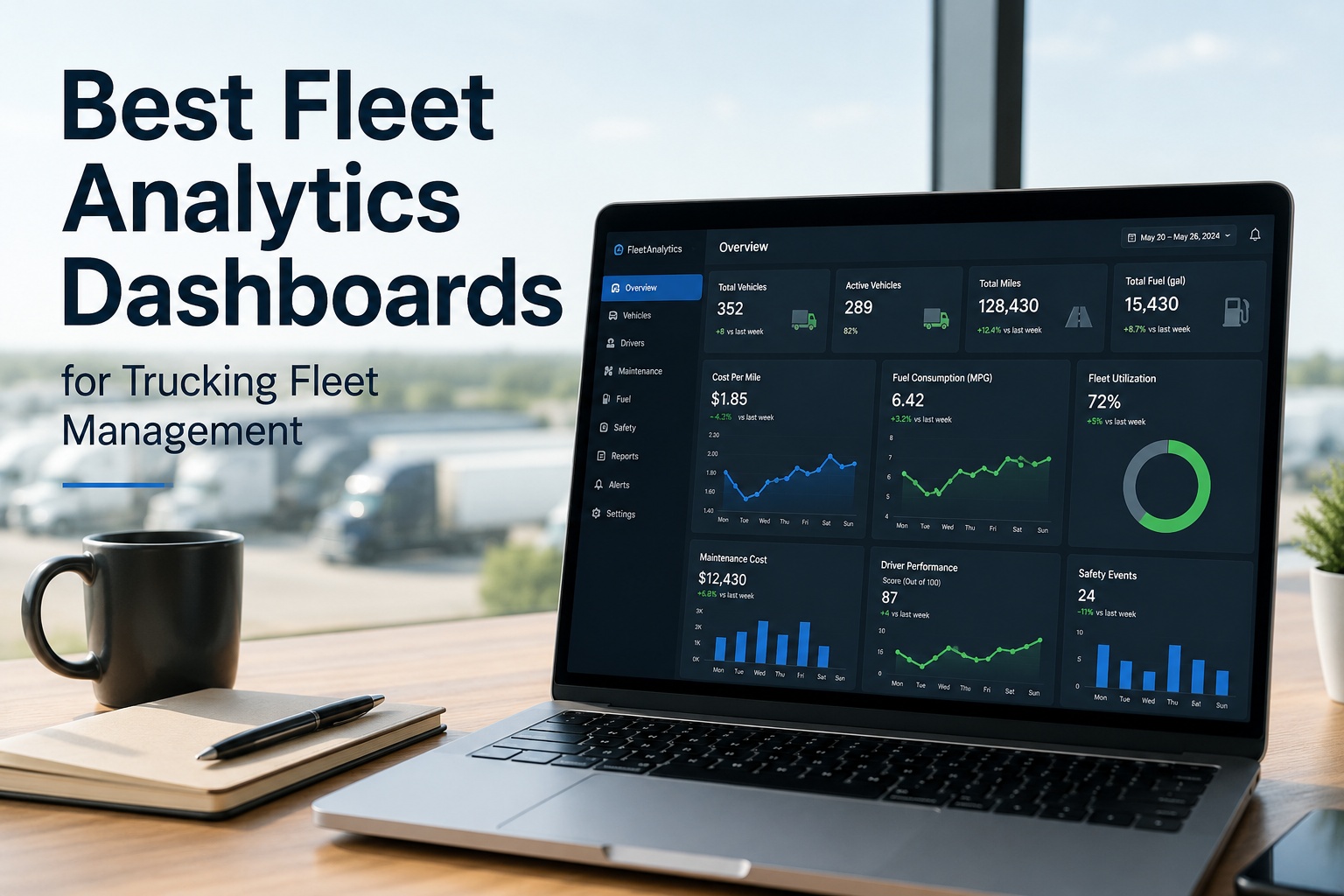
Commercial trucking liability premiums have climbed to record levels — the industry hit 10.2 cents per mile in 2024, up nearly 38% over the prior decade, and 2026 renewal cycles have brought further sticker shock for fleets carrying any CSA BASIC above the intervention threshold. What's changed is not just the price. It's how underwriters decide it. The old model priced by fleet size, radius, and loss runs. The new model prices by evidence — specifically, evidence that maintenance and inspection discipline is real, documented, and repeatable. A fleet that can produce a defensible DVIR chain, a 95%+ on-time PM record, and a clean vehicle-maintenance BASIC often gets 15–30% off comparable carriers who can't. This guide walks through exactly what underwriters look for in the maintenance section of your renewal package, how DVIR and PM discipline translate into pricing, and how Truck Inspection & Maintenance produces the audit-ready evidence file underwriters actually reward. Start a free trial to see the reporting your broker will thank you for.
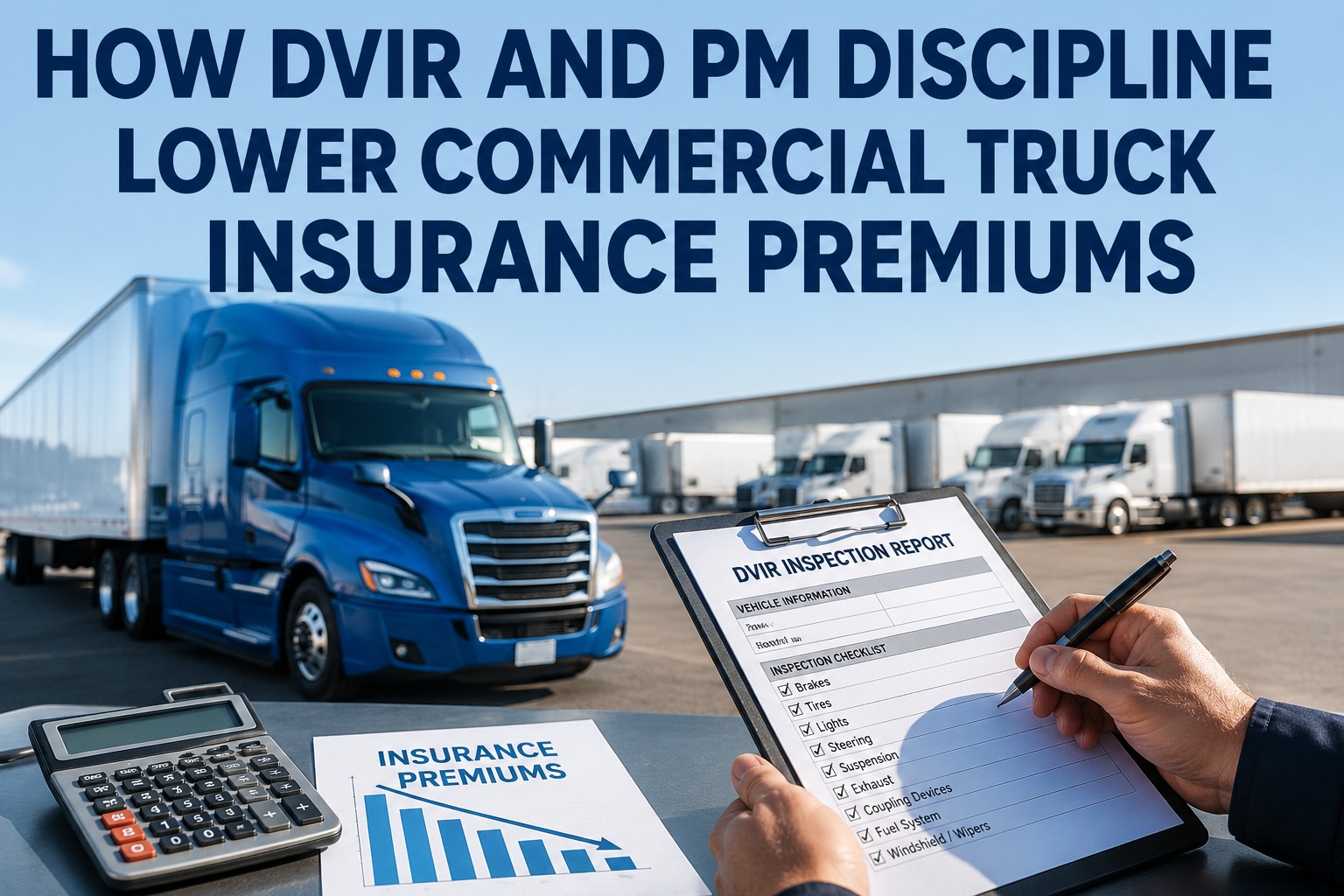
How DVIR and PM Discipline Lower Commercial Truck Insurance Premiums
Commercial truck insurers now reward fleets with documented DVIR and PM discipline. Learn what underwriters actually check, how to structure the evidence they'll accept, and how to turn maintenance rigor into a measurable premium reduction at your next renewal.
Why Underwriters Now Price by Evidence, Not Just Loss History
Ten years ago your premium came off three years of loss runs, radius, and commodity — with maintenance treated as an assumption. That changed. Nuclear verdicts, rising litigation frequency, and 14 straight years of underwriting losses in commercial auto pushed insurers toward a more forensic model. They now sort every carrier into three tiers before they quote, and where you land depends on what your evidence file looks like.
Competitive renewals · 0–5% increase
- All CSA BASICs below intervention threshold
- Zero at-fault losses in prior 36 months
- Documented DVIR chain and 95%+ PM compliance
- Telematics data shared, dashcam program active
Market renewals · 10–20% increase
- Most BASICs clean; one under threshold with trend
- Limited claim frequency, no severe losses
- PM tracked but under 90% on-time
- DVIR compliance present, chain integrity variable
Surcharge or non-renewal · 30–50%+
- One or more BASICs above intervention threshold
- Recent losses or repeat DVIR/PM violations at roadside
- Paper DVIRs, missing repair certifications
- Reduced market — few carriers willing to quote
The Six Data Points Underwriters Actually Look At
Ask a commercial trucking underwriter what they open first on a renewal file, and they'll name the same six data points every time. Each maps directly to something your DVIR and PM discipline either proves or leaves unproven. Getting these six right is the game.
Your CSA vehicle-maintenance percentile is the single strongest signal that your PM program is working — or isn't. Underwriters check this before they check anything else in the maintenance section.
Out-of-service percentage at roadside inspection. A rate above the national average is treated as evidence that pre-trip DVIRs aren't catching defects the way they should.
Percentage of scheduled preventive maintenance completed within the target window. 95%+ is preferred-tier territory; below 85% raises questions about program discipline.
Percentage of defect-flagged DVIRs with a documented repair certification and next-driver acknowledgment. A broken chain is a plaintiff attorney's exhibit A.
Percentage of units with a current 396.17 annual inspection on file, signed by a technician whose 396.19 qualifications are documented. Both parts get checked.
Same fault on the same unit within 90 days. Underwriters read this as either a maintenance-program gap or a specification issue — either way, priced in.
What "Discipline" Looks Like on the Ground
Underwriters don't just want the numbers — they want the process behind them. When a broker submits a maintenance discipline package with the renewal, these are the four artifacts that separate a real program from a spreadsheet exercise.
Every operating day, every vehicle, every defect through the same three-signature chain (driver → mechanic → next driver) with timestamps and GPS proving it happened at the yard.
Intervals set by asset class and duty cycle — not just OEM defaults. Reminders trigger the work, work orders track the completion, dashboards show the on-time rate every month.
Every DVIR-flagged defect routed automatically to a work order, tracked to completion, and closed with a signed repair certification before the truck rolls again.
Every record — DVIR, PM, work order, inspection, tech qualification — retained beyond federal minimums and retrievable in seconds, not days, when the broker asks.
Turn Every DVIR and PM Into Renewal Evidence
Truck Inspection & Maintenance is the fleet maintenance management platform that connects drivers, mechanics, and managers with mobile DVIRs, PM reminders, digital work orders, and audit-ready reports — producing the exact evidence package underwriters reward, month after month, without adding a step to anyone's day.
Assembling the Renewal Evidence Package
Ninety days before renewal, the fleet safety director and the broker sit down with the underwriter's checklist. What lands on that table decides the number. Here's the five-part package top-performing fleets bring — and how our platform generates each piece with no manual assembly. Sign up free to start building yours from day one.
Rolling 12-month view: DVIRs filed, defects flagged, chain-closure rate, average time from defect to repair certification.
On-time PM percentage by month, broken down by asset class. Trend line showing 12-month movement, target vs. actual.
Every unit, most recent 396.17 inspection date, signing technician, and link to that technician's 396.19 qualification file.
Every vehicle-maintenance violation received in the year, the corrective action taken, and the DataQs challenges filed where applicable.
One-page executive summary signed by the safety director confirming the maintenance program, cadence, and oversight schedule.
The Broker's-Eye View: What Not to Do
Brokers see the same self-inflicted mistakes at renewal, year after year. Each one costs premium dollars that better process would have saved. Avoid these five and your renewal conversation starts from a materially better place.
The 90-Day Pre-Renewal Runbook
The single highest-leverage window is the ninety days before renewal. Discipline built in this window compounds directly into the number the underwriter quotes.
Pull your current CSA percentiles and PM compliance. File DataQs challenges on any misattributed violations. Close every open DVIR chain older than 30 days.
Assemble the five-doc evidence package. Walk your safety director through it. Fix any gaps that would show up in a stranger's read.
Send the package to your broker two weeks before submission — not the day of. Give them time to preview it with the underwriter and answer questions before pricing lands.
Frequently Asked Questions
Recent market commentary describes 15–30% reductions for fleets that combine documented maintenance discipline, telematics, and driver coaching — used as a benchmark range, not a guarantee. Your specific savings depend on your carrier, your loss history, your CSA scores, and how well your evidence package tells the story. What is universal: fleets that can't produce the evidence don't get the pricing conversation at all. Start free and build the evidence trail from day one.
Yes. Underwriters treat any CSA BASIC above the intervention threshold as a de facto pricing surcharge — carriers with one BASIC above threshold routinely face 15–40% additions on top of market movement, and multiple BASICs above threshold can trigger non-renewal from preferred carriers entirely. Vehicle-maintenance BASIC is directly driven by DVIR and PM discipline, which makes it one of the fastest to bring back down with a real program.
Then evidence matters even more. A clean score with no supporting documentation gets treated as luck; a clean score with a documented program behind it gets treated as durable and priced accordingly. The fleets that get the deepest preferred-tier discounts are the ones who can prove the score is a result of process — not the ones who assume the score speaks for itself.
Often more, proportionally. Small fleets carry higher per-unit rates to start with, so a preferred-tier reclassification moves a bigger percentage of the total premium. Underwriters also treat a small fleet with excellent discipline as a signal of an owner who's genuinely engaged — which counts for more than raw scale. Talk to us about how small fleets use the platform to punch above their weight at renewal.
CSA BASICs use a 24-month rolling window, so full percentile improvement takes about that long. But most underwriters credit trend and program evidence within the first renewal cycle — meaning a fleet that installs a real DVIR and PM program in Q1 can present measurable evidence and improved discipline at renewal, even before the CSA percentile has fully recovered. The evidence starts working before the score does.
Give Underwriters the Evidence They Reward
Truck Inspection & Maintenance is purpose-built for trucking — connecting drivers, mechanics, and managers with mobile DVIRs, PM reminders, digital work orders, and the audit-ready reporting that turns maintenance discipline into a renewal-ready evidence package. Your broker gets the file they need, your underwriter gets the proof they price on, and your fleet keeps the difference.