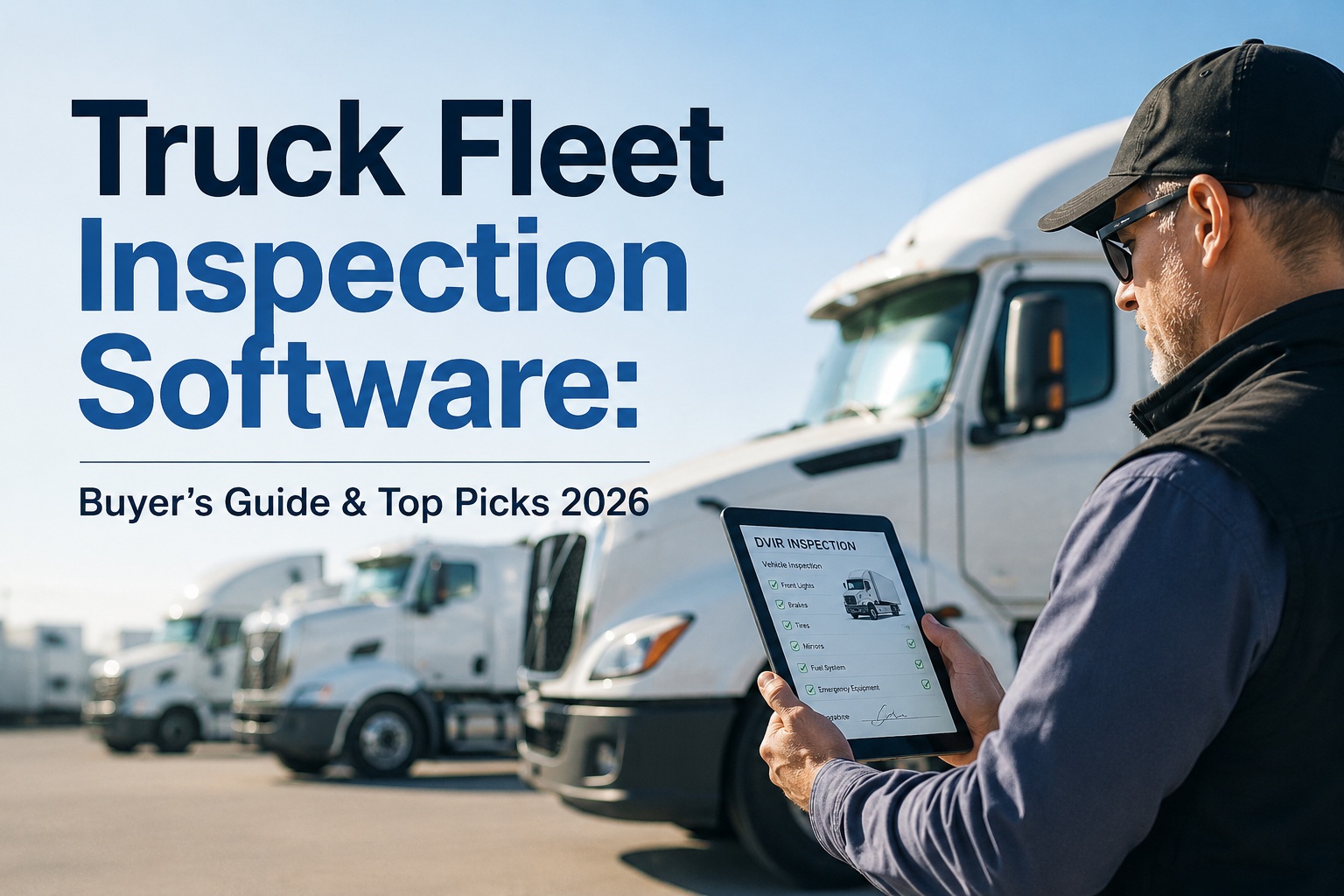
The clipboard on the dashboard, the carbon-copy DVIR pad in the glove box, the file cabinet of expired CDLs in the corner office — paper isn't just outdated, it's expensive. Industry data shows paper-based fleet operations consume 8-15 hours per week in administrative labor across maintenance documentation, DVIR processing, driver file management, and compliance reporting. At $35-$55/hour for a fleet coordinator, that's $14,560-$42,900 burned annually per coordinator — before you count missed defect reports, lost trip sheets, audit fines averaging $7,155 per DOT violation, and $1,000-$16,000 per DVIR infraction. The 2026 FMCSA final rule officially authorized electronic DVIRs, and the new CSA "Driver Observed" scoring category now grades inspection quality directly on your safety rating. Truck Inspection & Maintenance digitizes the entire trucking workflow — every inspection, every defect, every repair, every signature — so nothing important lives in a glove box or a manila folder. Start your free trial and put the clipboards in the recycle bin.
Eliminating Paper Across Trucking Operations
The fleet manager's guide to ditching clipboards, file cabinets, and the manila-folder shuffle.
Where Paper Hurts Most — The Hidden Cost Map
Paper isn't one cost line — it's a slow leak in five different departments at once. Most fleet managers see only the obvious one (filing time) and miss the four bigger ones. Truck Inspection & Maintenance digitizes all five, so the savings stack across the operation:
HOS infractions average $19,277 each. Paper DVIR gaps trigger audit findings that compound across reviews.
Filing, data entry, retyping defect reports, searching for missing forms. Per coordinator, every week.
Driver writes defect → paper goes to office → office transcribes → shop schedules → repair. Days lost in transit.
Auditor asks for 90 days of records. Paper fleets spend half a day in a file cabinet. Digital fleets export in 60 seconds.
FMCSA fines per DVIR infraction. "We can't find it" is the most expensive sentence in any audit.
Maintaining Satisfactory safety rating (instead of Conditional) reduces premiums materially. Digital records protect the rating.
The 6 Paper Workflows That Bleed the Most Time
Not all paper is equally painful. These six workflows consume more time, create more risk, and break more often than anything else in fleet operations. Truck Inspection & Maintenance replaces each one with a tracked, timestamped, audit-ready digital flow:
Driver DVIRs
PM Records & Work Orders
Driver Qualification Files
Fuel & Expense Receipts
Repair & Parts Tracking
Compliance Reports
Paper vs Digital — The Defect Cycle, Step by Step
The single biggest argument for going paperless is speed. A defect found on a Monday pre-trip can sit for days waiting for paper to travel from cab to office to shop. Here's the same defect, handled both ways, side by side:
Paper Workflow
Digital Workflow
Trade the clipboard for a tracked, audit-ready workflow.
Truck Inspection & Maintenance replaces paper DVIRs, PM logs, driver files, and repair tickets with a single digital system — searchable from any device. Free for up to 3 vehicles, no hardware, no contracts. Contact support to plan your rollout.
The Digital Workflow Map — What Actually Gets Digitized
"Going paperless" sounds vague until you see the specific workflows that get replaced. Here's the map most fleets follow when transitioning — each branch becomes a tracked, timestamped digital flow inside Truck Inspection & Maintenance:
The 4-Week Transition Roadmap — How Fleets Actually Switch
Going paperless doesn't require a project plan, an IT team, or a system overhaul. Most fleets complete the transition in 2-4 weeks. Here's the realistic week-by-week sequence Truck Inspection & Maintenance customers follow:
Setup & Configure
Add assets, configure inspection templates per vehicle type, set up PM intervals, import driver list. Most fleets finish setup in 2-4 hours total.
Pilot With 3-5 Drivers
Roll out to a small driver group. Run paper and digital in parallel. Train drivers in 15 minutes. Refine templates based on real feedback.
Full Driver Rollout
All drivers on the digital workflow. Paper retired for new inspections. Existing paper records scanned or archived for the audit window.
Integrate Maintenance & Reporting
Shop adopts digital work orders. Compliance reports start auto-generating. First clean DOT audit export tested. Filing cabinet officially retired.
The Paperless ROI Stack — What 25 Trucks Save in Year 1
Stacked across compliance, admin, defect cycle, and audit prep, the savings from going paperless show up faster than any other fleet-tech investment. Realistic Year 1 numbers for a 25-truck fleet making moderate (not optimal) improvements:
Frequently Asked Questions
Is digital DVIR actually FMCSA-compliant?
Yes — the February 2026 FMCSA final rule explicitly authorized electronic DVIRs, removing any remaining ambiguity. Digital DVIRs that capture all 11 required inspection components, driver signature, mechanic certification, and timestamped record retention are fully compliant. Truck Inspection & Maintenance is built to the standard from day one.
How long does going paperless actually take?
2-4 weeks for most fleets. Configuration takes hours, not days. Driver training runs about 15 minutes per driver. The longest part is usually convincing the holdouts on the team — once they see audit prep go from days to seconds, the conversation ends. Sign up free to start your pilot this week.
What about existing paper records — do I have to scan everything?
No. Most fleets keep paper records in physical storage for the FMCSA-required retention window (typically 3 months for DVIRs, 6 months for HOS, longer for DQ files) and just start fresh digitally. Within 90 days the entire active record set is digital. Historical paper stays in the cabinet until retention expires.
Will my older drivers actually use a mobile app?
Yes — this is a common concern and almost never a real problem. The platform UI is designed for tap-and-go use; most drivers complete their first pre-trip digital DVIR in under 10 minutes with no training. The faster-than-paper benefit (no clipboard, no handwriting, no carbon copy) converts skeptics quickly.
What does a DOT audit look like when records are digital?
Roughly five minutes. The auditor names a date range and a record type; you click "export" and hand them a PDF of every DVIR, work order, and signature for the period. Paper fleets spend hours searching cabinets and explaining gaps. Digital fleets finish audits before lunch.
Is this worth it for a 5-truck fleet?
Yes — and the math is actually better at small fleet sizes because admin overhead is proportionally higher per truck. The free tier covers up to 3 vehicles, so a small fleet can pilot the full workflow at zero cost. Talk to our team for a 5-minute ROI walkthrough sized to your operation.
Put the file cabinet in storage. Make audits a five-minute task.
Truck Inspection & Maintenance digitizes every DVIR, PM log, work order, signature, and compliance record on every truck — searchable from any device. Free for up to 3 vehicles. No hardware. No contracts.