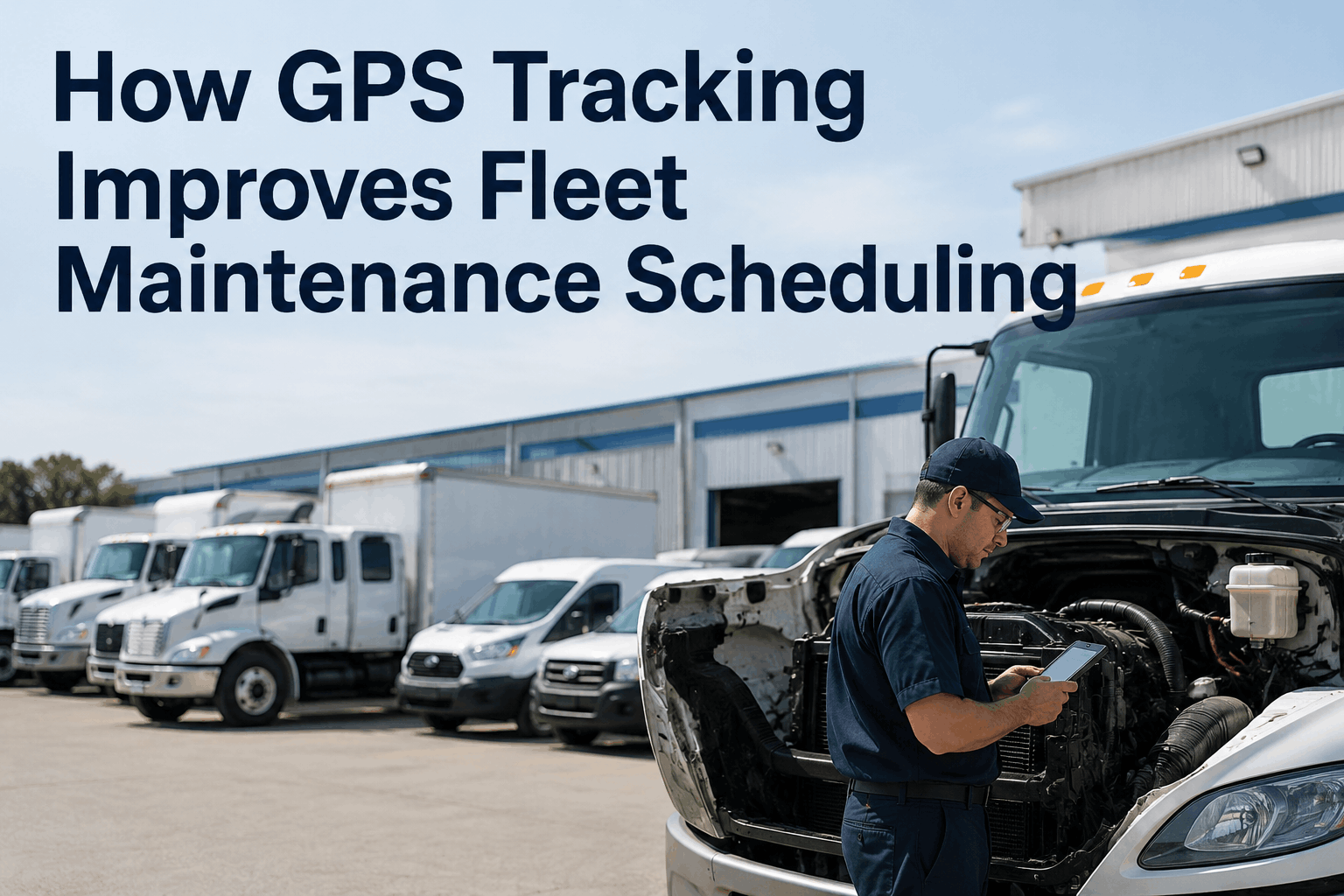
GPS tracking by itself is just a map dot. The real value emerges when GPS feeds maintenance — when location, mileage, engine hours, and diagnostic data automatically trigger service workflows. Most fleets pay $25-$45 per vehicle per month for telematics but extract less than 30% of its operational value because the GPS system and the maintenance system don't talk to each other. The vehicle hits 10,000 miles, the GPS unit knows it, but the PM scheduler stays silent — until a manual log catches up two weeks later. By then, the oil change is overdue, the engine is running on degraded fluid, and the next breakdown becomes inevitable. Truck Inspection & Maintenance closes that gap by integrating directly with major GPS/telematics platforms — Geotab, Samsara, Motive, Verizon Connect, Fleetio — so mileage and hours flow into PM workflows automatically, work orders auto-generate when thresholds hit, and you finally get the maintenance value you've been paying for telematics to provide. This guide explains exactly how GPS tracking improves fleet maintenance scheduling and why integration is the difference between paying for telematics and benefiting from it. Talk to our team for a GPS integration walkthrough on your fleet.
How GPS Tracking Improves Fleet Maintenance Scheduling
From map dot to maintenance trigger — Truck Inspection & Maintenance closes the gap.
What GPS Tracking Actually Delivers
GPS tracking isn't just a dot on a map. Modern telematics units stream continuous data that — when integrated into a maintenance platform — transforms PM scheduling from manual to automatic. Here's what GPS units capture:
The Old Way vs The Integrated Way
Most fleets run GPS tracking and PM scheduling as separate disconnected systems. The cost of that gap is invisible until you compare side-by-side what disconnected vs integrated looks like:
GPS + Manual PM
GPS + Truck Inspection & Maintenance
The 6 Maintenance Workflows GPS Powers
Once GPS data flows into Truck Inspection & Maintenance, six specific maintenance workflows shift from manual to automatic. Each one alone justifies the integration; combined, they transform fleet operations:
Automatic Mileage-Based PM
GPS pulls live odometer. Truck Inspection & Maintenance auto-fires PM-A at 10K, PM-B at 25K, PM-C at 50K, PM-D at 100K. Zero manual entry. Zero missed thresholds.
Engine-Hours PM Triggers
For idle-heavy equipment. GPS units read engine hours from CAN bus. PM triggers fire at 250, 500, 1,000, 2,000 hours — catching wear that mileage tracking misses entirely.
DTC-Driven Corrective Work Orders
When the GPS unit reads an engine fault code, Truck Inspection & Maintenance auto-creates a corrective work order with the code, severity, and likely cause. Mechanic gets the alert before the driver even notices.
Geofence-Triggered Inspections
When a truck enters or exits a job site, our platform can auto-prompt a site-specific inspection. Critical for construction fleets where on-road FMCSA and on-site OSHA requirements differ.
Driver Behavior PM Adjustment
Harsh braking events flag accelerated brake wear. Hard acceleration flags transmission stress. Truck Inspection & Maintenance tightens PM intervals on aggressive-driver vehicles automatically.
MPG Drop Early Warning
When fuel economy drops 8%+ on a vehicle, our platform flags it for inspection. Most common causes: clogged filters, dragging brakes, low tire pressure, or DPF issues.
Which GPS Platforms Integrate with Truck Inspection & Maintenance
Direct integrations with major telematics providers eliminate the "buy two systems that don't talk" problem. Our platform pulls data via official APIs — no manual exports, no CSV uploads, no broken connections:
Industry-leading commercial telematics. Pulls mileage, hours, DTC, location, idle time. Most popular integration in our customer base.
Modern cloud-native platform with strong driver app. Mileage, hours, location, dashcam events all flow into our PM workflows.
Formerly KeepTruckin. Combined ELD + telematics. Hours of service, mileage, and HOS violations integrated with our compliance tracking.
Enterprise-grade telematics. Mileage, hours, fuel data, DTC alerts all sync. Multi-region support for fleets across multiple states.
Fleet-centric telematics. Direct integration for mileage and PM trigger automation.
Cat, Komatsu, John Deere, Volvo, Mack OEM telematics databases connect directly. No aftermarket hardware required for new equipment.
Stop paying for telematics you can't extract value from
Truck Inspection & Maintenance integrates with Geotab, Samsara, Motive, Verizon Connect, and major OEM telematics — turning GPS data into automated PM, DTC-driven work orders, and real-time fleet visibility. Sign up free to connect your first 3 vehicles in 10 minutes.
The Real Savings — Quantified
GPS-driven maintenance scheduling delivers measurable financial returns across six categories. The numbers are conservative — fleets running structured integration through our platform consistently hit the upper ranges:
Conservative composite estimate: A 25-truck fleet running Truck Inspection & Maintenance with GPS integration saves $150,000-$300,000 in year one across all categories — typically 5-10x the platform cost.
How GPS-Driven Maintenance Actually Works
The integration is simpler than it sounds. Here's the technical flow from GPS unit to completed PM in Truck Inspection & Maintenance:
Common Mistakes Fleets Make with GPS + Maintenance
Most fleets that struggle with GPS-driven maintenance make one or more of these five mistakes. Truck Inspection & Maintenance solves each:
Frequently Asked Questions
No, but it dramatically improves it. Manual mileage tracking misses 30%+ of PM triggers due to driver entry errors. GPS-based automatic mileage import eliminates that gap entirely. Truck Inspection & Maintenance works without GPS but performs at full capacity with it. Contact our specialists to evaluate the right setup for your fleet.
Major commercial telematics: Geotab, Samsara, Motive (formerly KeepTruckin), Verizon Connect, Fleetio Go. Plus OEM telematics from Caterpillar, Komatsu, John Deere, Volvo, and Mack. Most integrations pull mileage, engine hours, fault codes, location, and driver behavior data via official APIs — no manual exports required.
A 25-truck fleet typically saves $150,000-$300,000 annually across breakdowns prevented, repair cost reduction, fuel efficiency, insurance savings, admin labor, and extended asset life. Most fleets recover the cost of Truck Inspection & Maintenance multiple times over within the first year. Sign up free to calculate your specific ROI.
The GPS unit captures mileage and engine hours continuously. Truck Inspection & Maintenance pulls this data via API every hour (or real-time for critical events). When any vehicle hits a PM threshold — 10K miles, 250 engine hours, 30 calendar days, whichever comes first — a work order auto-generates with the right checklist, parts list, and technician assignment.
Yes. Underwriters credit verifiable telematics adoption with 10-30% premium discounts. Combined with documented PM through Truck Inspection & Maintenance, total discount stacking typically hits 30-40% on baseline premium. Our platform exports the documentation underwriters need at renewal — DVIR completion rates, PM adherence, defect cycle times.
Yes — and you should. Harsh braking events drive accelerated brake wear; aggressive acceleration stresses transmissions; excessive idling adds engine hours without miles. Truck Inspection & Maintenance correlates driver behavior patterns with vehicle wear data to adjust PM intervals automatically. Talk to our team for behavior-based maintenance setup.
Stop paying for telematics that doesn't talk to your maintenance system.
Truck Inspection & Maintenance integrates with every major GPS platform — Geotab, Samsara, Motive, Verizon Connect, OEM telematics. Automatic PM triggers. DTC-driven work orders. Real-time fleet visibility. Free for up to 3 vehicles.