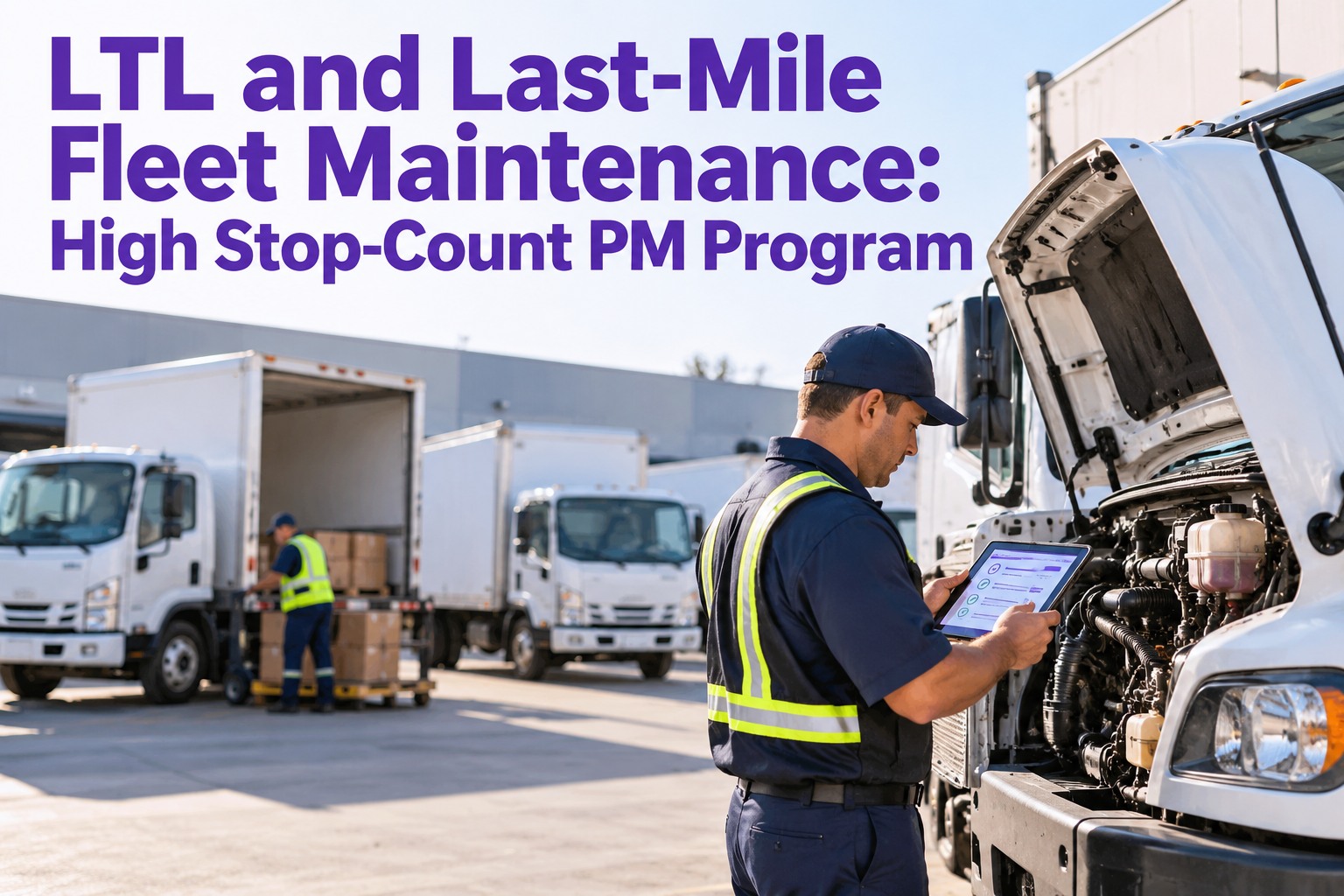
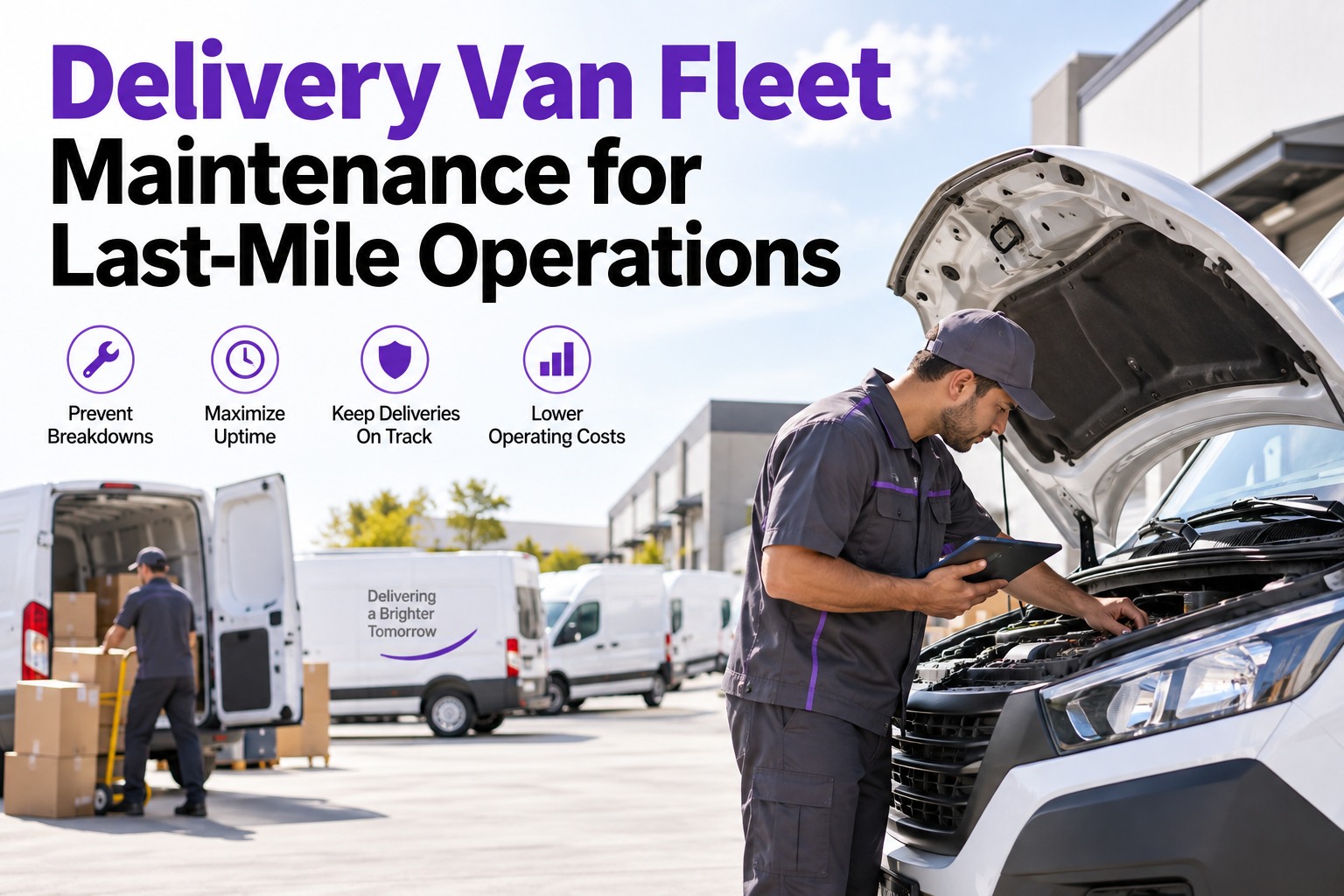
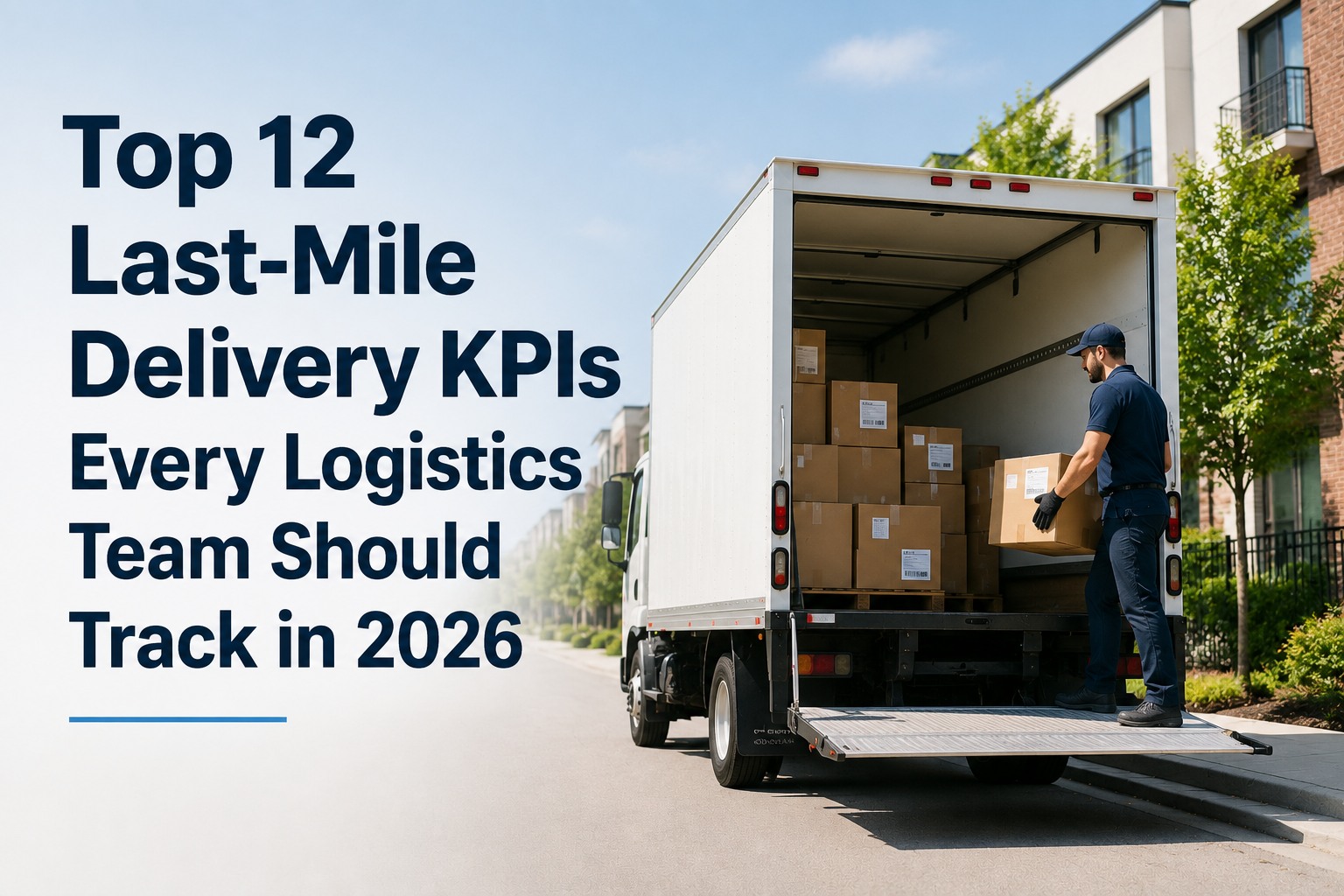
Two trucks log 60,000 miles in a year. One runs long-haul lanes; the other does 120 stops a day on a last-mile route. On paper their PM schedules look identical — but the last-mile truck has cycled its brakes, doors, and lift gate tens of thousands more times, idled for hundreds of hours the odometer never counted, and worn its engine oil down on trips too short to burn off moisture. Mileage-based PM quietly under-services high-stop fleets, and the bill arrives as a brake job at 30,000 miles or a lift gate that fails on a loading dock. This guide covers why stop count wears a truck faster than mileage suggests, which parts pay for it first, and the PM program tuned for high-stop-count duty — with Truck Inspection & Maintenance Management Software (TIM) scheduling it. Start free and tune your PM to real duty with TIM.
TIM · High Stop-Count PM
Your Odometer Doesn't Count Stops. Your Brakes Do.
LTL and last-mile trucks wear out on a different clock than long-haul rigs — every stop is a brake cycle, a door cycle, a lift-gate cycle, and every idle hour is engine wear the mileage never shows. A PM schedule built on miles alone services these trucks too late. TIM lets you schedule PM on the triggers that actually match the duty — stops, engine hours, and time, not just distance — so the brake job happens before the roadside, not after it.
Why Mileage Lies for High-Stop Fleets
The odometer measures distance, but distance isn't what wears a delivery truck. Three things happen on a high-stop route that miles simply don't capture — and each one is a component aging faster than the schedule thinks.
01
Every stop is a brake cycleA truck doing 120 stops a day applies its brakes thousands of times a week. Pad wear tracks cycles and heat, not the miles between stops — so a low-mileage route can still eat brakes fast.
02
Idle hours don't move the odometerWaiting at docks, running the lift gate, keeping the cab conditioned — the engine accrues hours and wear while the mileage stands still. Severe-duty wear is counted in hours, not just distance.
03
Short trips never let oil warm upOn stops-heavy routes the engine rarely reaches full temperature, so moisture and combustion acids build up in the oil instead of burning off — degrading it well before the mileage interval is due.
This is textbook "severe service" — short trips, stop-and-go, extended idle — the exact profile most OEM schedules say to service on the shorter, not the standard, interval.
What Wears First on a High-Stop Truck
High stop counts don't wear everything evenly — they punish the parts that cycle with every delivery. These are the components that fail first on LTL and last-mile duty, and the ones a tuned PM program watches hardest.
◑
Brakes
The number-one casualty. Every stop is a heat-and-wear cycle; pads and rotors on a dense route can need attention far sooner than mileage predicts.
Watch by: stop count + inspection
▤
Lift gates
Every delivery is a full up-down cycle under load. Hydraulics, cylinders, and controls wear on cycle count — a failed gate strands a route mid-shift.
Watch by: cycle count + function test
▢
Doors & latches
Roll-up and swing doors open and shut at every stop. Rollers, seals, latches, and hinges loosen and fail from sheer repetition, not road miles.
Watch by: cycle count + inspection
◕
Engine oil & transmission
Idle hours and stop-start cycles load the engine and transmission thermally and degrade fluids faster — wear the odometer never reflects.
Watch by: engine hours + time
◍
Tires
Constant acceleration and braking scrub tread and stress sidewalls harder than steady cruising, and low-speed turns add scrub in tight delivery zones.
Watch by: inspection + rotation
◒
Suspension & steering
Curbs, driveways, and constant low-speed maneuvering pound bushings, ball joints, and shocks that a highway truck barely touches.
Watch by: inspection + time
Notice the pattern: the parts that wear first are triggered by cycles and hours, not miles. Contact our team to set cycle- and hour-based PM in TIM.
Schedule PM on the Trigger That Matches the Wear
The fix isn't more PM — it's PM triggered by the right meter. A single truck should run several PM clocks at once, each tied to the wear it actually tracks. Here's how to match trigger to component.
MILES
Distance-driven wearTire tread, driveline, alignment — the wear that really does track distance. Keep it, but don't let it govern everything.
HOURS
Run-time & idle wearEngine oil, transmission, cooling — anything that ages while the engine runs, moving or not. Essential for idle-heavy routes.
CYCLES
Actuation wearLift gates and doors wear per open-close, not per mile. A cycle count catches them before they strand a route.
TIME
Calendar wearFluids, seals, and rubber degrade on the calendar regardless of use — the backstop when a truck is used lightly but ages anyway.
One Truck, Several PM Clocks — Running at Once
A high-stop truck can't be managed on a single mileage number. TIM lets you set PM triggers per component — miles for tires, engine hours for oil, cycle or time for lift gates and doors — and whichever comes due first raises the work order. So the brake inspection fires on the route's real stop-and-go intensity, the oil change fires on engine hours including idle, and nothing waits for a mileage number that a last-mile truck reaches too slowly to matter.
Severe-Service Intervals — Shorter for a Reason
Most OEM manuals carry two columns: normal and severe. High-stop LTL and last-mile duty is squarely severe service, which usually means shorter intervals on the wear items. These are representative directions — always confirm against your own OEM schedule.
| Item | Typical "normal" interval | Severe-service direction | Best PM trigger |
| Engine oil |
7,500–10,000 mi |
About half — roughly 3,000–5,000 mi |
Engine hours + time |
| Transmission fluid |
30,000–60,000 mi |
About half — roughly 15,000–30,000 mi |
Engine hours + miles |
| Brakes |
Mileage-based check |
Inspect far more often on dense routes |
Stop count + inspection |
| Air filter |
15,000–30,000 mi |
Shorter in dusty / urban duty |
Miles + inspection |
| Lift gate |
Not on OEM truck schedule |
Service on cycles & function test |
Cycle count + time |
Directional only, drawn from general severe-service guidance — the exact numbers vary by make, engine, and body. Set your own from the OEM manual and your route data.
How TIM Runs It
A PM Program Built for High-Stop Duty
TIM lets an LTL or last-mile fleet run PM on the meters that match the wear — and turns every inspection finding into a tracked repair on the same record.
Multi-trigger PMMiles, engine hours, cycles, or time per component — whichever comes due first raises the work order.
Severe-service profilesSet shorter intervals for high-stop routes so wear items get serviced on the right, not the normal, schedule.
Lift-gate & door PMTrack the cycle-driven parts long-haul schedules ignore — the ones that strand a last-mile route.
Inspection-to-work-orderA brake or gate finding on a DVIR becomes an assigned repair, not a note that waits for the mileage PM.
Per-unit historyEvery truck's real duty and repair record in one place, so intervals get tuned to how each route actually runs.
PM compliance visibilitySee which trucks are due and which slipped, across the whole fleet, before a missed PM becomes a breakdown.
Frequently Asked Questions
Why isn't mileage enough for a last-mile fleet?
Because distance isn't what wears these trucks. A last-mile route piles up brake, door, and lift-gate cycles and idle hours that the odometer never records — a truck can be low on miles and heavily worn at the same time. Stop-and-go duty also keeps the engine from reaching full temperature on short trips, degrading oil faster than the mileage interval assumes. Mileage still matters for tires and driveline, but on high-stop duty it under-services everything that wears by cycle or by hour, which is most of what fails first.
Start free and schedule PM on real duty with TIM.
What wears out fastest on a high-stop-count truck?
Brakes, first and foremost — every stop is a heat-and-wear cycle, so a dense route can need brake attention far sooner than mileage predicts. Close behind are the cycle-driven parts: lift gates, which take a full loaded up-down at every delivery, and doors and latches, which open and shut at every stop. Engine oil and transmission fluid degrade faster from idle hours and constant stop-start thermal load, and suspension takes a beating from curbs and low-speed maneuvering. The common thread is that these wear by cycles and hours, not by distance.
What is "severe service" and does my fleet qualify?
Severe service is the harder-duty column in most OEM maintenance schedules, and it's defined by conditions like frequent short trips, stop-and-go city driving, extended idling, heavy loads, and dusty or extreme environments. LTL and last-mile operations hit several of those at once, so they almost always qualify — which means the shorter severe-service intervals apply, not the normal ones. If your trucks run dense urban routes with lots of stops and idle time, you should be servicing on the severe column, and treating the normal column as under-maintenance for your duty.
Should I schedule PM by engine hours instead of miles?
Not instead of — in addition to. The right approach for high-stop fleets is multiple triggers running at once: miles for distance-driven wear like tires, engine hours for anything that ages while the engine runs including idle time, cycle counts for lift gates and doors, and calendar time as a backstop for fluids and rubber. Each component is serviced on the meter that actually tracks its wear, and whichever trigger comes due first raises the work order. A single mileage number can't do that, which is why idle-heavy, stop-dense routes need hours and cycles in the mix.
How do I keep lift gates and doors from stranding a route?
Put them on their own PM clock. Lift gates and cargo doors wear per actuation — every delivery is a cycle — so a mileage-based schedule misses them entirely, and they tend to fail mid-shift on a dock rather than in the yard. Schedule a function test and service based on cycle count or time, inspect the hydraulics, cylinders, rollers, seals, and latches on that cadence, and turn any finding into a work order before the part fails. Tracking these cycle-driven components is one of the biggest differences between a long-haul PM program and one built for last-mile duty.
Miles · Hours · Cycles · Time — All at Once
Service the Truck You Actually Run
A last-mile truck and a long-haul rig can log the same miles and be completely different machines underneath. Stops wear brakes, cycles wear gates and doors, idle wears the engine — and a mileage-only schedule sees none of it until something fails on a route. Match the PM trigger to the wear, run the severe-service intervals your duty calls for, and put the cycle-driven parts on their own clock. TIM schedules all of it on one record, so the fix lands before the breakdown.
No credit card required · Free for up to 3 trucks · Mileage, engine-hour, cycle, and time-based PM built in