A container chassis is the most overlooked asset in the intermodal chain — until one fails on the interstate with a loaded box on its back. Roadside failures don't just cost a tow and a repair; they trigger out-of-service orders, CSA points, missed delivery windows, and the kind of customer fallout that loses contracts. The numbers tell the story: roughly 17% of intermodal chassis checked in roadside inspections are placed out of service, and tires alone cause more than half of all roadside breakdowns. The good news is that chassis failures are overwhelmingly predictable — and predictable means preventable. This guide breaks down the "Big Three" defects that ground chassis, the shared-responsibility model that decides who's liable, and the proven prevention strategies that keep your intermodal fleet rolling. Truck Inspection & Maintenance is the system that ties it all together. Talk to our team to build it around your operation.
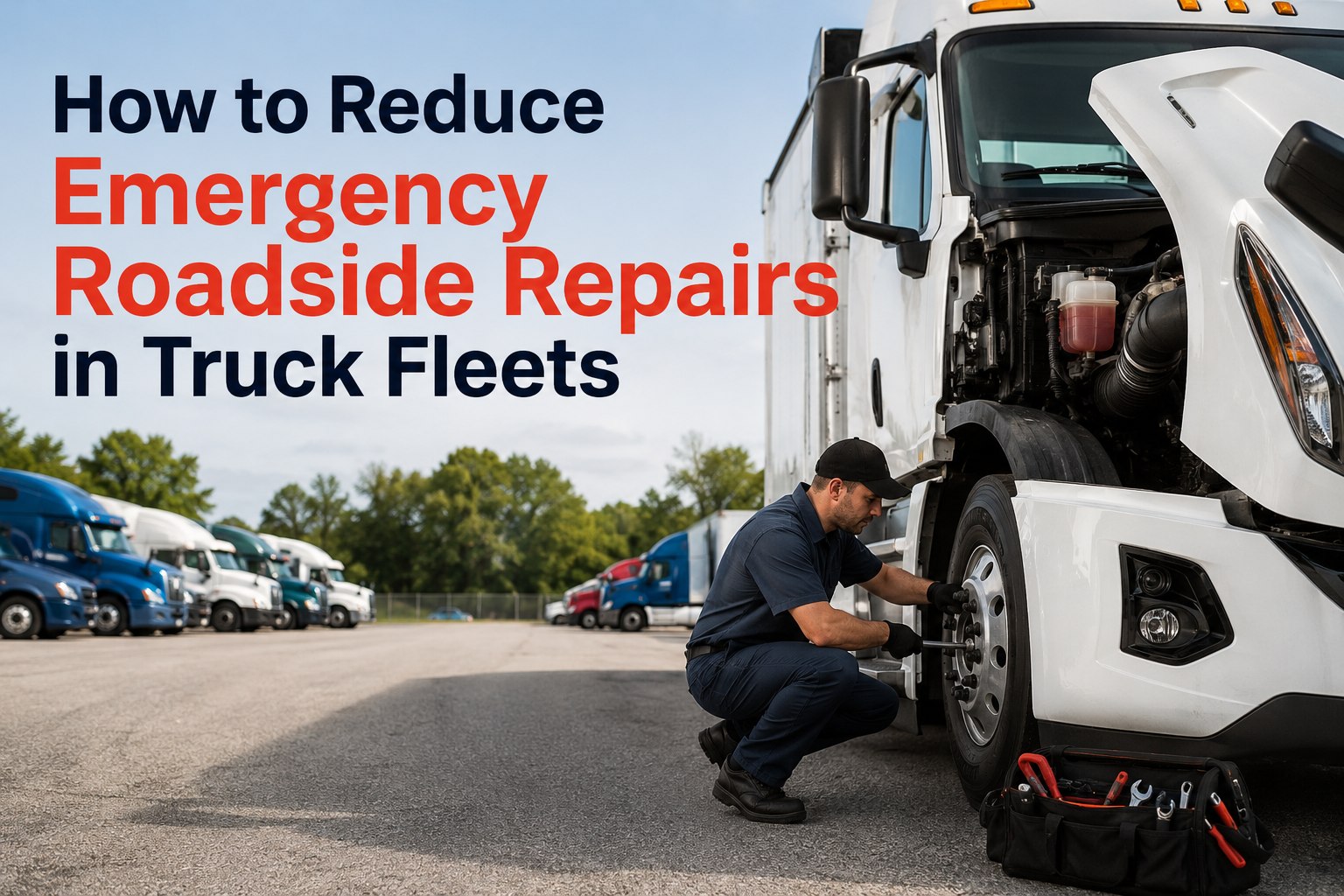
How to Reduce Container Chassis Roadside Failures
Stop the breakdowns before the gate — the Big Three, the rules, the playbook.
The "Big Three" That Ground Chassis
Chassis don't fail in a thousand mysterious ways — they fail in three. Federal and state inspectors consistently find the same defects, and intermodal maintenance pros call them the "Big Three": brakes, tires, and lights. Because a chassis often sits idle for long stretches between loads, these systems degrade quietly while no one's watching. Target these three and you eliminate the overwhelming majority of out-of-service orders.
Tires
The single largest breakdown category. Flats, low tread, and mismatched duals on a chassis that's been sitting. Use a tread gauge, not your eyes, and watch for rust trails at lug nuts signaling loosening.
Brakes
Out-of-adjustment brakes and corroded components from long idle periods. Auto-slacks help but must still be verified. Brake work requires a qualified inspector under FMCSA 396.25.
Lights
Non-working stop and turn-signal lights are the most common defect found — and they give officers probable cause for a full Level I inspection. A 60-second perimeter walk with lights on prevents it.
The Hidden Enemy: Sitting Still
Here's what makes chassis different from any other on-highway equipment — they don't fail from miles, they fail from idleness. A chassis can sit for weeks or even the full year between annual inspections, and inactivity attacks it in ways mileage never does. This is why a chassis that "looks fine" pulls from the pool and dies a mile down the road. PM checks have to account for the damage that sitting causes.
Brittle air lines
Rubber loses elasticity and air lines crack when equipment sits, causing brake-system leaks.
Lubricant separation
Grease separates from its soap medium during inactivity, leaving bearings and pins unprotected.
Corrosion creep
Moisture corrodes brake and electrical components while the chassis sits exposed in the yard.
Who's Actually Responsible? The Shared Model
The 2009 FMCSA roadability rule rewired chassis liability into a shared-responsibility model — and knowing your slice of it is half the battle. Chassis owners (Intermodal Equipment Providers, or IEPs) must register with FMCSA and maintain the equipment, but motor carriers and drivers still carry real duties. The driver who pulls a chassis from a pool is, in effect, rolling the dice on its condition — so the pre-trip and the defect report are your protection. Start a free account to capture every driver defect report automatically.
- Register with FMCSA & maintain equipment
- Systematic inspection, repair & maintenance program
- Major systems: brakes & frame integrity
- Qualified brake inspectors per 396.25
- Pre-trip assessment before leaving the gate
- Report damage/defects to the IEP (§390.42(b))
- Immediate roadworthiness: tires, wheels, lights
- Never operate an out-of-service chassis
Catch the defect at the gate, not on the interstate
Truck Inspection & Maintenance puts a digital pre-trip on every driver's phone, auto-routes defects to the IEP and your shop, tags out-of-service units, and keeps the documented history you need to push back on bad pools. No hardware, no contracts. Sign up free and start preventing failures today.
The 4-Step Failure-Reduction Playbook
Cutting roadside failures isn't luck — it's a repeatable system. These four moves, run consistently, move a reactive intermodal operation to a proactive one and shrink your out-of-service rate toward the zero that top providers actually achieve. Reach our team to put this playbook in place.
Gate-out pre-trip on the Big Three
Every driver inspects tires (tread gauge), brake components visible without going under, and all lights before leaving. This single habit catches the defects behind most OOS orders.
Account for idle damage in PM
Make air lines, lubrication, and corrosion explicit PM line items — not just mileage-based service. A chassis that sat needs a deeper check than one in daily rotation.
Track defects by provider & terminal
Log every defect with its source pool. A documented history lets you push back on IEPs supplying bad gear — and route drivers away from problem terminals.
Close the defect-to-repair loop
Route every reported defect into a work order and confirm the repair before the unit rolls again. An open loop is a roadside failure waiting to happen.
Frequently Asked Questions
What causes most container chassis roadside failures?
The "Big Three": brakes, tires, and lights. Tires alone account for more than half of all roadside breakdowns, brakes are the top source of out-of-service violations, and non-working lights are the most commonly found defect and a "gateway" that triggers full inspections. Roughly 17% of chassis checked roadside are placed out of service — almost all for these three. Start a free account to inspect the Big Three at every gate-out.
Why do chassis fail even with low mileage?
Because chassis fail from sitting, not driving. A unit can be idle for weeks or the full year between annual inspections, and inactivity makes rubber brittle, cracks air lines, separates lubricant from its grease medium, and lets corrosion attack brake and electrical parts. A chassis that looks fine after sitting can fail within a mile — which is why PM has to target idle damage specifically.
Who is responsible for chassis maintenance — the IEP or the carrier?
Both, under FMCSA's shared-responsibility roadability rule. Intermodal Equipment Providers (IEPs) must register with FMCSA and maintain the equipment, including major systems like brakes and frame. But drivers and carriers must perform a pre-trip assessment, report any defects to the IEP under §390.42(b), and ensure immediate roadworthiness of tires, wheels, and lights before leaving the gate. Talk to our team about documenting your side.
What can a driver do about a bad chassis from the pool?
Inspect before pulling out and document everything. The driver is responsible for catching readily visible defects — tires, wheels, lights, visible brake components — and reporting damage to the IEP. When you track defects by provider and terminal, you build a documented history that lets you push back on IEPs supplying poor equipment and steer drivers away from problem pools.
Is a written pre-trip report required for intermodal equipment?
The FMCSRs don't require a written pre-trip inspection report for intermodal equipment, but drivers must advise the IEP of any damage, defects, or deficiencies found. That said, documenting inspections digitally is smart practice — it protects you in disputes, builds the provider-quality history you need, and creates the audit trail that supports compliance. Sign up free to keep effortless digital records.
Can we really get our out-of-service rate down?
Yes — top providers have hit a 0.00% OOS rate in FMCSA inspections, proving it's achievable. The path is consistent gate-out inspections on the Big Three, PM that accounts for idle damage, defect tracking by source, and a closed defect-to-repair loop. The fleets that win treat chassis reliability as a system, not a roadside gamble. Contact us to build that system.
Turn roadside gambles into a reliability system.
Truck Inspection & Maintenance gives every driver a digital Big-Three pre-trip, auto-routes defects to the IEP and your shop, tracks provider quality by terminal, and closes the defect-to-repair loop. Free for up to 3 vehicles, no hardware, no contracts. Drive your OOS rate toward zero.