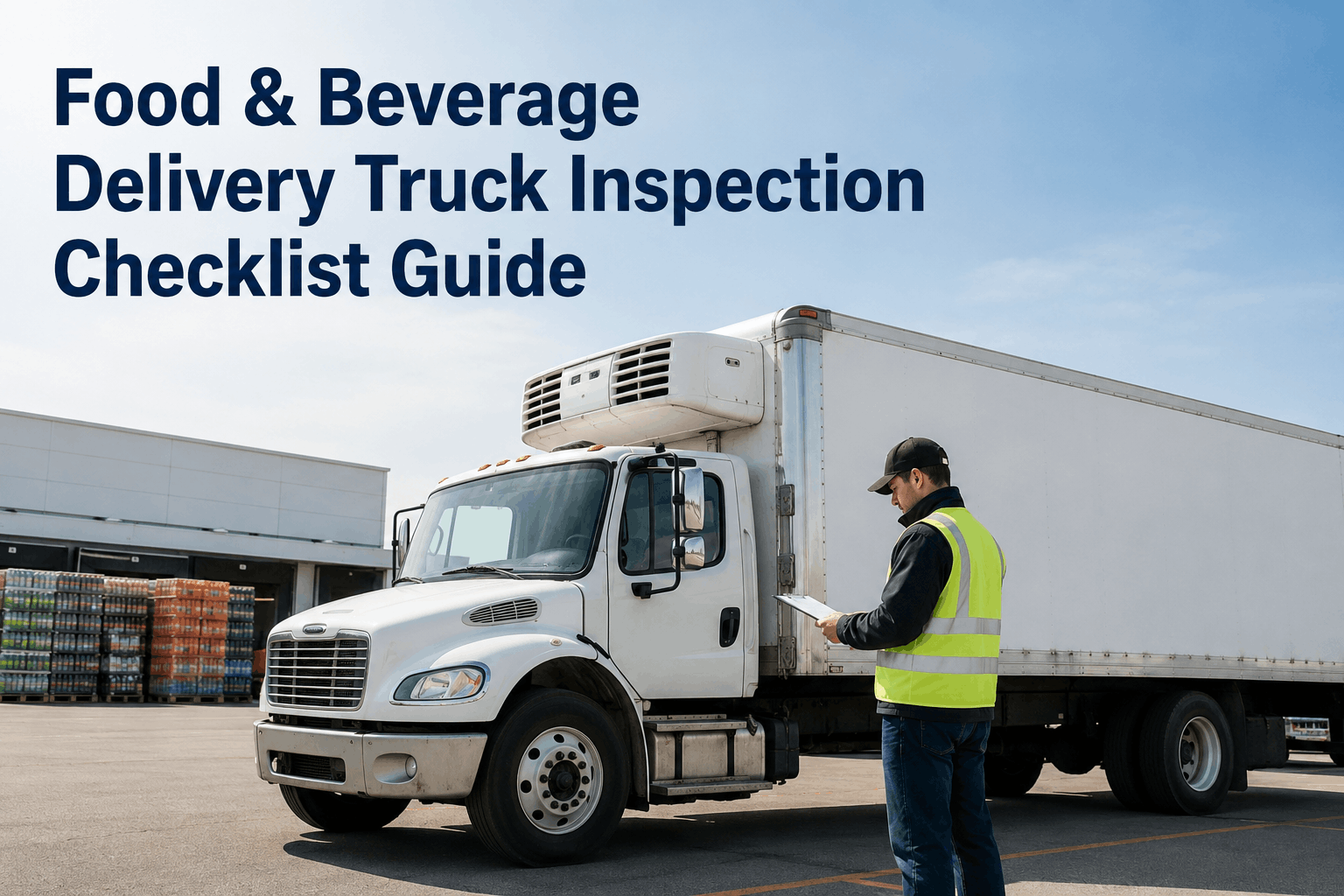
In cold-chain transport you can lose a load two completely different ways, and only one of them is a breakdown. The first is mechanical — the reefer unit quits and the freight warms up. The second is documentary — the unit ran perfectly, but the temperature record has a gap, and a receiver or an auditor rejects the shipment on paper alone. A cold-chain maintenance program has to defend against both at once: keep the refrigeration reliable, and keep the proof intact. This guide covers how. Start free and keep your cold chain reliable and provable.
Reliability · Records · Zero Excursions
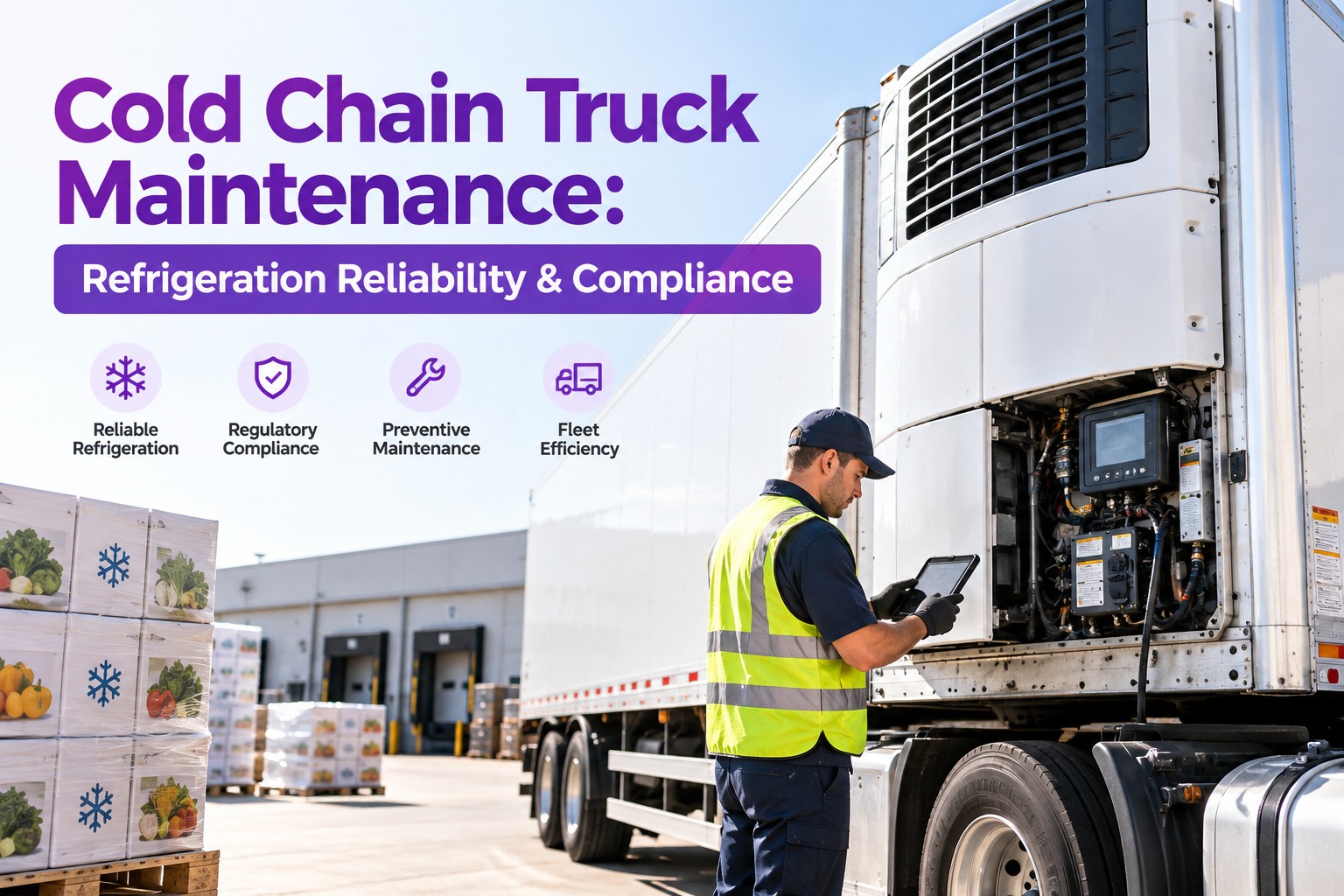
Cold Chain Truck Maintenance: Refrigeration Reliability & Compliance
A warm load from a dead compressor and a rejected load from a missing record cost the same: the whole shipment. Truck Inspection & Maintenance Management Software keeps every reefer on an engine-hour PM schedule, catches a failing unit before it excurses, routes defects to tracked repairs, and keeps the temperature and maintenance records that prove the chain held — so the freight arrives cold and the paperwork backs it up.
Two risksthe unit fails, or the record does
Engine hoursthe reefer's real PM clock
Provablecold chain backed by records
The Two Ways a Cold Load Is Lost
Every cold-chain maintenance decision traces back to these two failure modes. A program that guards one and ignores the other still loses loads — they're equal threats, and they need different defenses.
✕Mechanical failure
The refrigeration unit fails — a compressor, a refrigerant leak, a belt, a sensor — and the box temperature climbs out of range. The freight is physically spoiled, and the fix is reliability: maintenance that catches the unit before it quits.
◷Documentary gap
The unit ran fine, but the temperature record has a hole — a logger that failed, a reading that was never captured, a setpoint that doesn't match the agreement. The load is rejected on paper, and the fix is records: proof the chain held, start to finish.
Why both belong to maintenance It's tempting to treat the temperature record as a logistics problem and the unit as a maintenance problem — but a failed logger is a defect like a failed compressor, and both strand the load. A cold-chain program that routes a dead sensor to the same work-order flow as a dead belt closes the gap between the two. Truck Inspection & Maintenance Management Software treats reliability and records as one system, so the thing that keeps the freight cold and the thing that proves it are maintained together.
The Reliability Ladder — From Reacting to Predicting
Reefer reliability isn't on or off; it's a ladder. Where a fleet sits on it decides how often a unit fails on the road instead of in the shop — and climbing it is the single biggest lever on excursion rate.
1
ReactiveFix it when it fails. Cheapest to run until a unit quits mid-haul and takes the load with it — the most expensive place to be.
2
PreventiveService on a schedule — by engine hours, not just calendar. Belts, filters, refrigerant checks done before they fail. The baseline every cold-chain fleet needs.
3
PredictiveWatch the signals — alarm-code trends, pressures, run-time creep — and act on the warning before the failure. The unit tells you it's tiring while the load is still cold.
The Reefer Runs on Its Own Clock
The single most common cold-chain maintenance mistake is servicing the reefer on the truck's odometer. The refrigeration unit runs whether the truck is moving or parked — on a delivery day it can log hours idling at docks while the truck barely moves. Scheduling its PM on engine hours, not miles, is what keeps it reliable.
Why hours, not milesA reefer cooling a parked trailer accrues wear the odometer never sees. Engine-hour tracking matches service to actual run time.
What rides the hour clockBelts, filters, refrigerant and oil checks, and major service intervals all key to reefer run hours, not truck distance.
What this preventsA unit that's "low mileage" but hundreds of hours overdue — the one that fails mid-haul because nobody was counting its hours.
The Compliance Trail — What Proves the Chain Held
When a cold shipment is questioned, the answer is entirely documentary. Under the FSMA Sanitary Transportation rule the carrier is responsible for maintaining the agreed temperature conditions — and for being able to show it. These are the records that defend a load.
01Temperature recordThe continuous log — setpoint and actual readings — from a working recorder or telematics, with no gaps across the haul.
02Pre-cool & setpointProof the box was at temperature before loading and set to the agreed point, captured at the start of the trip.
03Maintenance historyThe reefer's PM and repair record, showing the unit was serviced and sound — the reliability behind the readings.
04Excursion & corrective actionIf a reading drifted, the record of what happened and what was done — an answer, not a silence.
The record is only as good as the recorder A temperature log proves nothing if the device capturing it failed halfway through — which is exactly why the recorder itself belongs on the maintenance program. A sensor or logger that's drifting or missing readings is a defect to catch and fix, the same as a weak compressor. Truck Inspection & Maintenance Management Software keeps the monitoring hardware on the inspection list and ties the temperature and maintenance records to each unit, so the proof is complete because the thing that captures it is maintained.
Where Cold-Chain Reliability Breaks
Most lost cold loads trace to a short list of causes. Knowing where they cluster tells you where the program pays off first.
Overdue reefer PMService tracked on miles instead of engine hours, so the unit is far more worn than the odometer shows.
Refrigerant & compressor faultsSlow leaks and tiring compressors that degrade cooling long before a hard failure.
Failed monitoring hardwareA dead or drifting sensor or logger that turns a good haul into an unprovable one.
Skipped pre-coolLoading warm freight into a box that never reached setpoint, starting the haul already behind.
One Program for Reefer Reliability and Cold-Chain Proof
Truck Inspection & Maintenance Management Software keeps every refrigeration unit on an engine-hour PM schedule, puts the reefer and its monitoring hardware on the inspection list, routes any defect — mechanical or sensor — to a tracked repair, and ties the temperature and maintenance records to each unit. Fleets use it to push reefer uptime higher and to answer any cold-chain question with a complete record instead of a scramble.
Frequently Asked Questions
Why schedule reefer maintenance on engine hours instead of mileage?
Because the refrigeration unit runs independently of the truck. It cools the box while the truck idles at a dock, waits to load, or sits overnight — all of which adds run hours with no miles on the odometer. A reefer scheduled on mileage can be hundreds of hours past due for service while looking low-mileage on paper, and that's the unit that fails mid-haul. Engine-hour tracking matches service to the wear the unit actually accumulates.
What's a temperature excursion, and why does it matter if the unit kept running?
An excursion is any time the load's temperature moves outside its required range, even briefly. It matters because the damage to temperature-sensitive freight — food, pharma — can be done in that window regardless of whether the unit recovered afterward. And because the temperature record is part of the shipment, an unexplained excursion in the log can get a load rejected even if the product is actually fine. Preventing excursions, and documenting any that occur, is the core of cold-chain maintenance.
Is the temperature logger really a maintenance item?
Yes — and treating it as one is what separates a defensible cold chain from a hopeful one. The record that proves a load stayed cold is worthless if the device capturing it was drifting or missing readings. A sensor or logger that's failing is a defect exactly like a failing compressor, and it belongs on the inspection list and in the work-order flow. If the hardware that creates your proof isn't maintained, your proof isn't reliable.
What records do I need to prove a cold shipment stayed in range?
At minimum, a continuous temperature log with no gaps, proof of pre-cool and the agreed setpoint at loading, the reefer's maintenance and repair history, and a corrective-action record for any excursion. Together these show both that the unit was sound and that the load actually rode at temperature. Under the FSMA Sanitary Transportation rule the carrier is responsible for maintaining the agreed conditions, so keeping this trail per unit isn't just good practice — it's how you answer when a shipment is questioned.
Contact us to set up cold-chain maintenance and records for your fleet.
Reliable Unit · Complete Record · Unbroken Chain
Make Reefer Reliability and Cold-Chain Proof One Job
Truck Inspection & Maintenance Management Software keeps every reefer on an engine-hour PM schedule, catches failing units and failing sensors before they cost a load, routes every defect to a tracked repair, and ties the temperature and maintenance records to each unit. Cold-chain and food & beverage fleets use it to raise reefer uptime and to prove, on demand, that the chain held.
No credit card required. Free for up to 3 trucks. Built for FMCSA-compliant fleets.