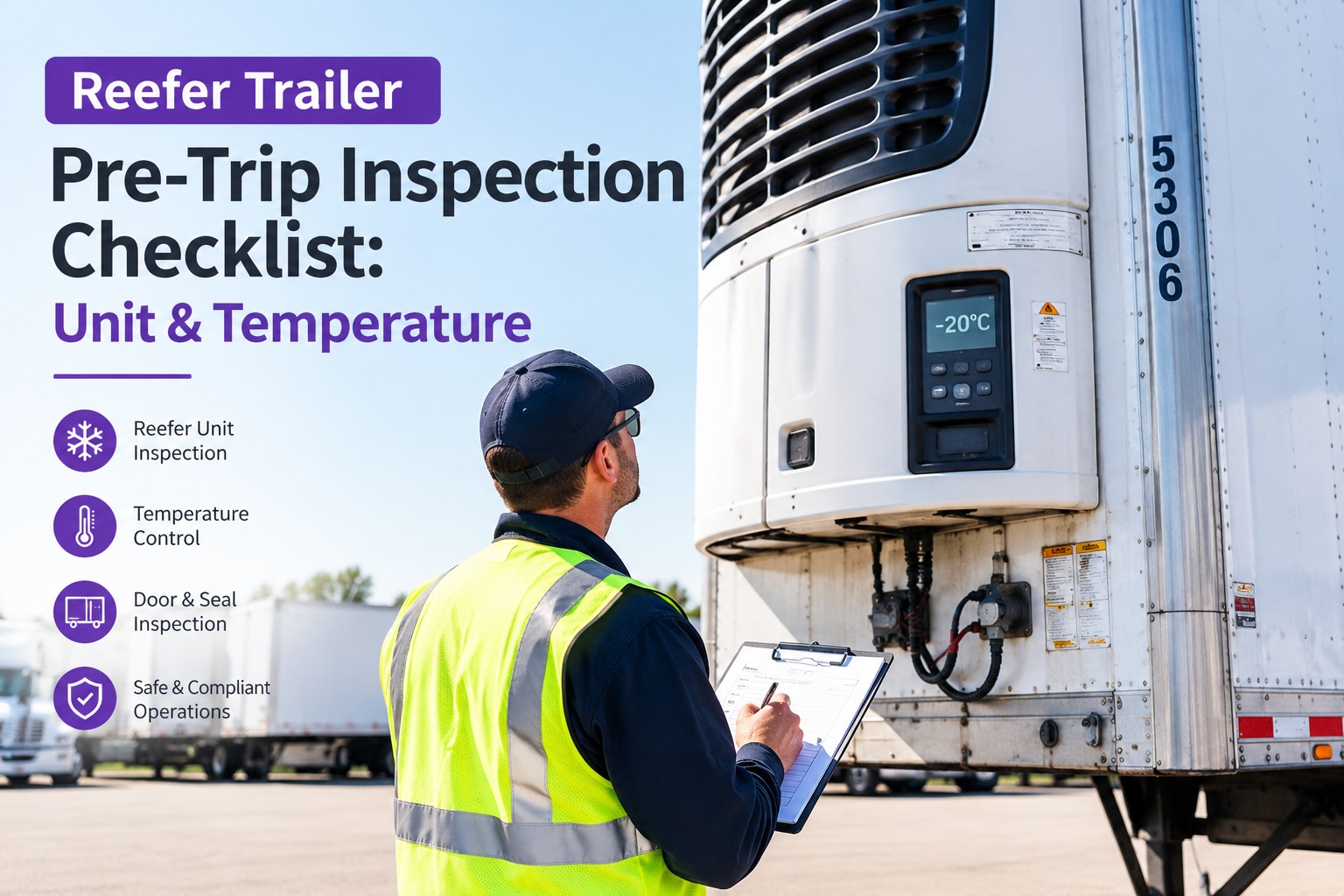
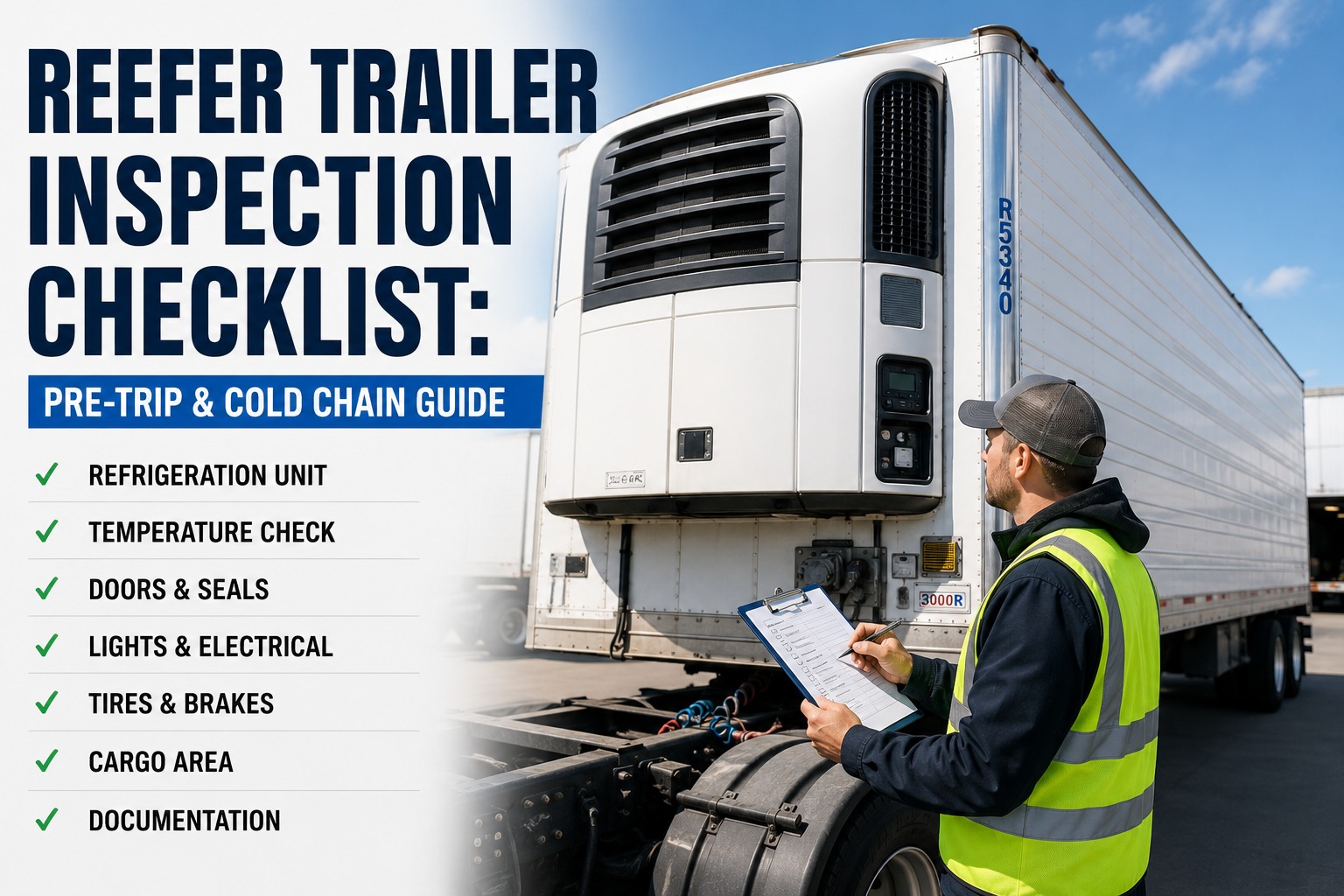
A dry-van pre-trip protects the truck. A reefer pre-trip protects the load and the load is often worth more than the trailer hauling it. A refrigeration unit that quits 200 miles into a run doesn't just strand a driver; it spoils a full box of temperature-sensitive freight and leaves a hole in the cold-chain record a receiver can reject the whole shipment over. This checklist covers both halves: the unit and the box, so the cargo arrives cold and the paperwork proves it. Start free and put the reefer pre-trip on every driver's phone.
Unit · Fuel · Airflow · Doors · Temperature
Reefer Trailer Pre-Trip Inspection Checklist: Unit & Temperature
A warm trailer, a low reefer-fuel tank, or a torn door seal costs you a whole load — not a repair. Truck Inspection & Maintenance Management Software turns the reefer pre-trip into a guided check that verifies the unit, the box, and the setpoint before freight is loaded, flags any fault to a work order, and logs the temperature record a receiver and an FSMA auditor both expect to see.
Two systemsthe trailer and the reefer unit
Pre-coolbox at setpoint before loading
Loggedtemperature record for the cold chain
Why a Reefer Pre-Trip Is Its Own Job
Everything you'd check on a dry van still applies — but the refrigeration unit adds a second machine and a second kind of failure, where the cost lands on the cargo, not the calendar.
$
The load is the value
A trailer of produce, pharma, or frozen protein is worth far more than a day of downtime — a cooling failure writes off the freight, not just the trip.
✓
The record is compliance
Under FSMA sanitary-transport rules, the temperature the load rode at is a documented part of the shipment — a gap in it can fail the whole delivery.
2
Two machines, one trip
You're inspecting the tractor-trailer and a separate diesel refrigeration unit with its own fuel, belts, and controls — miss either and the run is at risk.
The Reefer Pre-Trip Checklist, Area by Area
Work it in order — unit first, then the box and the cold setup. Tick each item you verify; anything you can't tick is a fault to fix before freight goes on board, because once it's loaded it's too late.
Two Reefer Calls That Protect the Load
Beyond the walkaround, two setup decisions decide whether the freight arrives in spec. Get these right at the yard and most mid-haul reefer trouble never happens.
Pre-cool, then load
Run the unit down to setpoint before freight goes in. Loading warm product into a warm box forces the unit to fight the heat all trip — and it rarely catches up. A pre-cooled box also surfaces a weak unit in the yard, not on the road.
Continuous vs cyclic
Continuous run holds the tightest, most even temperature and suits sensitive or fresh loads; cyclic (start-stop) saves fuel but lets temperature drift between cycles. Match the mode to the load's tolerance — the wrong one quietly risks the freight to save a little diesel.
The record is part of the cargo With reefer freight, "the truck was cold" isn't enough — you have to prove it. A receiver can reject a load, and an FSMA sanitary-transport review can flag a carrier, on a temperature record that has a gap or doesn't match the agreed setpoint. That's why the temperature line on this checklist matters as much as the mechanical ones. Truck Inspection & Maintenance Management Software logs the setpoint, the readings, and the pre-cool at pre-trip, so the cold-chain record starts before the freight does and travels with the load.
Where Reefers Lose a Load
Most spoiled loads don't come from a dramatic unit failure — they come from one of these quiet pre-trip misses. Check them first.
Low reefer fuelThe unit runs dry mid-haul and stops cooling — the most preventable spoilage of all.
Worn door sealsTorn gaskets bleed cold air and pull warm, humid air in at every stop.
Skipped pre-coolWarm freight loaded into a warm box the unit can never fully recover.
Blocked airflowA torn chute or clogged drain so cold air never reaches the back of the load.
Turn the Reefer Walk Into a Logged, Load-Protecting Check
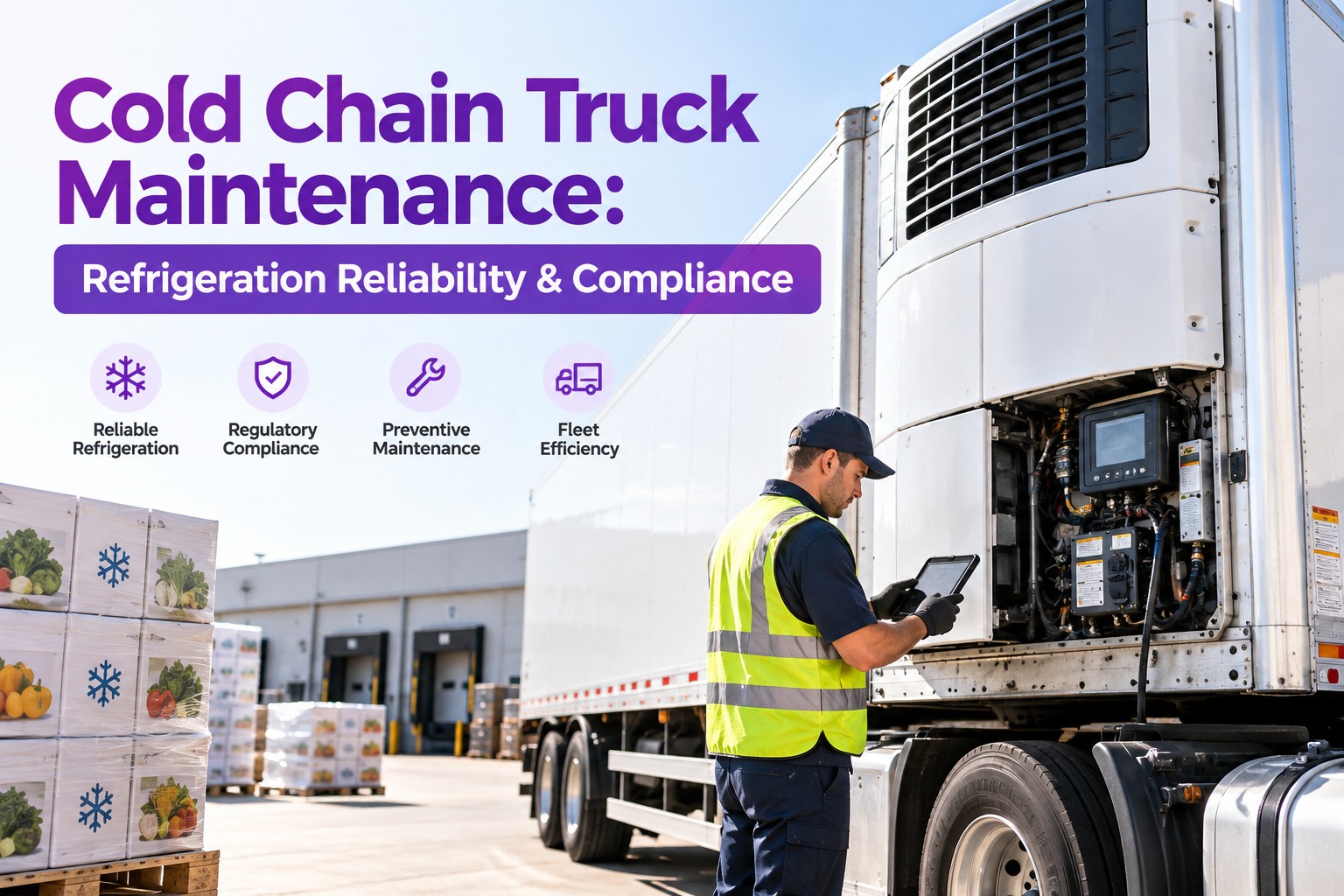
Truck Inspection & Maintenance Management Software puts every item above on the driver's phone as a guided reefer pre-trip, verifies the unit and the box before freight is loaded, routes any fault straight to a work order, and captures the setpoint and temperature record from the start. It also keeps the reefer unit on its own preventive-maintenance schedule — belts, fuel filters, and defrost checks on a calendar, so a tired unit is serviced before it strands a load.
Frequently Asked Questions
Why pre-cool the trailer before loading?
A reefer unit is built to hold a temperature, not to pull a warm box down quickly while fighting the heat coming off fresh-loaded freight. Load into a warm trailer and the unit may never reach setpoint for the whole trip, putting the load out of spec before it leaves the yard. Pre-cooling to setpoint first means the unit only has to maintain, not catch up — and a box that won't pre-cool tells you the unit has a problem while you can still fix it.
What's the difference between continuous and cyclic reefer mode?
In continuous mode the unit runs non-stop to hold a steady, even temperature — best for sensitive fresh and chilled loads. In cyclic, or start-stop, mode it shuts off once setpoint is reached and restarts when the box warms, saving fuel but allowing more temperature swing between cycles. The right choice depends on how tight a tolerance the freight needs; frozen loads often tolerate cyclic, while fresh produce and pharma usually call for continuous.
Do I need to keep a temperature record for a reefer load?
For most temperature-sensitive freight, yes — the receiver expects it and FSMA sanitary-transport rules make the carrier responsible for maintaining and, where agreed, documenting the temperature conditions of the shipment. A recorder or telematics log that captures the setpoint and actual readings is what proves the cold chain held. A clean pre-trip that logs the starting setpoint is where that record should begin, not at the first alarm.
What are the most common reefer pre-trip misses?
Low reefer fuel, worn door seals, and a skipped pre-cool account for most preventable spoiled loads — none of them a dramatic breakdown, all of them caught in a thorough pre-trip. Blocked airflow from a torn air chute or clogged drain is close behind, because the unit can be working perfectly while cold air never reaches the back of the load. A guided check that forces each of these before freight goes on board is what turns reefer runs predictable.
Contact us to set guided reefer pre-trips across your fleet.
Cool · Sealed · Logged · Loaded Right
Keep Every Reefer Load in Spec, Start to Delivery
Truck Inspection & Maintenance Management Software runs this full reefer pre-trip as a guided check, verifies the unit and box before loading, routes any fault to a work order, and logs the temperature record the cold chain depends on. Fleets use it to stop losing loads to preventable reefer misses — and to hand every receiver a shipment that's cold and proven.
No credit card required. Free for up to 3 trucks. Built for FMCSA-compliant fleets.