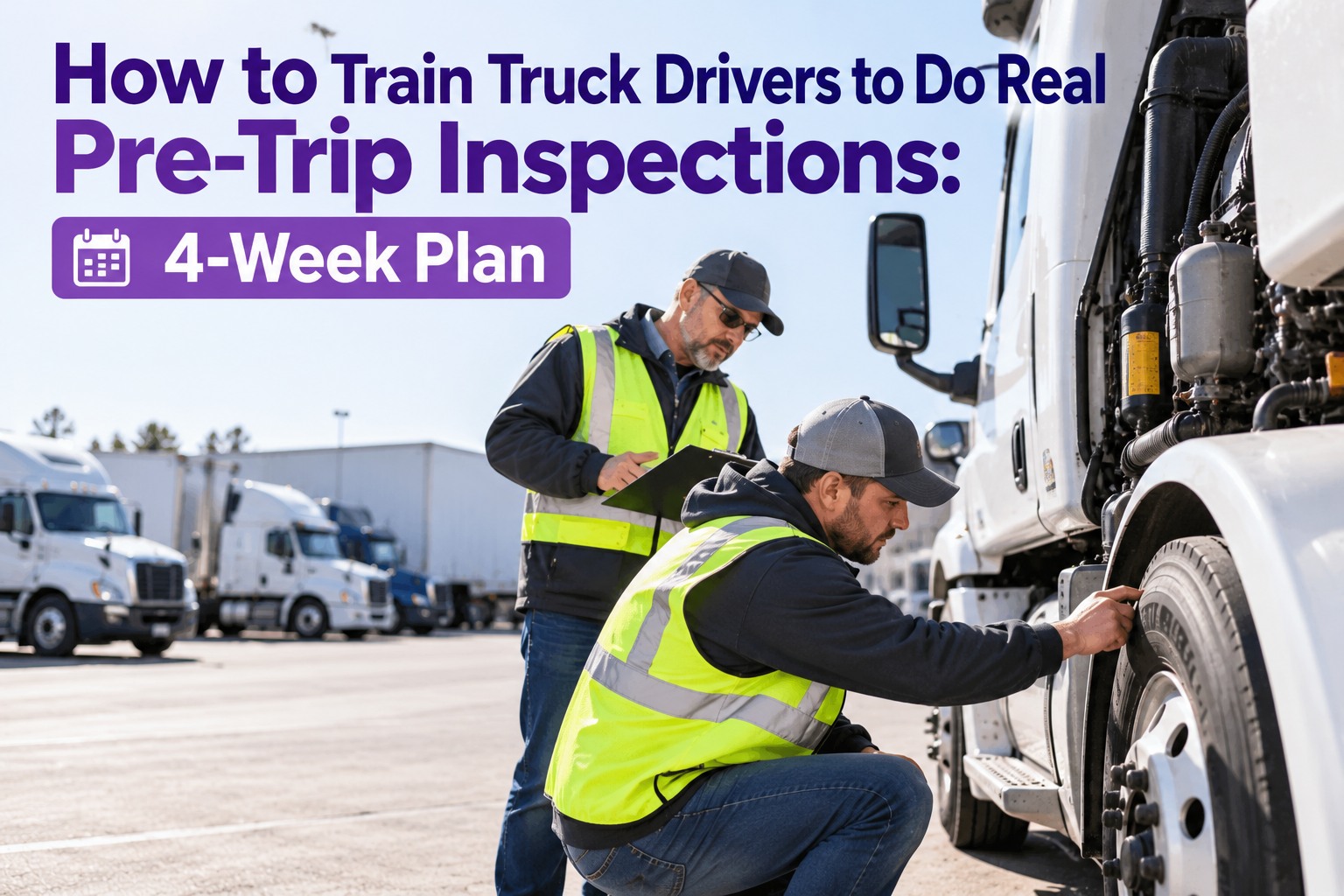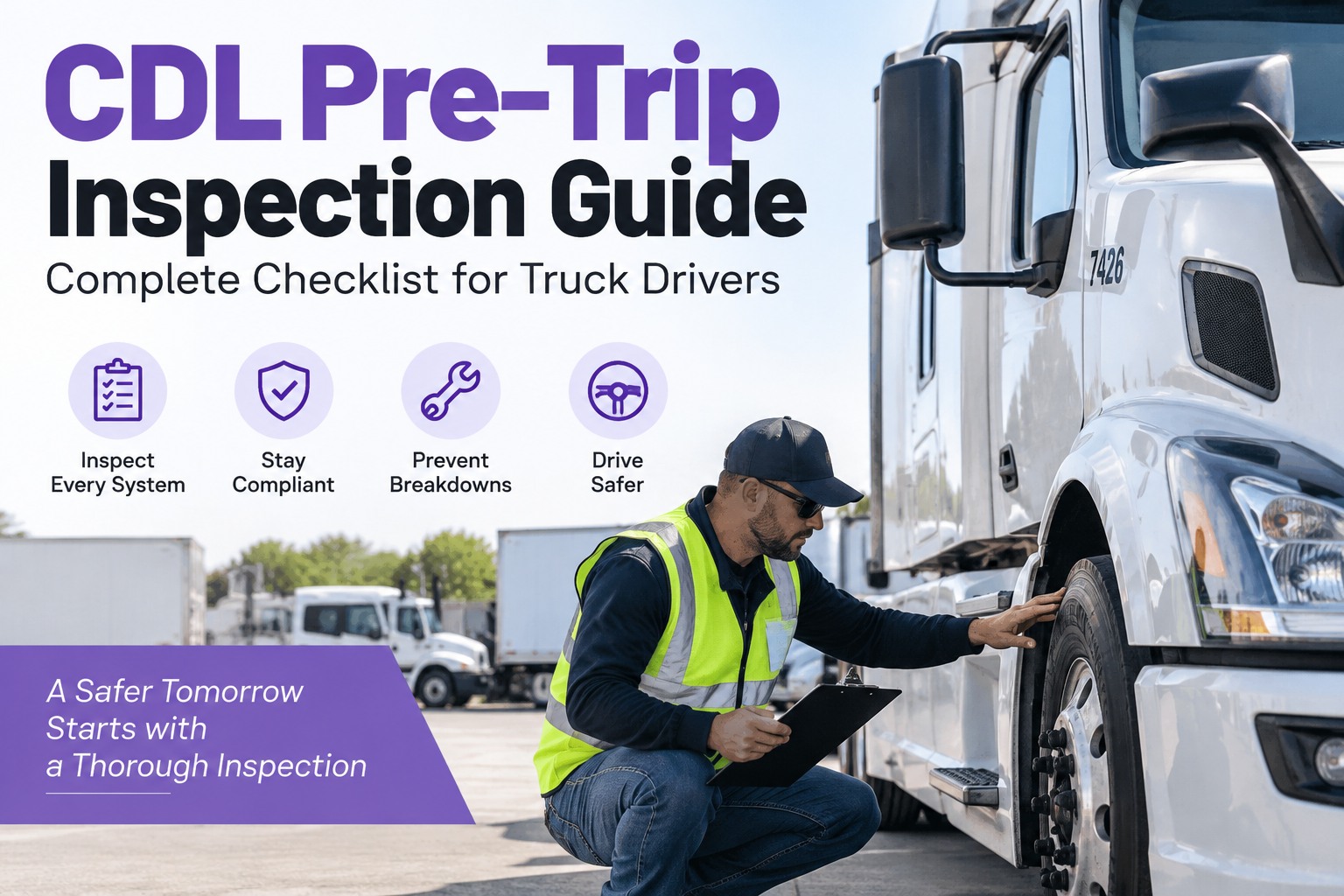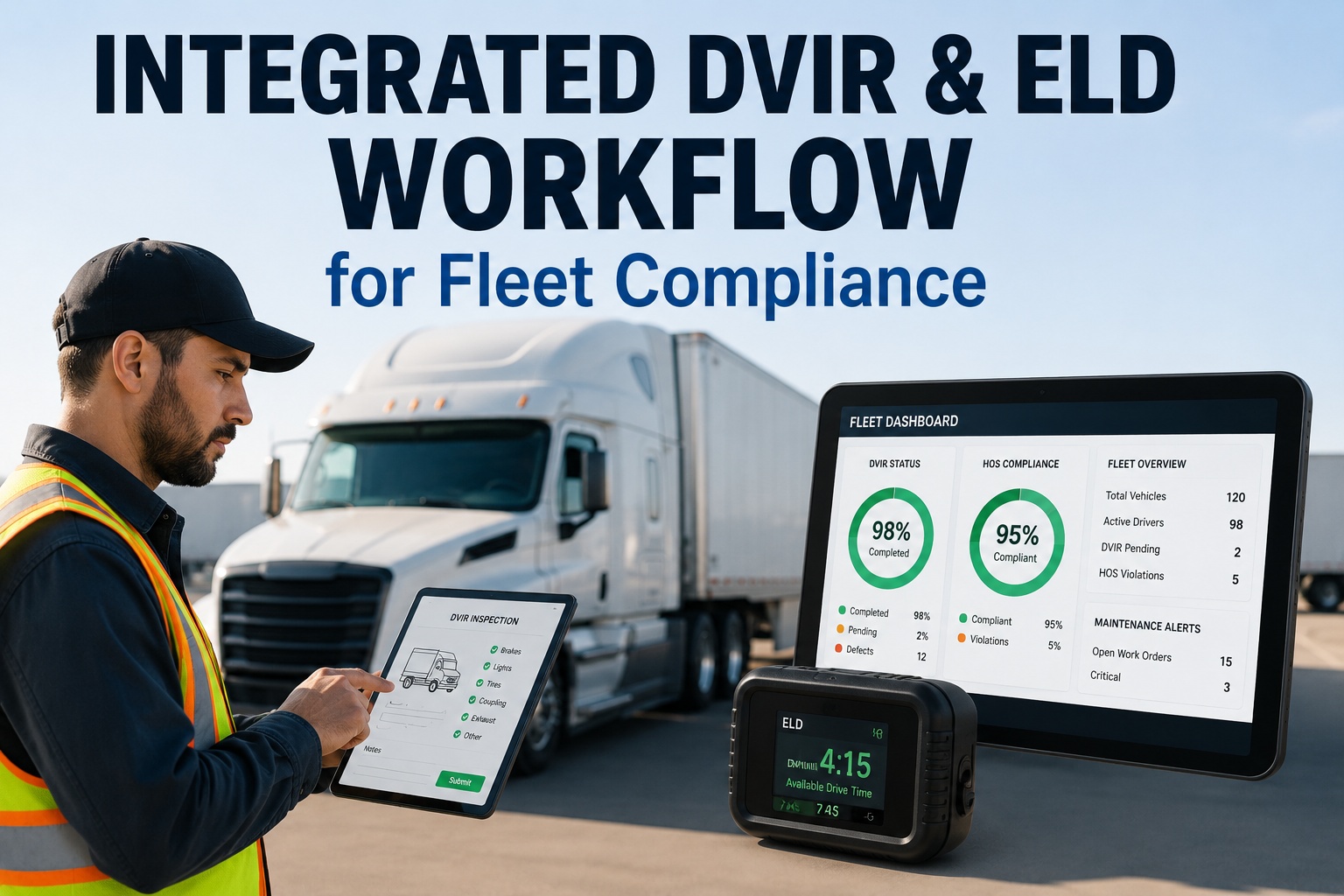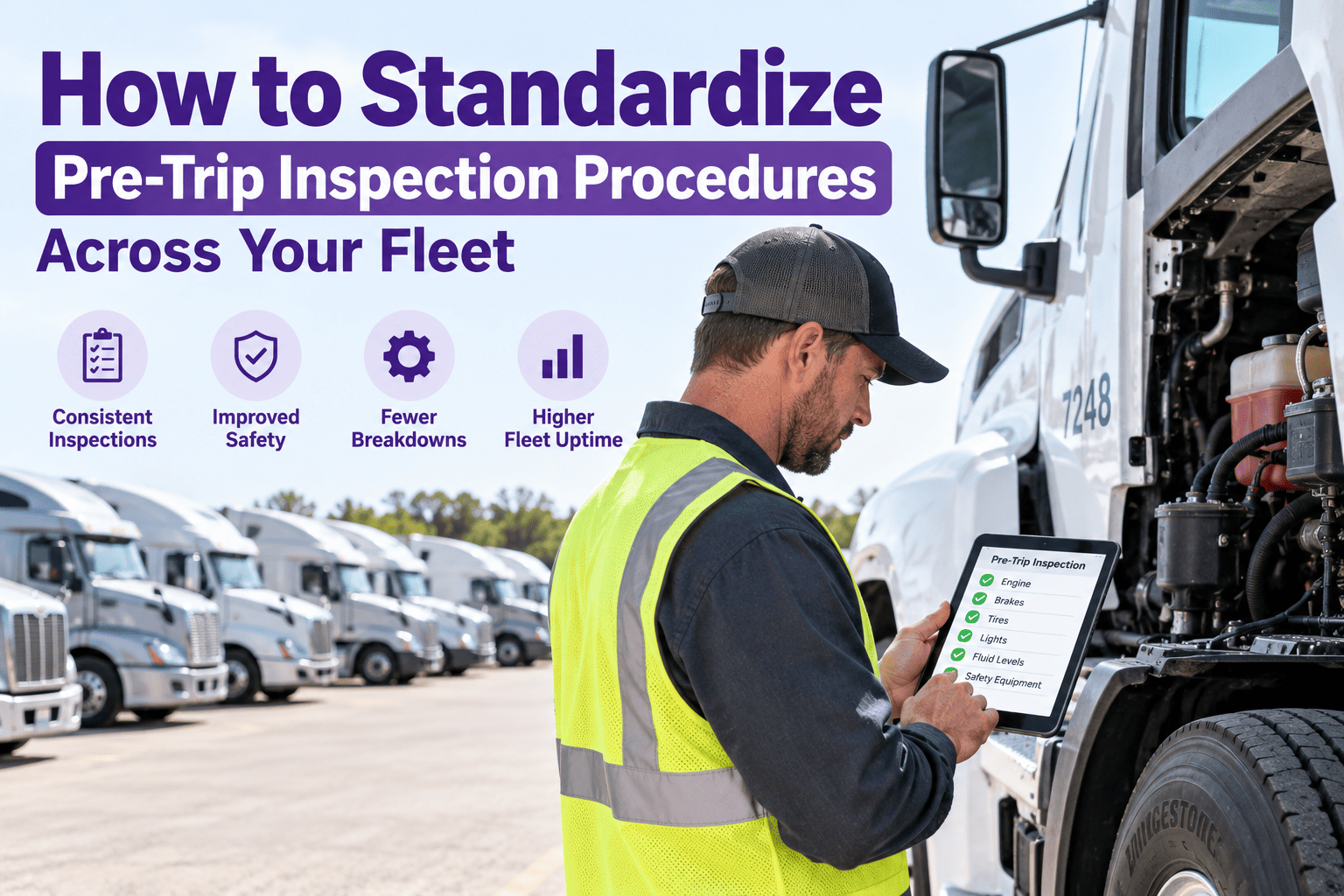
The pre-trip is only as good as the least disciplined driver doing it. Standardizing means one template every driver sees, one workflow every driver follows, one audit-ready record every truck generates. Truck Inspection & Maintenance Management Software runs the standardized workflow on every driver's phone — so the pre-trip stops being a driver preference and becomes the fleet SOP. Start free and standardize pre-trip inspections across your fleet.
Every Driver, Every Truck, Every Shift — The Same Pre-Trip, The Same Way
Inconsistent inspections are the audit finding fleets get hit with most often — a paper checklist filled in the cab, a "no defects" from a driver who never walked the truck, a defect that never reached the shop. Truck Inspection & Maintenance Management Software enforces the standard: same template on every driver's phone, timestamped photos on critical items, defects routed straight to a work order, 3-signature chain preserved for FMCSA retention. Drivers can't skip zones; ops managers see who's completing what in real time.
The 4 Pillars of a Standardized Pre-Trip Program
A standardized inspection program isn't one document or one app — it's four pillars that reinforce each other. Miss any pillar and the standard erodes back to driver preference within a quarter. TIM enforces all four as one platform.
Written DVIR policy, onboarding training every new driver completes, annual refresher, documented sign-off that each driver understands the SOP. This is the first document a DOT auditor asks for.
Real-time visibility into whether pre-trips are actually being completed per shift, which drivers rubber-stamp "no defects" every day, which vehicles never report a single issue. Paper systems can't see any of this.
Every defect flows into a work order, every repair gets certified on the original DVIR, no vehicle dispatches without the 3-signature chain complete. Broken chains are the #1 audit finding.
Retention of original DVIR + repair certification + driver review certification for FMCSA-mandated 3 months minimum. Offsite audits in 2026 give as little as 48 hours notice to produce records.
The 3-Signature Chain — What Every Defect Has to Complete
FMCSA §396.11 requires up to three signatures on a DVIR — a chain of custody from driver to mechanic to next driver. Skip any signature and the defect chain is broken. TIM enforces the chain on every defect logged.
The 11-Component Standard Template — What Every Pre-Trip Must Cover
FMCSA §392.7 and §396.11 harmonize on the same 11 vehicle components since the 2014 rulemaking. A standardized template locks these 11 in — no matter which driver, which truck, which yard. TIM's template ships with these built in.
| # | Component | What the driver checks | OOS trigger |
|---|---|---|---|
| 01 | Service brakes | Stroke measurement, pad thickness, air leaks, trailer connection | Yes · 41% of OOS |
| 02 | Parking brake | Holds at grade with foot off, spring brake operation | Yes |
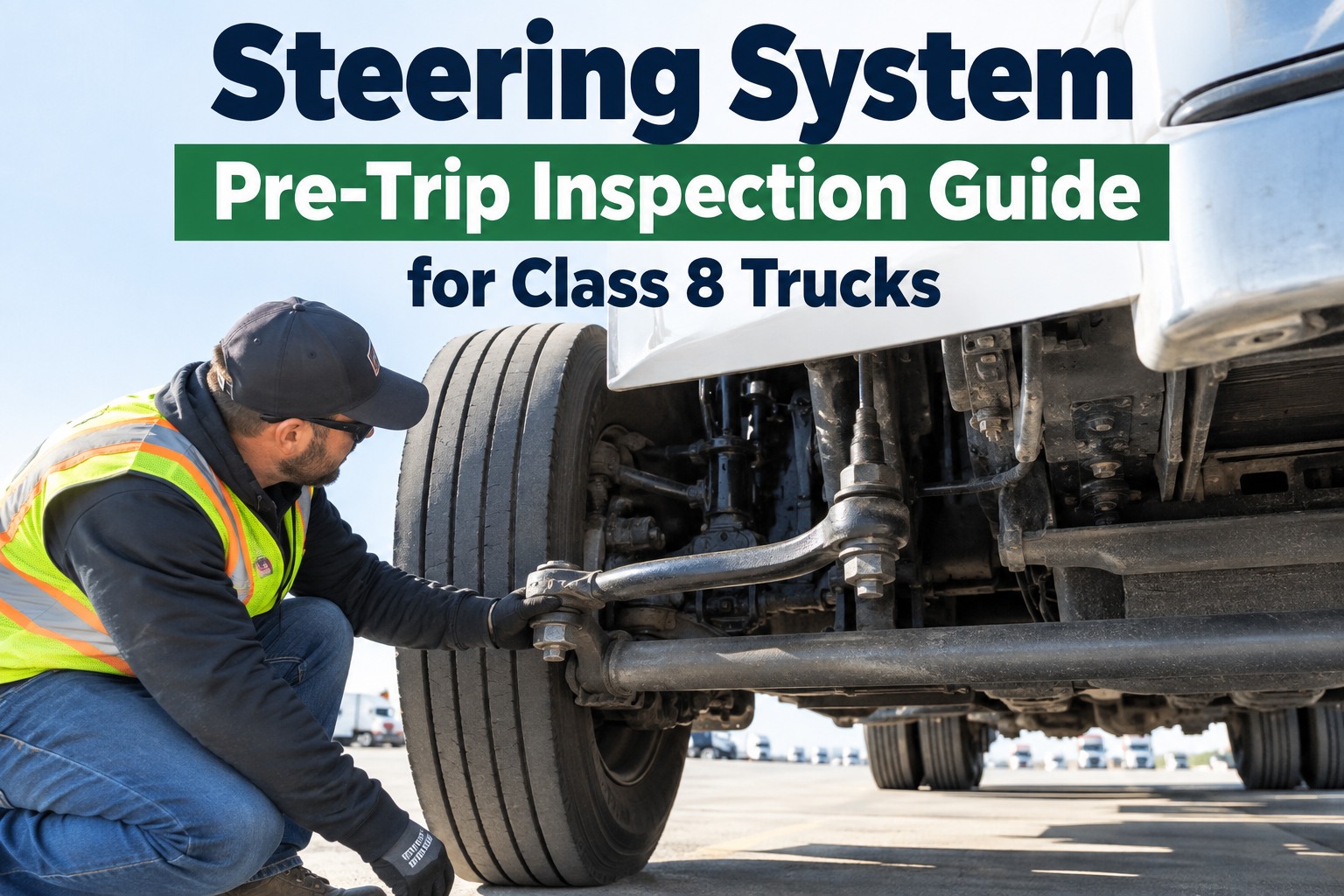
| 03 | Steering mechanism | Play at wheel, tie-rod condition, no binding | Yes |
| 04 | Lighting + reflectors | All positions functional, no cracked lenses, reflective tape | Condition-based |
| 05 | Tires | Tread depth (4/32" steer, 2/32" other), pressure, sidewall | Yes · 21.4% of OOS |
| 06 | Horn | Functional, single loud tone | Condition-based |
| 07 | Windshield wipers | Both blades operational, both wash-fluid streams | Condition-based |
| 08 | Rear-vision mirrors | Both sides adjusted, no cracks, secure mounts | Condition-based |
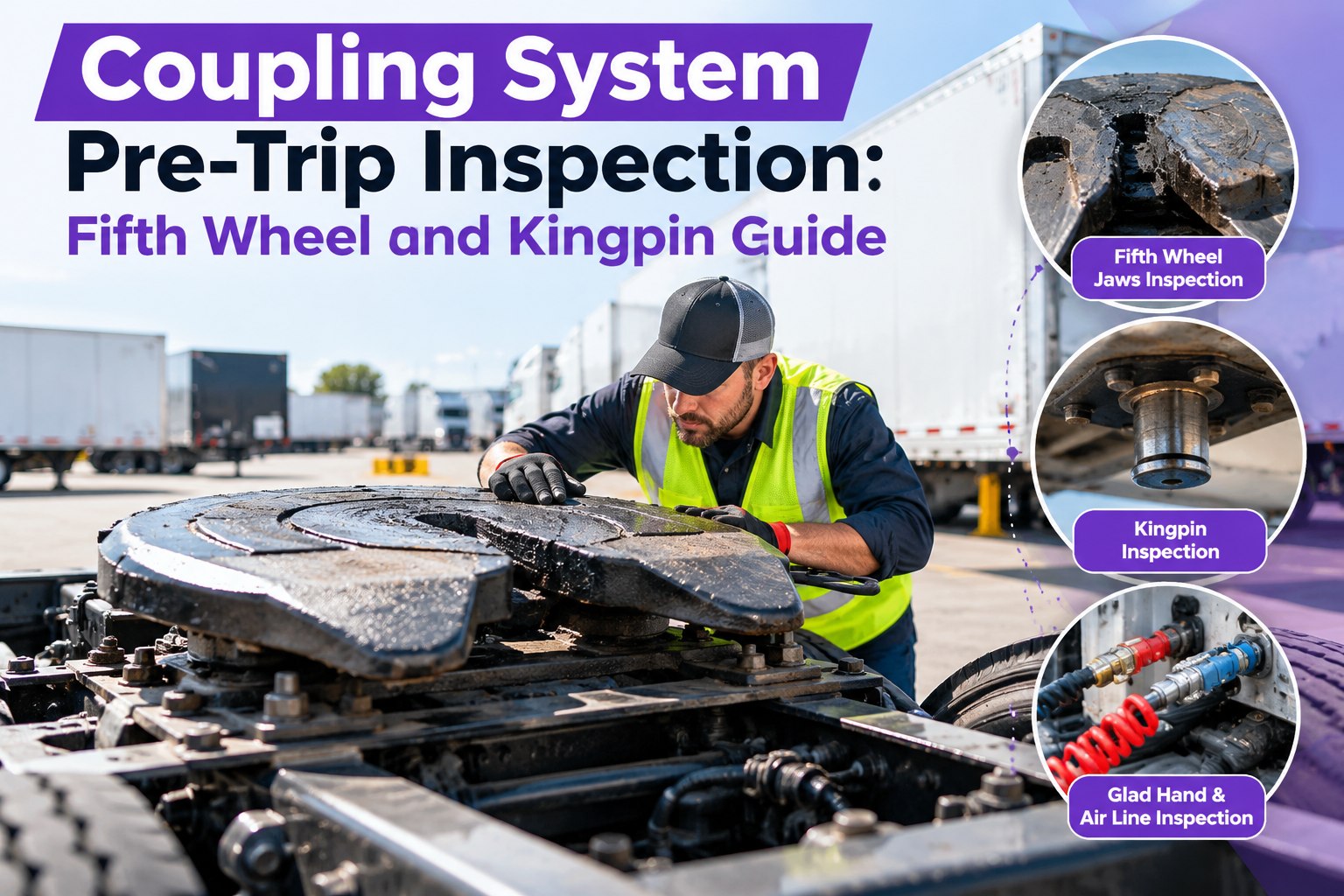
| 09 | Coupling devices | Fifth wheel, kingpin, safety chains, glad hands | Yes |
| 10 | Wheels + rims | Lugs tight, no cracks, no missing hardware | Yes |
| 11 | Emergency equipment | 3 triangles, fire extinguisher, spare fuses | Yes |
One Template · Every Driver · Every Truck · Every Shift — All in TIM
Truck Inspection & Maintenance Management Software ships with the FMCSA 11-component template built in, photo capture required on OOS items, defects routed to work orders, 3-signature chain enforced end-to-end, and the whole record retrievable in under 10 seconds for audit. The pre-trip stops being a driver preference and becomes the fleet SOP.
The 5 Standardization Failures That Break Every Paper Program
Fleets that stay on paper hit the same five failure patterns every year. Standardizing on a digital template eliminates each explicitly.
Driver rubber-stamps every pre-trip clean regardless of actual condition. TIM flags any driver whose defect rate stays at zero over 30+ shifts for supervisor review.
Paper checklist lets driver leave items blank. TIM's mobile flow requires each zone to be marked pass or defect before advancing — nothing can be skipped.
Paper DVIR sits in a folder, defect never opens a work order. TIM routes every defect straight into a WO with unit + severity + photo attached automatically.
Common cited violation — §396.13 signature skipped. TIM blocks unit dispatch until the incoming driver reviews and signs the previous DVIR.
Paper records lost, in wrong folder, or missing entirely. TIM stores every DVIR + repair cert + review sig for the FMCSA 3-month minimum, retrievable in seconds.
Frequently Asked Questions
Turn Pre-Trip From a Driver Preference Into the Fleet SOP
TIM enforces the standard template on every driver's phone, monitors completion in real time, routes defects into work orders, and retains audit-ready records for the FMCSA 3-month minimum. The inspection everyone runs the same way, every time.