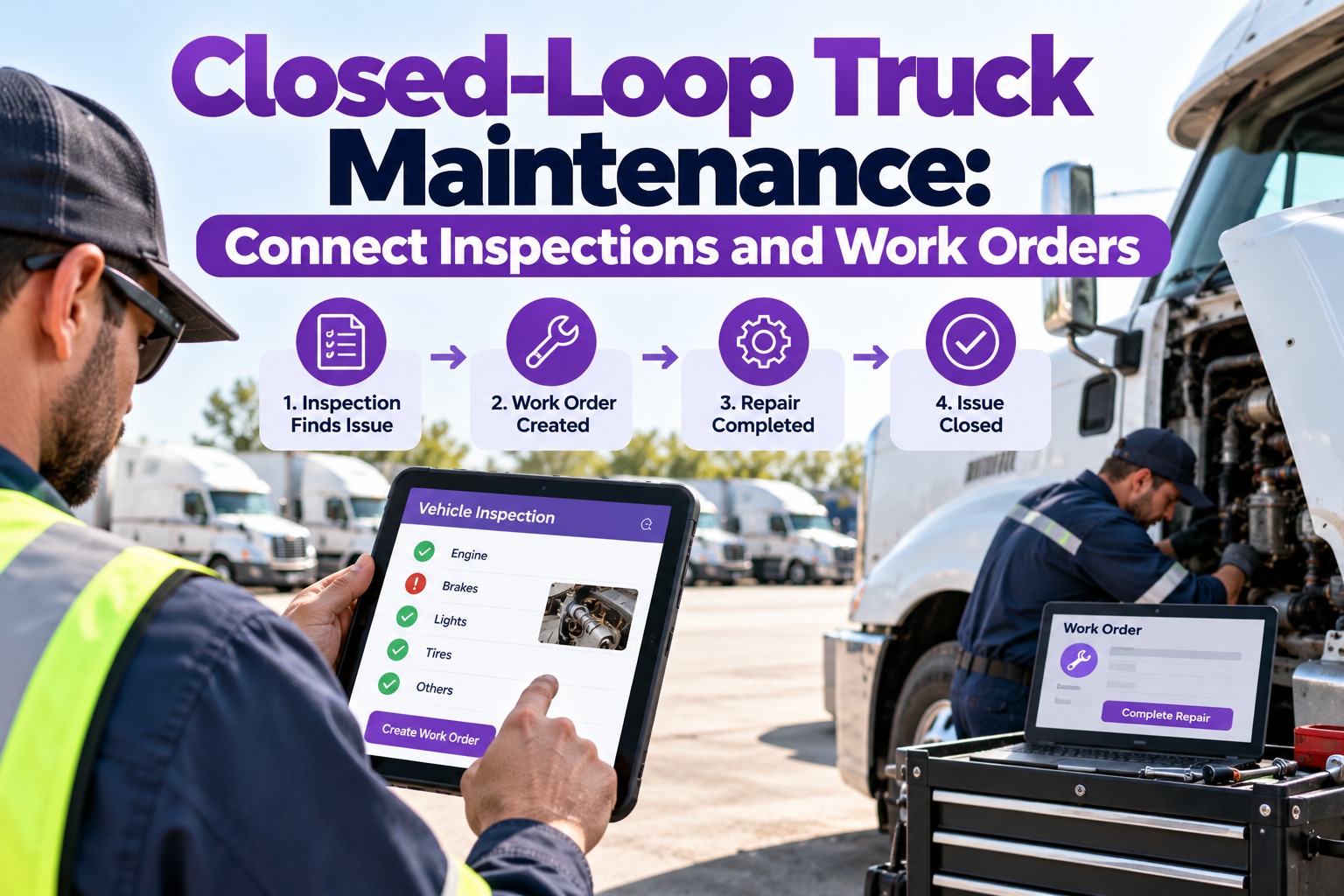
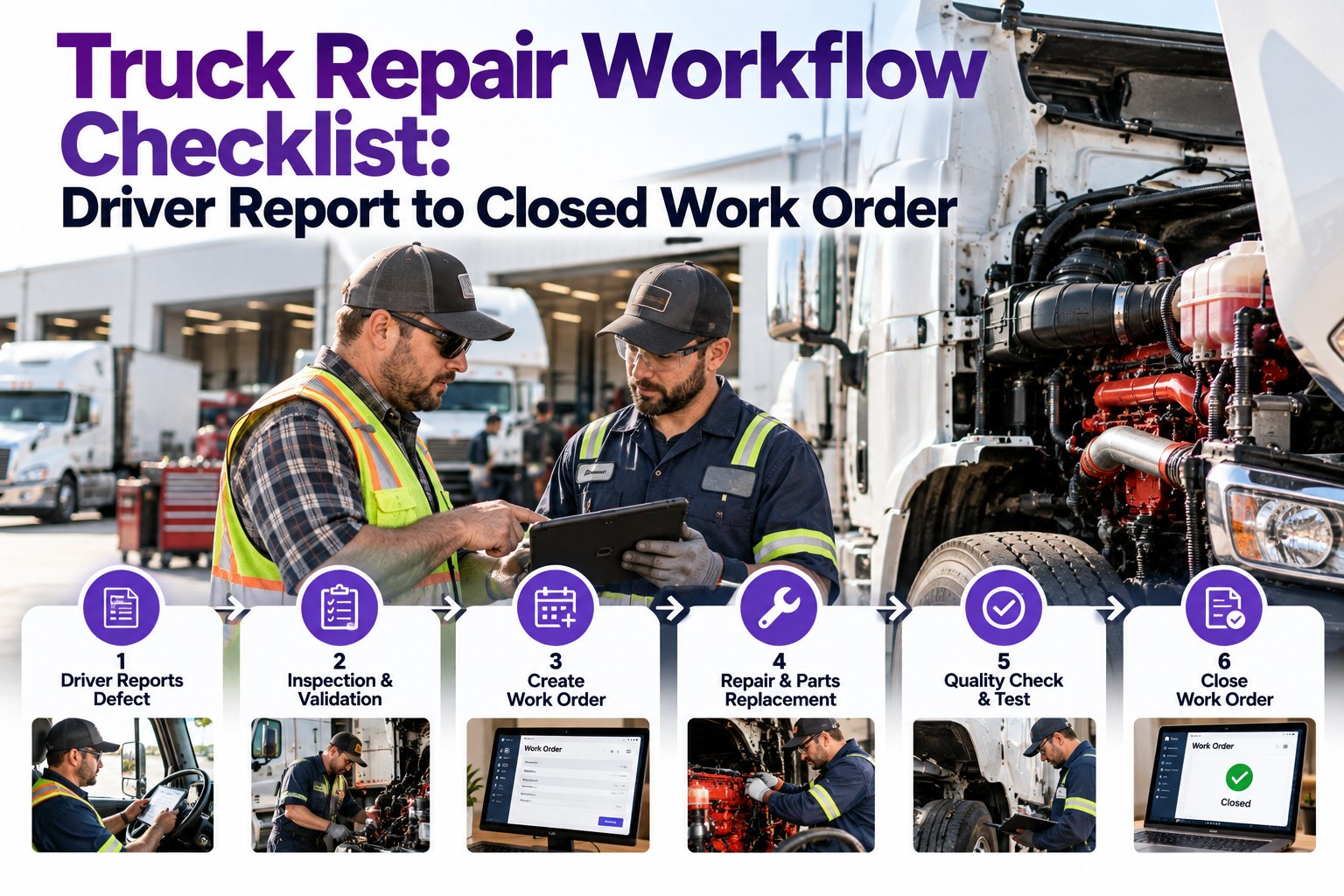
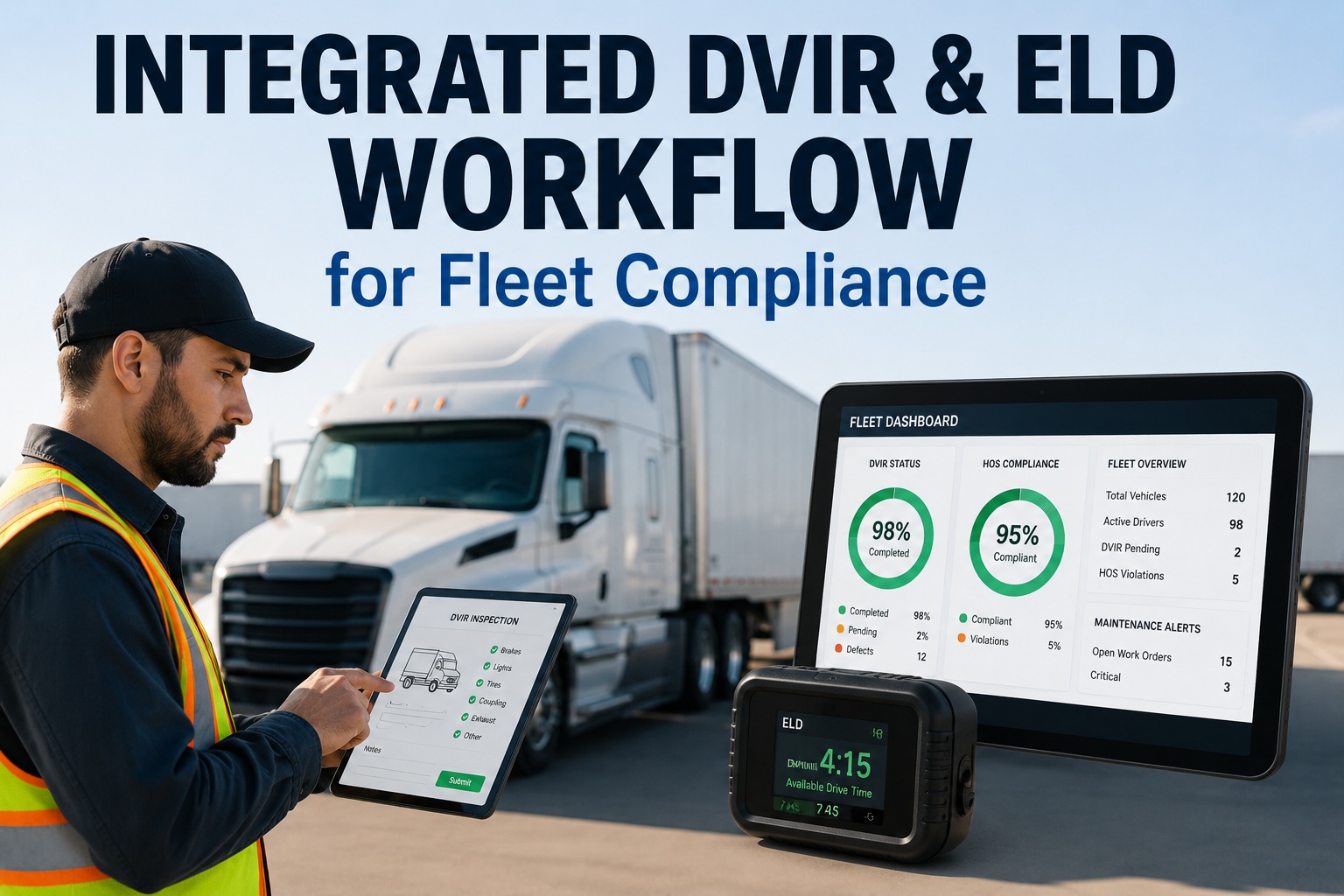
Marking a defect "fixed" and actually verifying it are two different things and only one of them holds up. A repair that's signed off without a check, a photo, or a root cause is a defect that can reopen next week and a record that won't survive an audit. Verification is the step that closes the loop properly: the repair is confirmed, certified, and acknowledged before the truck rolls. This guide lays out what real verification looks like and how to build it into the DVIR workflow. Start free and verify every repair before the truck dispatches.
Repair · Verify · Certify · Close
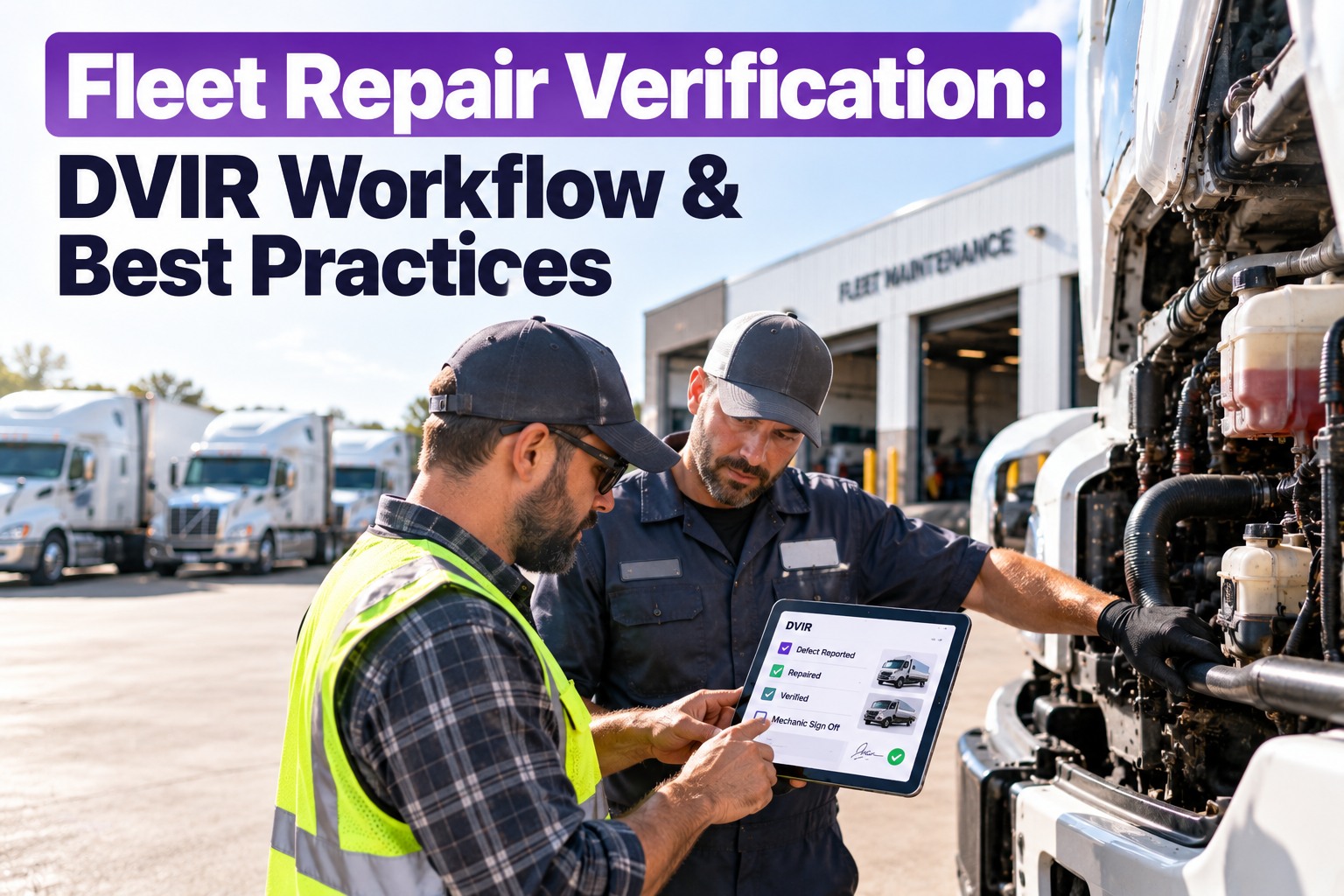
Fleet Repair Verification: DVIR Workflow & Best Practices
"Fixed" is a claim; verified is a record. Truck Inspection & Maintenance Management Software keeps every defect open until the repair is confirmed, certified on the DVIR, and acknowledged by the next driver — so nothing dispatches on an unverified fix and the closed-loop trail is there when an auditor asks.
§396.11(a)(3)carrier must certify the repair on the report
§396.13next driver acknowledges before operating
0trucks dispatched on an unverified fix
Why "Fixed" Isn't Enough
A defect marked done without verification is a gap in two directions: the truck may not actually be safe, and the record can't prove it was. Both cost you — one at the roadside, one in the audit.
"Fixed" — unverified
A note that says repaired, with no confirmation check, no photo, and no cause. The defect can reopen, the next driver has nothing to review, and the record is incomplete the moment an auditor opens it.
→
Verified — closed loop
The repair is confirmed against the original defect, certified on the DVIR with evidence, and acknowledged by the next driver. The truck is provably safe and the record is complete and defensible.
The Defect-to-Verified-Close Loop
Verification isn't a single signature — it's a loop that starts at the reported defect and doesn't close until the next driver has acknowledged the fix. Each stage hands off to the next, and skipping one leaves the loop open.
1Defect openedDriver reports it with position, measurement, and photo
→
2RepairedShop corrects the specific defect on the work order
→
3VerifiedRepair confirmed against the original defect, with evidence
→
4CertifiedCarrier certifies the correction on the DVIR (§396.11(a)(3))
→
5AcknowledgedNext driver reviews and signs before operating (§396.13)
What Good Verification Actually Requires
A verified repair isn't a checkbox — it's four things on the record that together prove the defect is genuinely closed. Miss any one and "verified" is just a word.
01A confirmation checkThe repair is tested against the original defect — the measurement back in spec, the leak gone, the lamp working — not just assumed done.
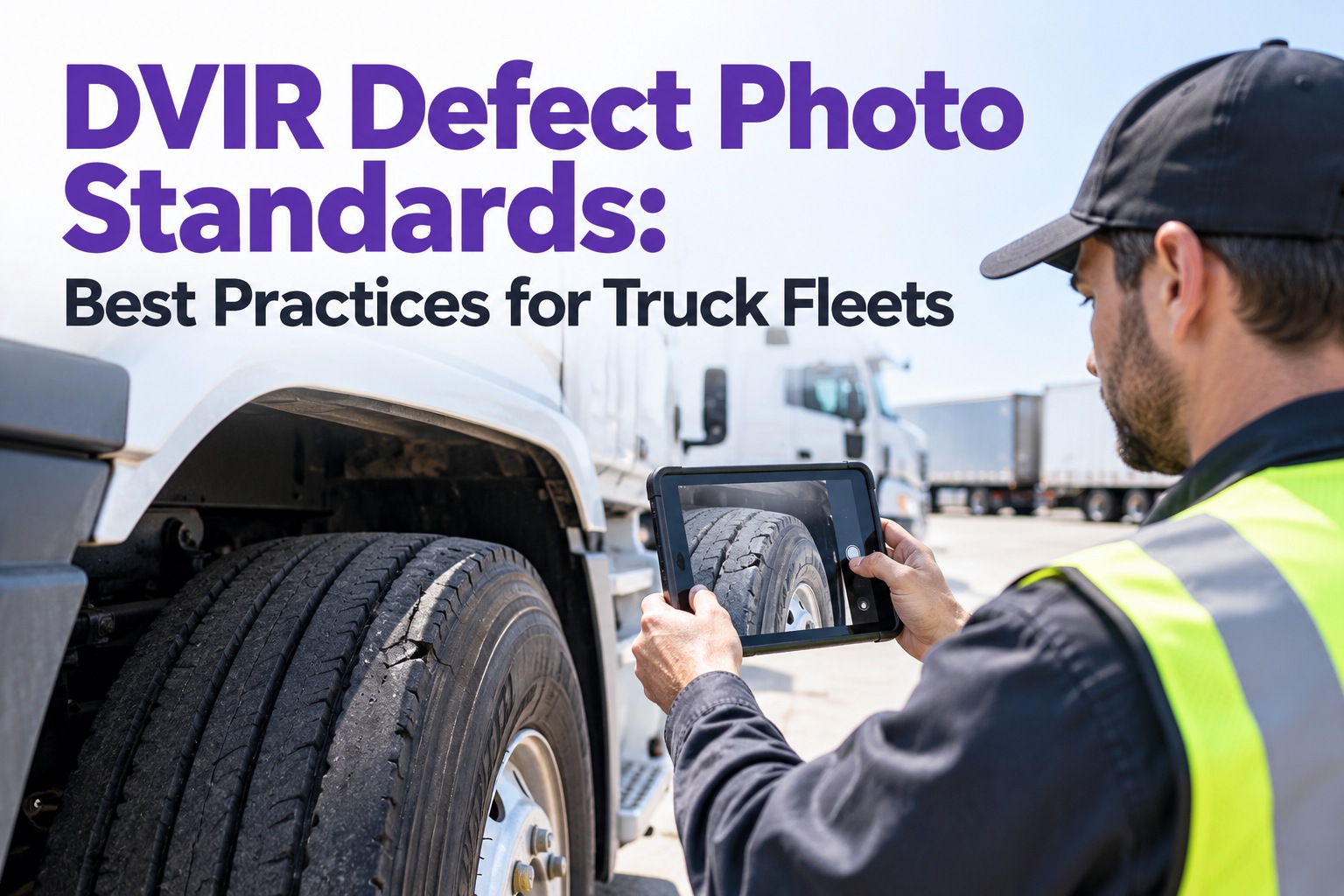
02Photo or evidenceA before-and-after or a repaired-state photo attached to the work order, so the fix is shown, not just claimed.
03Root cause, not just symptomWhat actually failed and why — so the same defect doesn't reopen next week because only the symptom was treated.
04Named sign-offThe mechanic who did and verified the work, by name and date, on the record — accountability that an initials-only note can't carry.
Where Verification Breaks Down
The loop fails in a handful of predictable places — all of them a shortcut that felt faster at the time and cost more later.
✕Closed without a checkMarked repaired on the strength of "should be fine" — never confirmed against the actual defect.
✕Symptom treated, cause leftThe leak wiped and topped up, the real seal untouched — so it reopens on the next run.
✕No certification on the DVIRThe repair happened but the §396.11(a)(3) certification line is blank — the record is incomplete.
✕Dispatched before acknowledgmentThe truck rolled before the next driver reviewed the prior defect report under §396.13.
Software That Won't Let a Defect Close Half-Verified
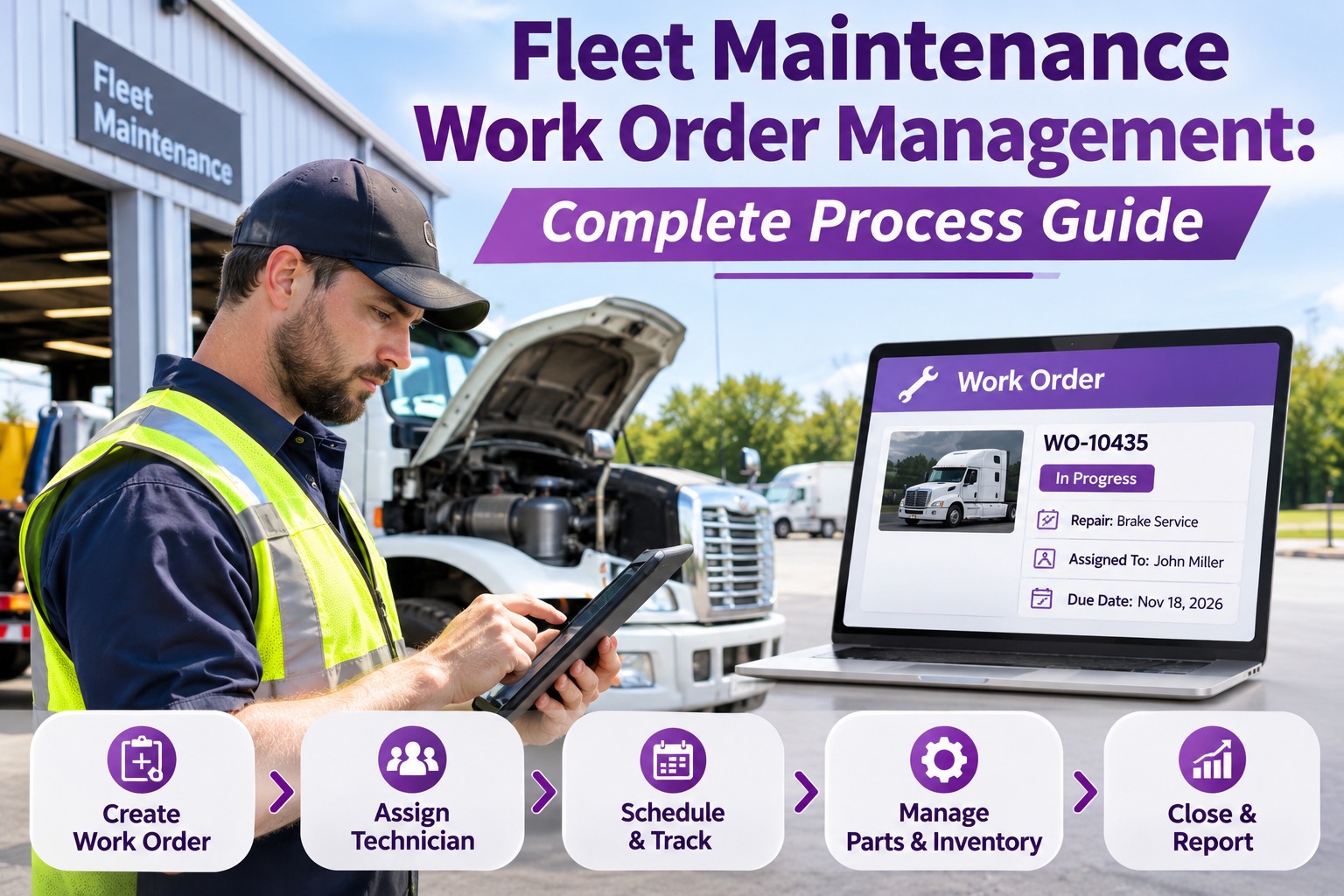
Helping with exactly this is the job. Truck Inspection & Maintenance Management Software ties every repair to the defect that opened it and holds the work order open until verification is complete — the confirmation check logged, a photo attached, the cause recorded, and the mechanic's named sign-off on it. The carrier certification and the next driver's acknowledgment are required steps before the truck can dispatch, so nothing rolls on an unverified fix. Because every repair stays linked to its defect and its truck, a part that keeps failing verification shows up as a pattern — and producing the closed-loop trail for an auditor is a filter, not a file hunt.
Best Practices for Repair Verification
Beyond the mechanics of the loop, a few habits separate fleets whose verification holds up from those whose records fall apart under review.
✓Verify against the original defectClose the exact defect that was reported, not a general "serviced" — the verification has to answer the specific report.
✓Keep the evidence with the recordPhotos and readings live on the work order, tied to the asset, so the proof is where the auditor looks.
✓Separate the fix from the sign-offWho repaired it and who verified it, both named — a single unverified initial is the gap reviews find.
✓Track repeat failuresA defect that reopens on the same part is a verification or root-cause problem — watch the pattern, not just the ticket.
Frequently Asked Questions
What is fleet repair verification?
It's the step that confirms a repair actually fixed the defect it was meant to, and documents that it did — rather than simply marking a work order "done." Proper verification means the repair is checked against the original defect, evidence like a photo or a reading is attached, the root cause is recorded, and a named mechanic signs off. Under the DVIR framework it also means the carrier certifies the correction on the report and the next driver acknowledges it before operating. Together those turn a claimed fix into a provable, defensible closed loop.
Why isn't marking a work order "fixed" enough?
Because "fixed" with nothing behind it fails in two ways. Operationally, a repair closed without a confirmation check or a root cause can reopen on the next run — the symptom was treated, not the cause. For compliance, a repair that happened but was never certified on the DVIR is an incomplete record, and in a review an incomplete record is treated much like a missing one. Verification closes both gaps at once: it confirms the truck is genuinely safe and leaves a record that proves it, which a bare "fixed" note can't do.
What should a repair verification include?
Four things. A confirmation check that tests the repair against the original defect — the measurement back in spec, the leak gone, the component working. Photo or similar evidence of the repaired state attached to the work order. The root cause, so the fix addresses why it failed rather than just the symptom. And a named sign-off from the mechanic who did and verified the work, with the date, on the record. On a DVIR-governed defect, add the carrier's certification of the correction and the next driver's acknowledgment before the vehicle is operated.
How does verification fit the DVIR compliance chain?
The DVIR defect chain has three signatures — the driver who reports the defect, the carrier who repairs and certifies it, and the next driver who acknowledges the repair status before operating. Verification is what gives the carrier's certification its substance: it's the difference between signing that a repair was made and being able to show it was confirmed, with evidence and a root cause. Build verification into the middle of that chain and the certification is defensible; skip it and the signature sits on top of an unconfirmed fix.
Contact us to put verified repair closure on your fleet.
Confirmed · Certified · Closed
Make "Verified" Mean Something on Every Repair
Truck Inspection & Maintenance Management Software ties each repair to its defect, holds it open until the check, photo, cause, and sign-off are all on it, and requires certification and acknowledgment before dispatch. Fleets run it to stop trucks rolling on unverified fixes — and to walk into any review with a complete closed-loop record.
No credit card required. Free for up to 3 trucks. Built for FMCSA-compliant fleets.