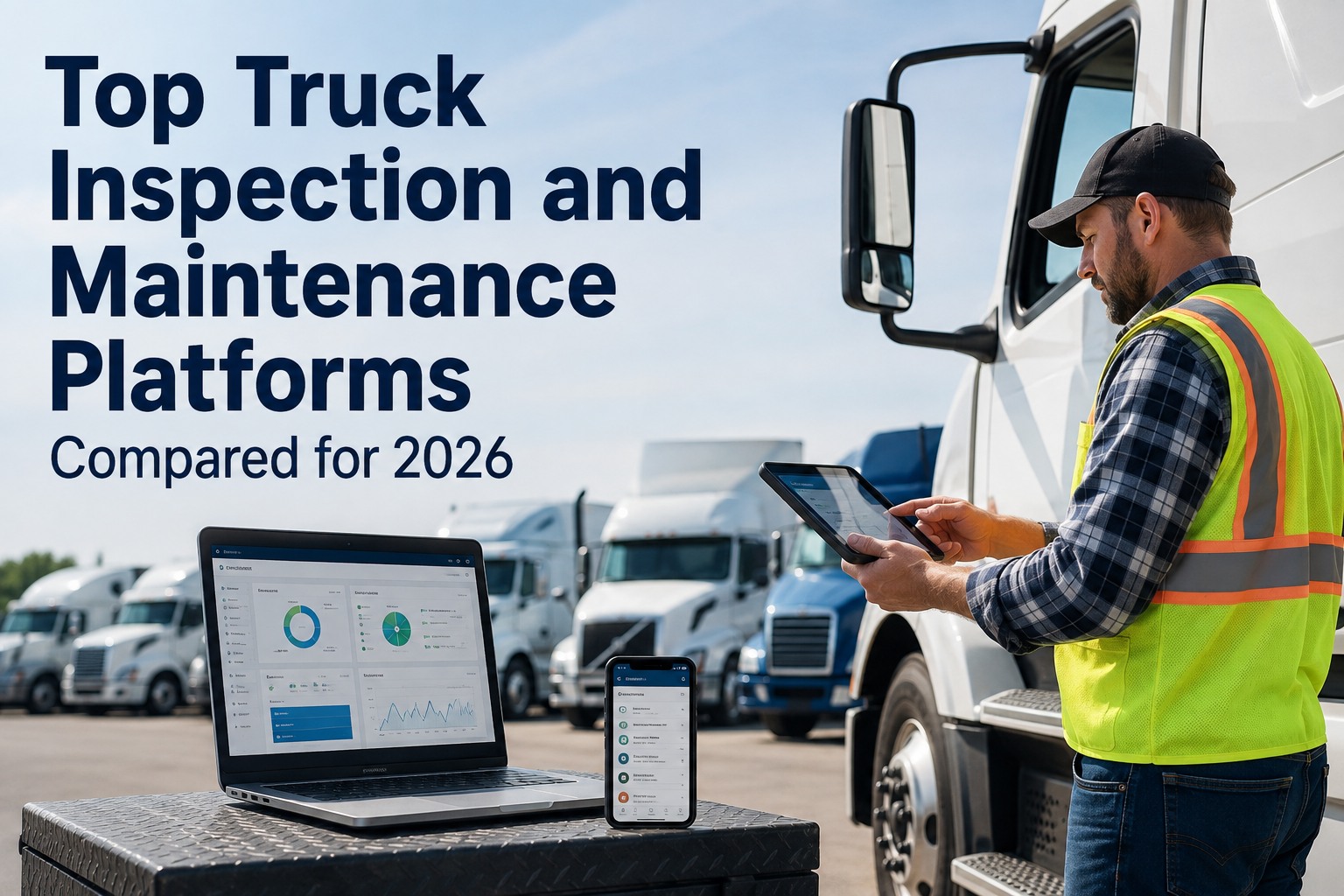
The truck inspection software market hit $1.32 billion in 2024 and is growing at 12.6% CAGR — meaning over 200 platforms now compete for your contract, and most look identical in a 30-minute demo. The real differences only surface after you sign: hardware requirements buried in the quote, auto-renewing 3-year contracts, per-user pricing that escalates as your team grows, and feature limitations that force a second subscription six months in. This guide breaks down exactly how to compare truck inspection software in 2026 — the 10 capabilities that matter, the four pricing tiers, the six hidden cost traps, and the buyer scorecard that protects fleets from picking wrong. With FMCSA's March 23, 2026 final rule explicitly authorizing eDVIRs and the new "Driver Observed" CSA category making your inspection quality visible on your carrier profile, picking the right platform isn't optional — it's strategic. Talk to our team for a side-by-side comparison with your current platform.
The 10 Capabilities That Actually Matter
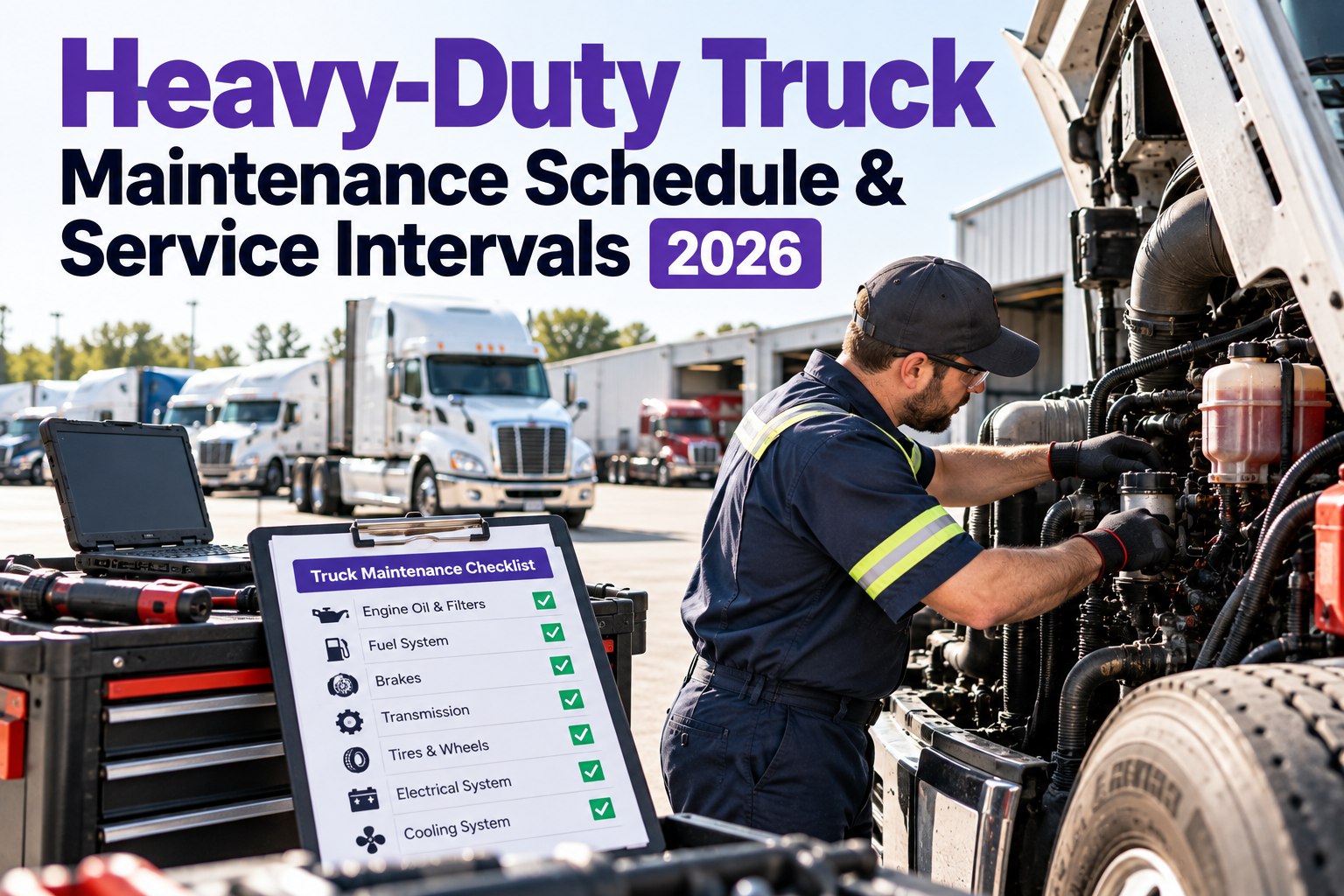
Every platform demos well. The real comparison happens against this 10-point capability scorecard. Each item maps to a specific operational outcome — adoption rate, audit pass rate, or compliance exposure. Use this as your evaluation checklist:
3-Signature DVIR Enforcement
Pre-trip, post-trip defect declaration, and mechanic repair certification. If any signature is optional, the 2026 CSA scoring will expose the gap.
Defect-to-Work-Order Automation
Defect reported = work order auto-created with photo, severity, parts requirement. No manual re-entry. The 2026 baseline for any serious platform.
Offline Capability
Inspections happen at truck stops, rural yards, and dead zones. Apps requiring connectivity produce skipped inspections — automatic audit failure.
Under-10-Minute Completion
Driver adoption dies above 10 minutes per inspection. Large tap targets, photo-first capture, guided walk-around order. UX is the adoption gate.
Vehicle-Type Templates
Tractors, trailers, reefers, vans, equipment — each needs purpose-built inspection items. One-template-fits-all platforms force compromise on coverage or speed.
CSA "Driver Observed" Mapping
The 2026 split made walk-around items (lights, tires, coupling, reflective tape) a separately scored CSA category. Platforms that don't map to it leave inspection quality invisible.
Photo-Embedded Defects
Every defect attached to timestamped, GPS-tagged photos within the DVIR record — not in a separate folder that gets disconnected. Eliminates ambiguity in repairs and litigation.
Real-Time Manager Dashboard
Completion rates, missed-inspection alerts, defect patterns, and cycle times visible to fleet manager in real time. CSV exports don't catch problems before they become violations.
Native Integrations
Direct connections to leading ELDs (Samsara, Geotab, Motive), telematics, fuel cards, accounting. Custom integration quotes signal platform immaturity.
Pricing Transparency
Per-vehicle pricing, no hardware lock-in, no auto-renewal traps, no proprietary device dependencies. Hidden costs inflate published rates 20-40%.
The Three Pricing Tiers — What You Actually Pay
Truck inspection platform pricing falls into three clearly defined tiers. The price tag tells you less than half the story — what you get for that price varies dramatically. Match your fleet size and complexity to the right tier:
- Basic eDVIR + photo capture
- Defect-to-work-order routing
- 3-signature enforcement
- Mobile app + cloud storage
- Email/chat support
- Standard FMCSA compliance
- All Entry features +
- Multi-terminal management
- Custom vehicle-type templates
- CSA score mapping
- Native ELD/telematics integrations
- Defect trend analytics
- Phone + priority support
- All Mid-Tier features +
- Predictive AI defect detection
- Full API + custom integrations
- Multi-site, multi-currency support
- Dedicated customer success manager
- SLA-backed uptime guarantees
- Custom reporting + BI tools
Industry data: 52% of fleet software buyers run 9 vehicles or fewer, yet most enterprise platforms price and configure for fleets 10x that size. Paying enterprise rates on a 20-vehicle fleet is as wasteful as running a 500-vehicle operation on entry-level tools.
The 6 Hidden Cost Traps
Industry analysis shows hidden charges inflate the total cost of fleet inspection software by 20-40% in the first year. The published per-vehicle rate is the start of the negotiation, not the end. Here are the six traps that catch unprepared buyers:
Required Hardware
"Free trial" platforms that require $200-$500 per truck in proprietary tablets, mounts, or telematics dongles. Adds 30-50% to Year 1 cost on a 50-truck fleet.
Auto-Renewing Multi-Year Contracts
3-year contracts with 90-day cancellation windows and automatic renewal. Miss the window, you're locked in at higher Year-2 rates. Always negotiate cancellation rights.
Per-User Charges
Per-vehicle base rate plus separate per-user fees for drivers, mechanics, dispatchers. Costs scale unpredictably as your team grows. Look for "unlimited users" pricing.
Implementation & Training Fees
$2,000-$10,000 one-time setup fees, plus per-driver training costs. Real platforms include onboarding in the subscription. Training under 25 minutes per driver shouldn't cost extra.
Tier Lock-Outs
Essential features (work orders, parts inventory, integrations) reserved for higher tiers. The $4/vehicle/month rate that becomes $7-$10 once you actually need to operate.
Minimum Vehicle Requirements
5 or 10-vehicle minimums that force small fleets to pay for unused seats. A 3-truck operation paying for 5 = 67% wasted spend. Look for true zero-minimum pricing.
Compare us against your current platform
Truck Inspection & Maintenance hits all 10 scorecard items at $3/vehicle/month with zero hidden costs — no minimums, no hardware lock-in, no contracts. Free for up to 3 vehicles. Sign up free to run a side-by-side comparison this week.
The Decision Framework — Match Platform to Need
Not every fleet needs the same platform. Here's how to map your primary pain point to the right product category:
The 7-Step Selection Process
Don't get sold by demos. Use this proven evaluation process to compare any 3-5 finalist platforms with confidence:
Define your top 3 pain points
Compliance failures, maintenance chaos, integration gaps, driver adoption, or cost control. Rank in order of business impact.
Score against the 10-point capability list
Use the scorecard above. Mark each platform as Has It / Partial / Missing for each capability. No platform scores 10/10 — find the one that hits your top 6-8.
Run the hidden-cost audit
Ask each vendor explicitly: hardware cost, minimum vehicles, contract length, cancellation terms, per-user charges, training fees. Get answers in writing.
Demo the actual workflow, not the marketing
Have your driver complete a real inspection during the demo. Time it. If it takes more than 10 minutes or confuses the driver, eliminate that vendor.
Pilot for 2-4 weeks on real vehicles
Free trials separate platforms that work from platforms that demo well. Run on 3-5 trucks across different vehicle types and operating conditions.
Verify references at your fleet size
Talk to current customers running fleets within 50% of your size. A platform optimized for 500-truck fleets often fails at 50 trucks.
Negotiate before signing
Cancellation rights, price-lock guarantees, training inclusion, integration credits. Vendors expect negotiation. The published price is rarely the best price.
Frequently Asked Questions
How much should fleet inspection software cost?
Real-world pricing falls into three tiers: Entry/SMB at $3-$8/vehicle/month, Mid-Tier at $15-$35/vehicle/month, and Enterprise at $35-$50+/vehicle/month. The right tier depends on fleet size and complexity, not vendor preference. Industry data shows 52% of buyers run 9 vehicles or fewer — paying for enterprise features at that scale is wasted spend.
Are paper DVIRs still legal in 2026?
Yes — but operationally disadvantaged. FMCSA's March 23, 2026 final rule (Docket FMCSA-2025-0115) explicitly authorizes electronic DVIRs while keeping paper as a permitted alternative. Paper records produce no usable data, fail audits even when inspections were done correctly, and 73% of paper DVIRs never reach the office. Digital is the 2026 standard. Contact our specialists for a paper-to-digital transition plan.
How long does software switching take?
Most fleets complete the transition in 2-4 weeks: configure templates per vehicle type (day 1), map checklist items to walk-around order (day 1-2), set defect routing rules (day 2), train drivers in a single 25-minute session (day 3-5), and pilot with one terminal before fleet-wide rollout. 95%+ driver adoption within 30 days is the documented norm.
What's the difference between DVIR-only and full fleet platforms?
DVIR-only platforms ($3-$10/vehicle/month) handle inspections and basic compliance. Full fleet platforms ($15-$35/vehicle/month) add maintenance management, work orders, parts, fuel tracking, and analytics. The 2026 trend is toward integrated platforms because data silos between disconnected tools create the same problems as paper. Sign up free to test a unified workflow.
How do I compare platforms objectively?
Use the 10-point capability scorecard above. Mark each finalist as Has It / Partial / Missing for every capability. Run the hidden-cost audit (hardware, minimums, contracts, per-user, training). Pilot on real vehicles for 2-4 weeks. Verify references at your fleet size. The platform that scores highest on YOUR top pain points wins — not the one with the best marketing.
What's the smallest fleet that benefits from inspection software?
Even 1-3 vehicle owner-operators benefit. The first prevented roadside violation ($1,270+) covers more than a year of software cost. The compliance audit trail protects against "Nuclear Verdicts" in accident litigation. Truck Inspection & Maintenance is free for up to 3 vehicles and $3/vehicle/month after that — accessible at any fleet size. Talk to our team about right-sized deployment.
Don't pick a platform from a 30-minute demo.
Use the 10-point scorecard. Run the hidden-cost audit. Pilot on real vehicles. Truck Inspection & Maintenance hits every scorecard item at $3/vehicle/month with no contracts, no hardware, no minimums. Free for up to 3 vehicles. Compare us against any platform on the market.