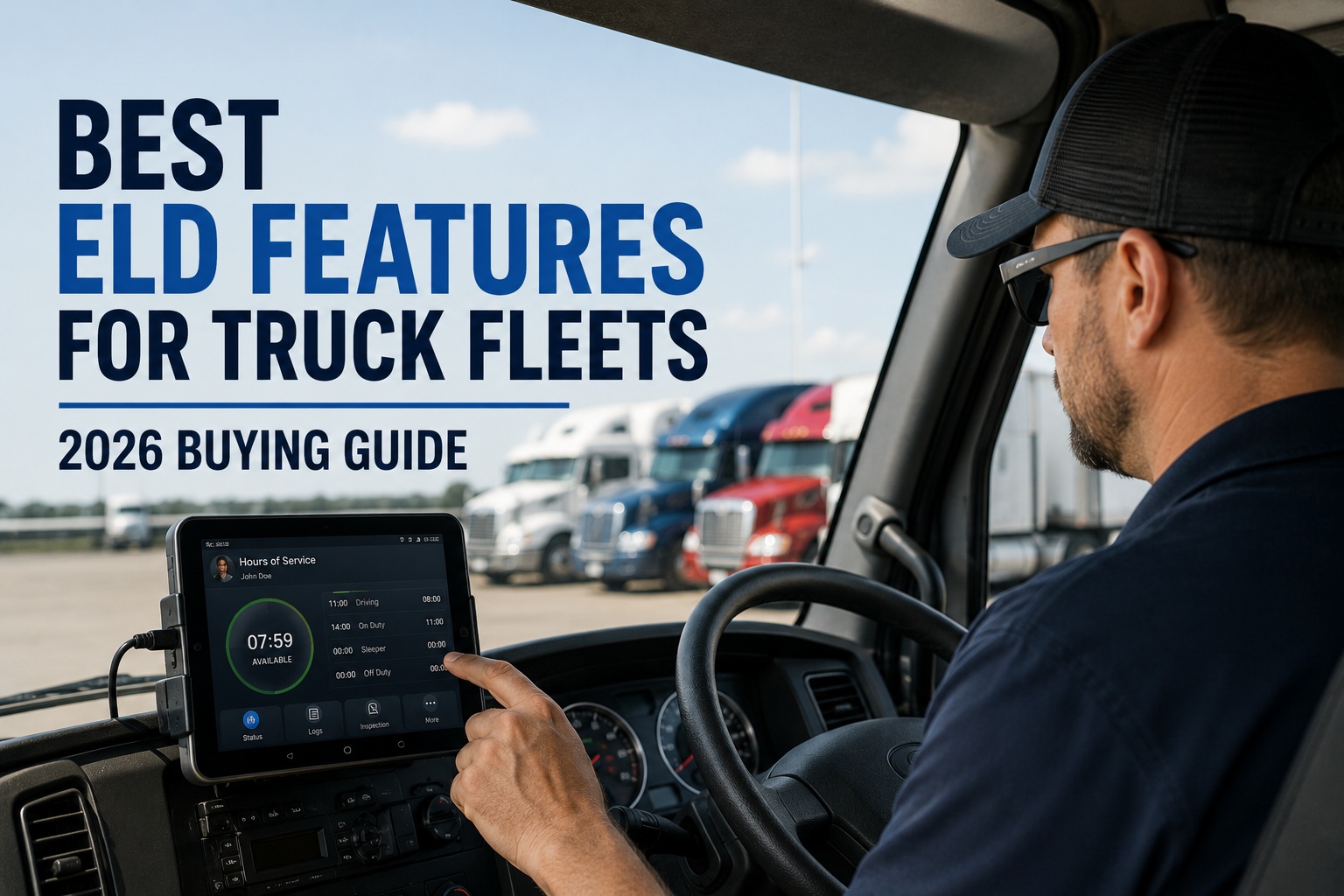
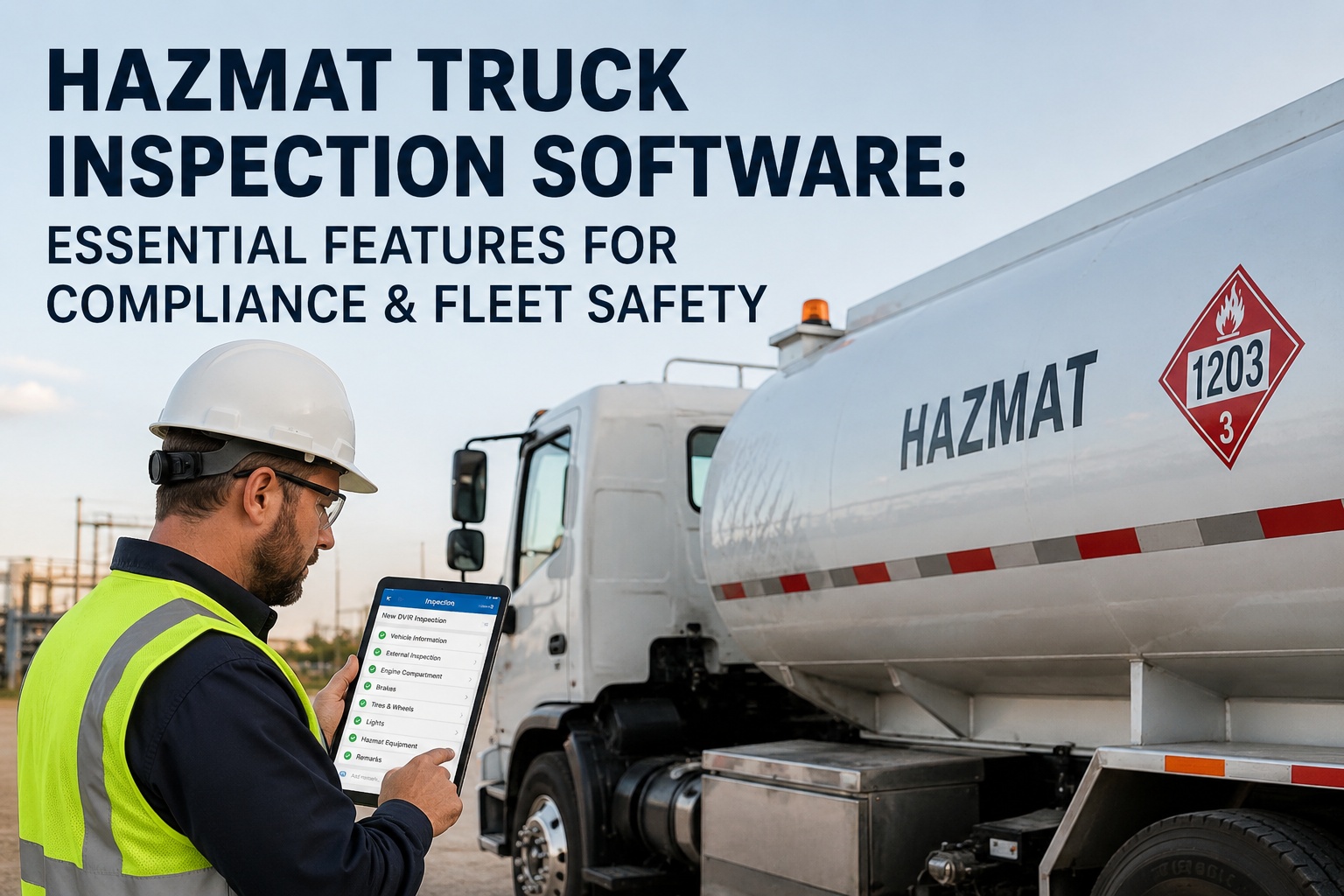
The "DVIR app market" in 2026 is split between two categories: glorified PDF builders that won't survive a DOT audit, and purpose-built fleet inspection platforms that prevent breakdowns, reduce CSA scores, and pay for themselves within the first month. The difference comes down to ten specific features — and most fleet managers don't know which ones to insist on until they're sitting through a roadside audit holding records that lack timestamps, GPS coordinates, photo evidence, or repair certifications. The 2026 FMCSA changes to CSA's "Driver Observed" methodology made the gap worse: paper-based fleets and basic checklist apps cannot document driver-level defect detection in real time, which directly damages the new BASIC sub-category. Industry data shows fleets running comprehensive inspection platforms cut DVIR completion time to 5-12 minutes, hit 99% compliance vs 61% on paper, and recover the cost of the platform from a single prevented breakdown. Truck Inspection & Maintenance is a cloud-based platform built around the ten features below — every one of them. This guide walks through what each feature actually does, why it matters, and how to evaluate any platform you're considering. Talk to our team for a feature walkthrough.
Inspection App Guide · 2026
Top 10 Features to Look for in a Truck Inspection App
FMCSA-defensible. Audit-ready. Truck Inspection & Maintenance delivers all 10.
5-12 minInspection time on our app
99% vs 61%Digital vs paper completion
$19,000Per FMCSA DVIR violation
1 monthTypical platform payback
Feature #1: Real-Time Cloud Sync
When a driver completes a DVIR, the dispatcher, fleet manager, and shop supervisor should see it within seconds — not at the end of the shift when a paper book hits the office. Truck Inspection & Maintenance is a cloud-based platform with instant sync across every user role:
Why it matters: Defect-to-repair cycle times collapse from days to hours when inspection data appears immediately. Fleet managers see issues across all vehicles in real time, not at end-of-day batch updates.
What to verify: Ask vendors to demo: driver submits DVIR on phone, fleet manager dashboard updates within 60 seconds. No manual refresh, no "wait for sync."
Our implementation: Cloud architecture pushes updates instantly to all authorized users. Driver, mechanic, supervisor, manager — all see the same data at the same moment. No version lag, no exports.
Feature #2: GPS-Tagged Inspections
"Pencil whipping" — completing inspections from the driver's couch — is the #1 audit risk. GPS tagging at inspection time eliminates the practice. Every Truck Inspection & Maintenance DVIR is geotagged at the exact location of completion:
Why it matters: FMCSA auditors increasingly require location verification. A DVIR completed at a Starbucks 30 miles from the vehicle yard = audit findings. CSA "Driver Observed" methodology specifically requires location proof.
What to verify: Inspection records should show latitude/longitude coordinates plus address translation. Map view should be available on every inspection in the dashboard.
Our implementation: GPS coordinates captured the moment inspection starts, locked to the record permanently. Address reverse-lookup displayed in dashboard. Inspections completed off-site flagged automatically.
Feature #3: Mandatory Photo Capture
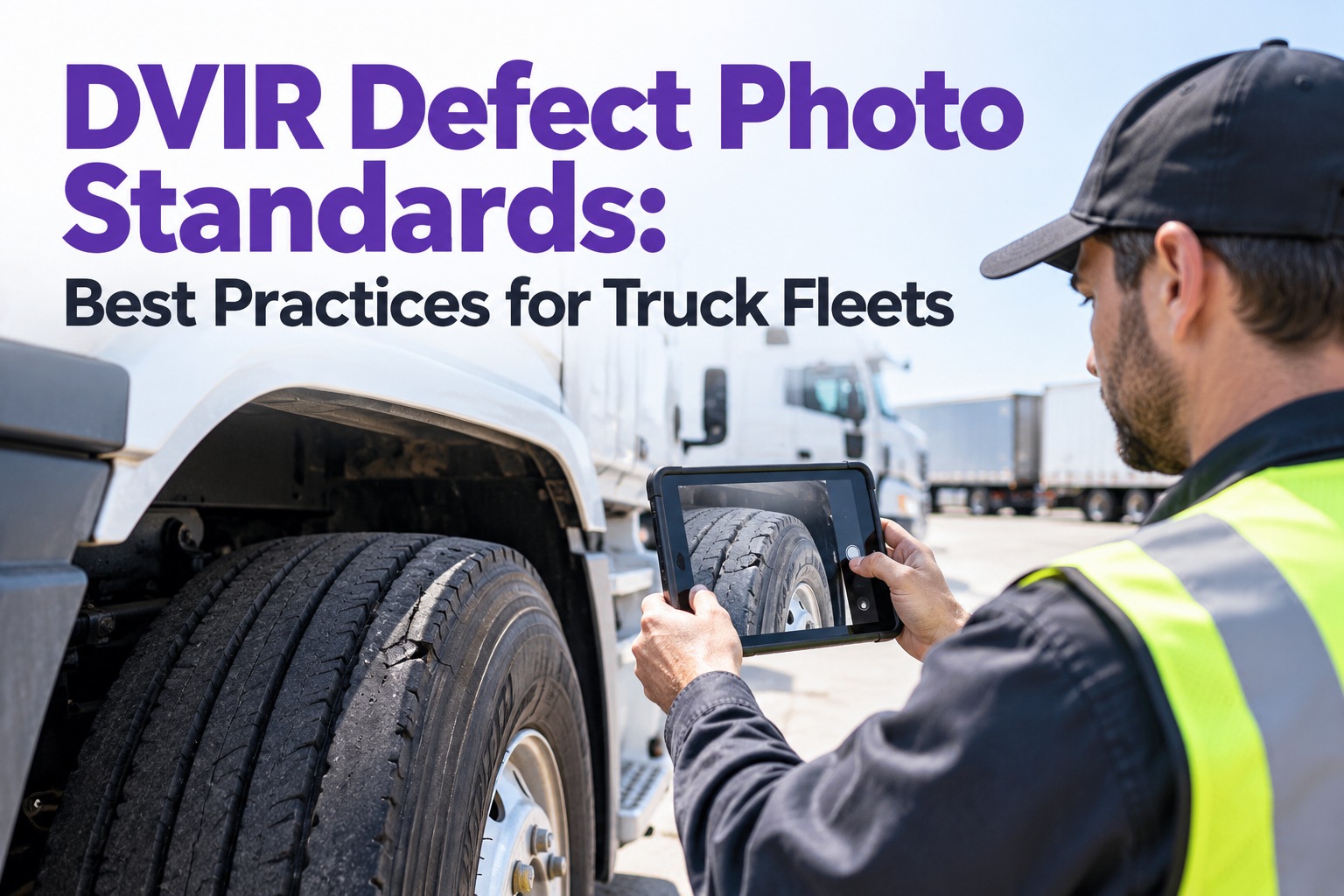
"Driver said the brake light was fine" doesn't hold up at audit or in litigation. Photo evidence does. Truck Inspection & Maintenance requires photos for any flagged defect — and supports photos on routine items at driver discretion:
Why it matters: Visual evidence eliminates ambiguity between "minor scratch" and "structural crack," accelerates maintenance response with exact defect location, and creates litigation-grade documentation.
What to verify: Photos must embed in the DVIR record itself — not save to a separate gallery that can disconnect. Multiple photos per defect must be supported.
Our implementation: Photos captured in-app via native camera. Each photo timestamped and GPS-tagged. Embedded directly in the work order alongside the defect description.
Feature #4: Auto Work Order Generation
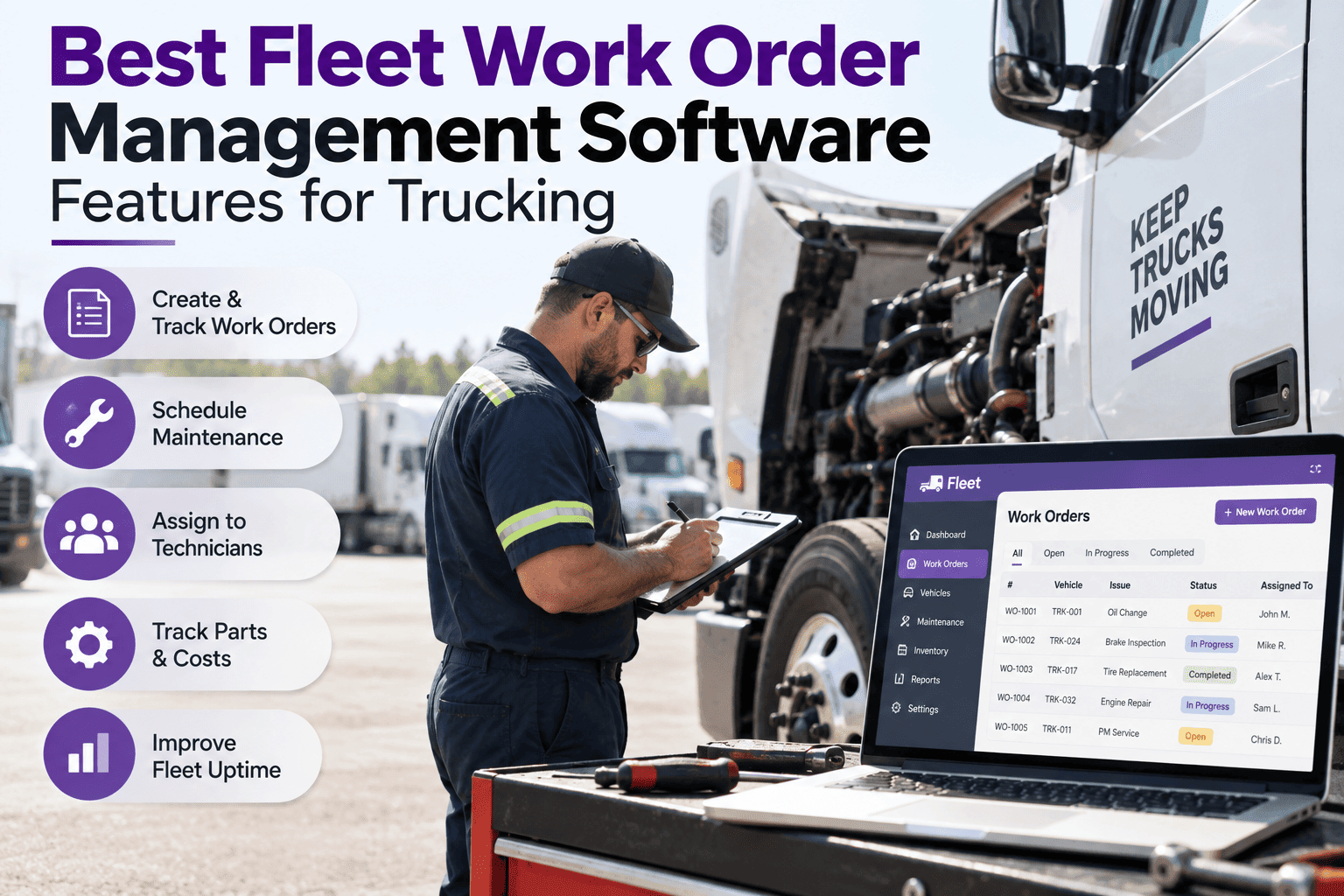
When a driver flags a defect, what happens next determines whether your fleet is reactive or proactive. Truck Inspection & Maintenance auto-creates a maintenance work order linked to the DVIR — no manual transfer, no separate entry:
Why it matters: Manual transfer is where 73% of paper-reported defects get lost. Auto-creation closes the loop. By 2026, this is a minimum expectation — not a differentiator.
What to verify: Defect-to-work-order should happen in seconds. Work order should pre-populate with vehicle history, defect photos, and recommended technician. Severity routing should auto-prioritize.
Our implementation: Critical defects auto-ground vehicle and notify shop immediately. Moderate defects queue for next PM. Minor defects go to watchlist. All in one workflow.
Feature #5: Vehicle-Type Templates
Tractors, trailers, reefers, dump trucks, excavators — each has different inspection points. A single generic checklist either misses critical items or wastes driver time. Truck Inspection & Maintenance ships with templates for every major vehicle class:
Why it matters: Tractor checklists need engine, brakes, steering, lights (37+ items). Trailer checklists need brakes, tires, lights, reflective tape, landing gear, frame, doors, cargo securement (28+ items). One-size-fits-none.
What to verify: Pre-built templates for every vehicle class in your fleet. Full customization for company-specific items. Linked inspections for tractor+trailer+reefer combinations.
Our implementation: Auto-loads the right template per VIN. Multi-asset inspection workflow for combo vehicles. Custom items can be added per fleet without losing FMCSA-required base items.
Feature #6: 3-Signature Compliance Chain
FMCSA 49 CFR 396.11(a)(3) requires a documented chain: driver pre-trip, then mechanic repair certification, then next driver acknowledgment. Most apps capture the first signature and miss the next two. Truck Inspection & Maintenance enforces all three:
Why it matters: Missing signatures in the chain = FMCSA violation. Even if both inspection AND repair happened, if the linkage isn't documented, auditors cite it. This is the #1 compliance gap.
What to verify: App should block dispatch when previous DVIR is unsigned. Mechanic must certify repair on the ORIGINAL defect record, not a separate work order. Next driver acknowledgment captured before truck moves.
Our implementation: Three-signature workflow enforced in software. Truck cannot dispatch until previous DVIR has mechanic certification + next driver acknowledgment. Audit trail unbroken by design.
Feature #7: CSA Score Integration
FMCSA's 2026 update to CSA scoring split the Vehicle Maintenance BASIC into "Standard" and "Driver Observed" sub-categories. Inspection apps must report data in formats that map directly to the new methodology. Truck Inspection & Maintenance is pre-mapped:
Why it matters: CSA scores drive insurance pricing, load access, and FMCSA intervention triggers. Above 80% on any BASIC = market decline from standard insurance. The 2026 Driver Observed sub-category penalizes fleets that can't document driver-level defect detection.
What to verify: Reports should map directly to CSA BASIC categories. "Driver Observed" items (lights, tires, coupling, reflective tape) tracked separately. Per-driver defect patterns visible for coaching.
Our implementation: Inspection templates pre-mapped to 2026 CSA Driver Observed items. Defect patterns tracked per driver. CSA-format reports exportable for review with safety consultants.
Feature #8: Real-Time Defect Alerts
A defect logged at 6 AM that nobody sees until 2 PM is a defect not actually managed. Truck Inspection & Maintenance routes alerts in real-time — fleet manager dashboard, supervisor mobile notification, and email all fire simultaneously:
Why it matters: Defect-to-repair cycle time directly correlates to CSA scores, breakdown prevention, and insurance pricing. Industry data: paper fleets average 3 days, integrated platforms achieve 4 hours.
What to verify: Defect notifications should fire within 60 seconds of submission. Severity-based escalation paths. Acknowledgment tracking so nothing falls through the cracks.
Our implementation: Critical defects = immediate notification to fleet manager + shop supervisor + safety. Moderate = dashboard flag. Minor = next-day digest. Severity ladder configurable per fleet.
Feature #9: PM Integration & Maintenance System Sync
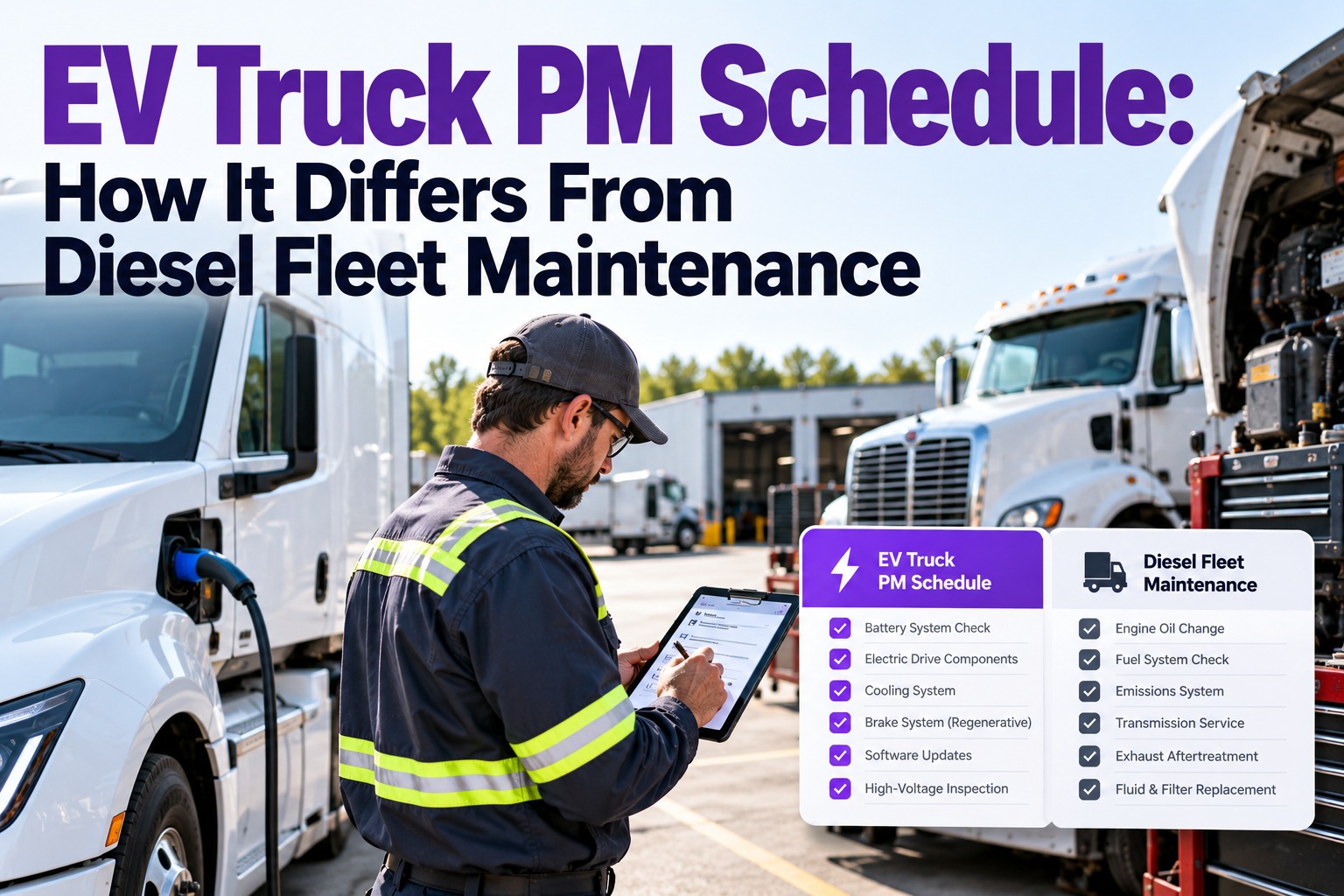
Inspection apps that don't talk to maintenance systems force duplicate data entry. The defect logged in the inspection app must manually retype into the CMMS, vehicle history, and parts system. Truck Inspection & Maintenance is one platform — DVIR through repair completion:
Why it matters: Standalone DVIR apps + separate CMMS = duplicate data entry, fragmented vehicle history, and broken audit trails. The platforms winning in 2026 are integrated, not stitched.
What to verify: Inspection defects should flow into the same work order system, the same vehicle history file, the same parts inventory. One vehicle = one record across all functions.
Our implementation: DVIR, PM scheduling, work orders, parts inventory, telematics integration, and reporting all in one platform. One vehicle file holds everything — searchable across all dimensions.
Feature #10: Audit-Ready Records Export
When a DOT auditor walks in and asks for "Unit 327, last 18 months of records," the right answer is "Here it is" — not "Give us a week." Truck Inspection & Maintenance exports complete audit packets in one click:
Why it matters: FMCSA 49 CFR 396 requires DVIRs retained 3 months, periodic inspections 14 months, maintenance records 1 year + 6 months. Auditors specifically trace each DVIR defect to its repair record. Manual assembly = days of work.
What to verify: One-click export by vehicle/date range. PDF format with timestamps, GPS, photos, signatures intact. Retention schedules automated per regulation.
Our implementation: Click vehicle, select date range, download complete audit packet PDF. DVIRs, work orders, parts, photos, signatures, certifications — all in one bundle. Insurance renewals use the same export.
Free Trial · 3 Vehicles
Stop evaluating. Start inspecting.
Truck Inspection & Maintenance delivers all 10 features — real-time cloud sync, GPS tagging, photo capture, auto work orders, vehicle templates, 3-signature compliance, CSA integration, real-time alerts, PM integration, audit exports. Sign up free on your first 3 vehicles in 10 minutes.
The Feature Checklist — Quick Reference
When evaluating any truck inspection app, run through this 10-point checklist. Truck Inspection & Maintenance passes every check; many competitors fail on 3-5:
#
Feature
Why Critical
Status
1
Real-Time Cloud Sync
Instant visibility across all users
Yes
2
GPS Tagging
Prevents pencil-whipping, required for CSA
Yes
3
Mandatory Photo Capture
Litigation-grade evidence
Yes
4
Auto Work Orders
Closes defect-to-repair gap
Yes
5
Vehicle-Type Templates
Right items per asset class
Yes
6
3-Signature Compliance
49 CFR 396.11(a)(3) chain
Yes
7
CSA Score Integration
2026 Driver Observed methodology
Yes
8
Real-Time Defect Alerts
4-hour cycle vs 3-day paper
Yes
9
PM/Maintenance Integration
One platform, not stitched
Yes
10
Audit Export
One-click DOT defense
Yes
The evaluation rule: If an app fails on any of features 1-6, walk away. Features 7-10 separate good platforms from market-leading ones. Truck Inspection & Maintenance delivers all 10 in one platform with one subscription.
Red Flags — Apps to Walk Away From
Beyond what to look for, watch for these warning signs. Each is a signal the app won't survive a 2026 DOT audit or real fleet operations:
!
Batch-only sync (no real-time updates). If fleet managers only see DVIRs at end-of-day batch refreshes, defects compound for hours. Real-time cloud sync is non-negotiable.
!
Photos stored separately from DVIR. Photo galleries that disconnect from inspection records create audit gaps. Photos must embed in the record itself.
!
No mechanic certification workflow. If repairs aren't certified on the ORIGINAL DVIR, the compliance chain breaks. 49 CFR 396.11(a)(3) requires it.
!
Manual CSV exports only. If you can't run integrated reports across inspections, work orders, and PM data, the platform isn't a real CMMS.
!
Per-user pricing that punishes growth. Per-vehicle pricing aligns better with fleet economics. Per-user charges add up fast as drivers/dispatchers come and go.
!
"DOT compliance" without specific citations. Vendors who can't cite the specific FMCSA rules they comply with don't actually comply with them. Ask for chapter and verse.
The ROI Math — Why These Features Pay for Themselves
The features described above aren't just nice-to-have — they generate measurable financial returns. Truck Inspection & Maintenance customers report consistent results:
1 prevented breakdown = full year subscription. Roadside breakdowns average $5,000-$15,000 each. One prevented event funds the platform for an entire fleet for 12+ months.
$19,000 saved per avoided DVIR violation. 2026 FMCSA fines for DVIR falsification. Digital inspection records with GPS + photo + timestamp eliminate the falsification risk entirely.
10-20% insurance premium reduction. Documented DVIR compliance + PM records flip fleets from Standard to Preferred risk. Underwriters credit the platform output directly.
7-8 hours saved per audit cycle. One-click export vs manual file assembly. DOT audits, insurance renewals, customer compliance reviews all use the same export.
4-hour vs 3-day defect cycle. 17x faster defect-to-repair. On a 25-truck fleet, this recovers 15+ vehicle-days of uptime per month.
CSA score improvement. 90 days of clean digital DVIRs typically drops Vehicle Maintenance BASIC by 10-20 points. Direct impact on insurance and load access.
Frequently Asked Questions
What's the most important feature in a truck inspection app?
Real-time cloud sync. Without it, fleet managers see DVIRs at end-of-day batch refreshes — and defects compound for hours before anyone acts. Truck Inspection & Maintenance is a cloud-based platform that pushes updates instantly to every authorized user. Driver, mechanic, supervisor, manager all see the same data at the same moment — no version lag, no manual exports. Contact our specialists to see real-time sync in action.
How long should a truck inspection actually take?
5-12 minutes for a thorough pre-trip. Once a driver completes 2-3 inspections on the platform, they're faster on the app than on paper. Truck Inspection & Maintenance's vehicle-specific templates eliminate scrolling through irrelevant items — drivers see only what applies to the vehicle in front of them.
Does a DVIR app really need GPS tagging?
Yes — and FMCSA increasingly requires it. The 2026 CSA "Driver Observed" methodology specifically requires location-based proof of inspection. GPS tagging prevents pencil-whipping (completing DVIRs away from the vehicle), creates audit-defensible records, and feeds CSA reporting accurately. Apps without GPS won't survive a focused 2026 DOT audit.
What's the difference between a DVIR app and a fleet maintenance platform?
A standalone DVIR app captures inspections. A fleet maintenance platform connects inspections to PM scheduling, work orders, parts inventory, telematics, and reporting in one system. The standalone approach creates duplicate data entry and fragmented vehicle history. Truck Inspection & Maintenance is the integrated cloud platform — DVIR through repair completion in one workflow. Sign up free to see the integration in action.
How do I know if an app is FMCSA-compliant?
Ask the vendor to cite specific regulations they comply with: 49 CFR 396.11 (DVIR requirements), 396.11(a)(3) (repair certification chain), 396.17 (annual periodic inspection), and 396.3 (systematic preventive maintenance). Compliant platforms cite chapter and verse. Vendors who say "we're DOT compliant" without specifics usually aren't. Truck Inspection & Maintenance maps every feature to specific regulatory citations available in the documentation.
What does a truck inspection app actually cost?
Industry range: $3-$15 per vehicle per month for purpose-built platforms. Avoid per-user pricing as it punishes fleet growth. Truck Inspection & Maintenance prices per vehicle, free for the first 3 vehicles — letting fleets validate fit before scaling. ROI math: a single prevented roadside breakdown ($5K-$15K) typically funds the platform for an entire year. Talk to our team for fleet-specific pricing.
All 10 Features · One Platform
Anyone can build a checklist. Truck Inspection & Maintenance delivers all 10.
Real-time cloud sync. GPS tagging. Photo capture. Auto work orders. Vehicle templates. 3-signature compliance. CSA integration. Real-time alerts. PM integration. Audit export. Free for up to 3 vehicles. No card, no contract, no hardware install.