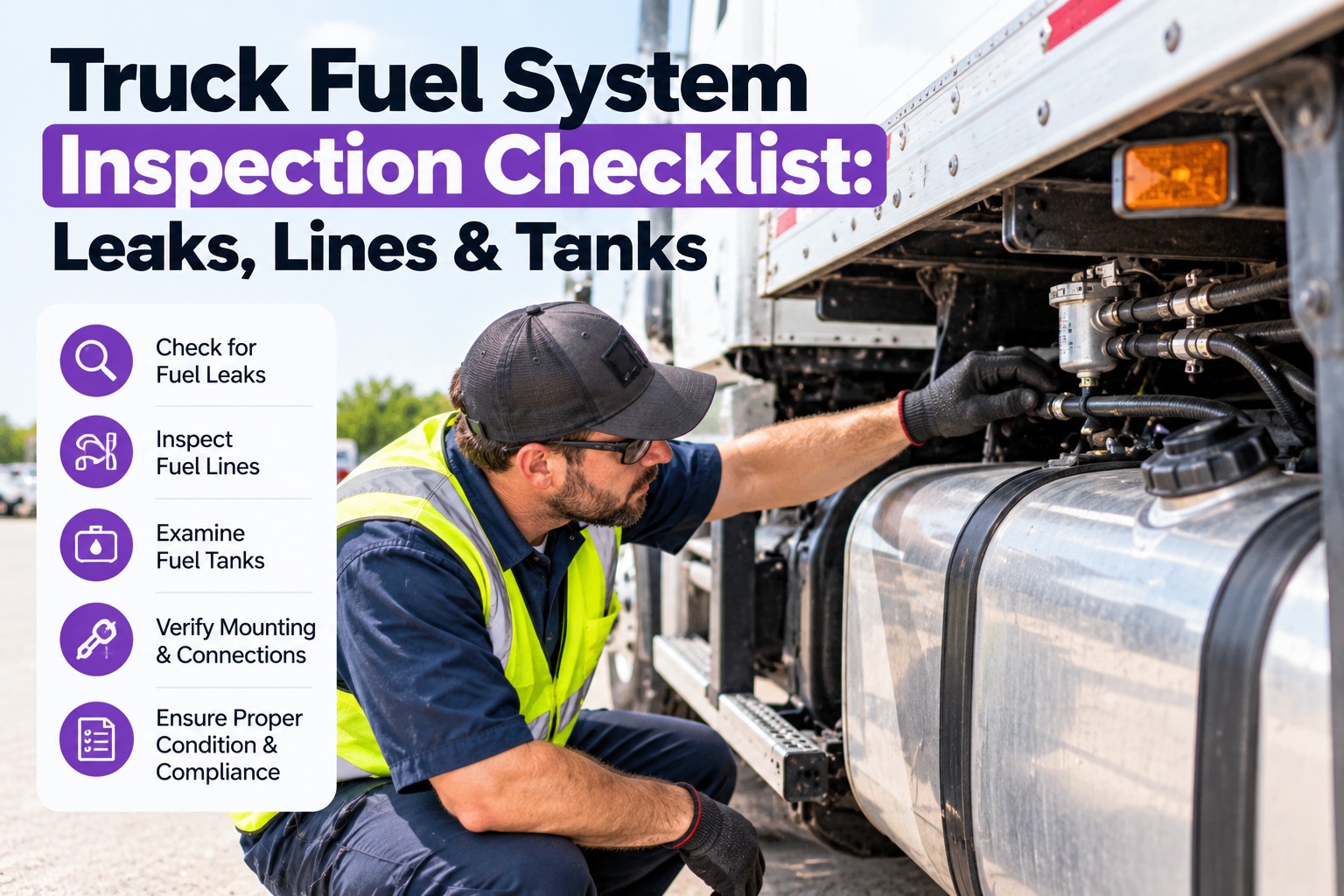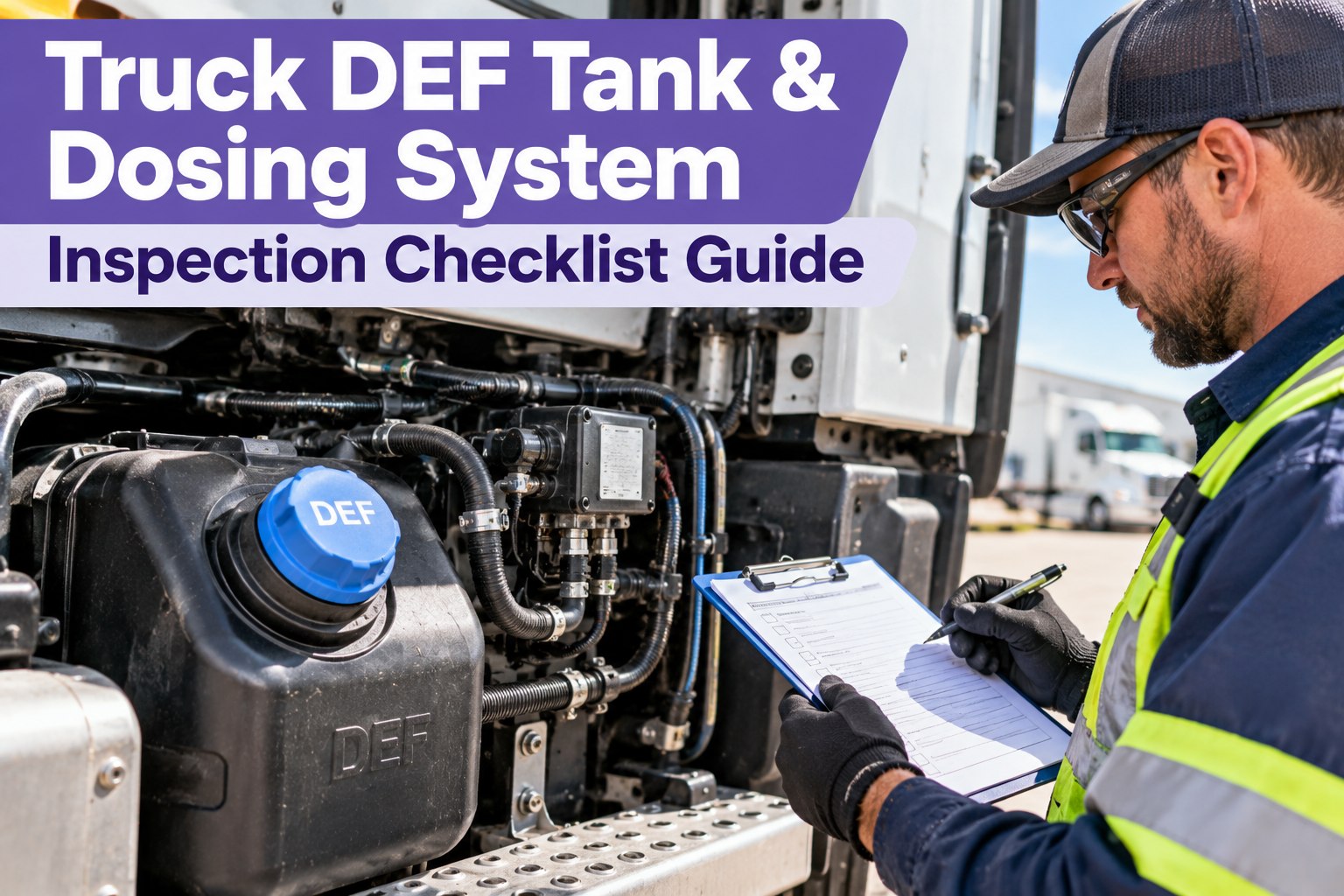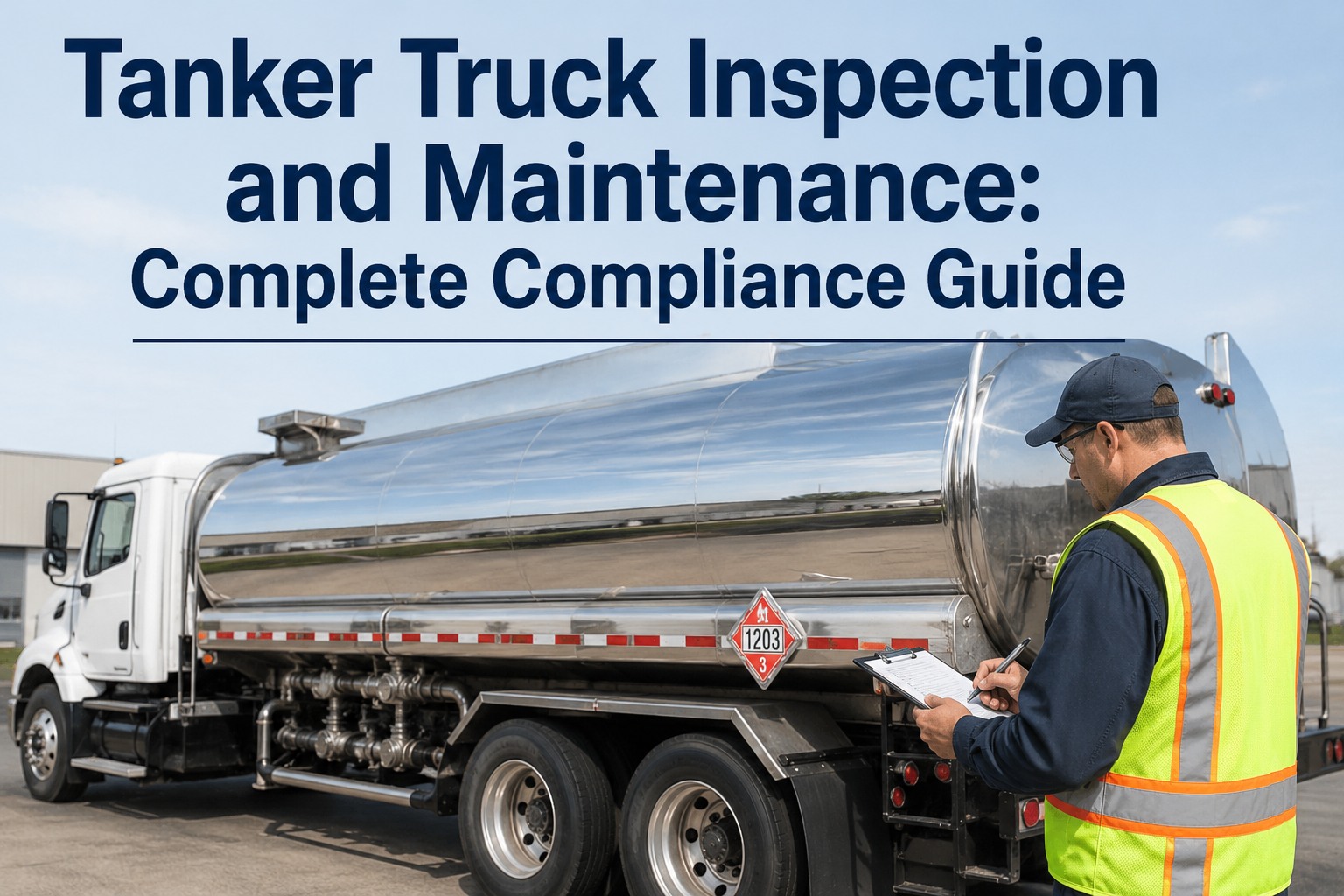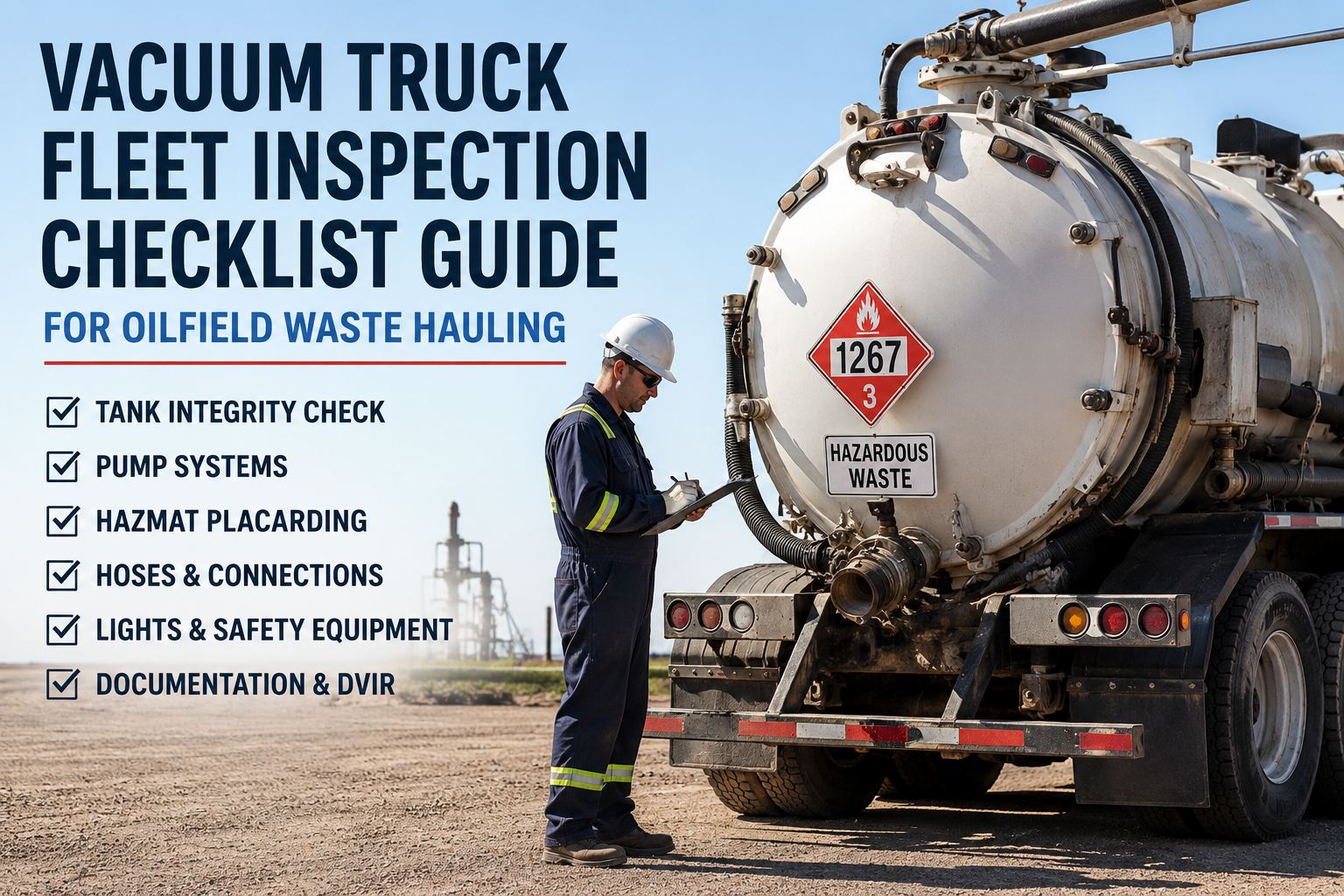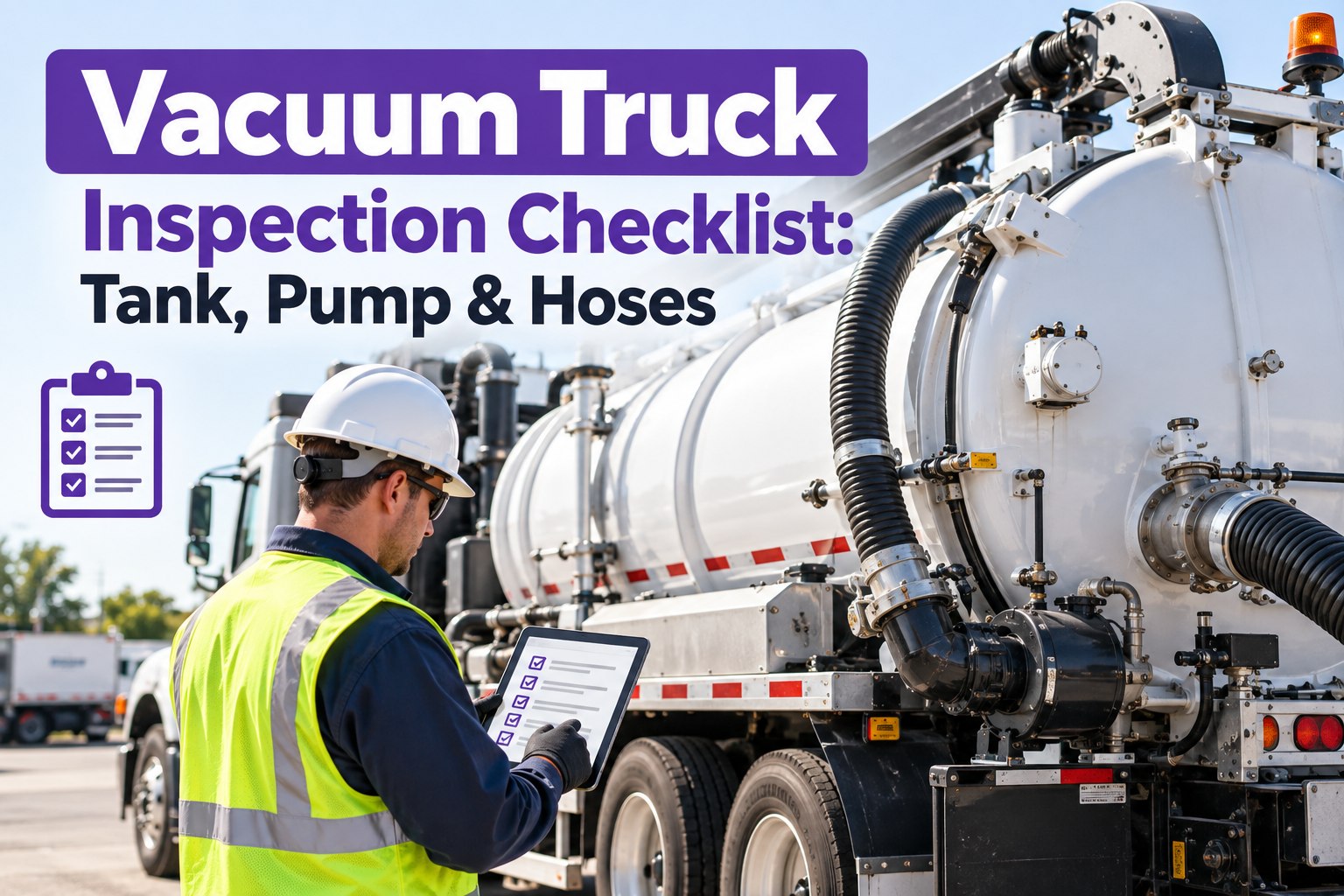
A vacuum truck is two machines in one: a commercial truck that has to pass a normal DOT walkaround, and a pressure-and-vacuum system that moves liquids, sludge or debris. Most pre-trips cover the first machine well and skip the second. This vacuum truck inspection checklist covers both, from the tank shell and hatches to the pump, hoses, valves and safety controls, with what to look for and what to do when something fails. The driver's duty to confirm the vehicle is safe sits in 49 CFR 392.7 and 396.13. Tank and pump details vary by build and by what you haul, so always follow the manufacturer's manual and your site rules. What a checklist alone can't do is get a failed item fixed, and that is the job of Truck Inspection & Maintenance Management Software.
Vacuum Truck Inspection Checklist: Tank, Pump & Hoses
Vacuum trucks work hard, and their tank, pump and hose problems often hide behind a normal-looking walkaround. Truck Inspection & Maintenance Management Software gives operators a guided checklist for the whole unit, grades each failed item, turns it into a work order, and schedules the next check in your PM plan.
Four Systems, One Truck
Walk a vacuum truck as four connected systems instead of one long list. Each system has its own failure modes, and a problem in one often shows up in another. A cracked hose, for example, can look like a weak pump.
The Checklist, System by System
Do this with the truck parked on level ground, the pump off and the PTO disengaged. Use the lockout and confined-space procedures your site requires. Each item can be marked pass or fail in the app, with a photo when something looks wrong.
- Shell has no dents, cracks, bulges or corrosion pitting
- Seams and welds show no weeping, rust streaks or fresh repairs
- Hatch lids close and seal fully, and gaskets are soft and uncracked
- Hatch latches, hinges and dogs are intact and move freely
- Pressure/vacuum relief valve is present, clean and free to move
- Shutoff or overfill protection is present and working per the manufacturer
- Ladder, handrails and walkway are secure and non-slip
- Required placards and markings are present and readable
- Pump oil is at the correct level and clean, not milky or dark
- No oil or fluid leaks at seals, fittings or the pump base
- Drive shaft and guards are secure, with no wobble or missing hardware
- PTO engages and disengages smoothly, with no grinding
- Filters and moisture separator are clean and not clogged
- Muffler and exhaust piping are secure and free of leaks
- Gauges read normally and are not cracked or fogged
- No unusual noise, heat or vibration during a short run
- Hoses have no cuts, bulges, soft spots, kinks or exposed reinforcement
- Couplings are tight, with no cracks, corrosion or worn threads
- Gaskets and cam-lock arms are present and seal properly
- Hose is rated for the material and pressure you actually handle
- Boom, arm and hose reel move freely and lock securely
- Valves operate fully, with no sticking or weeping at the stem
- Outlet caps and plugs are present and sealed
- Hose storage tubes and mounts are secure
- Emergency shutoff or kill switch works and is easy to reach
- Warning lights, strobes and back-up alarm work
- Fire extinguisher is charged, mounted and in date
- Bonding and grounding cable and clamps are intact
- PPE and spill kit are on board per your site rules
- Eyewash or wash station is stocked where required
- Warning triangles and standard cab equipment are present
- Required permits and paperwork are accessible
Pass, Repair or Do Not Operate
Not every finding stops the truck, but a few should stop the job. Use these levels as a starting point, and let your manufacturer's manual and company policy set the final limits.
- Light surface rust on non-structural parts
- Worn hose label or faded marking
- Minor gasket aging with a good seal
- Hose with cuts or soft spots
- Weeping valve stem or pump seal
- Hatch gasket that no longer seals
- Clogged filter or separator
- Cracked or leaking tank shell or weld
- Stuck or missing relief valve
- Failed emergency shutoff
- Bulging or burst-prone hose under vacuum or pressure
- Standard DOT out-of-service defect on the chassis
When the Truck Tells You Something's Wrong
Operators usually notice a symptom before they find the defect. Match what you see or hear to the likely source, then check that part first.
| Symptom | Likely Cause | Check First |
|---|---|---|
| Weak vacuum or slow loading | Air leak, clogged filter, worn pump or hatch not sealing | Hatch gaskets, hoses, filters and separator |
| Pump runs hot or loud | Low or contaminated oil, restricted intake or worn parts | Oil level and condition, filters |
| Milky or foamy pump oil | Moisture or product carried into the pump | Separator, overfill protection, shutoff |
| Liquid or sludge at the exhaust | Overfill or failed shutoff device | Overfill protection and relief valve |
| Hose collapses or bulges | Wrong or worn hose, or an internal liner failure | Hose rating, age and condition |
| Drip at a valve or outlet | Worn seat, seal or loose cam-lock | Valve stem, gasket and cap |
Daily, Weekly or at PM: What Goes When
Not every point needs checking every day. Splitting the list keeps the daily walkaround short and the deeper checks from being forgotten.
- Chassis walkaround, tires and brakes
- Tank hatches, seals and relief valve
- Hose condition and coupling tightness
- Pump oil level and obvious leaks
- Emergency shutoff and safety gear
- Filters and separator cleaned or checked
- Hose reel, boom and valve operation
- Gasket condition across all hatches
- Grounding cable and clamps
- Gauge accuracy and readability
- Pump oil change and service per the manual
- Relief valve and overfill device testing
- Tank shell and weld inspection
- Hose replacement by age or condition
- Required periodic tank tests and records
One Checklist for the Truck and the Equipment on It
Generic truck forms miss the tank, pump and hoses. With Truck Inspection & Maintenance Management Software, you build the checklist around your unit, so operators inspect the same points every shift. A failed hose or seal becomes a work order with a photo attached, and the recurring checks stay on the schedule instead of in someone's memory.
Where Vacuum Truck Problems Cost Fleets
Frequently Asked Questions
Give Every Operator a Checklist That Covers the Whole Unit
Start free and run a guided inspection on one vacuum truck, or talk to our team about building a checklist that matches your tank, pump and hose setup.