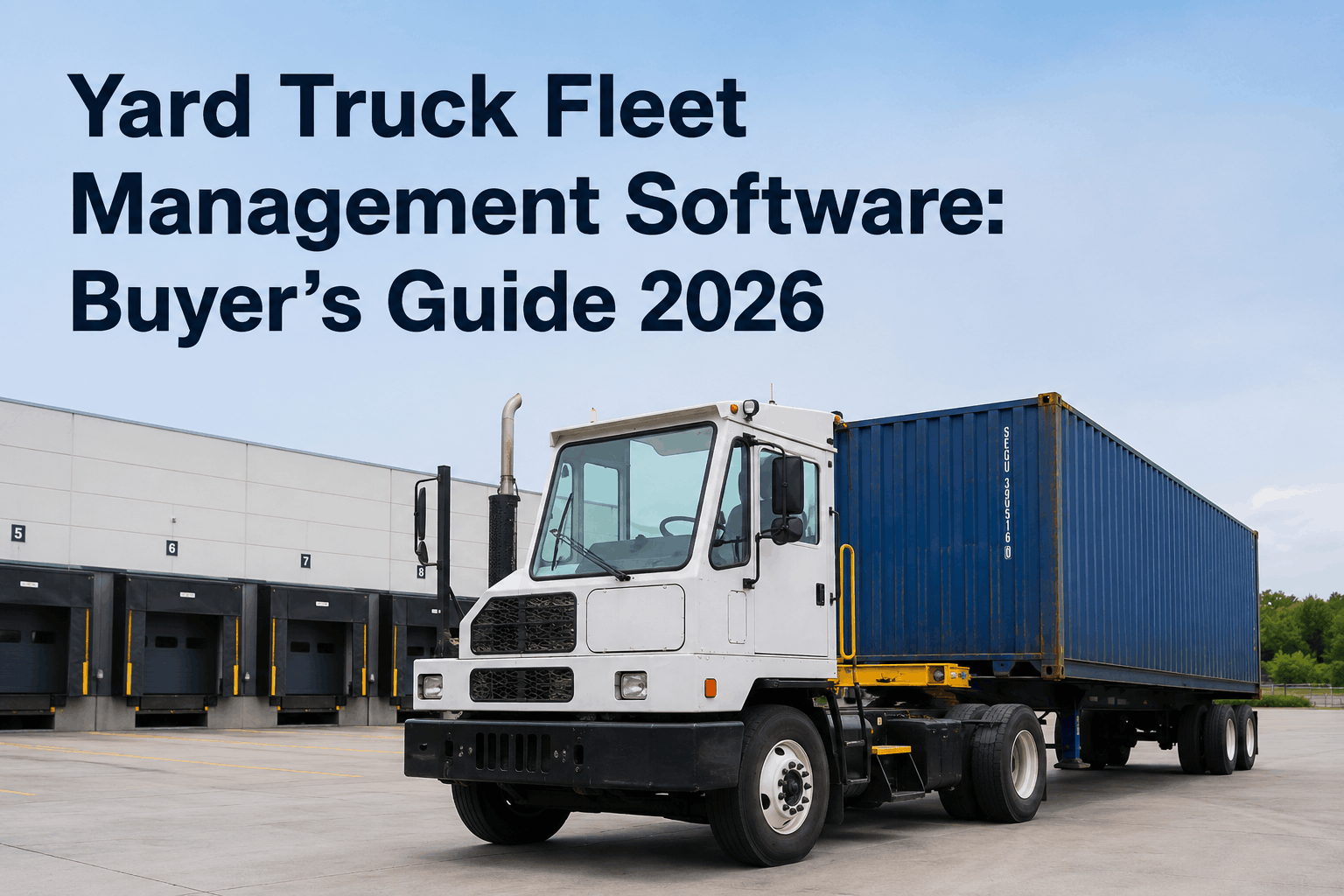
A yard truck earns its keep by never stopping — a terminal tractor couples and uncouples trailers hundreds of times a shift, raising each one off its landing gear with a hydraulic fifth-wheel lift no road tractor has. That high-cycle life wears the coupling, brakes, and hydraulics on engine hours, not miles, so a generic truck inspection misses what matters most. Walk the zone-by-zone checklist below before every shift, and let Truck Inspection & Maintenance Management Software (TIM) turn any defect into a tracked repair. Start free and run yard truck inspections on one record with TIM.
TIM · Yard Truck & Terminal Tractor Checklist
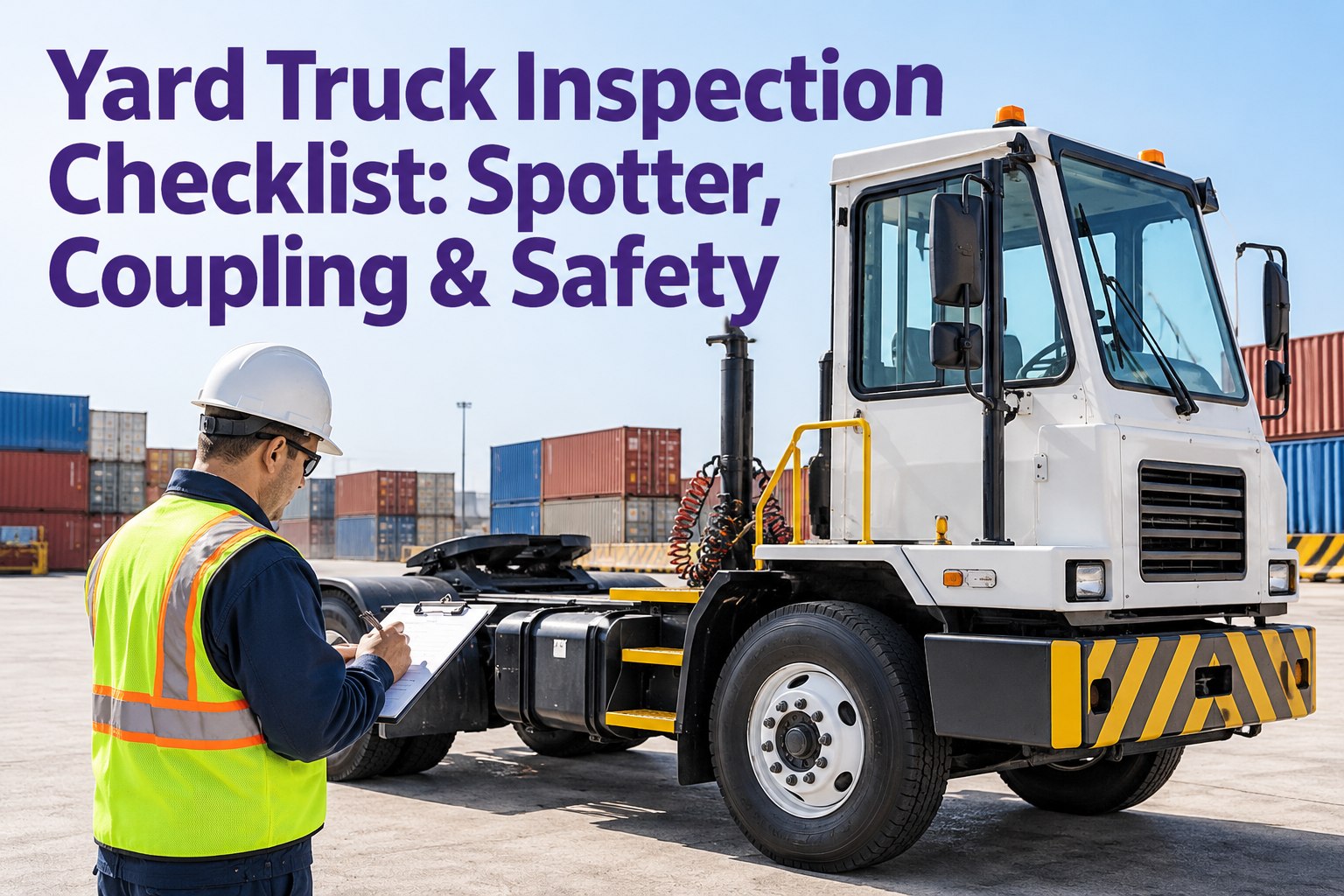
Yard Truck Inspection Checklist: Spotter, Coupling & Safety.
Yard trucks wear nothing like road trucks — the fifth-wheel jaws, the hydraulic lift, and the brakes age on cycles and engine hours, not odometer miles. A worn lock risks a trailer coming loose in a busy yard; a weak lift stops the machine cold. This zone-by-zone walk-around catches it, and TIM turns every failed item into a graded work order before the truck works another move.
Our promise: every flagged defect gets a 4-hour first response — acknowledged, graded, and assigned.
5
walk-around zones, one pass
hrs
wear on hours, not miles
1
record, check to repair
Why Yard Trucks Wear Differently
A terminal tractor lives a life no over-the-road truck does, and three things about it decide where it wears out first.
⟲
High-cycle couplingIt hitches and unhitches hundreds of times a shift, so the fifth-wheel jaws and hydraulic lift wear far faster than any road tractor's.
⏱
Runs on engine hoursLow miles hide hard use — brakes and hydraulics age on stop-start cycles and run-time, which is why service is scheduled by the hour.
⚠
A busy, shared yardThe operator is in and out of the cab and reversing toward trailers all day, so cameras, mirrors, and the beacon are safety-critical.
Inspect it like a road truck and you'll miss exactly what gives out first. Contact our team to build a yard-specific inspection form.
The Walk-Around, Zone by Zone
Take one route around the truck in the same order every time, so nothing gets skipped. Five zones cover it — tick each item as you go.
1Cab & Controls
→
2Fifth Wheel & Lift
→
3Boom & Hydraulics
→
4Running Gear
→
5Coupling Links
2
Fifth Wheel & Hydraulic Lift
One route, five zones, every item accounted for. Start free and capture every zone on one record with TIM.
WHAT MAKES A SPOTTER DIFFERENT
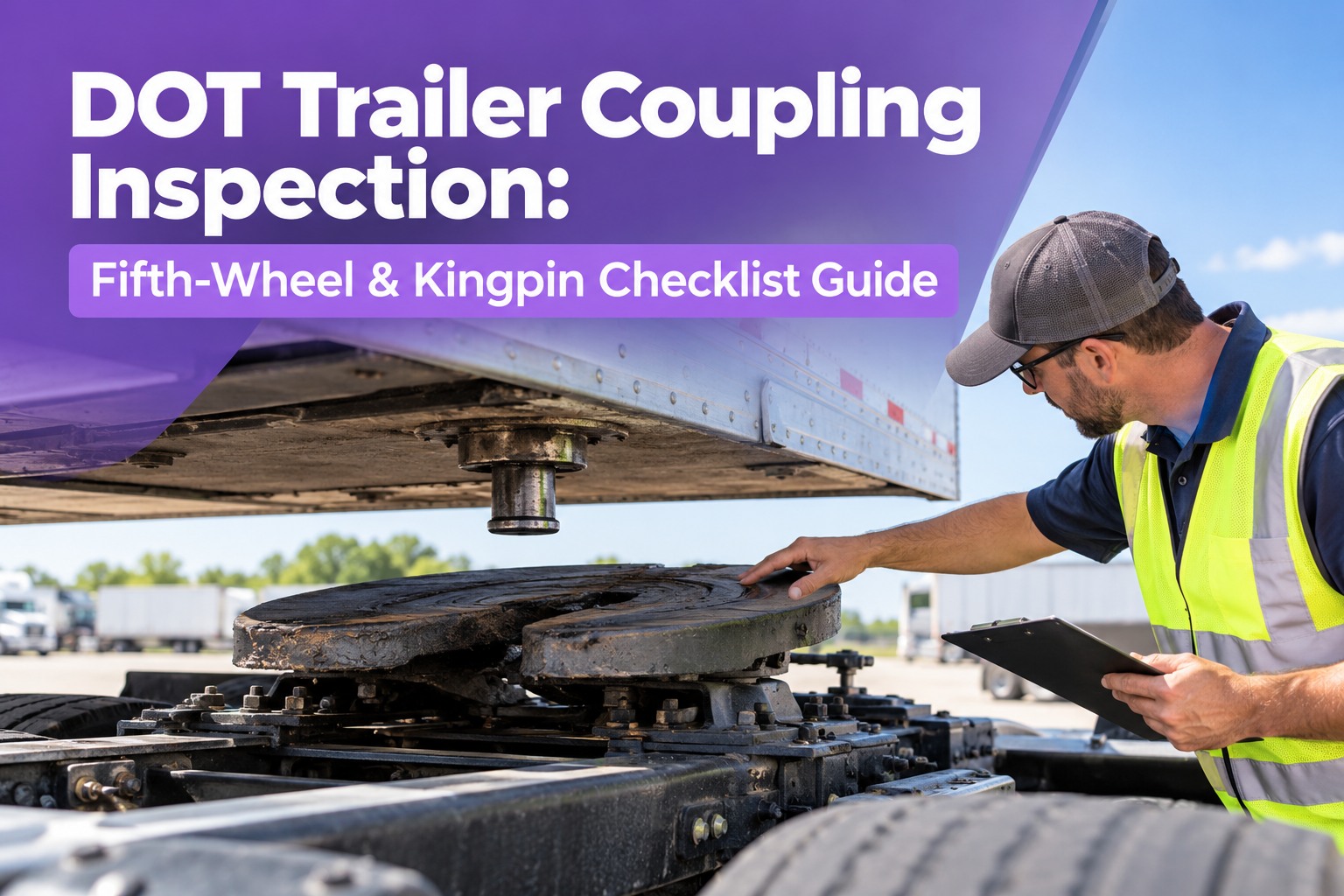
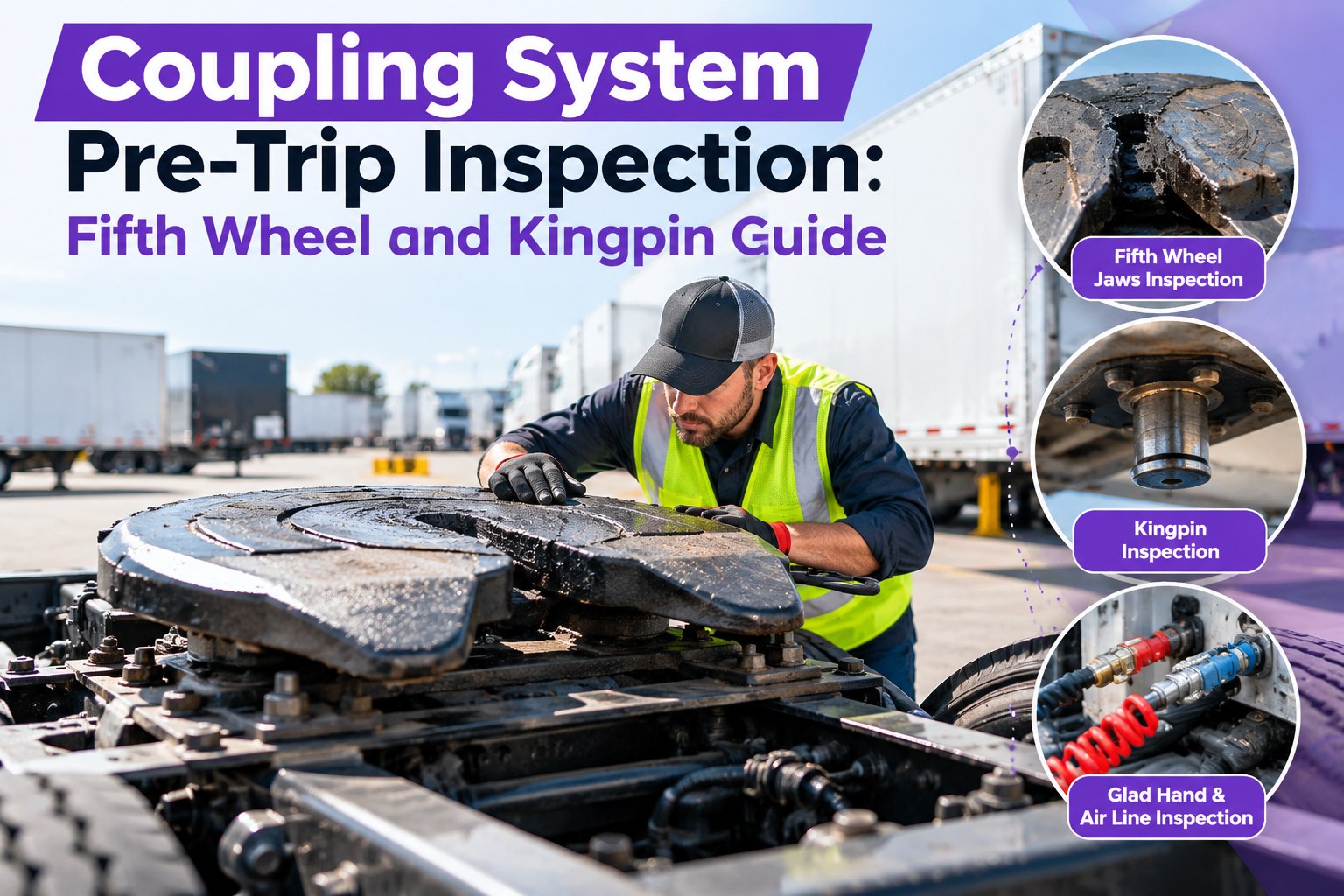
The hydraulic fifth-wheel lift is the heart of the machine. Unlike a road tractor's static plate, a spotter's fifth wheel raises the trailer off its landing gear so the operator can move it without cranking the gear up and down by hand. That lift is cycled under load on every single hitch — hundreds of times a shift — which is why its cylinder, hoses, and the jaws beneath it wear faster than anything else on the truck and sit at the top of the checklist.
Service by Engine Hours, Not Miles
Because a yard truck barely moves the odometer, its maintenance runs on run-time. Match the work to the hours.
EACH SHIFT
The full walk-around above — every operator runs it before taking control of the truck.
~500 HOURS
Oil and filters, steering and fifth-wheel lube, hydraulic checks, brake and air inspection, fifth-wheel and boom wear check.
MAJOR
Transmission and axle fluids, fuller brake service, hydraulic oil and filter change, deeper fifth-wheel and boom inspection, cooling service.
High-volume or multi-shift yards need tighter intervals — confirm the numbers against the maker's manual. Contact our team to set hour-based intervals for your fleet.
The Defects That Stall a Yard Truck
When a spotter goes down, it's usually one of these — and each is a checklist item above.
✕
Worn fifth-wheel lockJaws worn loose from constant coupling let a trailer come loose in a busy yard — the worst-case failure.
✕
Weak or leaking liftA tired lift cylinder can't raise a loaded trailer, and the machine can't do its one job.
✕
Brakes worn earlyStop-start cycles chew through pads and drums while the odometer barely moves — easy to miss on mileage-based PM.
✕
Dead camera or beaconA spotter reversing blind in a shared yard is a struck-by risk, not just a downtime one.
Every one starts as a checklist item someone skipped. Start free and make sure nothing gets skipped with TIM.
How TIM Helps
From Walk-Around to Work Order — On Engine Hours
A yard truck's wear runs on hours, and its defects run through a checklist — TIM handles both. It schedules preventive service by engine hours instead of miles, and turns any failed inspection item into a graded work order on one record, so a worn lock or a weak lift is fixed before the next shift.
1Walk the zones
→
2Defect graded
→
3Work order routed
→
4PM set by hours
Zone-based mobile checklistOperators walk the five zones on a phone, with a photo on every defect.
PM by engine hoursService scheduled on run-time, so stop-start wear never gets missed.
Defect becomes a work orderA failed item routes to the shop the moment it's filed — no re-keying.
Critical-item flagsA failed fifth-wheel, lift, or brake check marks the truck out of service.
Per-unit historyEvery coupling-system and hydraulic repair logged against that truck.
Audit-ready recordsInspections and repairs kept searchable and produced on demand.
Frequently Asked Questions
What's the most important part of a yard truck inspection?
The fifth wheel and its hydraulic lift. On a spotter, the fifth wheel doesn't just couple the trailer — the lift raises it off its landing gear on every hitch, hundreds of times a shift, so the jaws, lock, cylinder, and hoses wear faster than anything else on the truck. A worn lock risks a trailer coming loose and a weak lift stops the machine working, which is why both sit at the top of the checklist.
Start free and flag critical coupling items with TIM.
How often should a terminal tractor be serviced?
By engine hours, not miles, because a yard truck runs hard while barely moving the odometer. The walk-around runs every shift; a service around 500 engine hours covers oil and filters, lubrication, hydraulic checks, and a fifth-wheel and boom wear check; and a major interval adds transmission and axle fluids, a fuller brake service, and a hydraulic oil change. High-volume or multi-shift yards should tighten those intervals and confirm the numbers against the manufacturer's manual.
Why do yard truck brakes wear so fast?
Because brake wear follows stop-start cycles, not distance. A spotter makes constant short moves with frequent stops in tight spaces, so the pads and drums take far more work than the low mileage suggests. A mileage-based maintenance program badly underestimates it, which is how a yard truck ends up with worn brakes while the odometer still reads low — and why hour-based service matters.
What safety equipment matters most on a spotter?
The reversing camera, mirrors, amber beacon, backup alarm, and horn. A yard truck reverses toward trailers all day in a yard shared with other equipment and people on foot, so visibility and warning devices are genuinely safety-critical — a dead camera or beacon turns a routine move into a struck-by risk. That's why those items are flagged critical in the cab-and-controls zone.
Why use a digital checklist for yard trucks?
Because a paper checklist catches a defect but doesn't move it anywhere. A digital inspection sends the failed item straight to the shop as a work order with a photo, flags a critical coupling or brake fault as out-of-service on the spot, and keeps the record per truck. On a machine that wears on hours and couples hundreds of times a shift, closing the gap between finding a defect and fixing it is what keeps the yard moving.
Cab · Fifth Wheel · Hydraulics · Coupling
Keep the Yard Moving, Not Waiting
A yard truck is the busiest machine on the lot, and it wears where no road truck does — the coupling, the lift, and the brakes, all on engine hours. A zone-by-zone walk-around before every shift catches the wear early, and a critical fault can't be allowed to work another move. TIM turns the checklist into tracked, certified repairs and schedules service by the hour, so the spotter that rolls out is ready to couple, lift, and move all shift long.
No credit card required · Free for up to 3 trucks · Zone checklists, hour-based PM, and critical-item flags built in