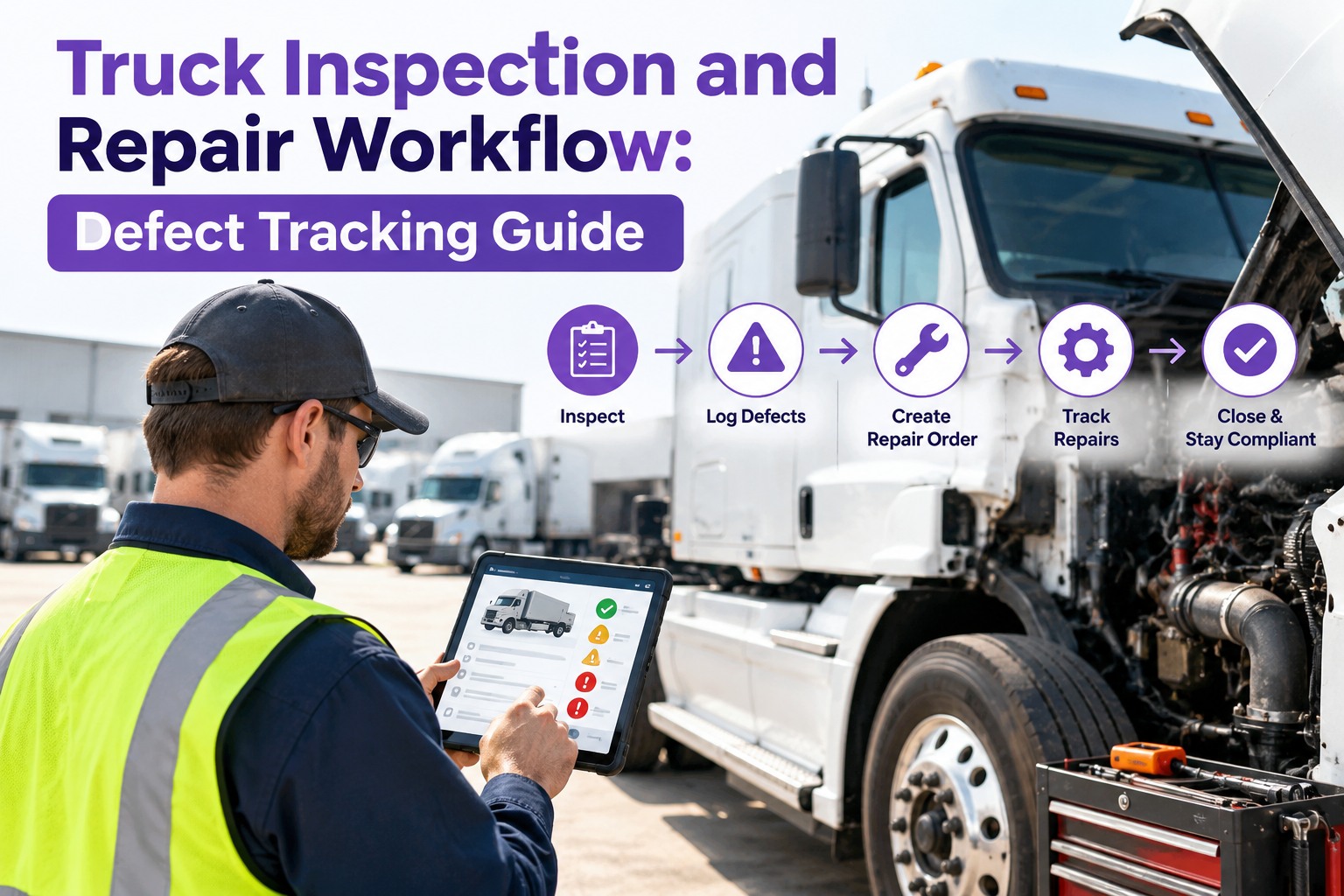
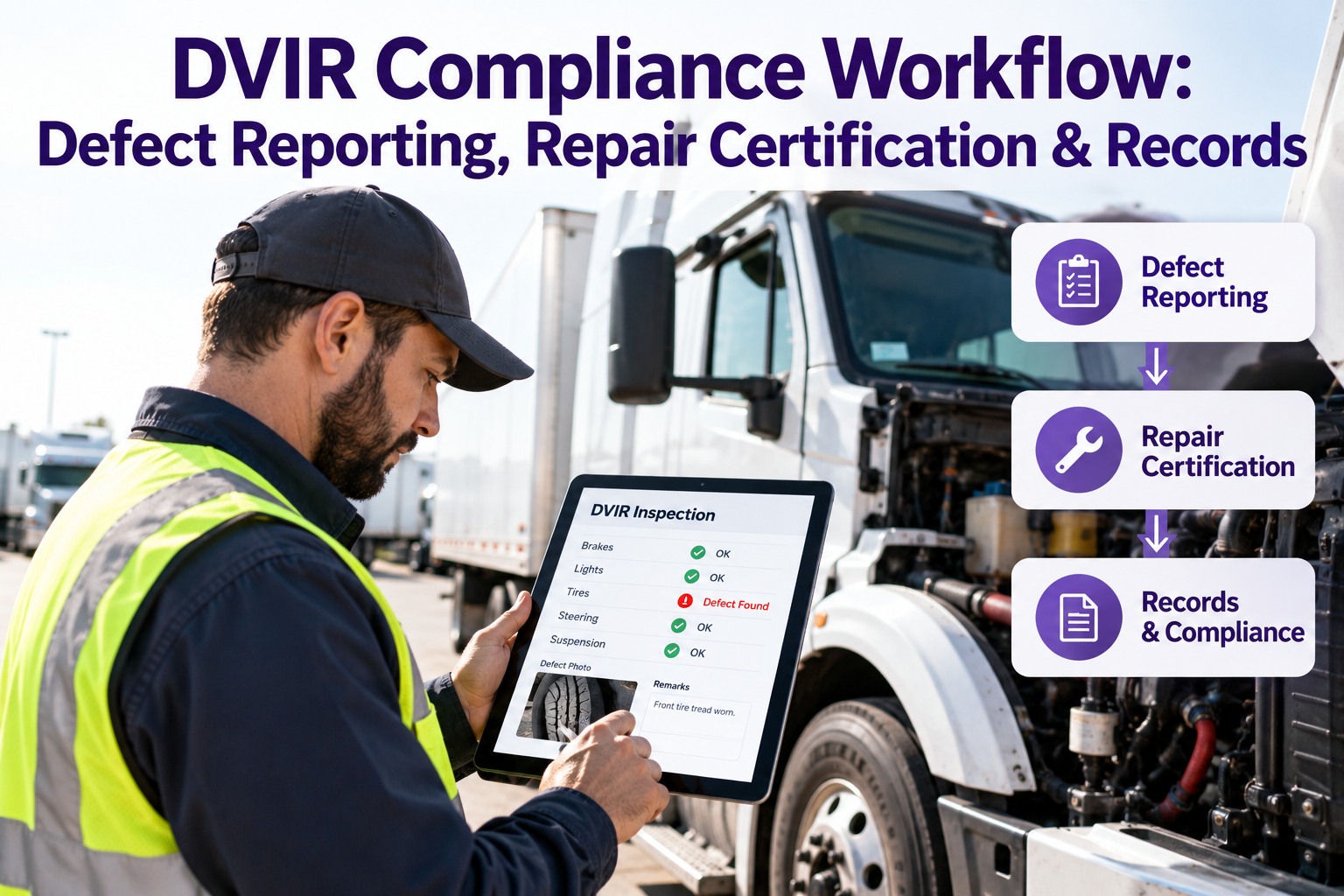
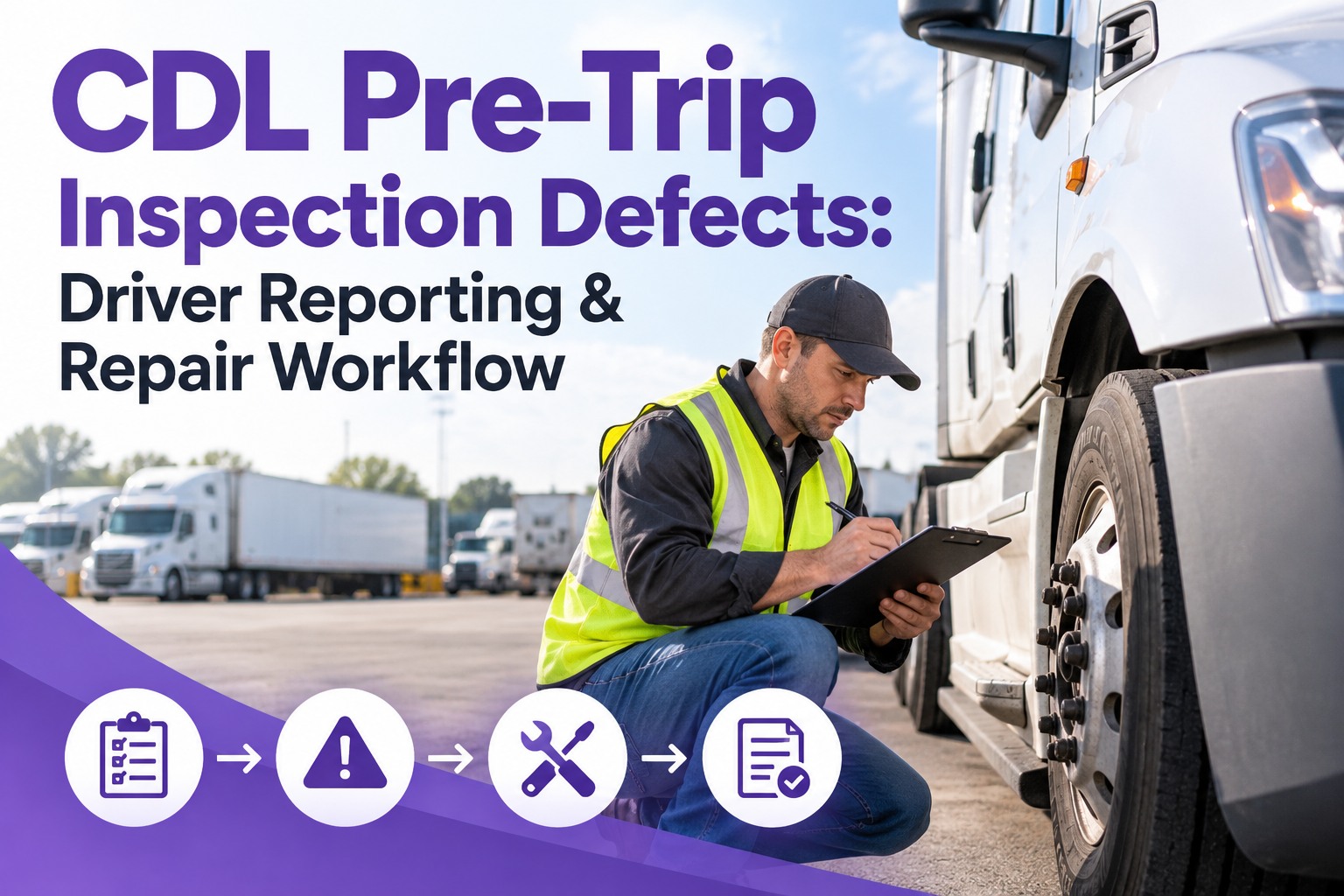
A driver circles the truck, finds a soft brake and a cracked lens, and writes it on a paper DVIR that rides back to the office in a door pocket. Two days later someone keys it into a spreadsheet — if the sheet ever gets read. That gap between finding a defect and fixing it is where safety risk and roadside violations live. Closing it means a defect becomes a work order the moment it's logged. Start free and turn every inspection defect into a work order automatically.
Inspection · DVIR → Defect → Work Order
Automated Truck Defect Tracking: Turn Inspections Into Work Orders
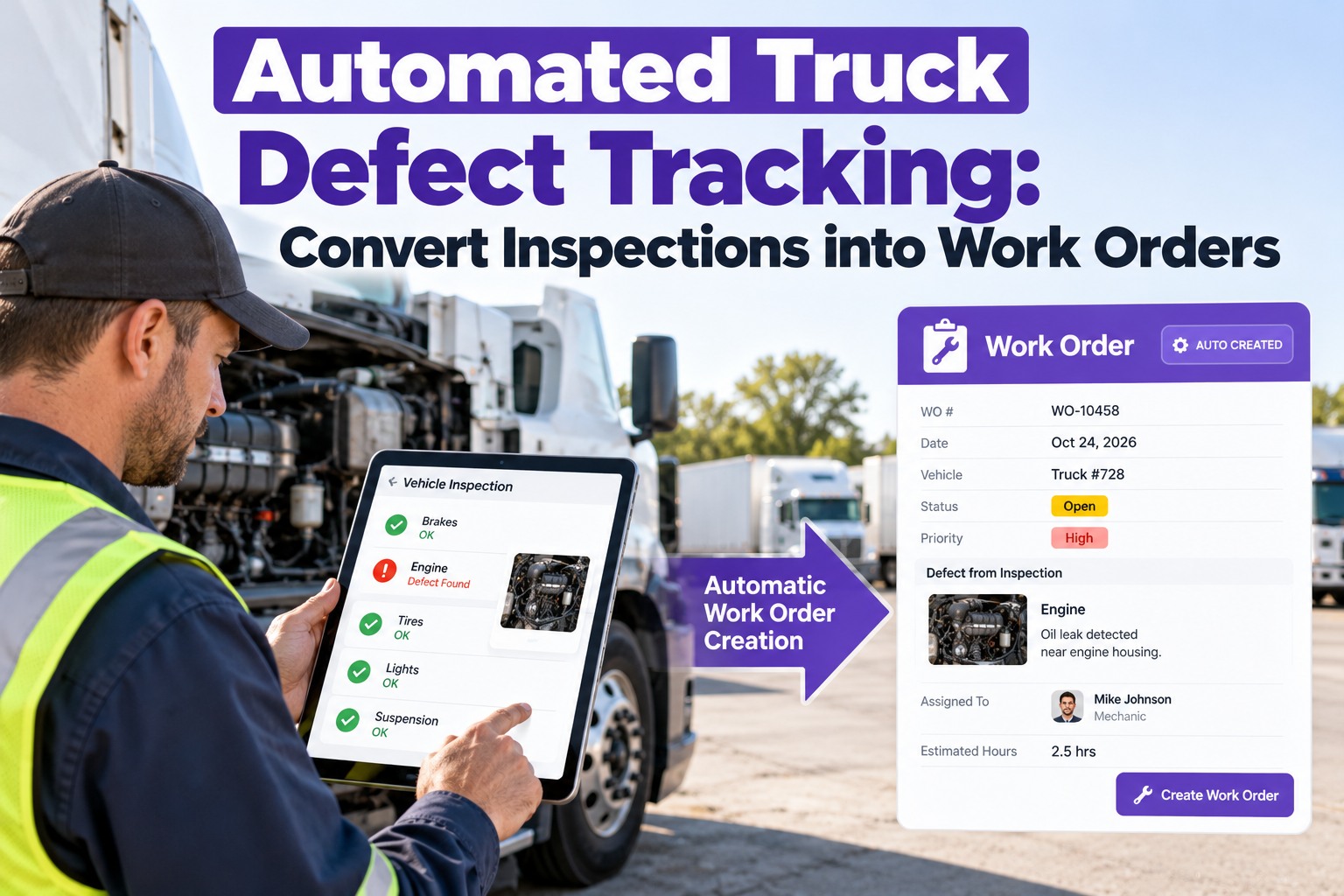
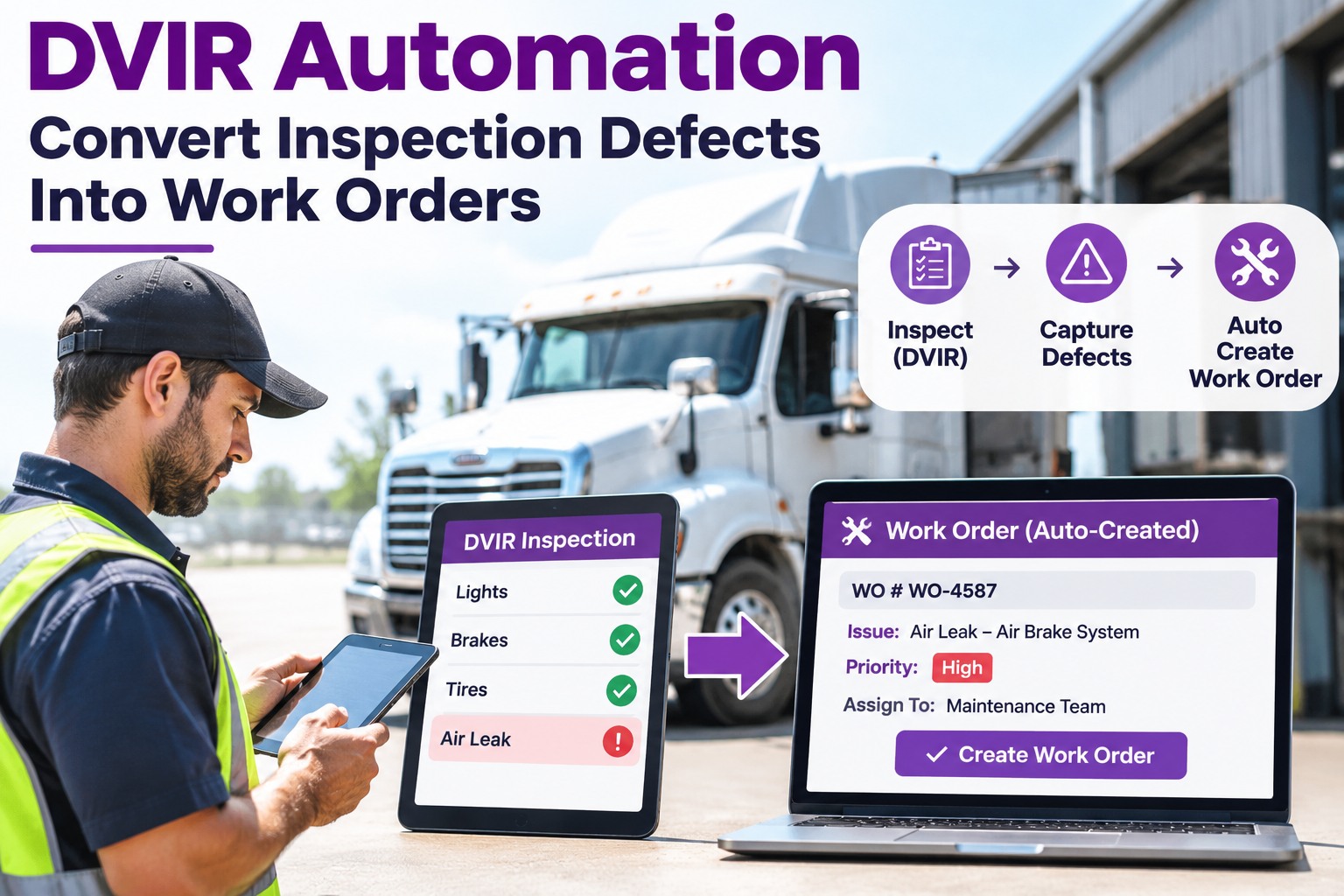
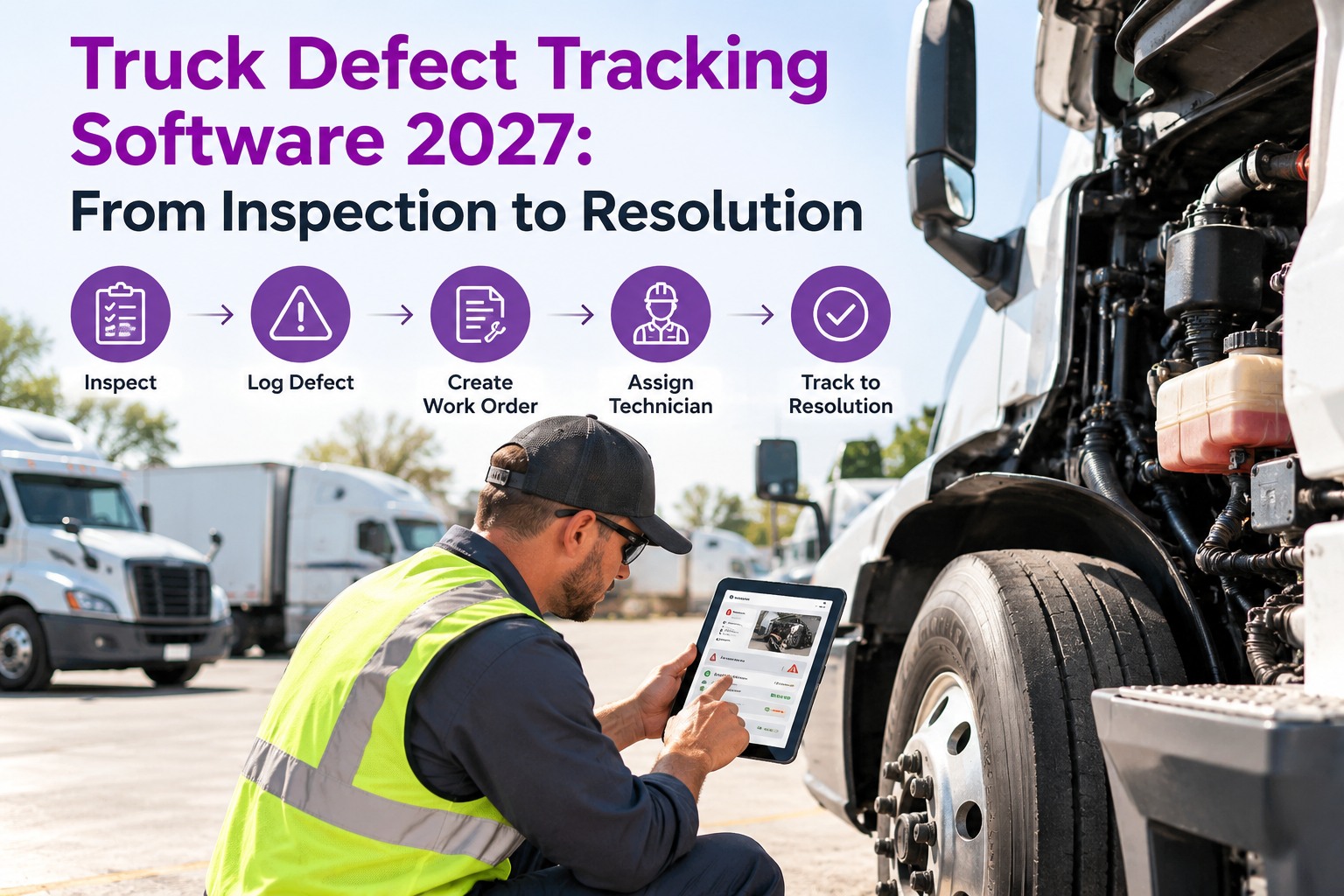
A defect found on a walkaround and a defect that actually gets fixed are two different things — the paperwork in between is where it stalls. Truck Inspection & Maintenance Management Software closes that gap: a driver marks a defect on the mobile DVIR and the system opens a graded work order on the spot — tied to the truck, the photo, the meter reading — alerts the shop, and tracks it to a signed-off repair. Every safety defect is acknowledged, graded, and assigned within 4 hours.
<60 secfrom marked defect to open work order
4-hourfirst response on every safety defect
3 sign-offsdriver, mechanic, next driver — on one record
§396.11defect certified before the truck runs again
The Hand-Off Is Where Defects Get Lost
Every manual step between the walkaround and the wrench is a place for a defect to stall, get mis-keyed, or quietly vanish. The fix isn't a faster clerk — it's removing the hand-off entirely.
Paper / Spreadsheet1–3 days
- Driver writes the defect on a paper DVIR
- Sheet rides back to the office in the cab
- Someone re-keys it — or doesn't
- No photo, no meter reading, no alert
- Safety defect sits while the truck keeps running
→
Automated Tracking<60 sec
- Driver marks the defect on the mobile DVIR
- Work order opens instantly — photo, GPS, meter attached
- Shop supervisor gets a push and SMS alert
- Severity sets the priority and the due time
- Safety defect holds the truck from dispatch
Not Every Defect Is an Emergency — Grade It, Then Route It
The whole point of automation is that each defect gets the response it actually needs. The system reads the severity set against each checklist item and opens the work order at the right priority, with the right clock.
CRITICALUnder 2 hrs
Safety-Critical
Brakes, steering play, tire damage, coupling faults, air leaks. Immediate work order, supervisor alert, and the truck is held from dispatch until a mechanic certifies the repair.
HIGHSame day
Compliance / Operational
Lights, reflectors, mirrors, horn, wipers, minor leaks, gauges. Priority work order with a due time — fixed before the next dispatch.
SCHEDULEDNext PM
Reliability Risk
Fluid seeps, belt noise, wear trending toward replacement. Batched onto the next planned service window instead of an emergency.
MONITORLog & watch
Cosmetic / Comfort
Seat wear, trim, minor body marks. Logged for trend analysis and re-inspected — not a work order on its own.
The Automated Loop — Defect to Signed-Off Repair
One continuous chain, with no re-keying and nothing waiting in a door pocket. Each step carries the record forward so the next person already has what they need.
01CaptureDriver marks pass/defect on the mobile DVIR with photos and notes — timestamped and tied to the truck.
02ClassifyDefault severity per checklist item sets the defect's tier automatically — critical, high, scheduled, or monitor.
03Open the work orderA work order opens tied to the vehicle, driver, location, meter reading, and photo — the moment the defect is logged.
04Alert & assignThe shop supervisor and dispatcher are notified by priority; safety defects push and text, and hold the truck.
05Repair & recordLabor and parts log against the work order, with a parts request raised if stock is short — no stalled jobs.
06Certify & releaseThe mechanic signs off, the truck is released, and the next driver sees the certified repair — the 3-signature chain, complete.
The 4-Hour Promise on Every Safety Defect
This is the promise the workflow is built around. The moment a driver flags a safety-critical defect, Truck Inspection & Maintenance Management Software acknowledges it, grades it, and assigns it to a mechanic — within 4 hours, every time. No defect waits in a cab for two days, no safety item slips through a spreadsheet, and the truck stays held from dispatch until the repair is certified. You manage exceptions, not paperwork.
Corrective Action That Actually Closes — and Stays Closed
Tracking a defect isn't done when the work order opens; it's done when the repair holds. The system keeps every action, part, and sign-off on one record, and watches for the repair that comes back.
◉One record, end to endRepair steps, parts, labor, and the mechanic's certification all live on the same work order — no scattered notes.
↻Repeat defects flaggedThe same fault on the same truck is tracked against asset history, so a recurring problem surfaces instead of hiding.
✓No uncertified closesA work order can't close as done without a sign-off, so "fixed" always means a real, recorded repair.
It's worth the discipline: the industry first-time-fix rate sits around 65–75%, and every comeback effectively doubles your mean time to repair. Catching the repeat-defect pattern early is what moves a fleet toward the 90%+ fix rate that keeps trucks on the road. Start free and track corrective actions to a certified close.
Why This Matters for DOT Compliance
The defect-to-repair trail isn't just good practice — it's what the regulation asks for. Automating it means the record is built as the work happens, not reconstructed before an audit.
§396.11Drivers report defects affecting safe operation; a carrier must repair — or certify repair isn't needed — before the truck runs again.
§396.13The next driver reviews the prior report and its certification before operating the vehicle.
3-sig chainDriver reports, mechanic repairs and certifies, next driver confirms — the full chain captured automatically on one work order.
Records keptInspection, defect, repair, and certification stored together and retained, ready to produce in an audit without a scramble.
Frequently Asked Questions
How does an inspection defect become a work order automatically?
When a driver marks a defect on the mobile DVIR, the software reads the severity set against that checklist item and opens a work order on the spot — tied to the vehicle, driver, GPS location, meter reading, and the photo the driver took. The shop supervisor is alerted by priority, and a safety-critical defect holds the truck from dispatch until it's certified. There's no re-keying from paper and no waiting for the sheet to reach the office, which is what drops the defect-to-work-order time from the 1–3 days typical of paper shops to under a minute.
How are defects prioritized so the shop isn't flooded?
Each checklist item carries a default severity, so defects self-sort into tiers. Safety-critical items — brakes, steering, tires, coupling, air leaks — open an immediate work order, alert the supervisor, and hold the truck, with a target response under 2 hours. Compliance and operational items like lights and mirrors become same-day priority work orders. Reliability-risk items such as fluid seeps or belt noise are batched onto the next PM window, and cosmetic items are logged for trend analysis. Your safety manager sets the final rules — the system applies them consistently without replacing that judgment.
What's the 4-hour first response, exactly?
It means every safety-critical defect is acknowledged, graded, and assigned to a mechanic within 4 hours of being logged — not left to chance in a cab or a spreadsheet. The work order opens instantly, the alert fires by priority, and the truck is held from dispatch until the repair is certified. It turns the vaguest part of fleet maintenance — "did anyone action that defect?" — into a clock you can count on.
Does automated defect tracking help with DOT inspection compliance?
Yes. The workflow mirrors the DVIR rules directly: under 49 CFR §396.11 a defect affecting safe operation must be repaired or certified as not needing repair before the vehicle runs again, and §396.13 requires the next driver to review the prior report and certification. The software captures that full three-signature chain — driver reports, mechanic repairs and certifies, next driver confirms — on one work order, and stores the inspection, defect, repair, and sign-off together so the record is audit-ready without a last-minute scramble.
Book a demo to see the compliance trail built in real time.
Defect · Work Order · Certified
Stop Losing Defects Between the Walkaround and the Wrench
Truck Inspection & Maintenance Management Software turns every inspection defect into a graded work order the moment it's logged — tied to the truck and the photo, routed by severity, held from dispatch when it's a safety item, and tracked to a certified repair. Every safety defect acknowledged, graded, and assigned within 4 hours. Manage the exceptions, not the paperwork.
No credit card required. Free for up to 3 trucks. Inspections, defects, and work orders on one system.