The crane truck is parked at the job site and the boom is ready to go. One outrigger pad is sitting on soft, wet ground, a hydraulic hose has a wet sheen near the elbow, and the load chart in the cab is for a different configuration. The operator has about ten minutes before the first pick. A crane truck is lifting equipment on wheels, so the pre-operation check is the cheapest safety control on the job. This guide gives you a six-zone walk-around checklist, a go / hold / tag-out ladder, the load chart steps to confirm before the first lift, and how Truck Inspection & Maintenance Management Software (TIM) turns every finding into an owned repair. Start free and run your first crane inspection digitally.
Boom · Outriggers · Hydraulics · Load Chart · LMI
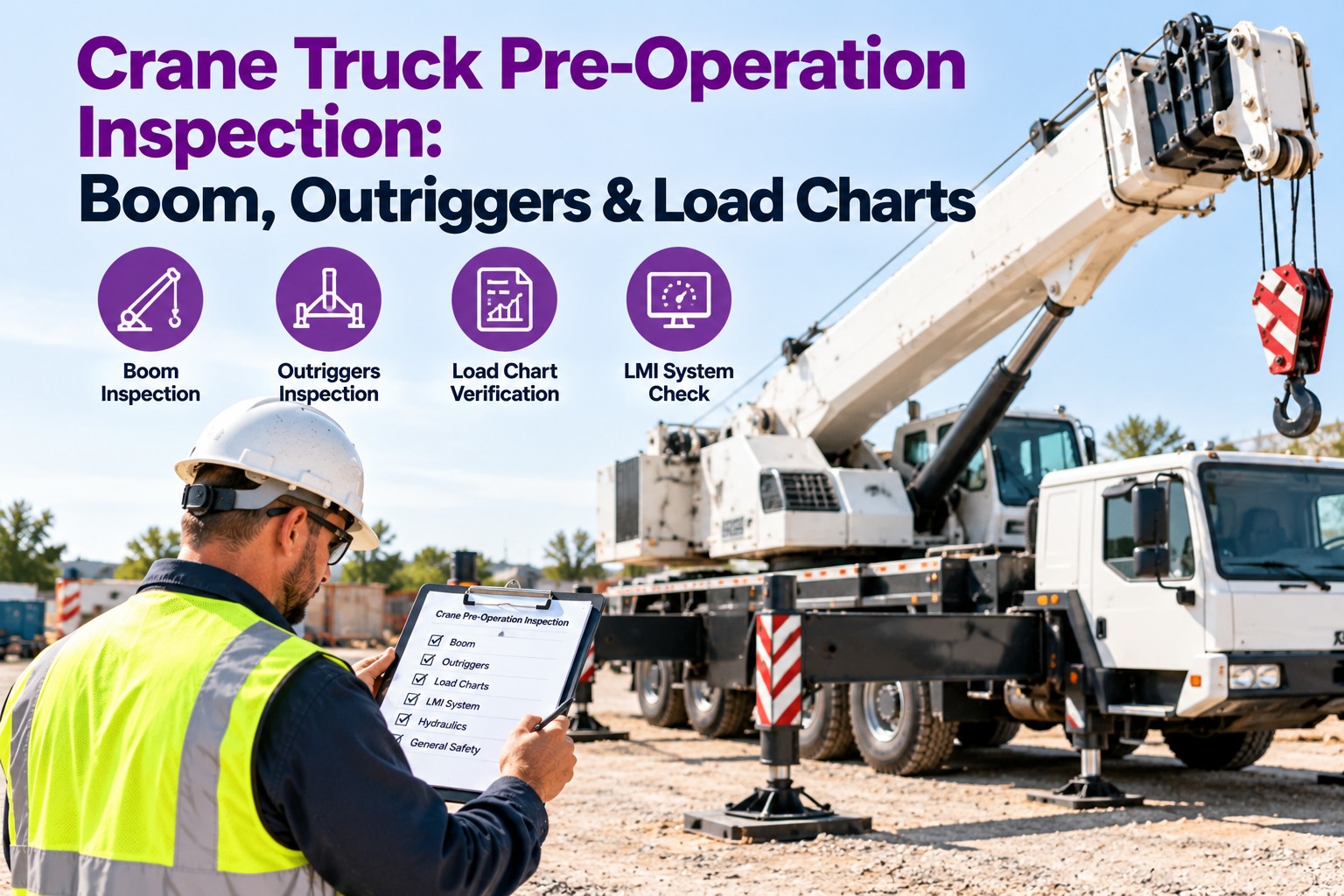
Crane Truck Pre-Operation Inspection: Boom, Outriggers & Load Charts
A checklist only protects the crew if the findings get fixed. TIM runs the pre-op as a digital checklist with photos, turns a failed item into a defect and a work order, and keeps the result on the crane's record.
Our promise: a guaranteed 4-hour first response on every crane defect
✓Acknowledged
✓Graded
✓Assigned
6 zonesone walk-around from chassis to hook
3 levelsshift, monthly and annual inspections
1 recordper crane: checks, defects and repairs
The Six-Zone Walk-Around Checklist
Walk the crane in the same order every shift. Each zone has three checks that catch the most common problems. Your crane's manual adds the rest.
Zone 1Boom & hook block
Boom sections straight, no cracks, dents or weld damage
Wire rope free of kinks, broken wires and crushing
Hook, latch and swivel intact and moving freely
Zone 2Outriggers & pads
Beams and jacks extend and retract cleanly
Pads or cribbing sound and sized for the ground
Ground firm, no settling, water or voids nearby
Zone 3Hydraulics
Fluid at the correct level
Hoses and fittings dry, with no chafing or bulges
Hoses routed clear of pinch points and sharp edges
Zone 4Load chart & LMI
Correct, legible load chart for this crane in the cab
LMI display on and showing the right configuration
Alarms and warning lights respond as the manual describes
Zone 5Cab & controls
Controls move smoothly and return to neutral
Level indicator, horn, backup alarm and lights work
Windows and mirrors clear of cracks that block view
Zone 6Chassis & tires
Tires inflated and free of cuts or bulges
No fluid leaks under the truck or turntable
Brakes, steering and DVIR items checked as usual
General checklist based on common crane inspection practice. Follow the crane manufacturer's manual, OSHA requirements that apply to your work (29 CFR 1926.1412 for construction, 1910.180 for general industry) and ASME B30 standards for your crane type.
Go, Hold or Tag Out: What to Do With a Finding
Every failed item needs a decision before the first lift, not after. Three outcomes cover most cases.
Tag outSafety-critical defectCracked boom, damaged rope, failed outrigger, leaking pressurized line or failed LMI test. The crane is locked out of use until a qualified person repairs it.
No lifts
HoldNeeds correction firstSoft ground, missing pad, wrong load chart or low fluid. Fix the condition, then re-check before lifting.
Fix, then go
Go + logMinor wear, no effect on safe operationLog it with a photo and schedule the repair so it does not become next month's tag-out.
Schedule
What counts as safety-critical is set by the manufacturer, your competent person and the applicable standard. When in doubt, hold the lift.
A tagged-out crane is only safe while the tag stays on. TIM keeps the tag-out reason, the owner and the verified fix on one record. Book a demo to see tag-out tracking.
Run One Real Pre-Op in TIM
Start a free trial and log a single crane inspection with photos. Watch a failed item become a graded defect, an assigned work order and a verified repair.
Before the First Pick: Load Chart Verification
Most crane accidents trace back to a lift that was outside the chart. Confirm these five points every time the setup changes.
1Know the loadGet the actual weight, including rigging and the hook block.
2Match the setupOutrigger position, boom length and counterweight match the chart section you are reading.
3Find the radiusMeasure working radius at the pick and at the set, not just the pick.
4Read the chartConfirm rated capacity at that radius and boom angle exceeds the load with margin.
5Check the LMILMI settings agree with the real setup. It supports the chart and never replaces it.
Always use the load chart for your exact crane and configuration. This page publishes no capacity figures on purpose.
Three Inspection Levels, Three Clocks
The pre-op is the first of three. Each one catches problems the others miss.
Every shiftVisual checkDone by a competent person before or during the shift. This is the checklist above.
MonthlyDocumented inspectionCloser look at rope, hooks and safety devices, with a signed and dated record kept.
AnnualComprehensive inspectionThorough inspection by a qualified person, with the record kept for the required period.
Frequencies and record retention come from OSHA 29 CFR 1926.1412 and the ASME B30 standard for your crane. Confirm current text for your operation.
How TIM Runs the Crane Inspection Loop
1Run the checklistOperator completes the six zones on a phone, with photos.
2Defect gradedA failed item is graded by safety risk.
3Work orderThe defect becomes a repair assigned to a technician.
4Fix verifiedThe repair is re-checked before the crane returns to work.
5Record keptShift, monthly and annual inspections stay with the crane.
Crane 07: inspection record (illustrative)
Today's pre-opSix zones completed, one hose seep logged with photo
DefectGraded, assigned and awaiting verification
MonthlyLast signed inspection and next due date
AnnualLast comprehensive inspection and report on file
Illustrative record. Fields depend on how your fleet configures TIM.
Frequently Asked Questions
What should a crane truck pre-operation inspection cover?
At minimum: boom and rope, hook and latch, outriggers and ground conditions, hydraulic fluid and hoses, controls, load chart and LMI, and the truck chassis and tires. Your crane's manual and the applicable OSHA and ASME requirements add the specifics.
Start free and use this checklist in TIM.
Who performs the shift inspection?
OSHA's crane rules call for a competent person to do the shift inspection. Monthly and annual inspections have their own qualification and record requirements. Check the current rule for your work type.
Can an LMI replace the load chart?
What does the 4-hour first response mean?
Every defect logged in TIM is acknowledged, graded and assigned within four hours. That is the first response, not the repair. A tagged-out crane stays out of use until the repair is done and verified.
Inspected · Graded · Assigned · Verified
Make Every Pre-Op Finding Someone's Job
Truck Inspection & Maintenance Management Software runs the crane pre-op as a digital checklist and tracks each finding to a verified repair. Start free to log your first inspection, or book a demo to see it on your fleet.
No credit card required. Free for up to 3 trucks.