A spot under a parked truck is a clue, not a crisis — if you can read it. The colour tells you which fluid, where it sits tells you which system, and together they usually point straight at the part. The trouble is that a diesel has a dozen common places to leak, and a driver who can't tell a harmless condensation drip from a weeping rear main ends up either ignoring a real failure or tearing into a non-problem. This guide names the 12 leaks, what causes each, and how they get fixed. Start free and log every leak against the truck it came from.
Identify · Diagnose · Fix
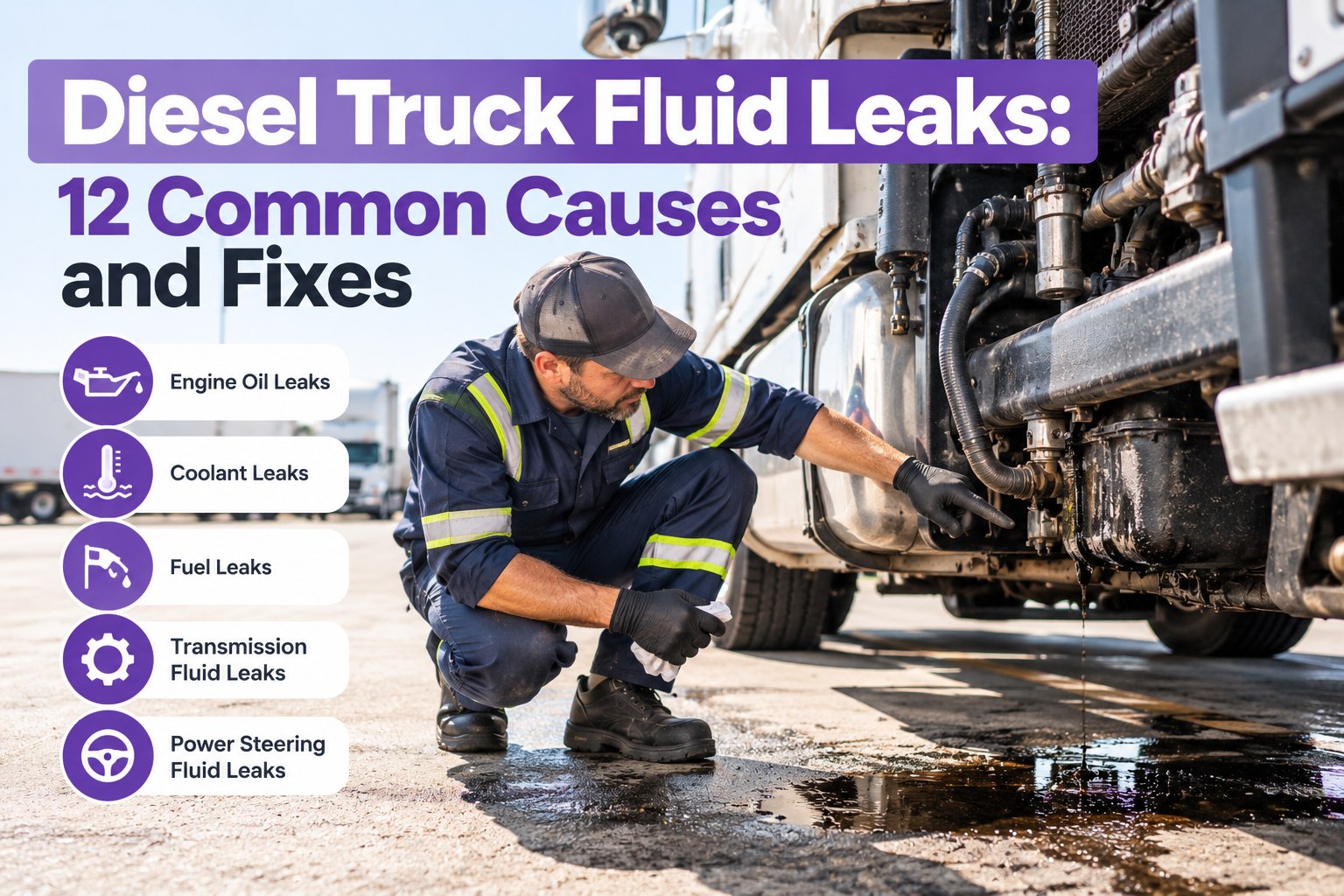
Diesel Truck Fluid Leaks: 12 Common Causes and Fixes
Read the colour, locate the source, know the fix — that's the whole diagnosis. Truck Inspection & Maintenance Management Software lets a driver log a leak with a photo and a location the moment it's spotted, then turns it into a dated work order so a weep gets watched and a stream gets stopped before it strands the truck.
12common places a diesel truck springs a leak
Colourthe fastest clue to which fluid you're losing
Weep vs streamone you monitor, one stops the truck
First, Read the Puddle by Colour
Before you chase a part, name the fluid. Colour and feel on the ground narrow a leak to one system in seconds — this is the triage step that tells you how urgent the rest of the hunt is.
Amber → black, slickEngine oil — fresh is amber, old is dark brown to black
Green / orange / pink, sweetCoolant — bright colour, sweet smell, slightly slimy
Red → brown, oilyTransmission or power steering fluid — red when fresh
Straw / oily, strong smellDiesel fuel — thin, oily, unmistakable diesel odour
Clear → amber, oilyBrake fluid — near the wheels or firewall, slippery
Clear, watery, odourlessUsually A/C condensation — normal, not a leak
The 12 Common Diesel Truck Leaks
Grouped by system so you can work from the puddle you found. Each one names where it shows, what's behind it, and how it's put right.
Oil Leaks
01Valve cover gasketCause: hardened, cracked gasket lets oil seep from the top of the engine, often onto the exhaust where it smokes and smells.Fix: replace the gasket; clean the sealing surface and torque the cover to spec.
02Oil pan gasket / drain plugCause: a tired pan gasket or an over-tightened, stripped, or loose drain plug drips from the lowest point.Fix: reseal or replace the pan gasket; renew the drain plug and crush washer.
03Rear main sealCause: a worn crankshaft seal at the back of the engine weeps where the engine meets the transmission — a slow, stubborn leak.Fix: replace the seal; it's labour-heavy as the transmission usually has to come out.
04Turbo oil seal / linesCause: a failing turbo seal or a loose oil-feed/return line leaks hot oil near the turbo, sometimes drawn into the intake.Fix: reseal the lines or rebuild/replace the turbo; find why it failed.
Coolant Leaks
05Water pumpCause: a worn pump bearing or shaft seal weeps from the weep hole — a telltale coolant trail below the pump.Fix: replace the water pump and gasket; inspect the belt and tensioner while there.
06Radiator / hoses / clampsCause: a cracked radiator, a split or swollen hose, or a loose clamp lets coolant out under pressure, often as steam.Fix: replace the failed hose or radiator; renew clamps and pressure-test the system.
07Freeze plug / gasketCause: a corroded freeze (core) plug or a failing head/intake gasket lets coolant seep — a head gasket can push it into the oil.Fix: replace the plug or gasket; if oil and coolant are mixing, address it immediately.
Fuel Leaks
08Injector cups / sealsCause: failed injector cup seals leak diesel — and can let fuel into the coolant or oil, a serious condition.Fix: replace the cups/seals; check oil and coolant for fuel dilution before returning to service.
09Fuel lines & filter housingCause: cracked lines, loose fittings, or a poorly sealed filter housing weep diesel — a fire and air-in-fuel risk.Fix: renew the line or seal, retighten to spec, and replace the filter and O-rings.
Transmission, Steering & Brake
10Transmission pan / cooler linesCause: a tired pan gasket or a chafed cooler line drips red fluid mid-chassis; low fluid then causes shift trouble.Fix: reseal the pan or replace the line; refill to the correct warm level.
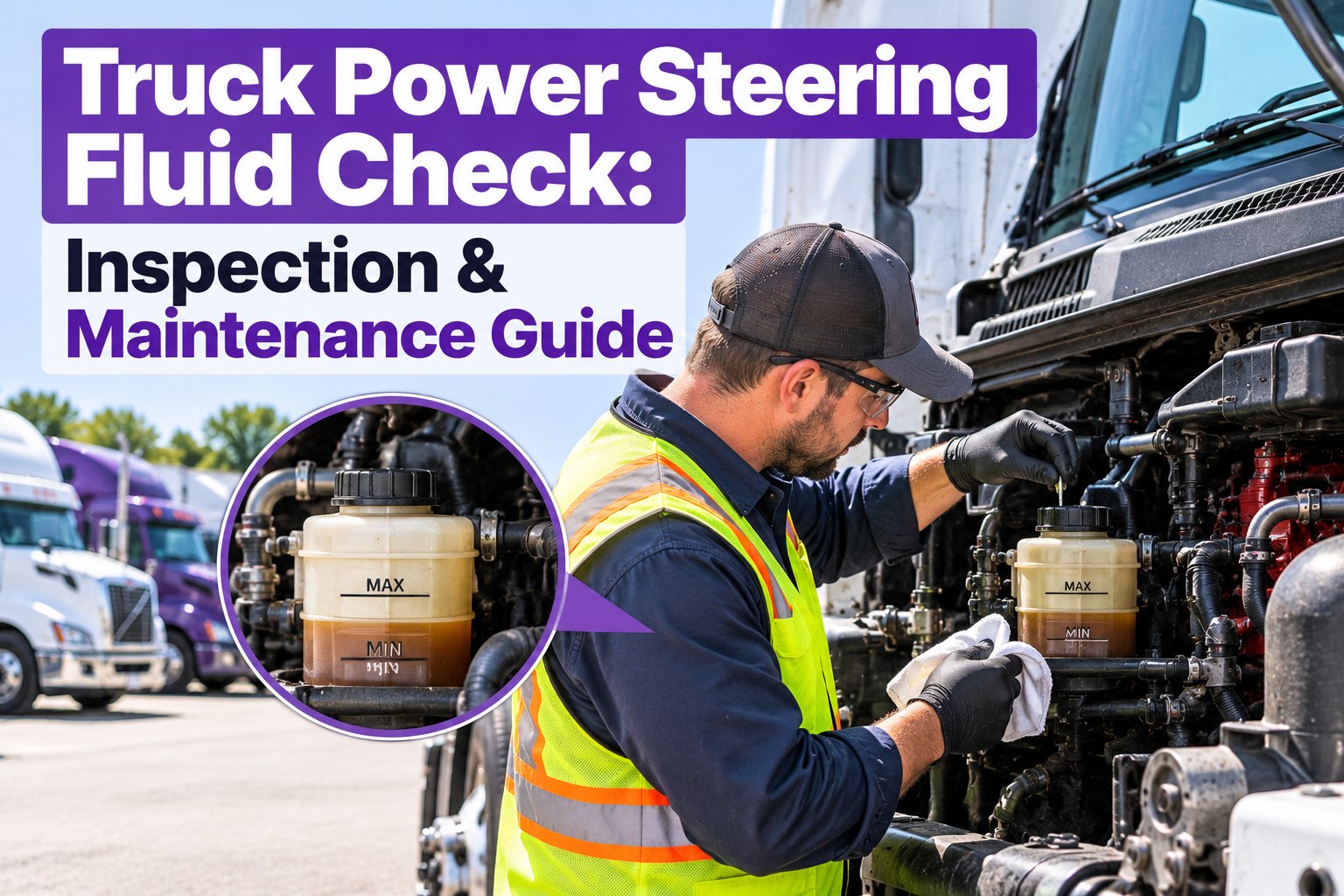
11Power steering pump / hoseCause: a leaking pump seal or high-pressure hose drips red/amber fluid up front; steering turns heavy and whines.Fix: replace the seal, pump, or hose; bleed the system and refill.
12Brake fluid / wheel sealsCause: on hydraulic-brake trucks, a leaking wheel cylinder, caliper, or line softens the pedal; a hub seal leaks gear oil at the wheel.Fix: repair the leaking component, bleed the brakes — do not drive on a soft pedal.
Weep, Drip, or Stream — How Urgent Is It?
Not every leak stops the truck, but guessing wrong is expensive both ways. This is the triage once you know what's leaking.
Weep — monitor
A damp film that doesn't form beads. Log it, mark the level, and watch it over a few days. Common on older seals and often stable for a long time.
Drip — schedule
Forming beads and a small spot overnight. Fluid is being lost; book the repair soon and keep the level topped in the meantime.
Stream — stop
A running leak, a fast-falling level, fuel pooling, or a soft brake pedal. Don't dispatch — fuel, brake, and coolant streams are a safety call.
Software That Turns a Spot on the Ground Into a Fix
Helping with exactly this is the job. Truck Inspection & Maintenance Management Software lets the driver log a leak the moment they spot it — colour, location, and a photo — and routes it by severity: a weep goes on a watch list with the level noted, a stream opens a priority work order the shop sees before the truck moves. Every leak stays tied to its truck, so a recurring weep at the same seal becomes an obvious pattern instead of a note that gets lost between drivers. The puddle becomes a tracked repair, not a guess.
The Three Leaks You Never Let Roll
Most leaks can wait for a shop slot. These three can't — each one is a safety or engine-ending risk the moment it's a real stream.
⊘FuelA diesel stream near hot exhaust is a fire risk — and air in the fuel can stall the engine.
⊘Brake fluidA hydraulic leak and a soft pedal is a stopping-distance emergency. Don't drive it.
⊘Coolant + oil mixingMilky oil or oily coolant means a gasket or cup is failing internally — park it.
Frequently Asked Questions
How do I tell what fluid my diesel truck is leaking?
Start with colour and smell on the ground. Amber-to-black and slick is engine oil; bright green, orange, or pink with a sweet smell is coolant; red to brown and oily is transmission or power steering fluid; a thin, straw-coloured fluid with a strong diesel smell is fuel; clear-to-amber and slippery near a wheel or the firewall is brake fluid. One common "leak" that isn't one is clear, watery, odourless fluid under the cab — that's usually air-conditioning condensation and perfectly normal. Once you've named the fluid, where the spot sits under the truck points you toward the system and the likely part.
Is it safe to drive a diesel truck that's leaking?
It depends entirely on what and how much. A light weep from an older seal can usually be monitored and topped up while a repair is scheduled. But three leaks are never safe to drive on as real streams: fuel, because a diesel leak near hot exhaust is a fire risk and air in the fuel can stall the engine; brake fluid, because a hydraulic leak with a soft or sinking pedal is a stopping emergency; and any sign that coolant and oil are mixing, which means an internal gasket or injector cup is failing. The safe rule is that a weep gets watched, a stream gets the truck parked.
What are the most common oil leak points on a diesel engine?
Four account for most of them. The valve cover gasket is the most common and the easiest to spot, often seeping onto the exhaust where it smokes. The oil pan gasket and drain plug leak from the lowest point, frequently from an over-tightened or worn plug. The rear main seal weeps slowly where the engine meets the transmission and is the most labour-intensive to fix. And the turbo oil seals and feed lines leak hot oil up high, sometimes drawn into the intake. Identifying which one is leaking is mostly about where the oil shows up — top of the engine, bottom, back, or near the turbo.
Why is diesel in the oil or coolant such a serious problem?
Because it means two systems that are supposed to stay separate are now connected, usually through a failed injector cup seal or a gasket. Fuel diluting the engine oil thins the oil's protective film and accelerates wear throughout the engine; fuel or oil getting into the coolant signals an internal breach that won't fix itself and tends to get worse. Either one is a park-it-and-diagnose condition rather than a top-up, which is exactly why the oil and coolant condition checks in a daily inspection matter as much as the level — a milky dipstick is often the first warning.
Contact us to put leak tracking and condition flags on your fleet.
Identify · Triage · Repair
Turn Every Spot on the Ground Into a Tracked Fix
Truck Inspection & Maintenance Management Software lets drivers log a leak by colour, location, and photo, routes it by severity, and keeps it tied to the truck so recurring leaks become obvious patterns. Fleets run it to stop a weep from becoming a breakdown — and to keep the stop-now leaks off the road.
No credit card required. Free for up to 3 trucks. Built for FMCSA-compliant fleets.