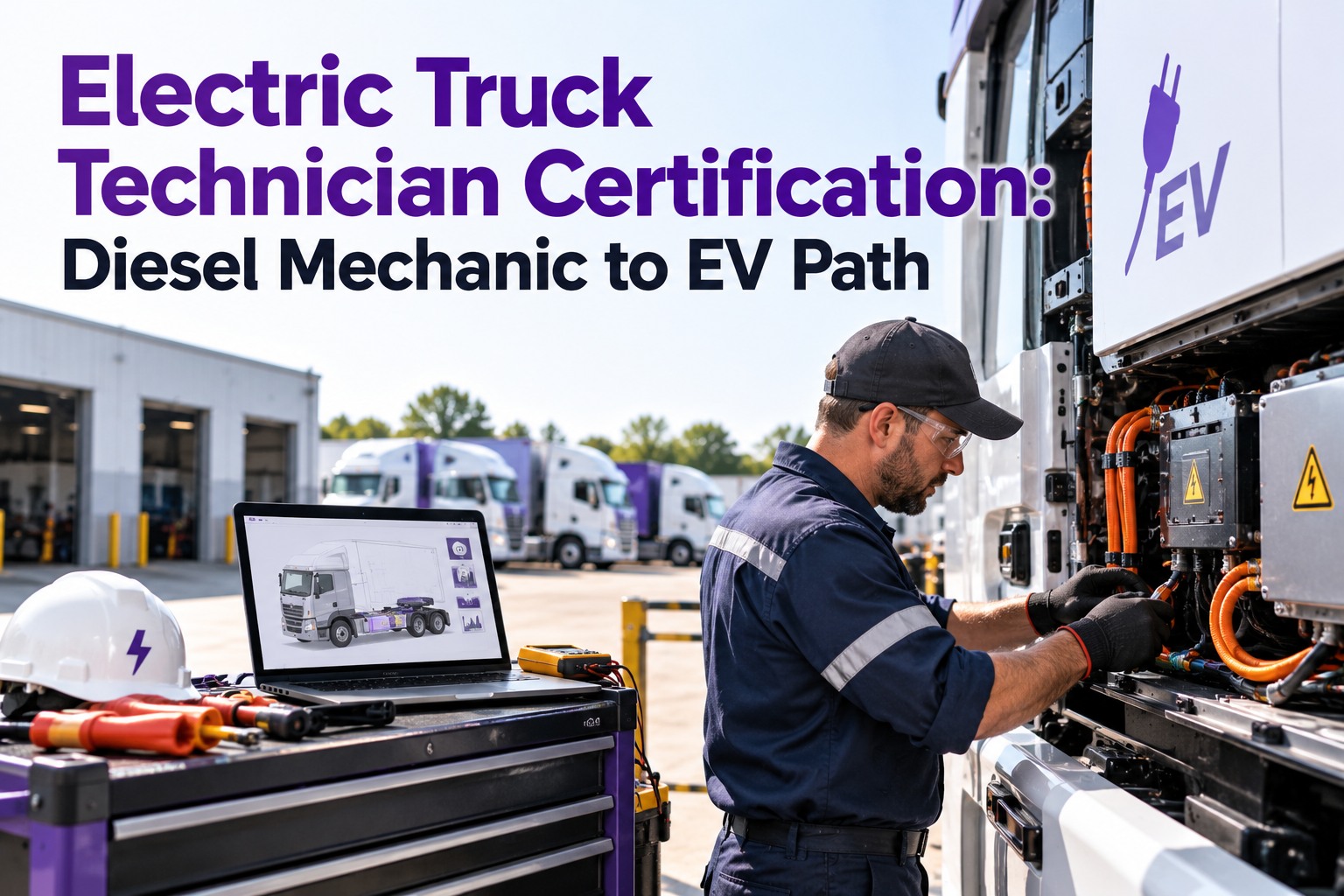
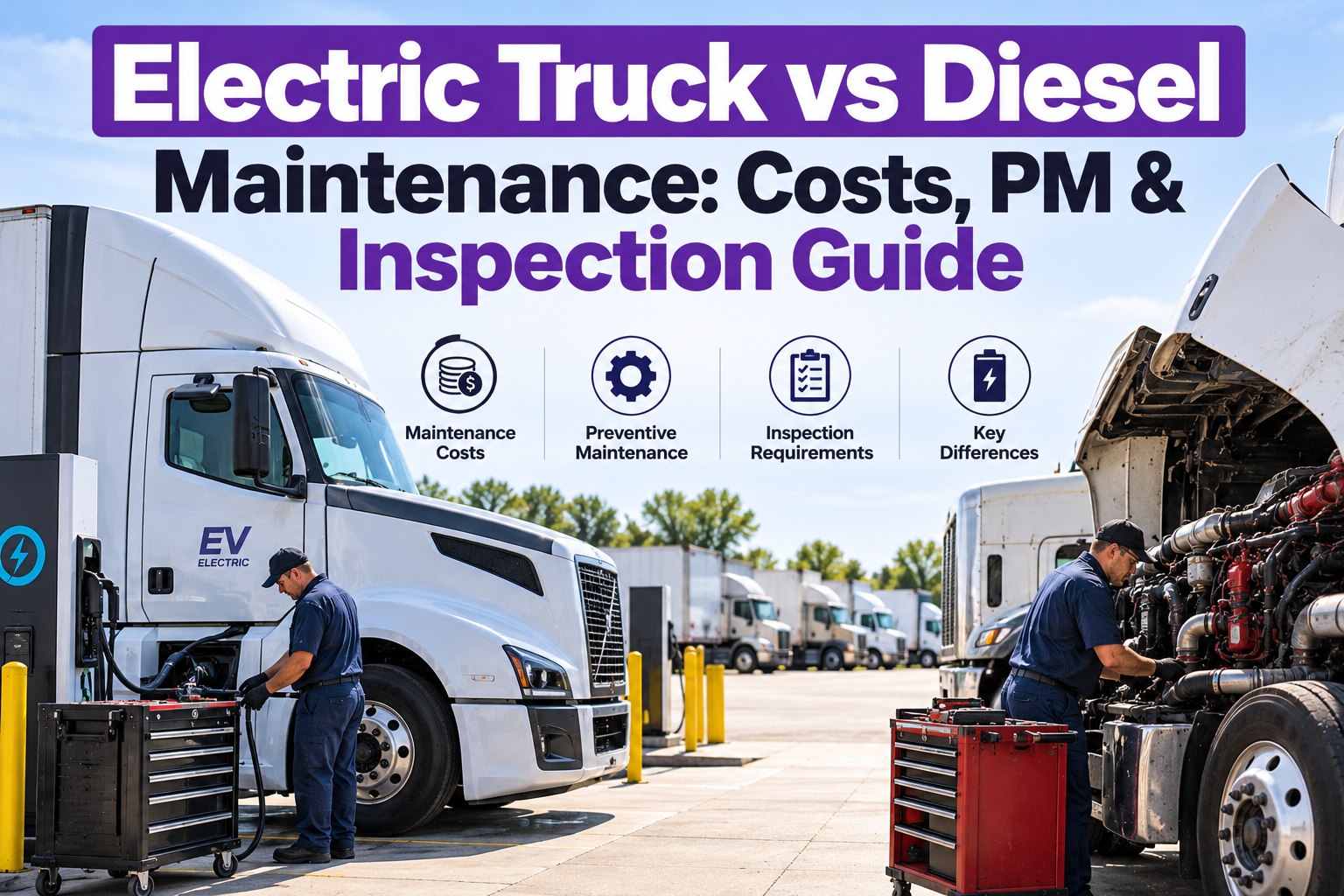
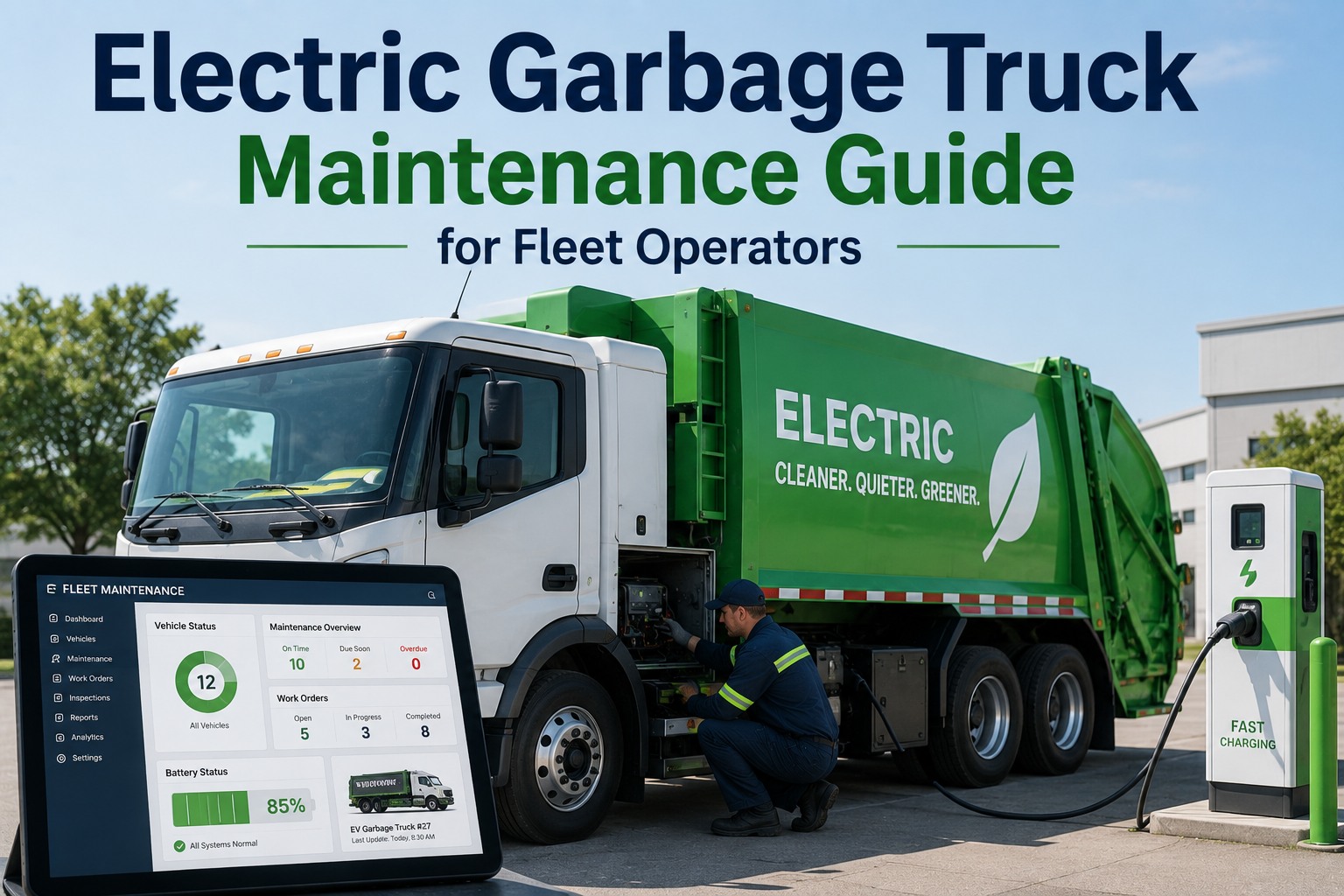
A diesel technician already knows how to read a truck: air brakes, suspension, steering, chassis, drivetrain. An electric truck keeps much of that and adds something a wrench can't see. High-voltage battery packs, inverters and drive units are a different kind of risk, and no one should open them on guesswork. Fleets are buying electric trucks faster than they are building qualified teams, and that gap is a career path for technicians and a staffing problem for shop managers. This guide lays out the route from diesel mechanic to EV technician: what carries over, how the ASE xEV safety certifications fit, where OEM training comes in, a self-scoring skill gap grid and a 12-month plan. It also shows how Truck Inspection & Maintenance Management Software keeps electric units on schedule once your team is ready. Start free and get EV trucks into your maintenance system.
EV Truck Technicians · Certification Path · Skill Gaps · Shop Readiness
Electric Truck Technician Certification: Diesel Mechanic to EV Path
The training gets technicians qualified. The shop still has to run EV trucks consistently: the right inspection items, work orders tied to the unit, and PM that doesn't depend on one person's memory. TIM gives electric units the same inspect, defect, work order and PM loop as the rest of your fleet.
2 levelsof ASE xEV electrical safety certification
Light + heavyASE xEV program covers medium/heavy-duty too
OEM-specifictruck training still comes from the manufacturer
Start Here: Which One Are You?
The right first step depends on your seat in the shop.
🔧Diesel technicianYou want to work on electric trucks without taking risks you can't see.First step: high-voltage safety awareness, then hands-on safety training.
🧭Shop managerYou need to decide who gets trained first, and who stays on diesel.First step: score your team on the skill gap grid below.
🚛Fleet ownerEV trucks are coming and you don't have a qualified team yet.First step: ask your OEM about training before delivery, and plan your maintenance system.
What Carries Over From Diesel, and What's New
Much of a diesel technician's skill transfers directly. The new part is concentrated in one area, and that is exactly where safety training matters.
✓You already know
- Chassis, suspension, steering and axles
- Brakes (many electric trucks still use air brakes, with regenerative assist)
- Tires, wheel ends and DOT inspection standards
- Low-voltage electrical and basic diagnostics
- Coolant and thermal basics
- Methodical, safety-minded shop habits
+New to learn
- High-voltage hazards, PPE and de-energizing procedures
- Battery packs and battery management systems
- Inverters, motors and drive units
- Charging systems and charge-port inspection
- Battery and power-electronics thermal management
- Software, scan tools and telematics-based diagnostics
The Certification Ladder
No single card makes someone an EV truck technician. Think of it as four steps, each building on the last.
1
High-voltage safety awarenessASE xEV Electrical Safety Awareness (Level One). Built for anyone who works around electric vehicles, including people who do maintenance that isn't related to high-voltage systems. The test can be taken online.
2
Hands-on high-voltage safety trainingA course from your employer, school or training provider covering protective equipment, de-energizing and testing. ASE's standards are meant to be used alongside this training, not instead of it.
3
ASE xEV Technician Electrical Safety (Level Two)For people who have received high-voltage training and work on these vehicles. It covers PPE, de-energizing procedures and the test instruments used on electric vehicles.
4
OEM-specific trainingEach manufacturer's trucks have their own service procedures, tools and warranty requirements. OEM training is where a certified technician becomes a qualified one on your truck.
Confirm the requirements ASE certification is voluntary. Your employer, insurer, OEM warranty terms and local rules may require specific training or credentials before someone services a high-voltage system. Check each one before you schedule anyone on the work.
The Safety Non-Negotiables
1De-energizeFollow the OEM procedure to isolate the high-voltage system.
2Verify zeroTest with a properly rated meter. Never assume it's off.
3Rated PPEInsulated gloves and gear inspected before every use.
4Lock and tagControl the energy source so no one can re-energize it.
5Know the procedureUse the OEM's service information for that exact truck.
Skill Gap Grid: Score Your Team
Rate each technician on each skill from 0 to 3: 0 = not yet, 1 = aware, 2 = works under supervision, 3 = works independently. Anything below 2 on a safety row means that technician shouldn't work on high-voltage systems yet.
| Skill area | Type | 0 | 1 | 2 | 3 |
| High-voltage hazards and PPE |
Safety |
○ |
○ |
○ |
○ |
| De-energize and verify zero voltage |
Safety |
○ |
○ |
○ |
○ |
| Battery pack basics and handling |
Safety |
○ |
○ |
○ |
○ |
| Charging system and port inspection |
Technical |
○ |
○ |
○ |
○ |
| Drive unit, motor and inverter basics |
Technical |
○ |
○ |
○ |
○ |
| Thermal management service |
Technical |
○ |
○ |
○ |
○ |
| Regenerative braking and air brake service |
Technical |
○ |
○ |
○ |
○ |
| Scan tool and software diagnostics |
Technical |
○ |
○ |
○ |
○ |
| Work order notes and documentation |
Process |
○ |
○ |
○ |
○ |
A 12-Month Plan From Diesel Tech to EV Tech
Pace depends on your OEM, your training provider and how soon EV trucks arrive. Here's a realistic order of operations.
Months 1–3Awareness and safetyASE Level One awareness, shop safety rules, PPE and meters on hand, skill gap grid scored
Months 4–6Hands-on trainingHigh-voltage safety course, then ASE Level Two for the technicians who will work on the systems
Months 7–9OEM trainingTruck-specific procedures, tools and service information; supervised work on the first units
Months 10–12Independent workRoutine inspections, PM and diagnostics, with documented sign-off for each task type
Once the Team Is Ready, Keep the Trucks on Schedule
Truck Inspection & Maintenance Management Software gives each electric unit its own record: inspections and DVIRs, defects, work orders assigned to the technicians you've qualified, and PM schedules. Training makes your team capable. A consistent system keeps their work repeatable and documented.
Frequently Asked Questions
Is there an ASE certification for electric trucks?
ASE offers two xEV electrical safety certifications that apply to light-duty and medium/heavy-duty electric vehicles: Level One (awareness) and Level Two (technician). They test high-voltage safety knowledge rather than a specific truck, so OEM training still covers the vehicle itself.
Start free and prepare your EV maintenance records.
Do I need certification to work on EV trucks?
ASE certification is voluntary, but employers, insurers and OEM warranty terms often set training requirements. Ask each of them what they require before anyone works on a high-voltage system.
Will diesel skills still matter?
How long does the transition take?
It varies with the provider, the OEM and each technician's background. The 12-month plan above is a planning frame, not a requirement. Start with safety and move to hands-on work only when each step is signed off.
Train · Qualify · Inspect · Work Order · PM
Build the EV Team, Then Give It a System That Keeps Up
Start free to set up your first electric unit with its own inspections, work orders and PM, or book a demo and we'll walk through your shop's EV rollout together.
No credit card required. Free for up to 3 trucks. Built for FMCSA-compliant fleets.