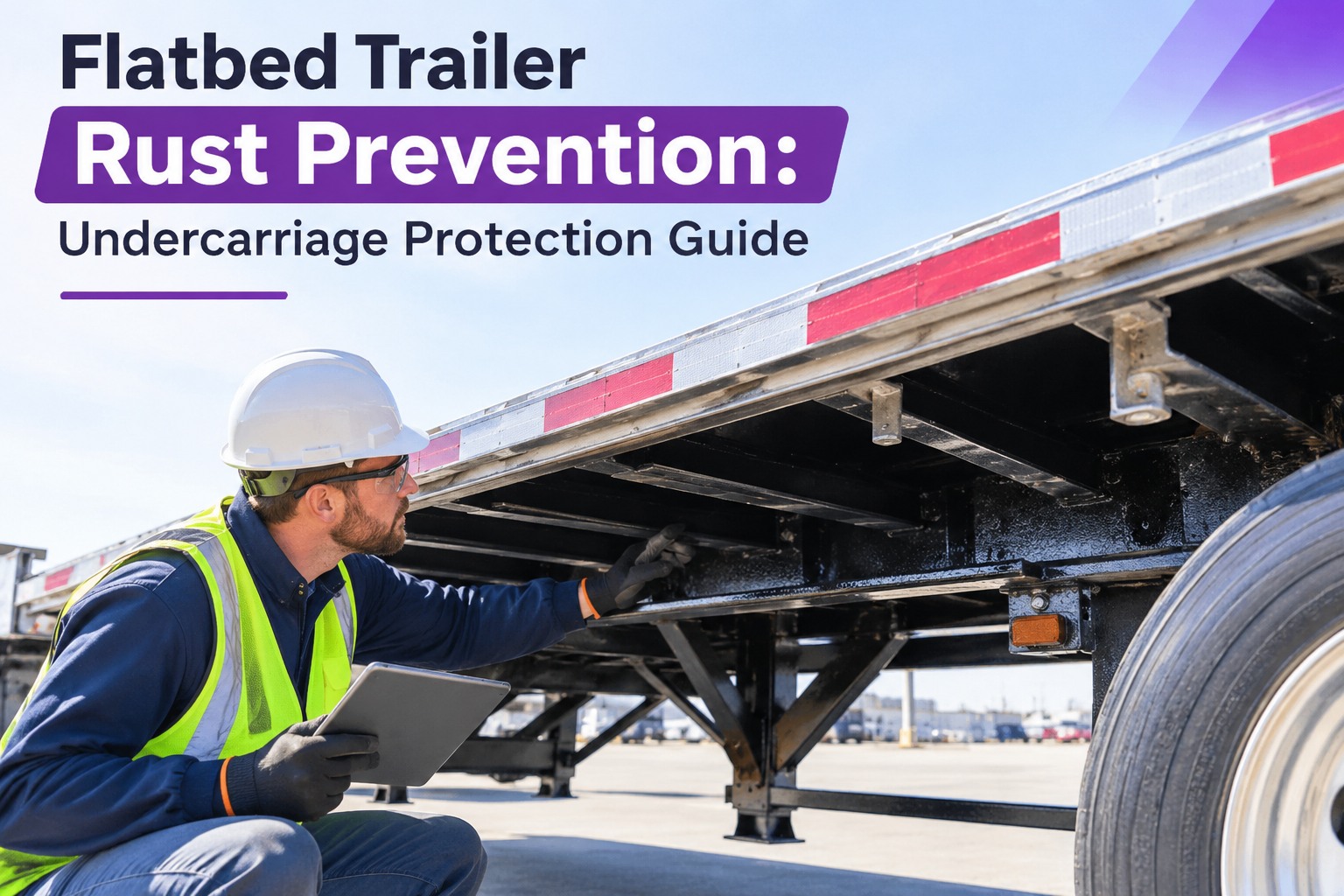
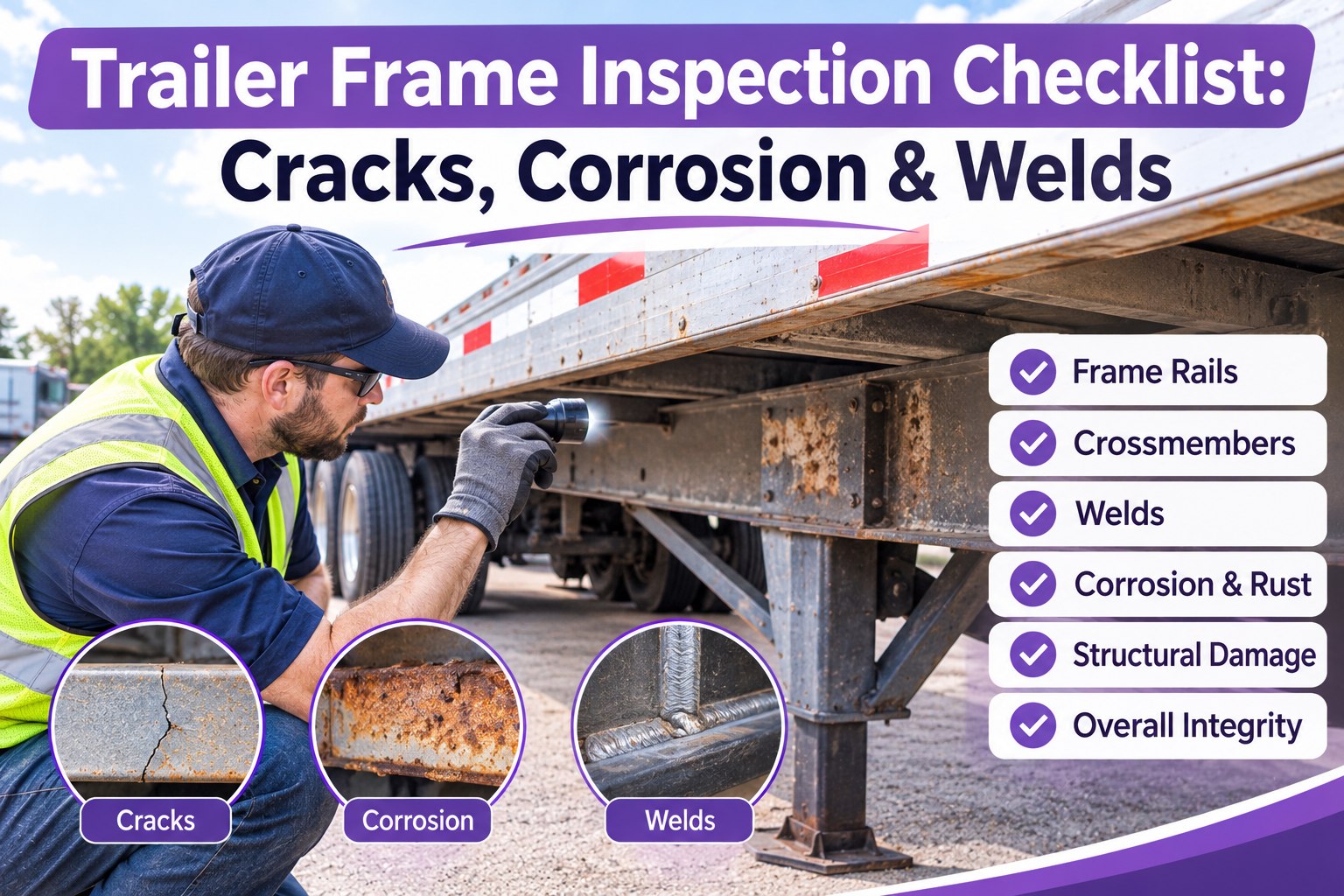
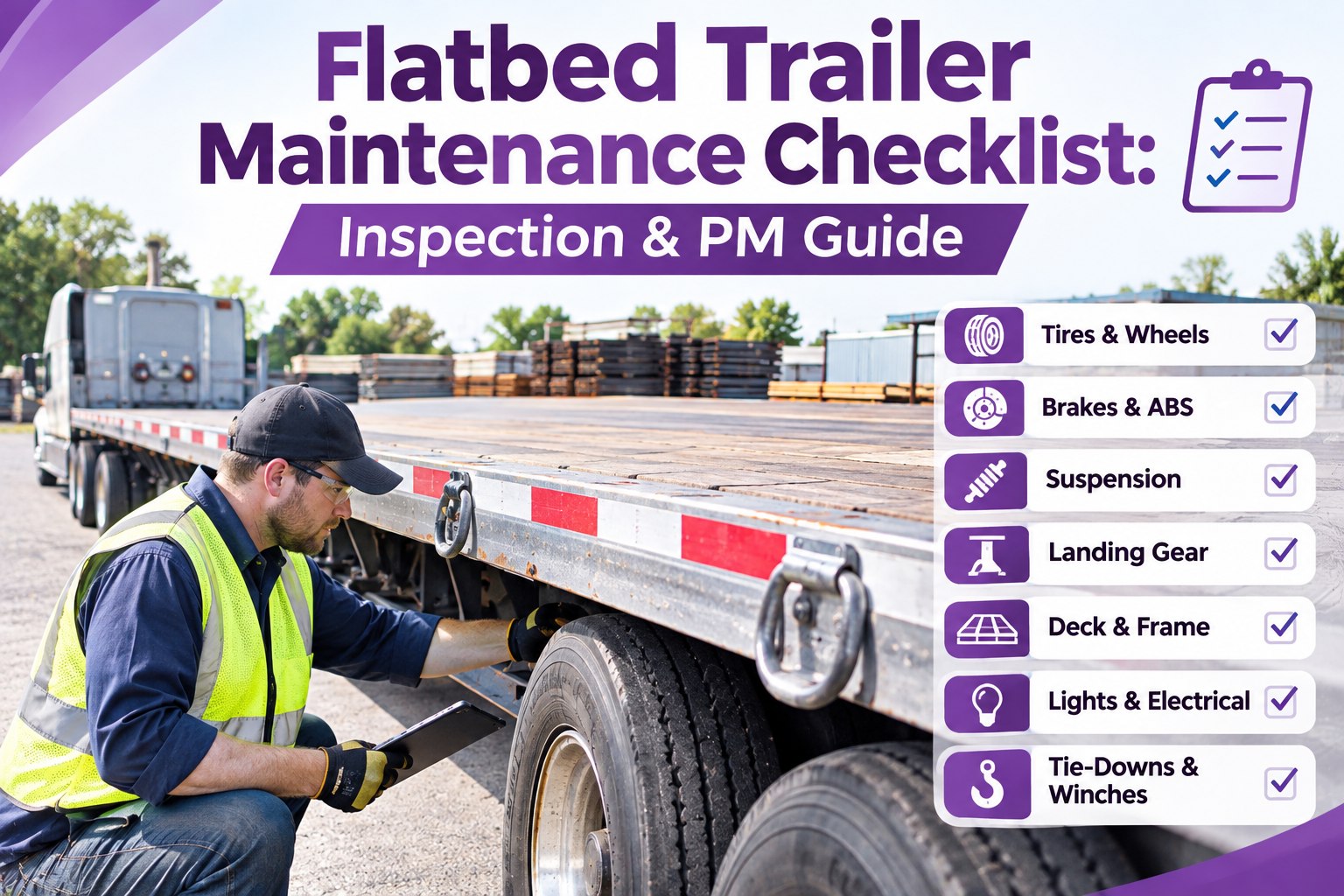
A flatbed's frame rusts where nobody looks: behind mud, under old coating, at the weld where a crossmember meets the beam. The damage is only found when a technician is already under the trailer for something else, or when it fails. This guide shows where flatbeds rust first and how to stop it, and how Truck Inspection & Maintenance Management Software (TIM) turns every rust finding into a work order and every coating job into a scheduled PM. Start free and schedule your first rust PM.
Inspections → Defects → Work Orders → PM
Flatbed Trailer Rust Prevention: Undercarriage Protection Guide
Rust you find early is a wash and a recoat. Rust you find late is a frame repair.
TIM runs the loop that catches it early, so every undercarriage finding gets a work order, a due date and a place on the trailer's record.
1. InspectCheck the five rust zones on a digital inspection.
2. Log the defectRecord the finding against the trailer, graded by severity.
3. Work orderCreate and prioritize the repair so it is not forgotten.
4. Repeat as PMRecurring wash, recoat and re-check on schedule.
Seen earlyRust zones built into every flatbed inspection
Not forgottenEach finding becomes a work order with a priority
On recordEvery wash, coating and repair kept in trailer history
Why Flatbeds Rust Faster Than You Expect
Rust forms when steel meets oxygen and moisture, and road salt speeds it up. A flatbed has no body to shield its frame, so spray, slush and gravel hit the steel directly. Mud makes it worse by holding salty water against the metal long after everything else dries. Prevention is mostly consistency, and consistency is a scheduling problem.
💧MoistureStanding water in frame pockets and behind crossmembers keeps steel wet for days.
🧂Road salt & de-icersDried residue stays on the frame until it is washed off, even when the road looks dry.
🪨Gravel & mudChips break the coating and caked mud holds corrosive moisture against bare steel.
The 5 Rust Hot Spots to Build Into Every Inspection
Rust concentrates in the same five places. Add them as inspection items in TIM and every driver or technician checks the same zones the same way, every time.
Illustrative side view. Log each zone as pass or defect at every inspection.
1
Main frame railsLook for bubbling paint, flaking and orange-brown staining along the lower flange where spray hits first.
2
Crossmember jointsOn combo flatbeds that mix steel and aluminum, corrosion often appears where floor crossmembers meet the main beam.
3
Welds & seamsWelds break the factory coating and trap water. Orange rings around a weld are an early warning.
4
Brake lines, wiring & air fittingsThin tubing and connectors corrode faster than the frame. Flickering lights can point to hidden corrosion.
5
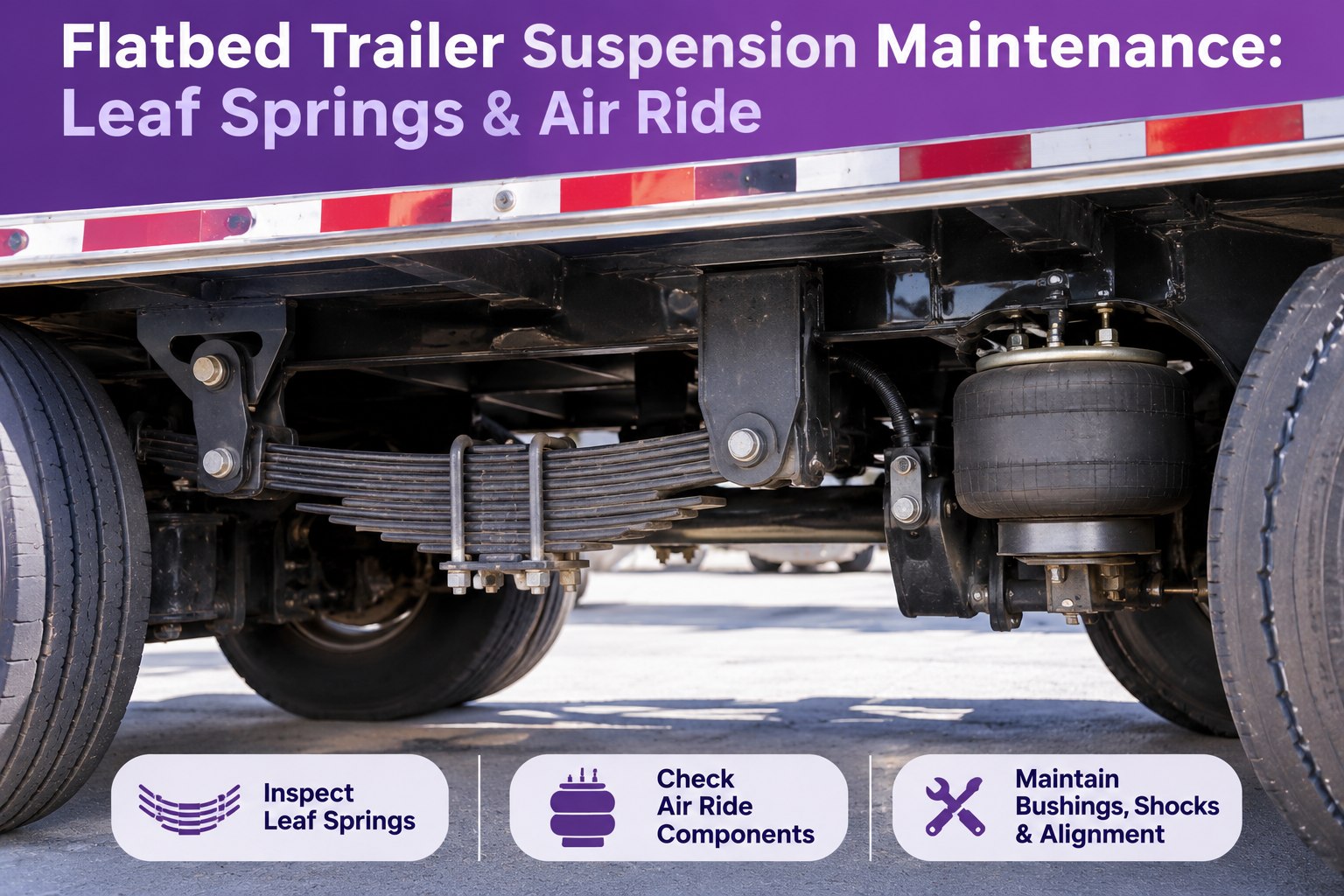
Suspension & mounting pointsSprings, hangers and axle mounts collect salt and mud. Rust here affects ride and structural integrity.
A zone marked "defect" in a TIM inspection becomes a work order, instead of a note someone has to remember. Book a demo to see zone-by-zone trailer inspections.
Four Rust Stages and What TIM Does at Each
The cost of rust climbs with every stage. The workflow below matches the response to the stage, so small problems stay small.
Stage 1Flash rustOrange dust and light surface staining. Clean, treat and recoat.TIM: log defect, schedule recoat PM
Stage 2ScaleFlaking, bubbling paint and rough texture. Needs grinding back to sound metal.TIM: work order to the shop
Stage 3PittingCraters in the steel. Have it assessed and consider a repair plate.TIM: high-priority work order
Stage 4Section lossHoles, thin or soft steel. Take the trailer out of service until repaired.TIM: top-priority, pull from service
Frames with cracked, loose or sagging members are a safety issue, not a cosmetic one. If you are unsure, have a qualified technician assess the trailer.
Undercarriage Coatings Compared
No single product fits every trailer. Soft films are easy to touch up, hard coatings last longer on clean steel, and galvanizing is decided at purchase. Whatever you choose, record the product and date in TIM so you know what is on each frame and when it is due again.
Coating typeBest forWatch out for
Wax or paraffin-based filmAnnual protection, easy touch-ups, self-healing after chipsReapply yearly and after heavy washing
Oil or lanolin-based spraySeasonal use and creeping into seams and jointsStays tacky and attracts dust
Rubberized undercoatingImpact and gravel protection on clean framesCan trap moisture if applied over rust
Epoxy or industrial paint systemRepaired frame sections and long-life finishNeeds careful surface prep
Hot-dip galvanizingNew builds and high-salt regionsSet at purchase, not an after-market fix
Follow the coating maker's instructions and check compatibility with the coating already on your frame.
The Wash-to-Seal Routine, Tracked in TIM
The best coating fails on a dirty frame. Follow this order, and let TIM hold the schedule and the record.
1RinseLoosen mud, slush and salt with warm water.TIM: recurring wash PM
2WashUse a neutral or acidic cleaner. Alkaline cleaners only move salt around.TIM: part of the same PM
3Dry & inspectCheck all five zones in clean, dry light.TIM: digital inspection
4Treat rustRemove loose rust and treat bare steel before coating.TIM: work order from defect
5SealCoat frame, welds and joints. Seal weld seams so water cannot enter.TIM: recoat PM, next due date
6Close the recordNote the date, zone and product used.TIM: closed on trailer history
Your Rust-Prevention Calendar
Timing matters as much as technique. Set these four recurring jobs once in TIM and they come back every year without anyone having to remember.
FallPrepareDeep wash, inspect, repair rust and apply the main protective coat before the first salt.
WinterWash oftenRinse the undercarriage after salted roads. Spot-check welds and brake lines.
SpringFlush & assessRemove built-up salt, inspect for new damage and touch up chipped areas.
SummerRepairDo deeper repairs and recoating while dry weather helps coatings cure.
Near the coast? Salt air attacks metal the same way road salt does, so keep these jobs year-round. Start free and schedule your seasonal trailer PMs.
How TIM Runs the Rust Loop
Inspect, log, repair, repeat. TIM keeps the loop moving so a rust finding on Monday is a scheduled job by Monday afternoon.
1Defect loggedA driver or inspector records the finding on a digital inspection.
2Severity gradedIt is graded and placed in a priority lane, so safety items rise first.
3Work order createdThe repair is queued, with parts checked so the shop knows if it can start.
4Closed on recordThe repair closes against the trailer's history and the next PM is due.
Example rust work queue for flatbeds (illustrative)
P1Trailer F-12 — Section loss at crossmember jointPull from service
P2Trailer F-07 — Rusted brake line fittingSame shift
P3Trailer F-03 — Scale on frame rail, bubbling paintNext open bay
P4Trailer F-09 — Fall recoat PM dueNormal queue
Make Rust Prevention a Routine, Not a Reminder
TIM connects your inspections, defects, work orders and PM schedules, so undercarriage protection happens on time and is documented on every trailer.
Frequently Asked Questions
How do I prevent rust on a flatbed trailer frame?
Keep it clean and sealed. Wash the undercarriage regularly, especially after salted roads, treat any rust you find, and coat the frame, crossmembers and welds. Do this before winter and again in spring. TIM schedules each job as a recurring PM.
Start free and set it up.
Where does a flatbed trailer rust first?
Most often at welds, crossmember-to-beam joints, the lower frame rails, and around brake lines, fittings and suspension mounts. These areas trap water and take the most spray.
How often should I apply an undercarriage coating?
Most fleets treat once a year before winter and touch up chipped areas in spring. Soft-film products need regular reapplication, so follow the manufacturer's directions and your inspection findings.
Can I coat over existing rust?
Not loose rust. Remove flaking scale and treat bare steel first, otherwise the coating can trap moisture and hide the damage. Deep pitting or section loss should be assessed by a qualified technician.
How does TIM help with trailer rust prevention?
It runs the full loop: digital inspections catch rust by zone, defects are graded into priority lanes, work orders are created for the repair, and recurring PMs bring the next wash and recoat. Everything closes on the trailer's history.
Book a demo to see it in action.
Inspect · Log · Repair · Repeat
Catch Rust While It's Still a Wash and a Recoat
Start a free trial and schedule your first undercarriage inspection, or book a demo and we'll walk through the rust loop with your trailers in mind.
No credit card required. Free for up to 3 trucks.