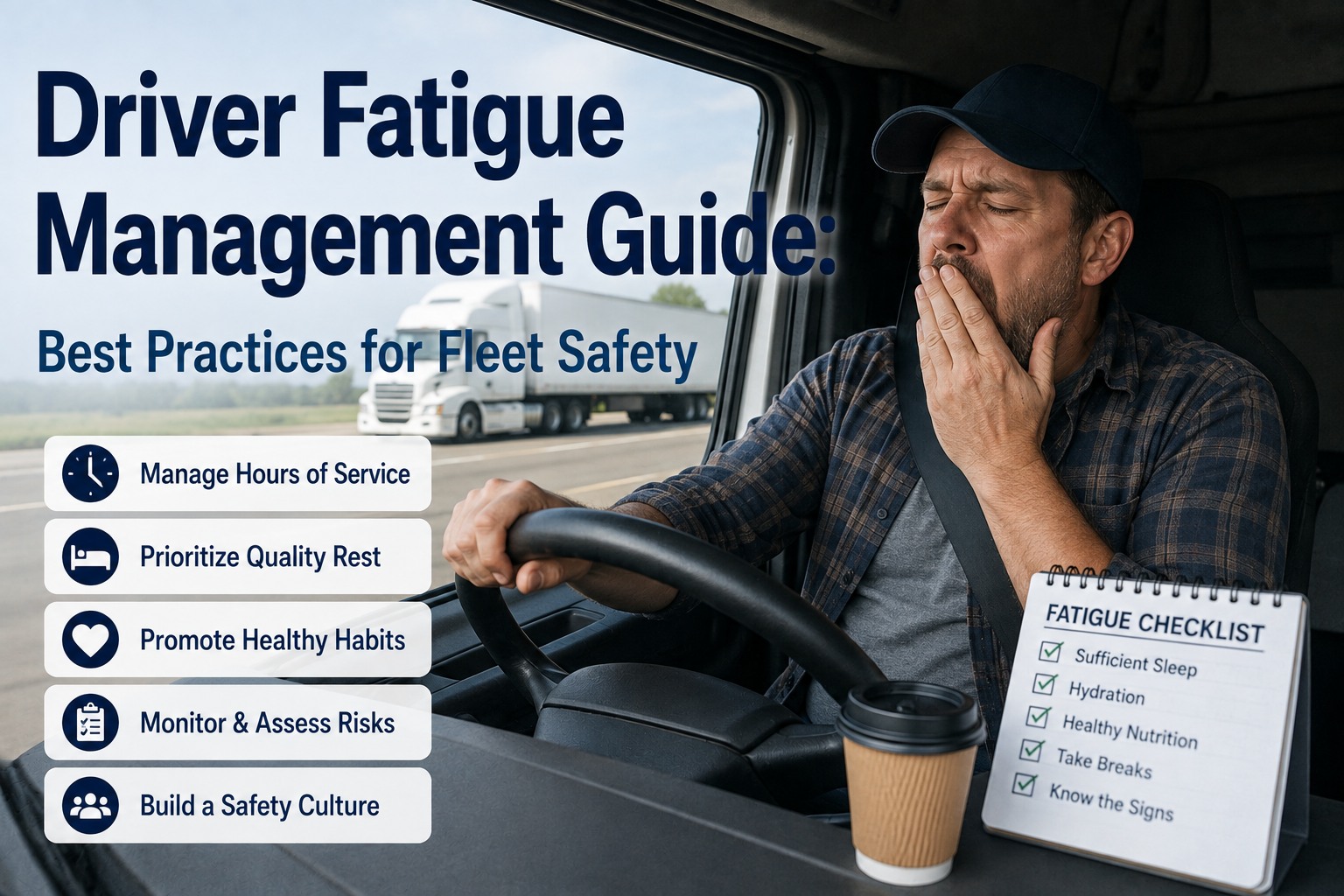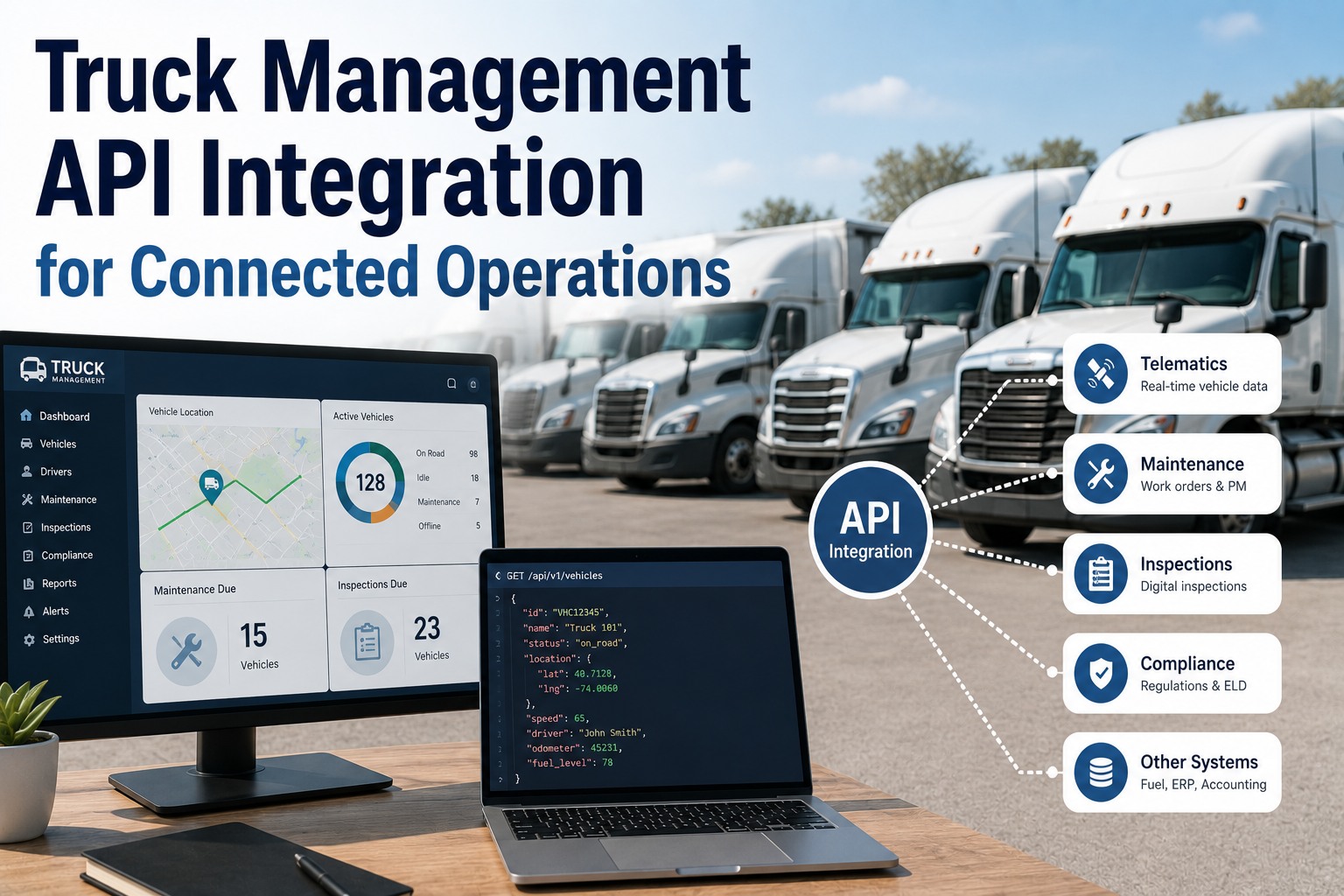
Fatigue almost never announces itself. It doesn't arrive as a driver deciding they're too tired to continue — it arrives as a slow slide the driver is subconsciously fighting and losing, what safety researchers call the fatigue loop. Blinks get longer. The head dips and catches. Somewhere in there comes a microsleep: two seconds of nothing, which at highway speed is roughly the length of a football field covered by a driver who isn't there. The European Transport Safety Council attributes about 20% of commercial vehicle accidents to fatigue. The cruel part is the timing — by the time a driver feels sleepy enough to act, the dangerous window has already been open for several minutes. Add fatigue detection to your fleet free. A driver-facing AI camera closes that gap by watching the signals a person can't see in themselves. Integrated with Truck Inspection & Maintenance, those detections become in-cab alerts, coaching records, and a safety history per driver. This guide explains what the camera actually measures, how early it catches fatigue, and why the false-positive rate is the number that matters most.
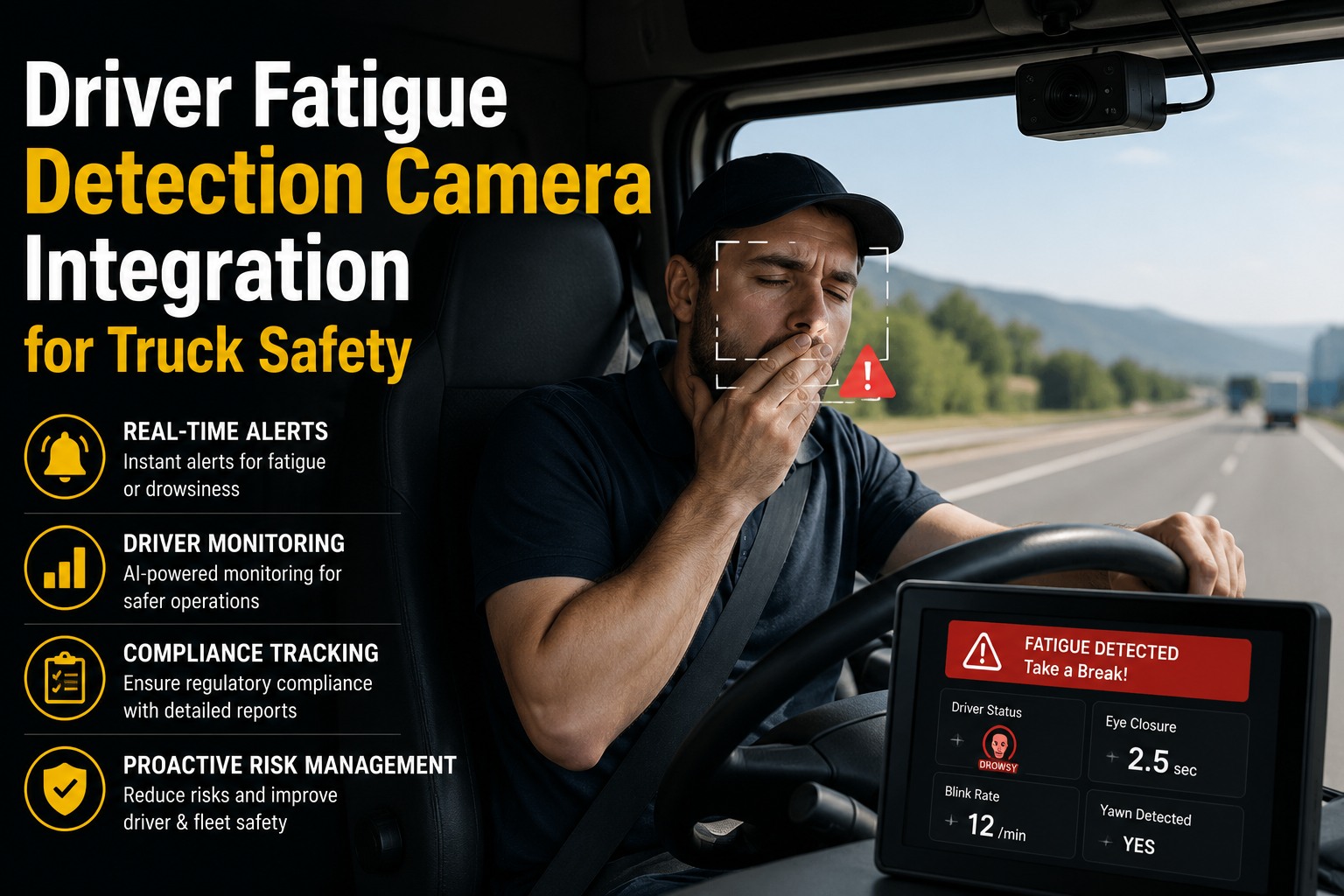
Driver Fatigue Detection Camera Integration for Truck Safety
Catch drowsiness before the driver feels it. AI cameras measure eye closure, blink patterns, and head pose in real time — firing an in-cab alert 8 to 12 minutes before a driver would self-report fatigue, with every event logged to their safety record.
The Fatigue Loop, and the Window Inside It
Fatigue rarely strikes quickly. It manifests as a repeating pattern of declining performance — and each stage leaves a physical signature on the face long before the driver would ever pull over. The whole value of a DMS lives in the minutes between the first measurable sign and the moment control is lost.
PERCLOS: The Number Behind the Alert
Every credible fatigue system is built on one metric. PERCLOS — percentage of eye closure — is the ISO/SAE-standard measure of the proportion of time a driver's eyes are at least 80% closed across a rolling observation window. It has outperformed every alternative tested, including brain-wave patterns, heart-rate variability, pupil size, and simple blink counting.
The Camera Watches More Than Eyes
Fatigue is one of several risks a driver-facing camera can read. The same sensor that measures eye closure also catches the behaviors that put a truck at risk while the driver is wide awake.
PERCLOS plus blink rate and duration — drowsy drivers blink longer, slower, and in irregular patterns.
Nodding, slumping, and the micro-nods that precede a full microsleep, caught before the lapse.
Yawn frequency corroborates the eye signal, strengthening confidence before an alert fires.
Eyes off the road or a head tilted down at a phone registers as distraction, not fatigue.
Policy checks — belt worn before and during the trip, smoking in a no-smoking cab.
Every detection lands on the driver's safety history — the trend, not just the moment.
Start free →An Alert Nobody Trusts Is Worse Than No Alert
False positives are what kill DMS programs. Alert a rested driver enough times and they'll tape over the lens — and the one real alert never lands. Truck Inspection & Maintenance logs detections with the context around them, so managers coach on patterns rather than punishing on noise, and drivers learn that when the cab chimes, it means something.
How Accuracy Is Earned
Lower-tier systems run false-positive rates of 5 to 15%; well-built ones stay under 2%. That gap isn't luck — it comes from four specific engineering choices.
From Detection to Fewer Crashes
The in-cab chime is only the first of three interventions. Real fatigue programs work because the data does something after the trip ends, too.
Why Fleets Add Fatigue Detection
Of all the sensors you can put on a truck, this is the only one watching the component that causes most crashes.
Frequently Asked Questions
Primarily through PERCLOS — the percentage of time the driver's eyes are at least 80% closed over a rolling observation window. It's the ISO/SAE-standard fatigue metric and the most validated one available, outperforming brain-wave patterns, heart-rate variability, pupil size, and blink parameters at identifying lost alertness. The system layers on blink rate and duration (drowsy drivers blink longer and more irregularly), head pose including the micro-nods that precede a microsleep, and yawning frequency. When those signals converge past threshold, it alerts. Start a free trial to add detection.
Well-tuned systems detect fatigue onset roughly 8 to 12 minutes before a driver would self-report feeling sleepy — which is the entire point. Drivers are unreliable judges of their own drowsiness, because the impairment that makes you tired also degrades your ability to recognize it. That window turns the response from reactive to preventive: instead of an alert as the head drops, the driver gets a warning while they still have the judgment to pull over and take a break. Once eye closure hits 1.5 seconds or longer — the commercial-fleet standard for a fatigue event — you're already in the dangerous zone.
Yes, and this matters enormously since fatigue peaks in darkness. Quality systems use 940nm near-infrared illumination, which is completely invisible to the driver — no light shining in their face — while giving the sensor a clear image in total darkness. Detection also holds through non-polarized sunglasses, and works in low-light conditions generally. A system that only functions in bright daylight is failing precisely when you need it, so night-vision performance is worth checking closely before you buy. Ask about camera specs.
That's the real risk, and it's why false-positive rate is the spec that matters most. Lower-tier systems run 5 to 15% false positives; well-engineered ones stay under 2%. The difference comes from multi-frame confirmation before alerting (a reading must hold across consecutive detection windows, not fire on one frame), cross-referencing eye data against G-sensor and motion data so a pothole isn't read as a nod, adaptive thresholds for different road and light conditions, and optimized infrared imaging. Get this wrong and drivers tape over the lens, which means the one alert that mattered never arrives. Get it right and the chime earns trust. Start free and tune your thresholds.
Different questions entirely. GPS tells you where your vehicles are. A road-facing camera tells you what happened on the road — after it happened. Only a driver-facing monitoring system tells you what the driver was doing in the moments before an incident, which is the data that actually changes behavior and reduces future risk. Without it, a fleet has no visibility into fatigue, phone use, or distraction until an accident forces the issue. With it, the detection happens in real time and becomes an in-cab alert that prevents the incident, plus a logged pattern you can coach against or fix at the schedule level. Start free and see the full picture.
Catch Fatigue in the Minutes That Still Matter
Truck Inspection & Maintenance turns driver-facing AI cameras into a working safety program — PERCLOS-based detection that fires 8 to 12 minutes before a driver knows they're tired, in-cab alerts that earn trust by rarely being wrong, and a per-driver record that exposes the routes and schedules quietly manufacturing fatigue.