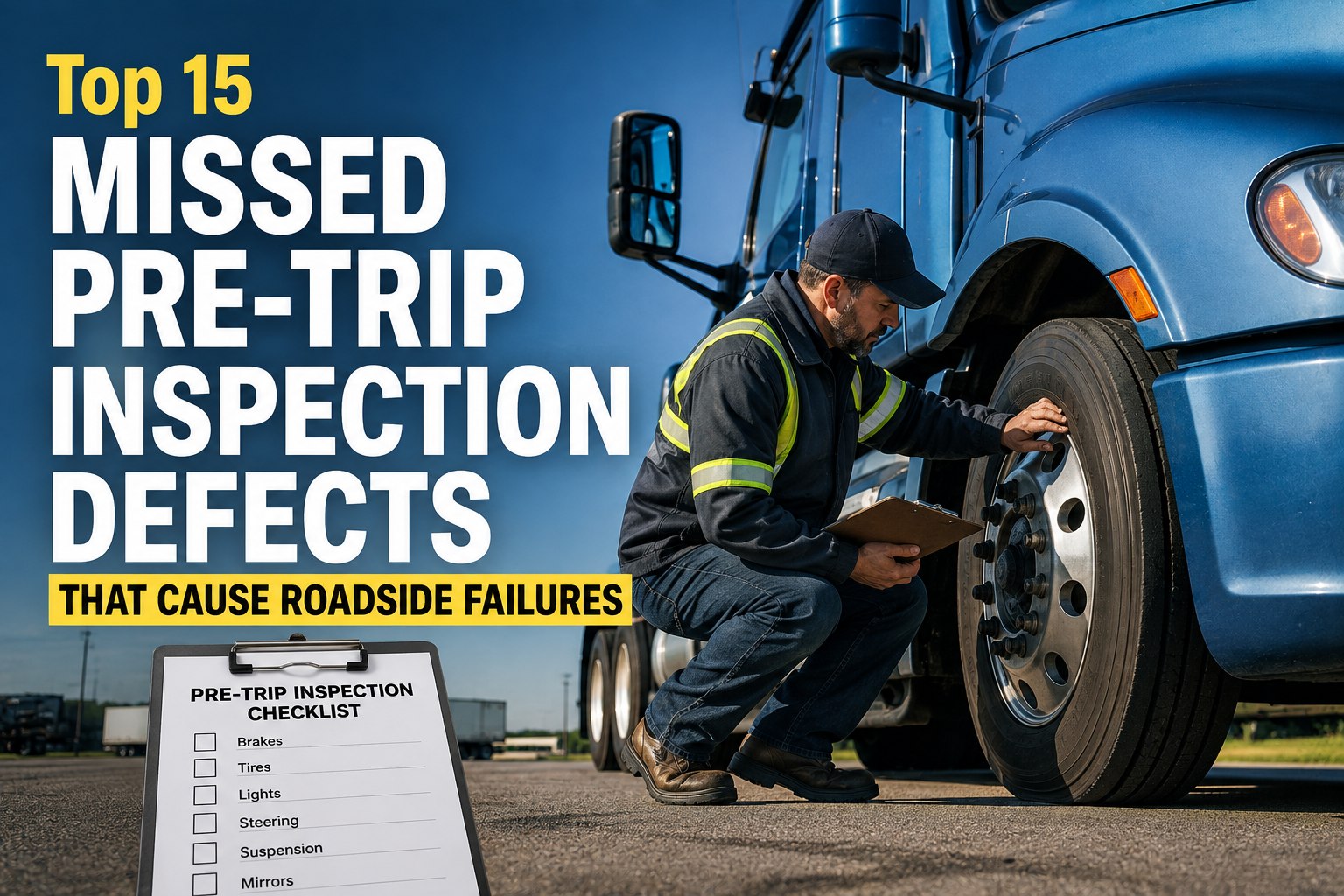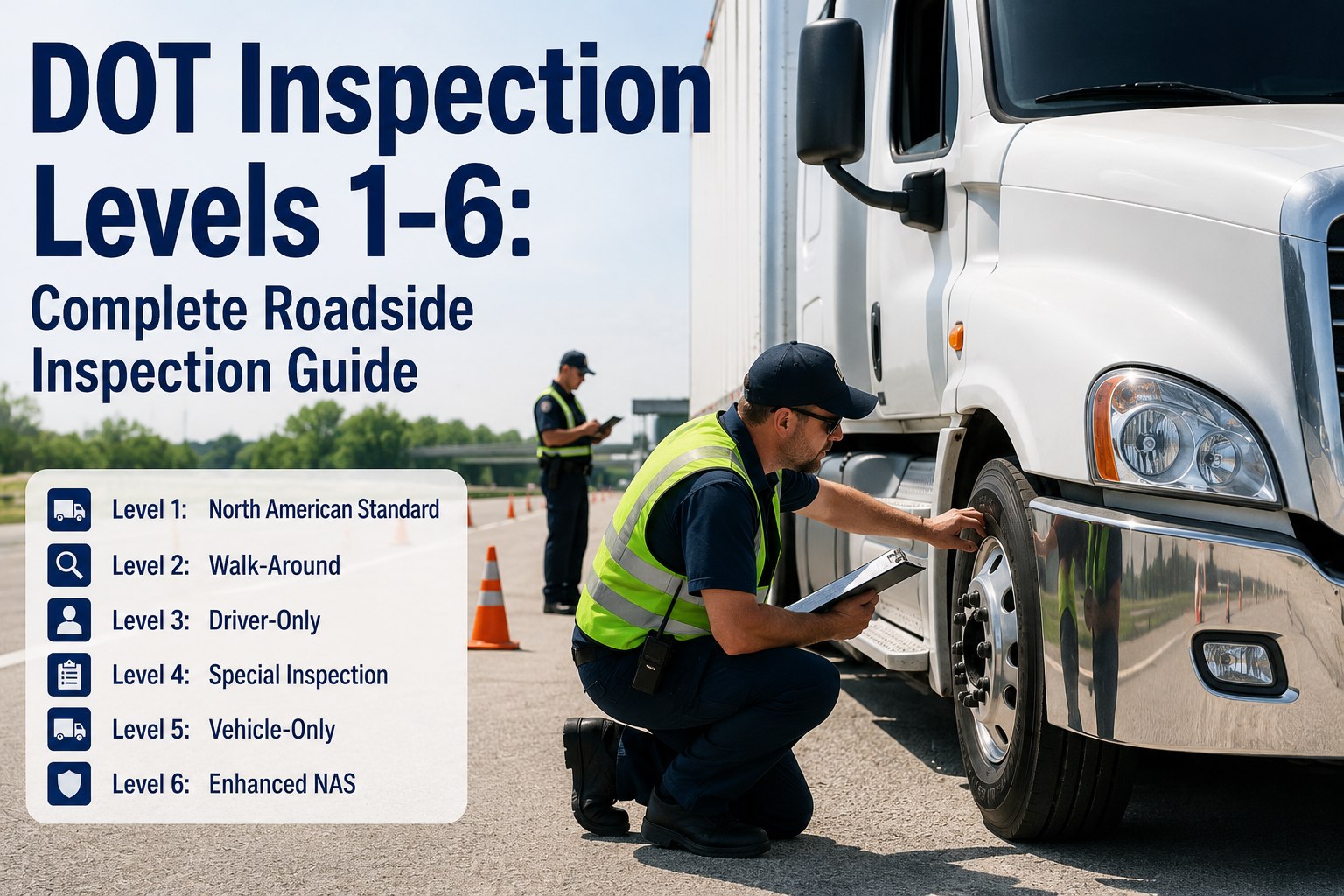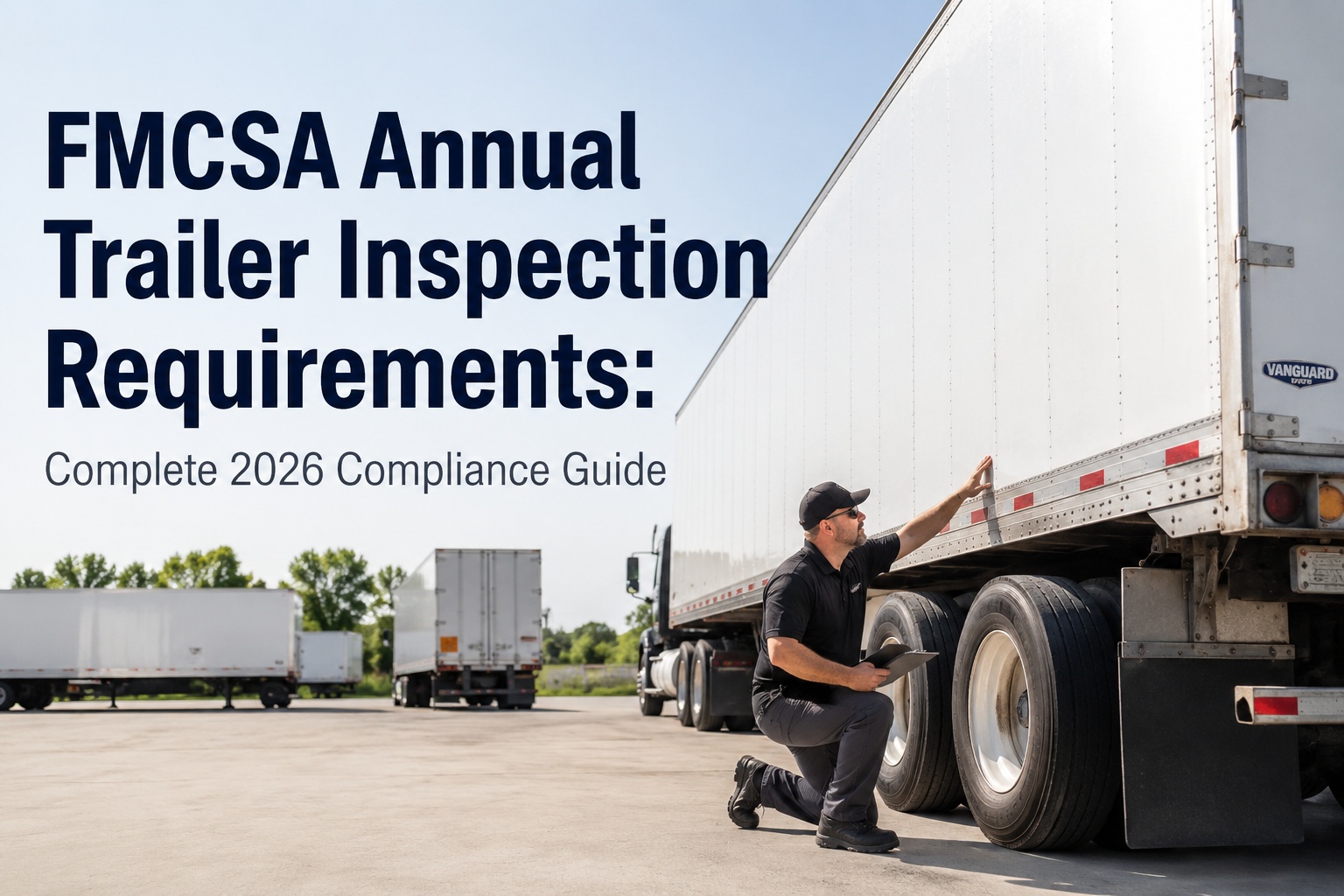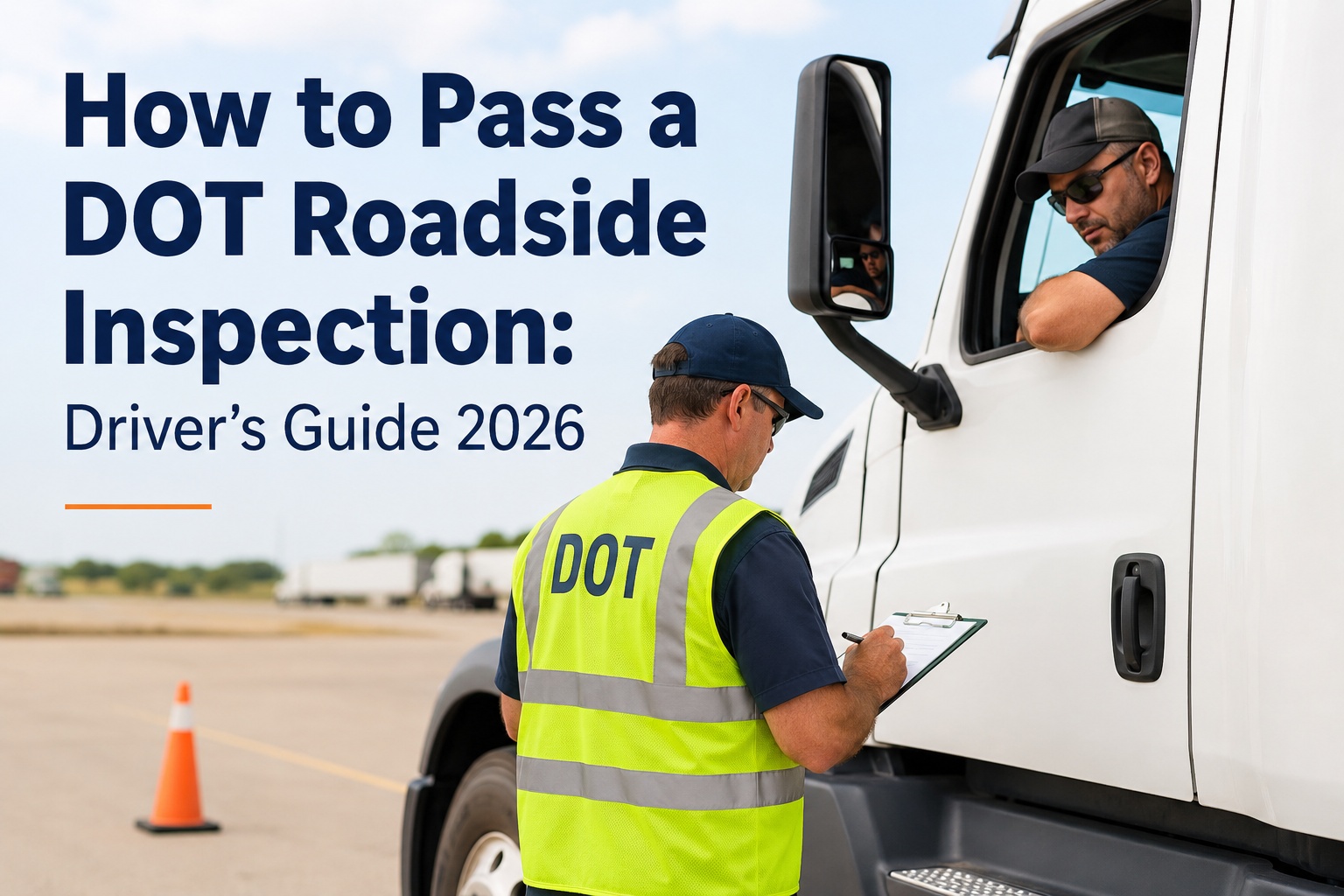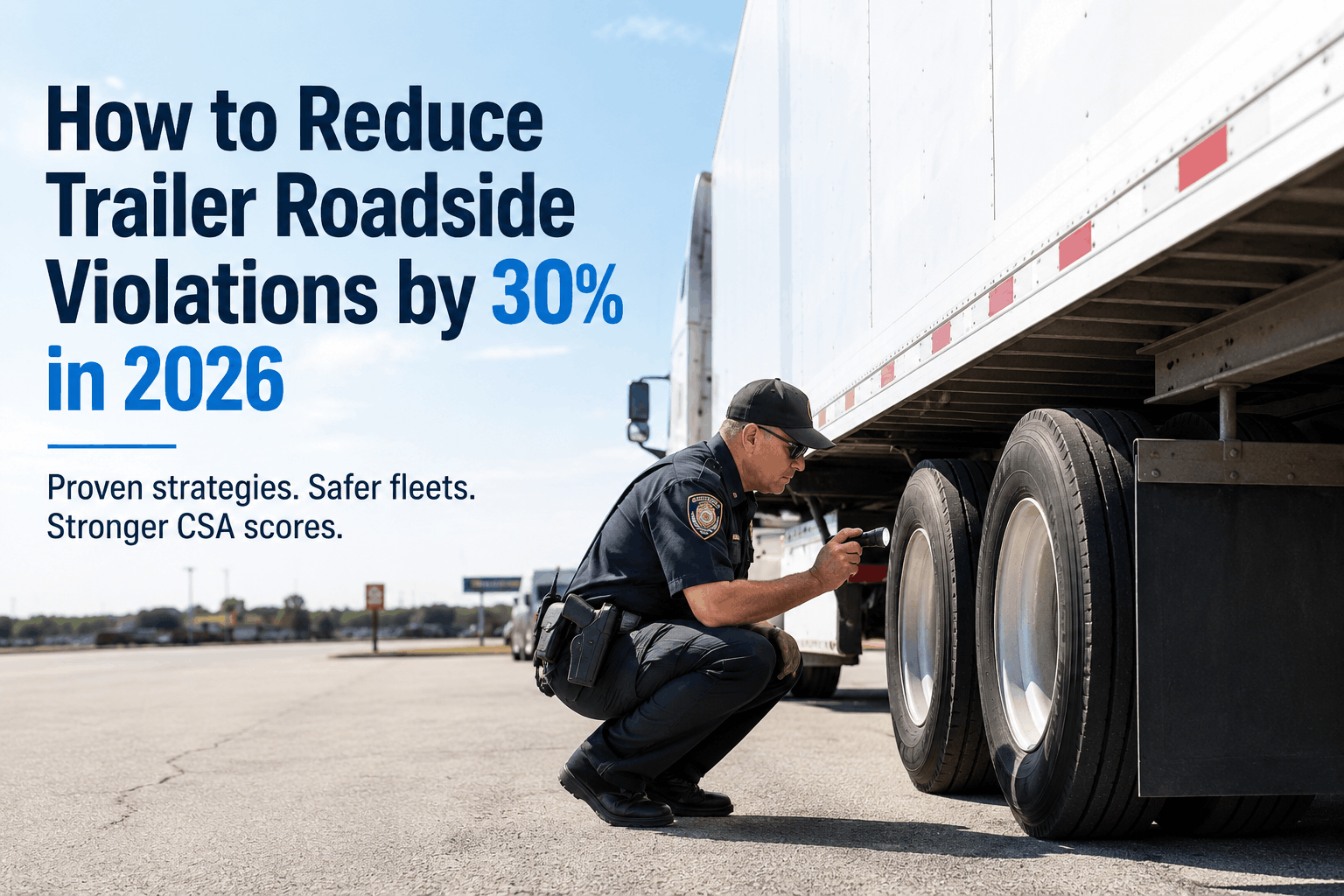
One worn brake, one cracked marker lamp, one tire below 2/32" — that is all it takes to pull a trailer out of service and stamp points onto your CSA score that linger for 24 months. At the 2025 International Roadcheck, inspectors placed 22.6% of vehicles out of service, and brakes plus tires alone drove more than 60% of those orders. The encouraging part: nearly every top violation is a pre-trip inspection item, which means a 30% reduction is not luck — it is a system. This guide breaks down the violations that stop trailers most, the four levers that cut them, and the DVIR habits that protect your score. Start building your inspection system free.
How to Reduce Trailer Roadside Violations by 30% in 2026
The exact violations stopping trailers, the prevention playbook behind a 30% drop, and the DVIR practices that keep your CSA score clean — built on 2025 Roadcheck data.
The Real Cost of a Single Roadside Violation
A roadside violation is never just a citation. It is a stopped trailer, a missed delivery window, a CSA score hit that raises your inspection odds and your insurance premiums, and a paper trail that follows your DOT number for two years. Understanding the stakes is what turns "we should inspect more" into a habit that sticks.
What Actually Stops Trailers: 2025 Roadcheck Breakdown
Before you can cut violations, you need to know which ones do the damage. The Commercial Vehicle Safety Alliance inspected over 56,000 vehicles during the 2025 International Roadcheck. The out-of-service violations cluster around a handful of systems — and every one of them is checkable in a pre-trip walkaround.
The lesson is blunt: brakes and tires together account for more than 60% of out-of-service orders. See how a structured pre-trip closes these gaps. Lighting and securement fill out the rest — all low-cost to check, all expensive to ignore.
The Top Trailer Violations — and How to Beat Each One
Here is the practical view: the specific defects inspectors cite most on trailers, what regulation governs them, and the prevention habit that keeps them off your record. Truck Inspection & Maintenance turns each of these into a required pre-trip checkpoint with photo proof.
Make Every Top Violation a Required Checkpoint
Truck Inspection & Maintenance builds brakes, tires, lights, and securement into a digital pre-trip with photo evidence — so defects get caught in the yard, not at the scale.
The 4-Lever Playbook for a 30% Reduction
A 30% drop does not come from trying harder during Roadcheck week. It comes from four systems working together year-round. Pull all four levers and the violations that stop trailers simply stop happening at the rate they used to.
A consistent, mandatory checklist on every shift catches brake, tire, and lamp defects before the trailer rolls. Photo evidence proves it was done.
Schedule brake and tire service by mileage and time, not by failure. Overdue intervals are flagged before they become violations.
Every flagged defect becomes a work order tracked to completion. No defect slips between the driver's report and the repair.
Review inspection and violation trends with drivers. Patterns surface the trailers and habits that need attention.
DVIR Done Right: Your Compliance Backbone
The Driver Vehicle Inspection Report is where roadside compliance is won or lost. Under 49 CFR 396.11, drivers must inspect and submit a written report at the end of each day's work. Done on paper, DVIRs get rushed, lost, or rubber-stamped. Done in Truck Inspection & Maintenance, they become a defensible, audit-ready record.
Protecting Your CSA Score
Your CSA score is the number brokers, insurers, and inspectors judge you by. Roadside violations feed directly into the Vehicle Maintenance BASIC, and out-of-service orders carry the heaviest weights of all. Here is what every trailer fleet should understand about keeping that number low.
The takeaway is simple: prevention is far cheaper than recovery. A clean inspection avoids points entirely, while a single OOS order can shadow your score for two years and quietly raise costs the whole time. Start protecting your score today.
Frequently Asked Questions
Based on 2025 CVSA Roadcheck data, brake-related issues lead at roughly 41% of out-of-service vehicle violations, followed by tires at 21.4%, lights at 14%, and cargo securement at 11%. On trailers specifically, inoperative lamps, brakes out of adjustment, defective slack adjusters, and worn or under-inflated tires are cited most often.
Yes, because almost every top violation is a preventable pre-trip item. Fleets that standardize daily inspections, run preventive maintenance on intervals, close the defect-to-repair loop, and coach drivers with the data consistently see large drops. The 30% figure reflects what's achievable when all four levers run together year-round rather than just during Roadcheck week.
Violations feed into the Vehicle Maintenance BASIC. Out-of-service violations carry the heaviest severity weights — typically 5 to 10 points versus 1 to 3 for minor issues — and remain on your record for 24 months. A higher score increases inspection frequency and can raise insurance premiums for years.
Yes. 49 CFR 396.11 requires a written inspection report at the end of each day's work but does not mandate paper. A digital DVIR with a guided checklist, timestamped operator records, photo evidence, and a defect-to-work-order trail satisfies the requirement and is far easier to retain and produce than paper forms.
The trailer cannot move until the defect is corrected — not even to the nearest shop. For issues like a flat or damaged tire, only a roadside service call can clear it. You'll also receive an inspection report that must be signed and returned within 15 days confirming the repair, and the violation lands on your CSA record.
Cut Your Trailer Violations Before the Next Inspection
Truck Inspection & Maintenance turns the top roadside violations into required pre-trip checkpoints, runs preventive maintenance on intervals, and keeps every DVIR audit-ready — so your trailers pass and your CSA score stays clean.