A reefer trailer rolls into the yard reading five degrees warmer than setpoint, and the easy answer is "it's low on refrigerant — add a charge." That's often the expensive guess, not the diagnosis. A coil can ice over from a refrigerant leak, a dead fan, a clogged drain, or a stuck defrost timer — four completely different repairs — and the only way to tell them apart is by reading the ice itself before touching anything. Start free and route every reefer fault into a diagnosis-first work order.
Evaporator Icing · Airflow · Defrost · Diagnosis Before Repair
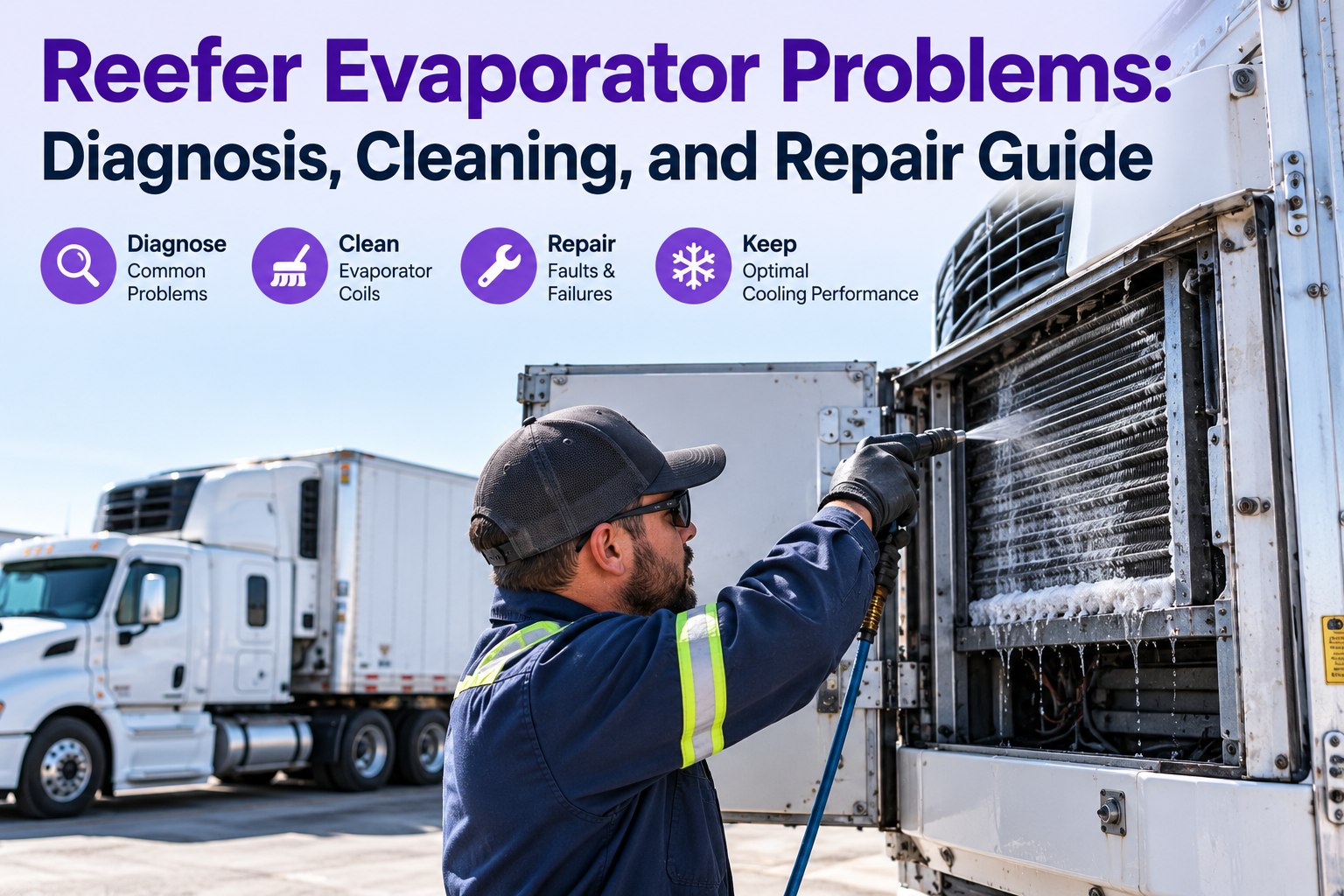
Reefer Evaporator Problems: Diagnosis, Cleaning, and Repair Guide
An iced evaporator has a story to tell, and the pattern — where the ice sits, how uniform it is, how fast it came back — points to one of three root causes before a single tool touches the system. Truck Inspection & Maintenance Management Software logs the symptom, the ice pattern, and the diagnostic steps together on one work order, so a technician isn't reconstructing the story from memory halfway through the repair.
Three Causes Explain Almost Every Iced Evaporator
Resist the urge to diagnose from the symptom alone — "ice on the coil" by itself tells you nothing. The pattern of that ice narrows it to one of three root causes almost every time.
1Low Refrigerant ChargeUneven icing — heavier right at the coil inlet, tapering off as it crosses the coil. The pattern is the giveaway, not just the presence of ice.
2Poor or No AirflowUniform, complete icing across the whole coil face. Often traced to a dirty filter, blocked return air, or a failed evaporator fan.
3Defrost Cycle FailureAlso uniform icing, but the system otherwise runs normally until it simply stops defrosting on schedule — the heater, timer, or thermostat is the suspect.
The Diagnostic Path — In the Order a Technician Should Actually Walk It
Jumping straight to a refrigerant gauge is how a $40 fan motor turns into an unnecessary refrigerant service call. Work the sequence in order instead.
Step 1De-ice the coil properlyUse a heat gun or trigger a manual defrost cycle — never an ice pick or anything that could rupture a refrigerant line
↓
Step 2Confirm fan operationRun the system and verify the evaporator fan spins in the correct direction, at full speed, with no obstruction
↓
Step 3Measure superheatA low superheat value points to restricted airflow across the coil rather than a refrigerant charge issue
↓
Step 4Check the defrost controlsIf superheat and airflow both check out, the heater, timer, or thermostat is the next place to look
The clogged drain nobody checks first A surprisingly common cause of recurring icing isn't the refrigerant circuit at all — it's a clogged condensate drain tube. Water from the defrost cycle has nowhere to go, pools under the coil, and refreezes the moment the next cooling cycle starts, blocking airflow all over again. Clear the drain tubes and check for ice at the drain hole before chasing anything more expensive.
What a Proper Coil Cleaning Actually Covers
Coil face, both sidesDirt and debris buildup restricts airflow long before it's visibly "dirty" to a glance
Fin conditionBent or crushed fins block airflow the same way dirt does — straighten before cleaning, not after
Return air pathCargo stacked against the return air chute starves the coil of airflow regardless of how clean it is
Condensate drain tubesCleared and flow-tested with water before the unit is called finished
Diagnose First. Repair Once.
Our Truck Inspection & Maintenance Management Software captures the ice pattern, airflow check, and superheat reading on the same work order a technician is already filling out — so the next tech who sees that trailer doesn't start the diagnosis over from scratch, and the repair gets done right the first time.
Frequently Asked Questions
Is it ever okay to just add refrigerant when a coil is icing?
How often should the evaporator coil actually be cleaned?
A seasonal inspection and cleaning is a commonly recommended baseline, but a reefer running constant freight cycles in dusty or humid lanes may need it checked more often — airflow restriction builds up quietly and often isn't obvious from a quick glance at the coil.
Why does an evaporator ice over even with a clean filter and good airflow?
A clean filter rules out the most common airflow cause, but not the only one — a clogged condensate drain, a failing defrost heater or thermostat, or a genuine refrigerant leak can all produce icing even when the obvious airflow path looks fine. That's exactly why the ice pattern and a step-by-step check matter more than any single assumption.
Can a hot spot in the trailer be caused by the evaporator even if the unit reads the correct setpoint?
Yes — a unit can maintain its setpoint at the sensor while cargo blocking the return air chute or an iced section of coil still creates uneven airflow throughout the box, leaving hot spots far from the reefer unit itself. The thermostat reading and the actual temperature distribution in the trailer are two different things.
Contact us to build airflow checks into your reefer PM routine.
Read the Ice. Diagnose the Cause. Repair It Once.
Stop Guessing at Reefer Evaporator Problems
Our Truck Inspection & Maintenance Management Software captures the full diagnostic path — ice pattern, fan check, superheat, defrost controls — on every reefer work order, so technicians fix the actual cause instead of the first thing that looks like one.
No credit card required. Free for up to 3 trucks.