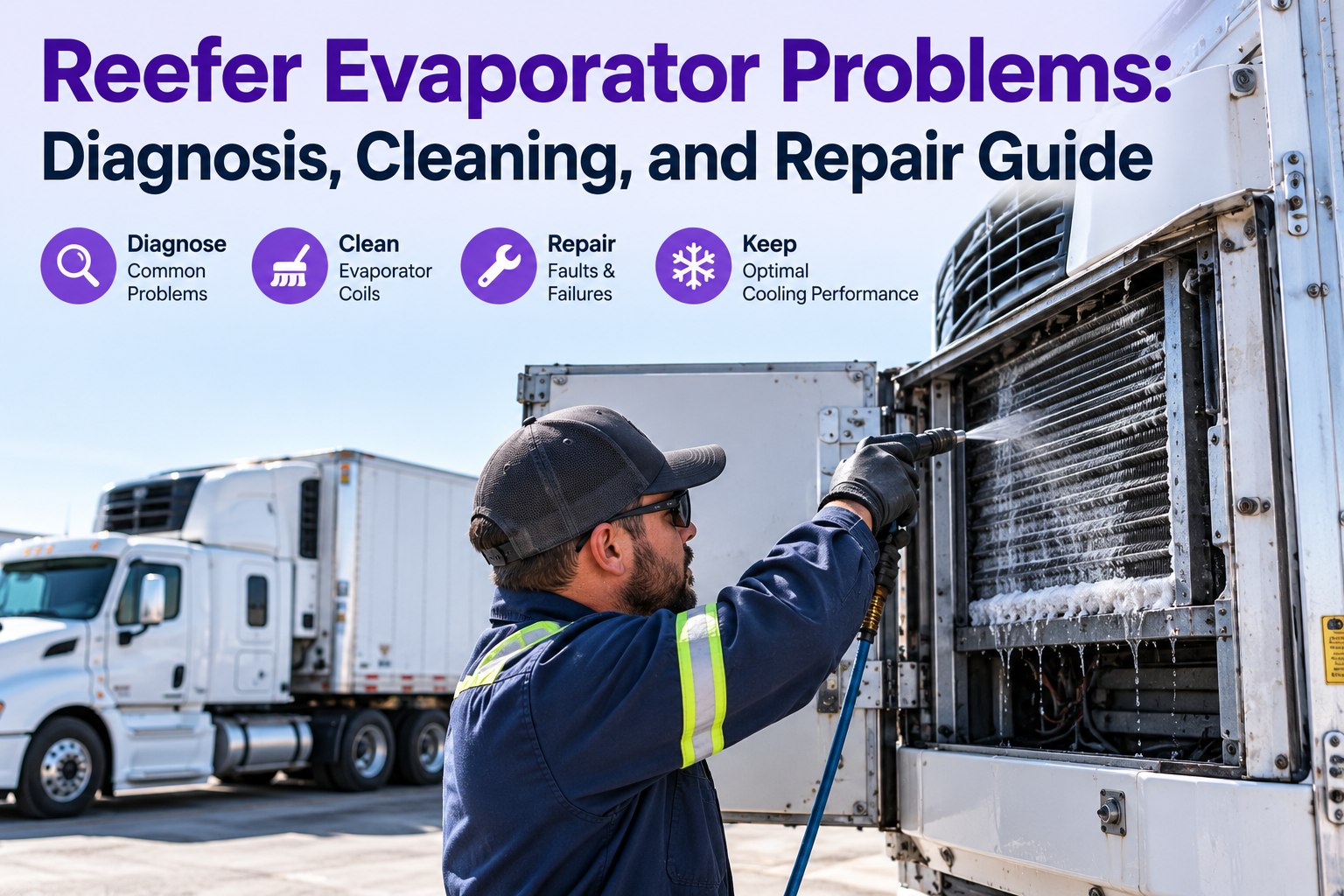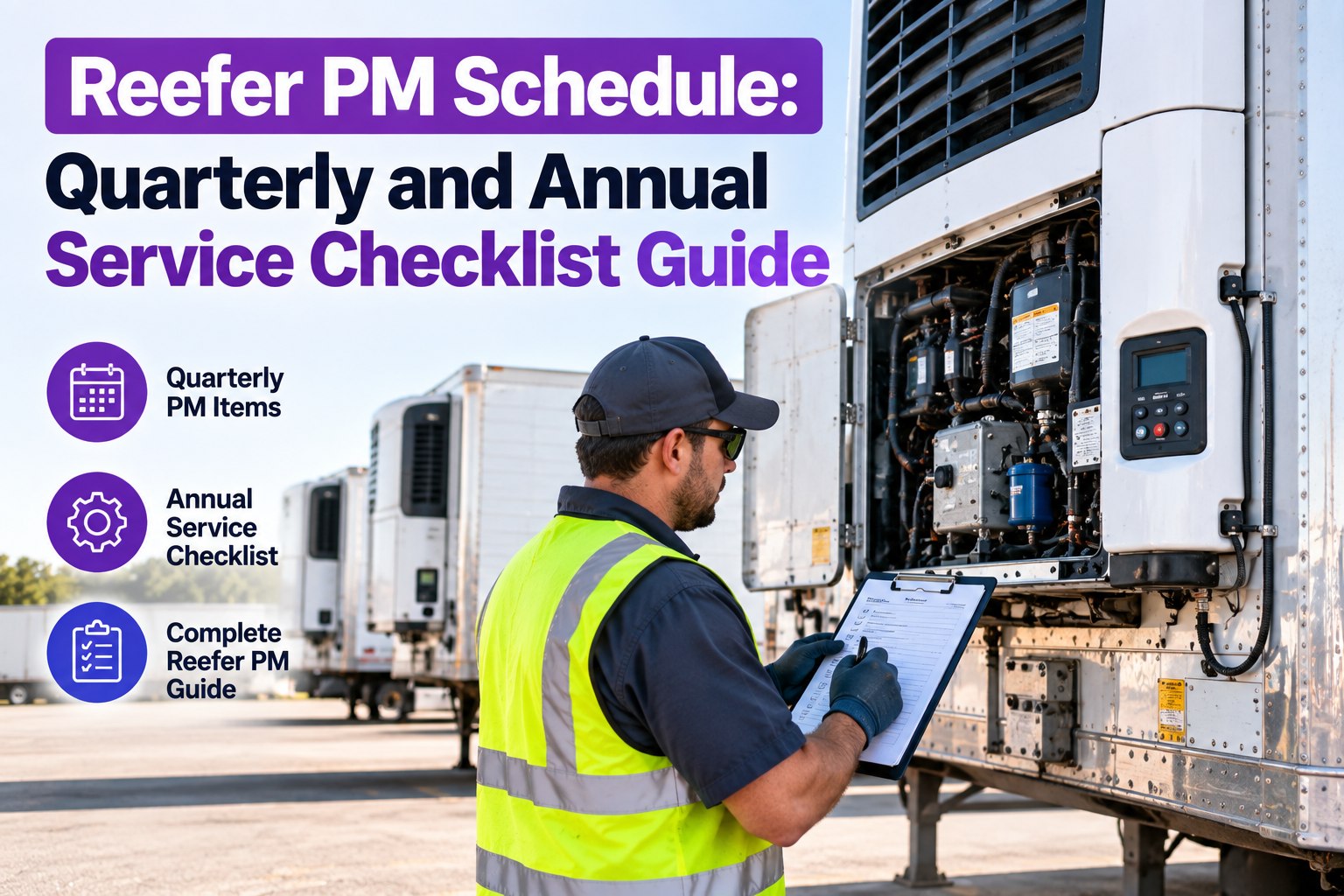
The cargo temperature is climbing, an alarm is on the display, and the driver has a decision to make on the side of the road — with a full load of perishables riding on getting it right, fast. A reefer failure isn't like a check-engine light you can nurse to the next shop; every degree of drift is money leaving the trailer. The good news: reefer units fail in predictable ways, and a systematic diagnosis — simplest checks first, working inward from airflow to the compressor — finds the cause quickly and avoids the unnecessary service call. This checklist walks the symptoms, the subsystems, and the alarm categories in the order that saves the load. Start free and run a structured reefer diagnosis with TIM.
When the Box Is Warming, You Don't Have Time to Guess — You Need the Sequence
A reefer alarm on the road is a race against the load. Truck Inspection & Maintenance Management Software gives drivers and techs a structured diagnosis path — simplest checks first, then compressor, evaporator, sensors, and control board — captures every alarm and temperature reading, and routes the fault straight to a work order with the record that protects you if a cargo claim follows.
How a Reefer Cools — and Where It Breaks
Every diagnosis starts with the cycle. A reefer is a closed loop: the compressor moves refrigerant, the condenser rejects heat outside, the expansion valve meters flow, and the evaporator absorbs heat from the cargo space. The whole thing depends on proper airflow, accurate sensor input, and electrical control. When one link fails, the cycle breaks — and knowing the loop tells you where to look.
Diagnose in the Right Order — Simplest Checks First
The costliest mistake is tearing into the compressor when the real problem is a blocked air chute. Systematic diagnosis works outside-in: rule out the cheap, common causes before the expensive, rare ones. Follow this order every time and most failures resolve before you reach the hard repairs.
The most common cause of poor cooling. Pallets blocking the evaporator discharge, cargo stacked above the air chute, or a solid-packed load with no channels creates hot spots no matter how hard the unit works. Check this first — it's free to fix.
Low charge from a slow leak is gradual and easy to miss until cooling drops off. Look for oil residue on lines and fittings — the tell-tale sign of a leak. Adding refrigerant is only a temporary fix; the leak has to be found and repaired.
The second most common cause. Dust, road debris, and grease cut heat transfer; a condenser fan that isn't running drives high-pressure alarms. Clean the coils and confirm the fan spins.
Cracked or fraying belts, slipping or squealing on startup, misaligned pulleys, or a weak tensioner can stop a belt-driven compressor from cooling. Cracked or worn hoses leak the working fluid the cycle depends on.
Frost after the valve with a warm evaporator, sudden low-side pressure drop, or unexplained temperature swings point to a stuck or clogged expansion valve. An iced evaporator or blocked fan chokes airflow at the source.
The last and most expensive stops. A failing compressor means no circulation; a bad sensor makes the controller "think" the box is cold when it isn't; wiring corrosion, a bad relay, or a failed control module causes intermittent cooling or failed startups.
Work the list top to bottom and you fix the cheap causes before touching the expensive ones. Contact our team to load this sequence as a reefer checklist in TIM.
The Four Subsystems — Symptoms & What to Check
Once airflow and charge are ruled out, the fault lives in one of four subsystems. Each has a recognizable symptom signature. Here's how to tell them apart.
Read the Alarm First — It Points You In
Modern units display alarm codes that narrow the search before you touch a tool. The exact codes differ by brand, but the categories are consistent — and the alarm history log is the fastest starting point on any diagnosis.
Alarm categories are consistent across Thermo King (numbered codes) and Carrier Transicold (letter-number codes such as AL-1 or SH-2), though exact codes vary by brand and model — always confirm against the unit's own manual.
Every Alarm, Every Reading, Every Repair — On One Reefer Record
Truck Inspection & Maintenance Management Software turns reefer diagnosis into a guided, documented workflow. Drivers and techs work the sequence on-screen, log each alarm and temperature reading with a timestamp, and route the confirmed fault straight to a work order. When a cargo claim comes, you can show you monitored the load and responded — the documentation that protects the fleet.
Stop Failures Before the Road — The Reefer Pre-Trip (PTI)
The best failure diagnosis is the one you never need. A thorough pre-trip inspection catches developing faults in the yard, where they're cheap and the load isn't at risk.
TIM builds the reefer PTI into your inspection routine so these checks happen before every load, not after a claim. Start free and run a documented reefer pre-trip with TIM.
Frequently Asked Questions
Diagnose in the Order That Saves the Load
A reefer failure on the road is a race, and guessing loses it. A structured diagnosis — read the alarm, rule out airflow and charge, then work inward to compressor, evaporator, sensor, and control board — finds the cause fast and keeps the cargo cold. Do it with the alarms and temperatures documented, and you're protected whatever the receiver says. TIM makes that sequence, and that record, standard on every reefer.