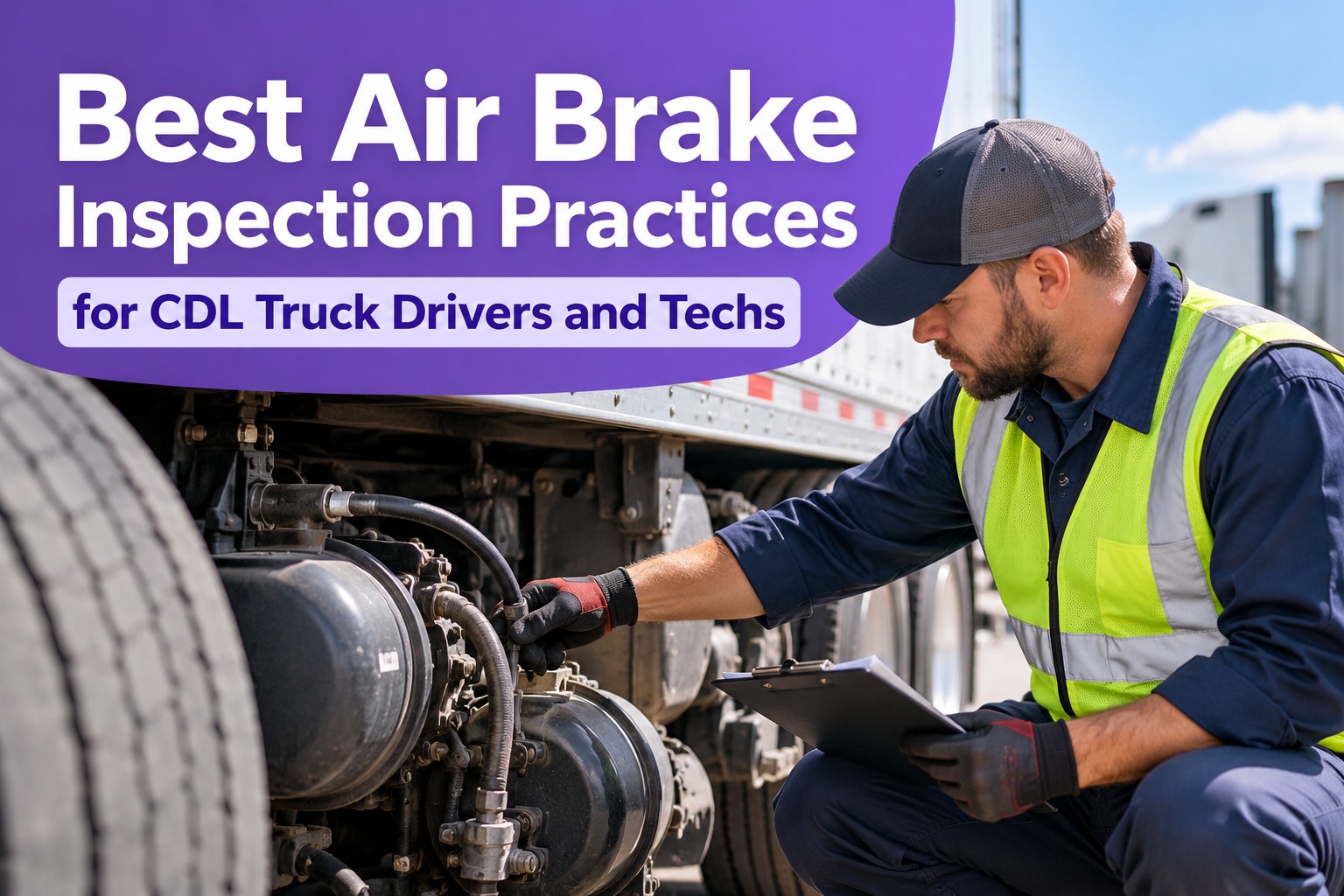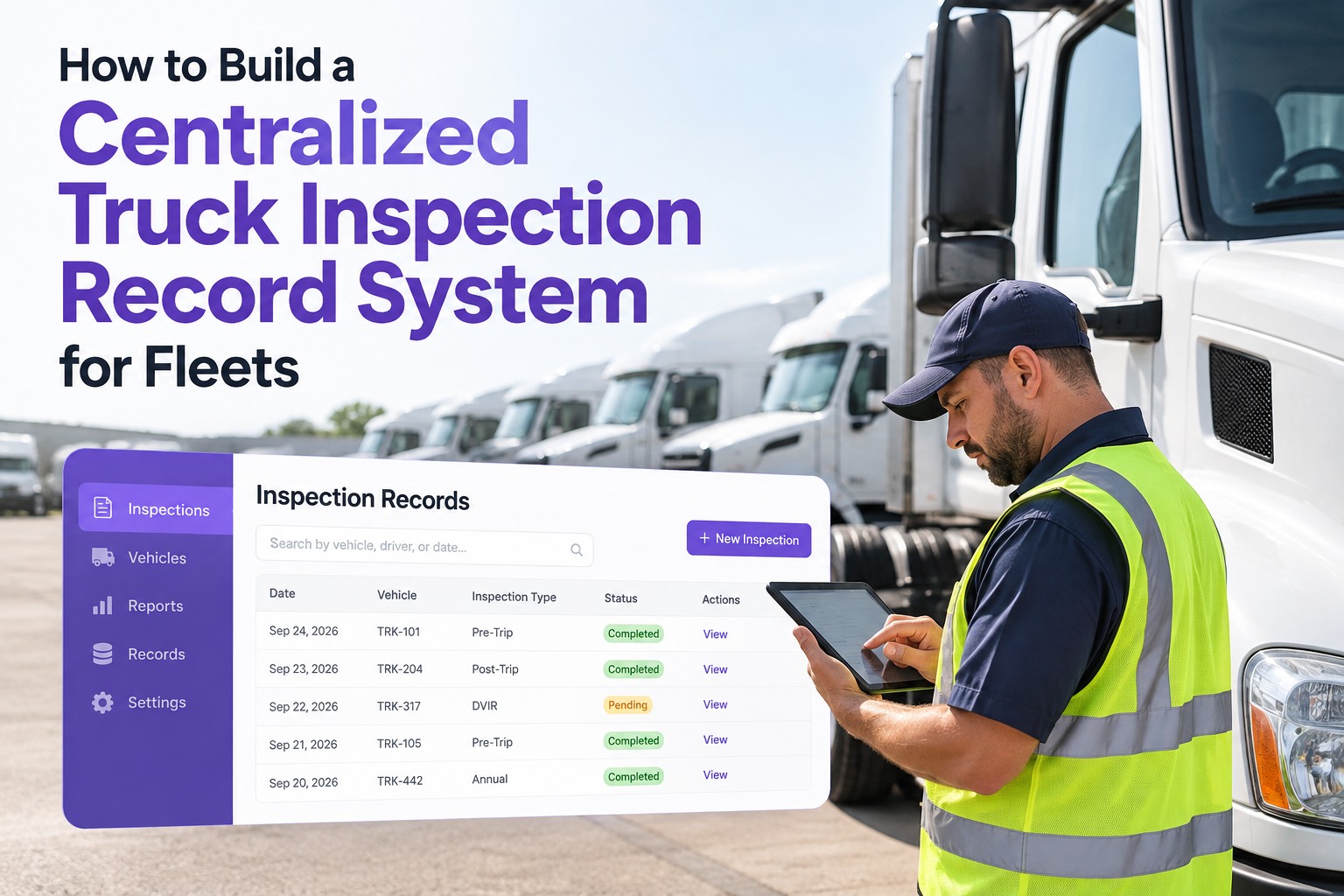
One in four trucks pulled into a 2025 roadside inspection went out of service — and brakes were the single biggest reason, behind 24.4% of all vehicle OOS cases. Brakes also contribute to roughly 30% of truck crashes. Here's the part most fleets miss: a brake almost never fails suddenly. Pushrod stroke creeps past the limit one fraction of an inch at a time, an air leak starts as a faint hiss, a lining thins gradually. Every one of those is measurable weeks before it becomes an out-of-service violation — if someone's tracking the trend instead of waiting for the inspector. This guide breaks down why brakes lead the OOS list, how the air system actually fails, and the monitoring cadence that catches adjustment and leak issues before they ground a truck. Catch brake issues before the roadside free.
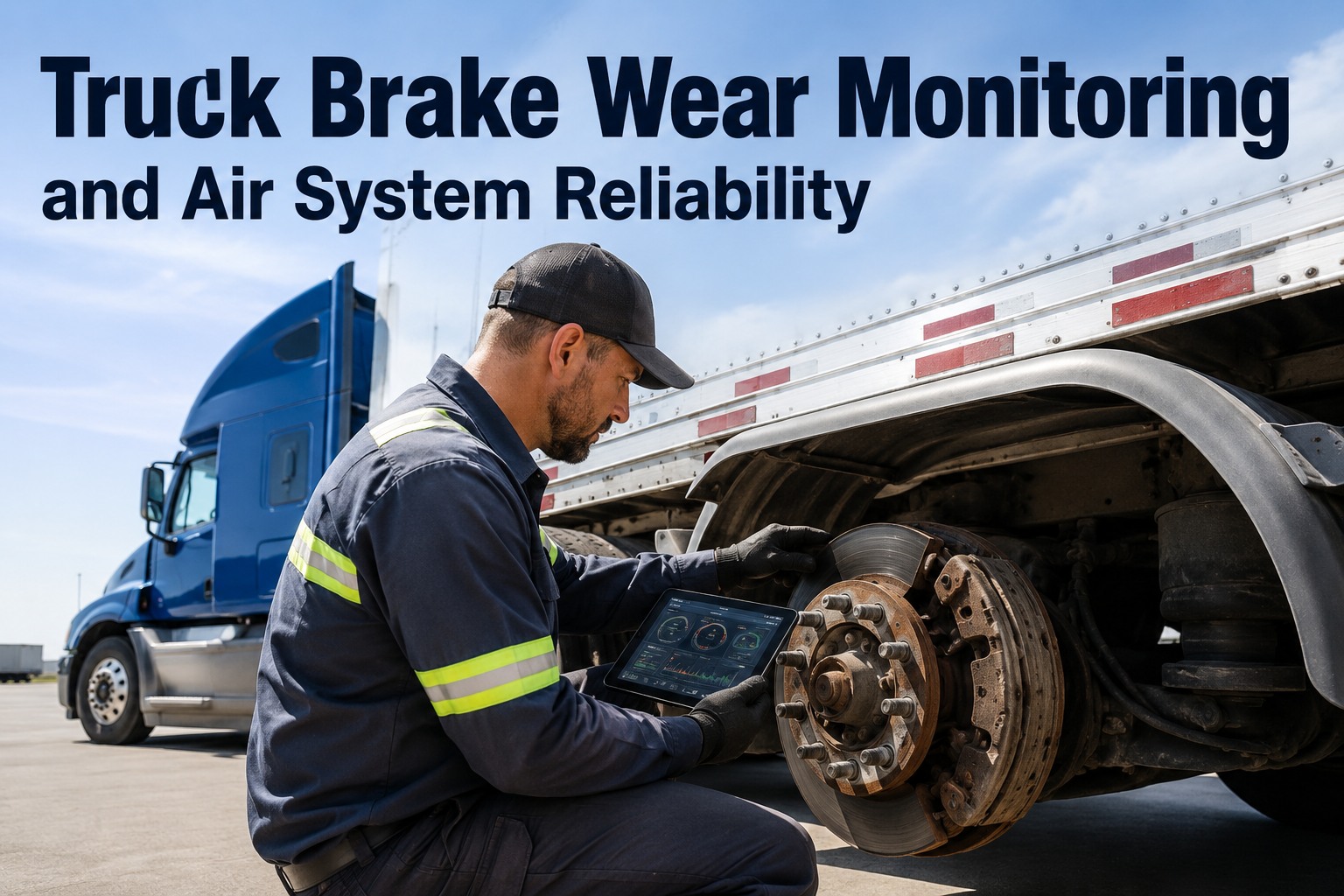
Truck Brake Wear Monitoring and Air System Reliability
Brakes are the top roadside out-of-service cause. Track brake wear and air-system health so you catch adjustment and leak issues before they ground a unit — not after an inspector finds them.
Why Brakes Top the OOS List
Brakes aren't cited most because they're the weakest system — they're cited most because they're the easiest defect for an inspector to find and the highest-stakes one to ignore. A tape measure on a pushrod settles it in seconds, and the consequences of a bad brake are severe enough that enforcement never lets up.
The Air System: How It Actually Fails
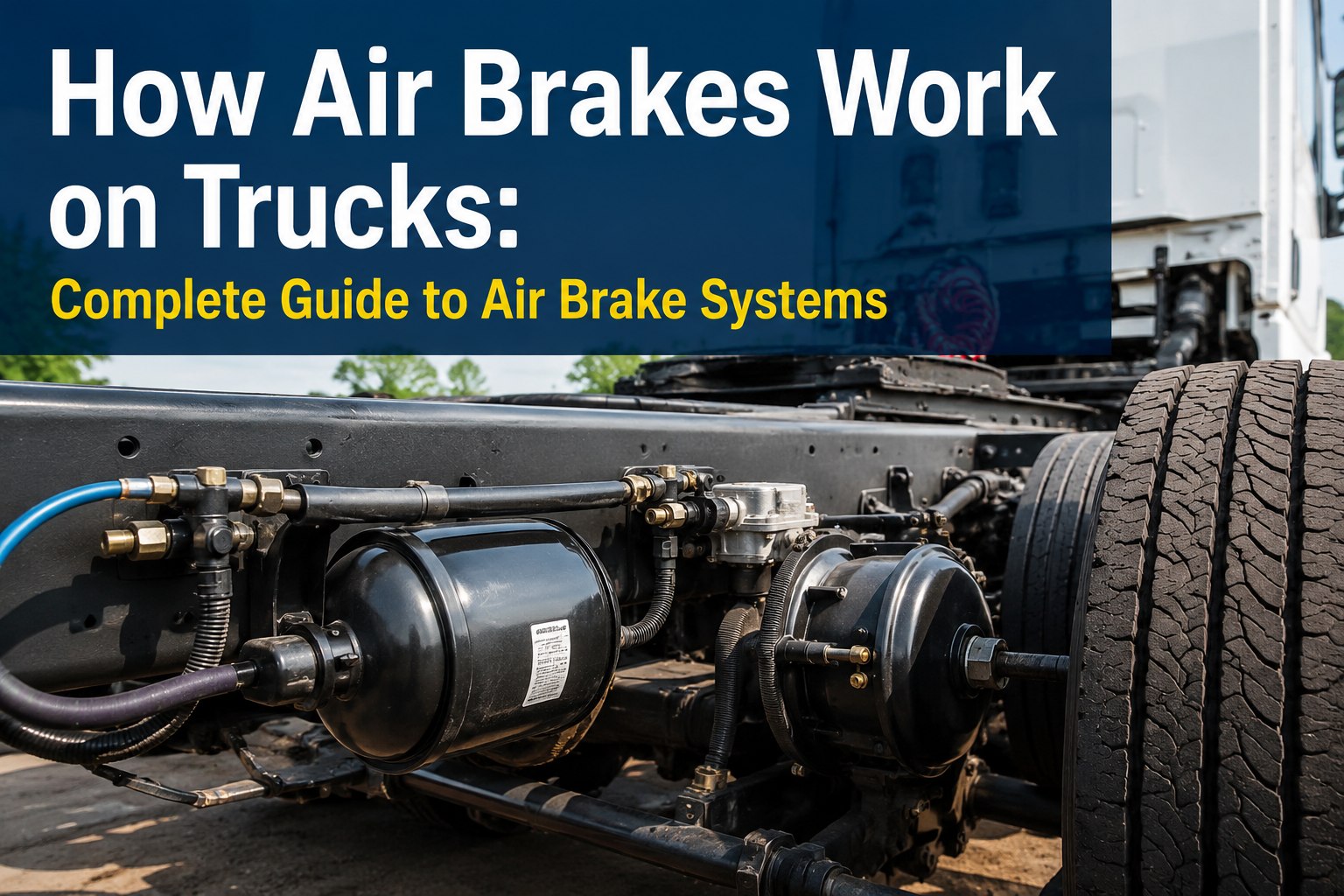
A truck's air brake system is like a circulatory system — many parts that must work together, where one leak or clog compromises the whole. Failures cluster in a handful of components, and each has a telltale early sign that shows up long before total failure.
The #1 measured defect. As linings wear, stroke lengthens; past the limit, the brake can't deliver full force. Creeps gradually — trend it.
An audible leak at a chamber, hose, or fitting is an instant OOS. Starts as a faint hiss and a slow pressure drop before it's obvious.
Drum pads must be at least 1/4", air disc pads 1/8". Thinning is predictable wear that's easy to schedule around — if it's tracked.
A crack to the edge is an automatic OOS and a danger of debris detaching. Heat scoring and wear precede the crack.
Misalignment or a seized adjuster throws off stroke even with auto-adjusters installed. Worn components still need measuring.
Water in the system corrodes valves and freezes lines in winter. A failing dryer is the upstream cause of many downstream faults.
Trend the Stroke Before It Crosses the Line
Truck Inspection & Maintenance logs pushrod stroke, lining thickness, and air-system checks per wheel — surfacing the trend so you adjust before a brake goes out of spec.
The Out-of-Service Triggers
Some brake defects are judgment calls; these are not. Each of the following is grounds for an immediate out-of-service order under CVSA criteria — know them cold, because they're exactly what an inspector measures first.
Beyond the chamber's adjustment limit is a defect; 1/8" past counts as a half-defective brake toward the 20% rule.
A hearable leak at a chamber, hose, or fitting on the service or emergency side is an immediate violation.
A crack running to the edge is an automatic OOS — replace immediately, no exceptions.
When defective brakes reach 20% of the total, the whole vehicle goes out of service.
Below the minimum thickness — 1/4" drum, 1/8" disc — or cracked and contaminated linings.
Absent or broken chambers, pushrods, springs, adjusters, pins, or mismatched chamber sizes.
The Monitoring Cadence That Prevents It
The fleets that stay out of service treat brake monitoring as a rhythm, not a panic before Brake Safety Week. Recording stroke and air checks on a regular cadence surfaces trends early — so a brake gets adjusted on a schedule, not flagged at the roadside.
Frequently Asked Questions
Brakes accounted for 24.4% of all vehicle out-of-service cases in the 2025 CVSA Roadcheck and contribute to roughly 30% of truck crashes. They lead because defects like excessive pushrod stroke and audible air leaks are easy for inspectors to find with a tape measure and a listen, and the safety stakes are high enough that enforcement focuses on them year-round, not just during Brake Safety Week.
Pushrod stroke is the distance the air chamber pushrod travels when the brakes are applied. As linings wear, the stroke lengthens; once it exceeds the chamber's regulatory limit, the brake can no longer deliver full force and it's a violation. It's the single most effective check of drum foundation brakes — measured by comparing the distance from the chamber to the clevis pin with brakes released versus applied.
If 20% or more of a vehicle's brakes are defective, the whole vehicle is placed out of service. A brake 1/8" or more beyond its adjustment limit counts as half (0.5) defective. For a truck-trailer combination, the OOS status applies to the units that have the defective brake conditions. It means a few neglected wheel-ends can ground an entire rig.
Yes. Most heavy vehicles built in the US after the late 1990s have automatic slack adjusters, but abnormal wear or broken components can still produce excessive pushrod stroke that the auto-adjuster won't correct. CVSA is explicit that stroke should be measured regularly even on self-adjusting brakes — relying on the adjuster alone is how violations slip through.
It captures the trend that prevents the violation. Truck Inspection & Maintenance records pushrod stroke, lining thickness, and air-system checks per wheel-end on your daily, weekly, and monthly cadence, flags measurements drifting toward the limit, and routes them to a work order before they cross into OOS territory — turning reactive roadside surprises into scheduled adjustments.
Keep Every Brake In Spec, Every Wheel-End Tracked
Truck Inspection & Maintenance trends pushrod stroke and lining wear per wheel, flags air leaks and adjustment drift before they cross the limit, and ties every defect to a work order — so brakes get serviced on your schedule instead of grounding a truck at the roadside.