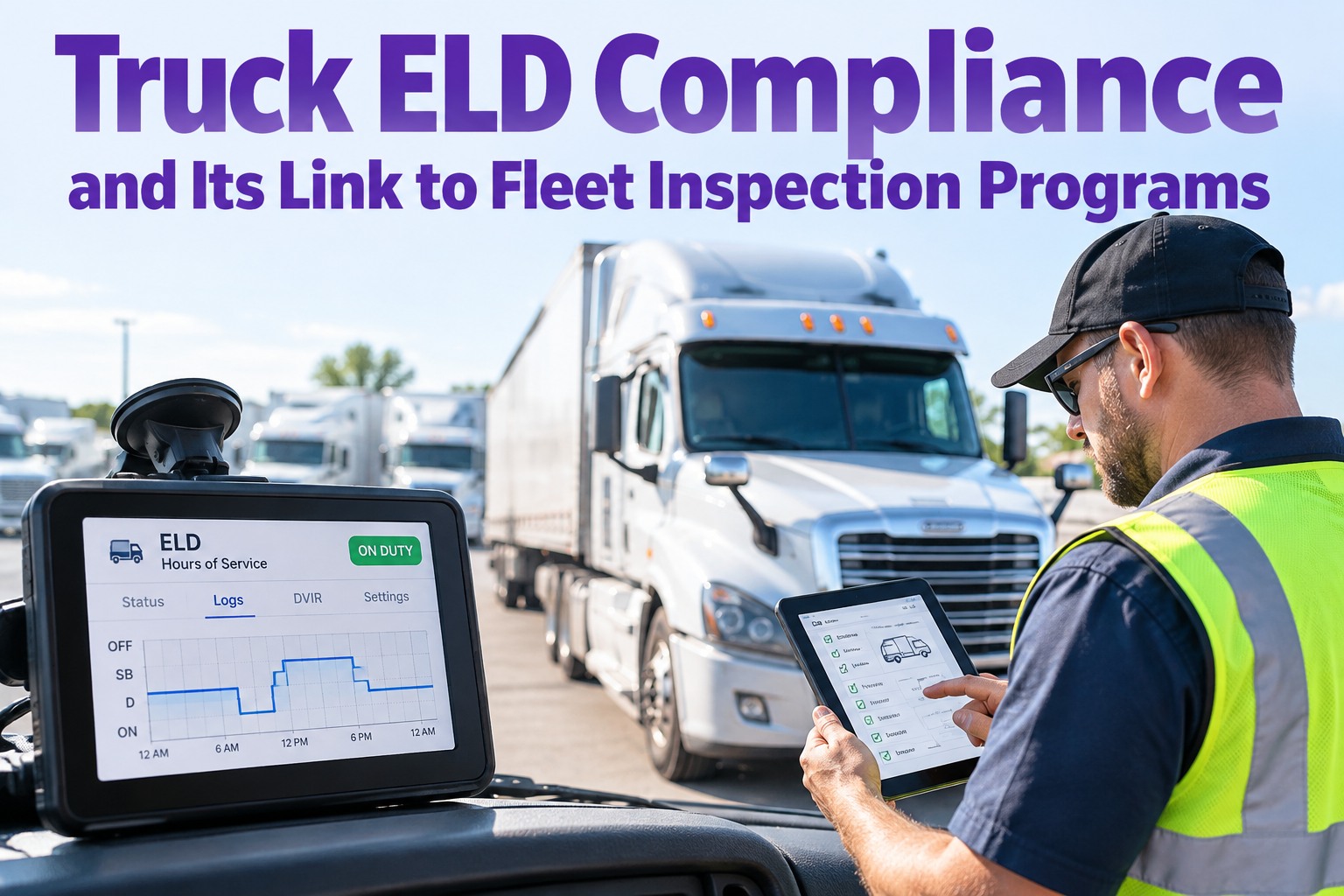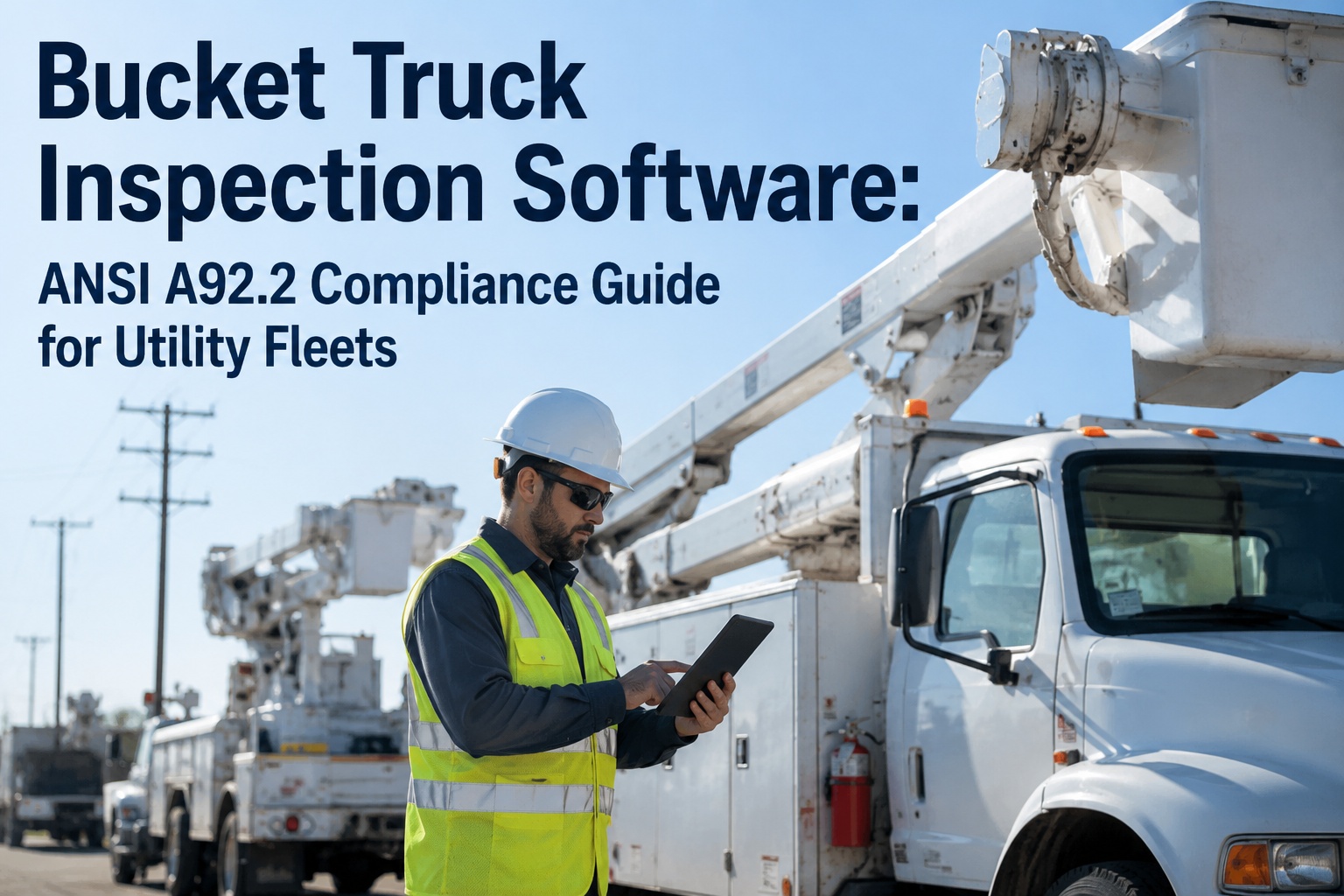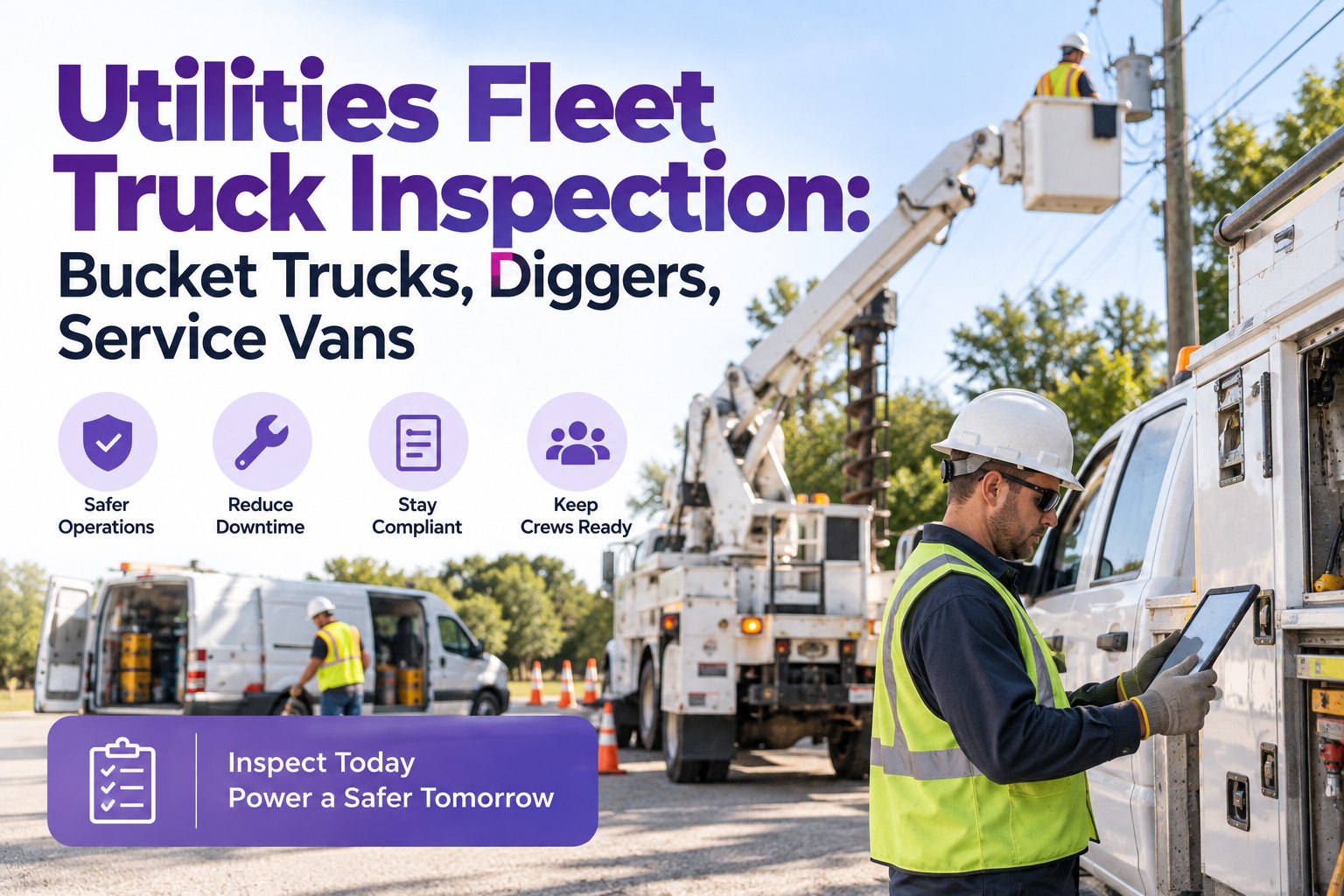
A utilities fleet isn't one thing — a bucket truck answers to ANSI A92.2, a digger derrick to ANSI A10.31, and a service van to DOT §396.11. One checklist across all three is how a bucket rolls without a current dielectric test and a van rolls with a marker light out. This guide is the inspection program that fits the mixed utility fleet — asset class by asset class. Start free and give every utility asset its right inspection template.
One Utility Fleet, Three Compliance Regimes — Inspect Each on Its Own Terms
A generic DVIR built for over-the-road trucks misses the dielectric test on a bucket, the boom pin condition on a digger, and treats a service van like a Class 8. Truck Inspection & Maintenance Management Software runs an asset-class-aware inspection loop: the right template opens for the right unit, every failed checkpoint auto-grades into a work order, and expiry dates for A92.2, A10.31 and DOT annual are tracked per asset — so a truck never rolls out of certification and a mechanic never guesses which standard applies.
The Three-Asset Reality — Why One Checklist Doesn't Work
Running every vehicle through the same DVIR template looks efficient but hides real risk — bucket-specific items get bolted onto a generic checklist, drivers skim them, and the shop can't tell a bucket walkaround apart from a van's. The right structure is one workflow, three asset-class templates, all writing to the same record.
The ANSI A92.2 Four-Tier Cadence — What a Compliant Bucket-Truck Program Looks Like
ANSI A92.2 asks for a layered program with four distinct cadences, each performed by a qualified inspector. The dielectric test is the one every utility knows about; the frequent inspection at 3 months / 150 hours is the one most programs quietly miss. The 2022 revision added a 15-year structural inspection that now catches a growing share of legacy fleet units.
Walk-around before the boom leaves the cradle. Visible damage, hydraulic leaks, boom cleanliness (dry, free of contaminants), controls function, emergency stops, outriggers, tires and chassis.
Beyond the walk-around: hydraulic hose condition, bolt torque on boom pivot points, control valve function under load, insulation cleanliness, upper-control response, safety-device function.
Full structural inspection plus the dielectric (hi-pot) test — voltage up to 200 kV per manufacturer rating applied to FRP boom, bucket liner, tool circuits, upper controls. Certification sticker updated.
Added under ANSI A92.2 (2022) Section 8.2.5. Non-destructive weld inspection, boom pin condition, fatigue analysis. Vehicle out of service until findings resolved. Applies to a growing share of legacy fleet units.
Four Cadences, One Certification Chain — Track Every Interval Per Asset
Our software tracks every interval per aerial unit with alerts before any lapses. 30 days out from hi-pot the fleet lead sees it, the mechanic sees a work order in the queue, and dispatch is blocked on an out-of-cert unit. That's the difference between an inspection program and a wall of paper nobody reads.
The Digger Derrick — Where the Checks Diverge From the Bucket
A digger shares a chassis and boom with a bucket truck, but the load path and failure modes are different — lifting poles, augering holes, and (if the FRP extension is present) still hot-line work. ANSI A10.31 governs the digger side; a checklist built for a bucket will miss the winch every time.
Service Vans — The Class That Gets Under-Inspected Because It Looks Simple
The service van is where most utility fleets quietly lose ground — no boom, no dielectric date, so it slides down the priority stack until a marker light out gets it pulled into a Level 1, or a loose ladder rack drops a pipe on the highway. The right approach: a lightweight pre-trip covering the failure modes vans actually have, plus mileage-based PM.
The DOT-standard four. Tread depth > 2/32", no cuts or bulges, brake response firm, headlights & marker lights functional, wipers clear the glass fully.
Interior tool cabinets, bins and drawers secured. Loose meters and tool trays in a rollover become projectiles inside the cab.
Rack bolts tight to roof, ladders strapped both ends, no visible corrosion at mount points. Highway winds fatigue rack mounts faster than most crews expect.
Hitch condition, safety chains crossed, breakaway cable connected, trailer lights functional, tire condition on trailer as well as van.
Oil, coolant, washer, fuel to at least ½ tank. Utility routes are unpredictable — a call at 4 PM can become a 2 AM restoration run.
Three reflective triangles per FMVSS 125, fire extinguisher rated at least 5B:C, per DOT §393.95 (2026 rule set).
The Certification-Currency Dashboard — What a Utility Fleet Manager Actually Needs to See
The single most useful screen for a utility fleet manager is a live certification-currency dashboard per asset. Which buckets are within 30 days of hi-pot? Which diggers are past their frequent interval? A good dashboard turns every date into a visible status color and every expiring cert into a scheduled work order.
| Asset | Class | Next dielectric | Frequent (3mo/150hr) | §396.17 annual | Status |
|---|---|---|---|---|---|
| B-4471 | Bucket | 18 days | Current | 62 days | Watch |
| B-4482 | Bucket | 147 days | Current | 29 days | Watch |
| D-2214 | Digger | 91 days | 4 days overdue | 184 days | OOS |
| D-2220 | Digger | 210 days | Current | 102 days | Ready |
| V-3341 | Van | n/a | n/a | 78 days | Ready |
| V-3358 | Van | n/a | n/a | 11 days | Watch |
Frequently Asked Questions
Run the Right Inspection for the Right Asset — Every Time
Asset-class-aware templates for bucket, digger, and van. Every failed checkpoint auto-graded into a work order. Every dielectric-test and annual-inspection date tracked per unit.