A driver logs "brake grabbing, pulls right" at the end of a run. Simple defect except the combination has brakes on both the tractor and the trailer, and the DVIR just says "the truck." Which asset gets the work order? Whose maintenance history carries the flag? And when that trailer gets dropped tonight and hooked to a different tractor tomorrow, does the defect follow the trailer it belongs to — or stay stuck to a tractor that never had the problem? Defect attribution is the quiet data-integrity failure behind fragmented inspection records: a defect assigned to the wrong asset, or a combined report that never splits tractor from trailer at all. This guide covers when one DVIR legally covers a combination and when it can't, how to attribute cleanly, the drop-and-hook trap that corrupts trailer history, and what accurate attribution unlocks. Start a free trial and tag every defect to the right asset automatically.
DVIR · Defect Attribution
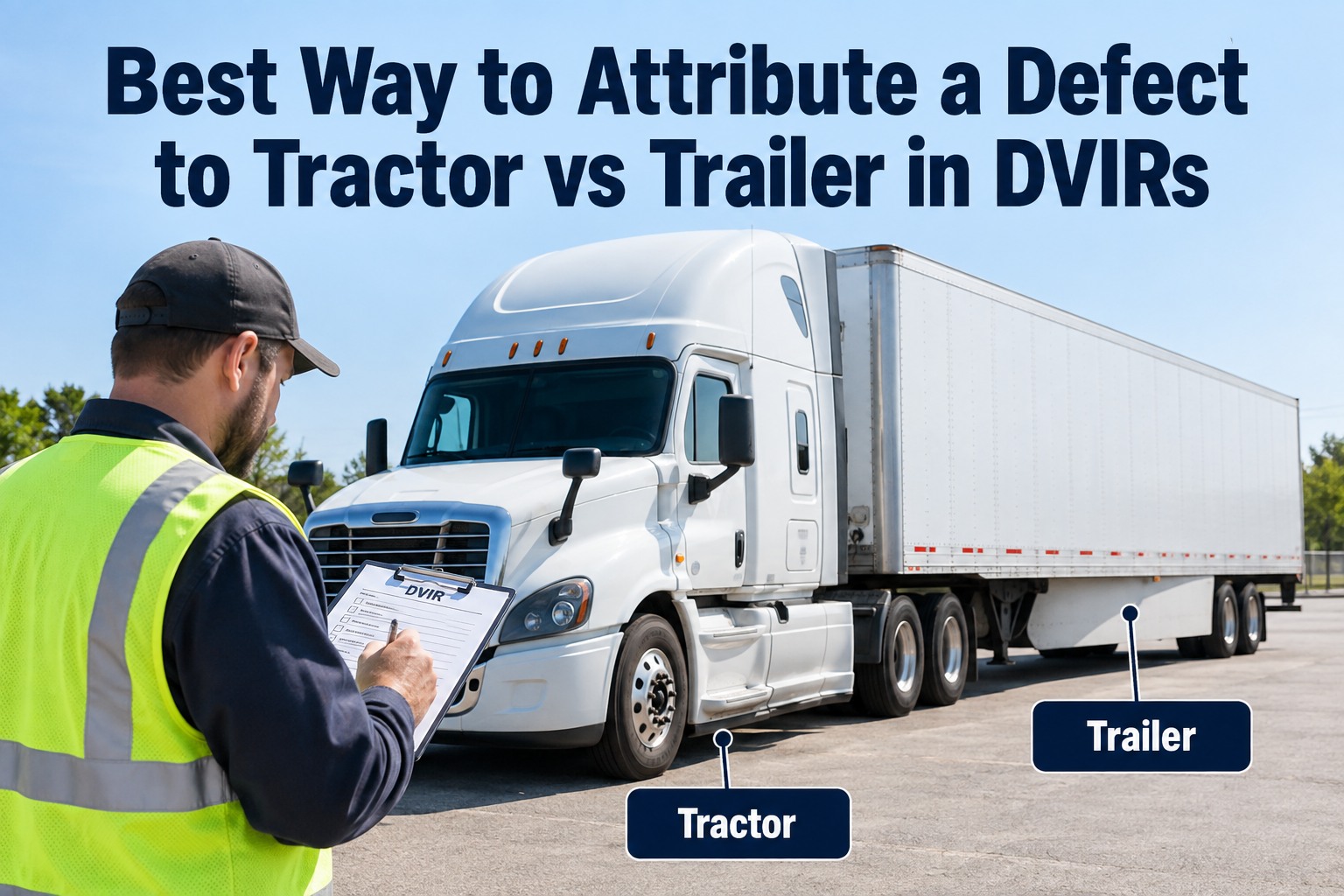
Attributing a Defect to Tractor vs Trailer
A combination is two assets that couple and uncouple all day. A defect logged against "the truck" — with no split — breaks per-asset history, misroutes the repair, and follows the wrong unit. Here's how to attribute cleanly, every time.
2assets in every combination — each its own record
1 DVIRcan cover a combination — but only sometimes
Eachdropped trailer needs its own report
Two Assets, Shared Systems — That's the Whole Problem
A tractor-trailer isn't one vehicle; it's two that share systems across the coupling. Several defect types can originate on either unit, and "the truck has a problem" doesn't tell the shop — or the record — which one.
Tractor-only
Engine, transmission, drivetrain
Steering & front suspension
Cab, mirrors, wipers, horn
Fifth wheel (tractor side)
Could be either — attribute carefully
Brakes (tractor axles vs trailer axles)
Lighting (cab/marker vs trailer lamps)
Air system (leak either side of glad hands)
Tires & wheels (which axle group?)
Trailer-only
Kingpin & upper coupling
Landing gear
Trailer body, doors, floor
Cargo securement points
Where it breaks The middle column is the danger zone. A brake or lighting defect logged as "the truck" with no axle or unit called out gives the shop a guessing game and leaves the record unable to say which asset actually had the fault. Attribution is about resolving that middle column every time.
Ask how per-asset defect capture works.
Can One DVIR Cover Both? The Rule That Trips Fleets
This is the exact point where fleets apply the wrong rule. FMCSA does allow a single DVIR to cover a tractor-trailer combination — but only in one specific situation, and the common drop-and-hook operation is not it.
✓
One DVIR is OK
When one tractor stays coupled to one trailer for the driver's whole day (a dedicated combination), a single DVIR can cover both — per FMCSA Q&A 5 — as long as it still identifies each unit and attributes each defect to the correct one.
✕
Separate DVIRs required
In drop-and-hook operations — where a driver pulls multiple trailers across the day — each dropped trailer requires its own DVIR. One combined report cannot legally or practically cover trailers the tractor no longer has.
The catch inside the allowance Even when one DVIR is permitted, "identifies the vehicle" is a requirement, not a suggestion. A single report that lumps both units under one ID and never says which asset a defect belongs to satisfies neither the rule nor your maintenance data. The allowance is about paperwork count — never about skipping attribution.
The Attribution Decision, Every Defect
For each defect a driver logs, three questions resolve it to the right asset. Run them in order and the ambiguous middle column collapses into a clean assignment.
1Which unit is the component physically on? Trailer axle brakes vs tractor drive-axle brakes; trailer tail lamps vs cab markers. Locate the part first — that answers most cases outright.
↓
2If it's a shared system, which side of the coupling? An air leak is on the tractor side or trailer side of the glad hands. A brake pull traces to a specific axle group. Name the position, not just the symptom.
↓
3Record it against that asset's ID — with a specific description. Unit number, axle/position, symptom. "Trailer 4721, RH rear axle brake grabbing" routes and files correctly; "brakes bad" does neither.
Make Attribution Automatic — One Defect, One Asset
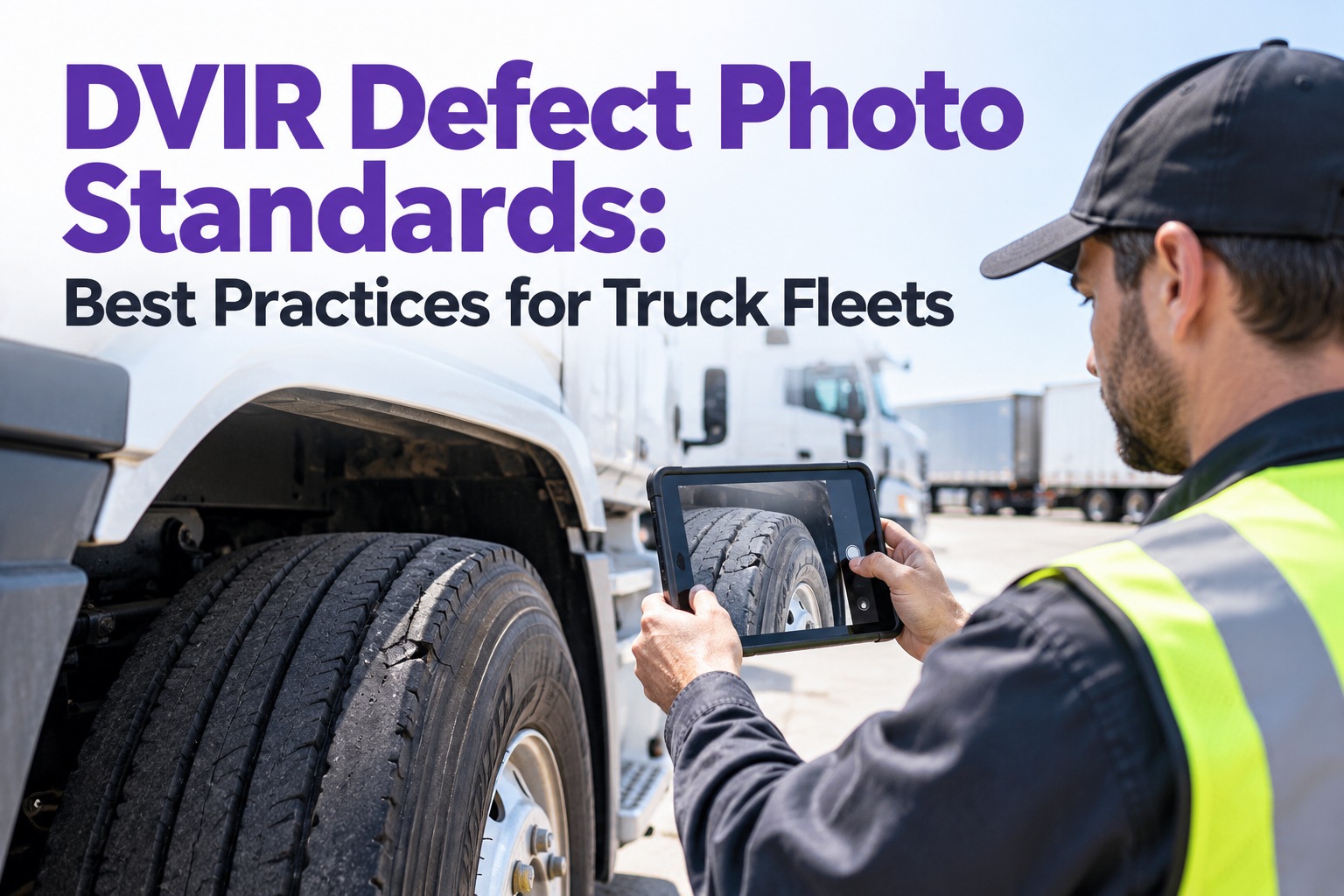
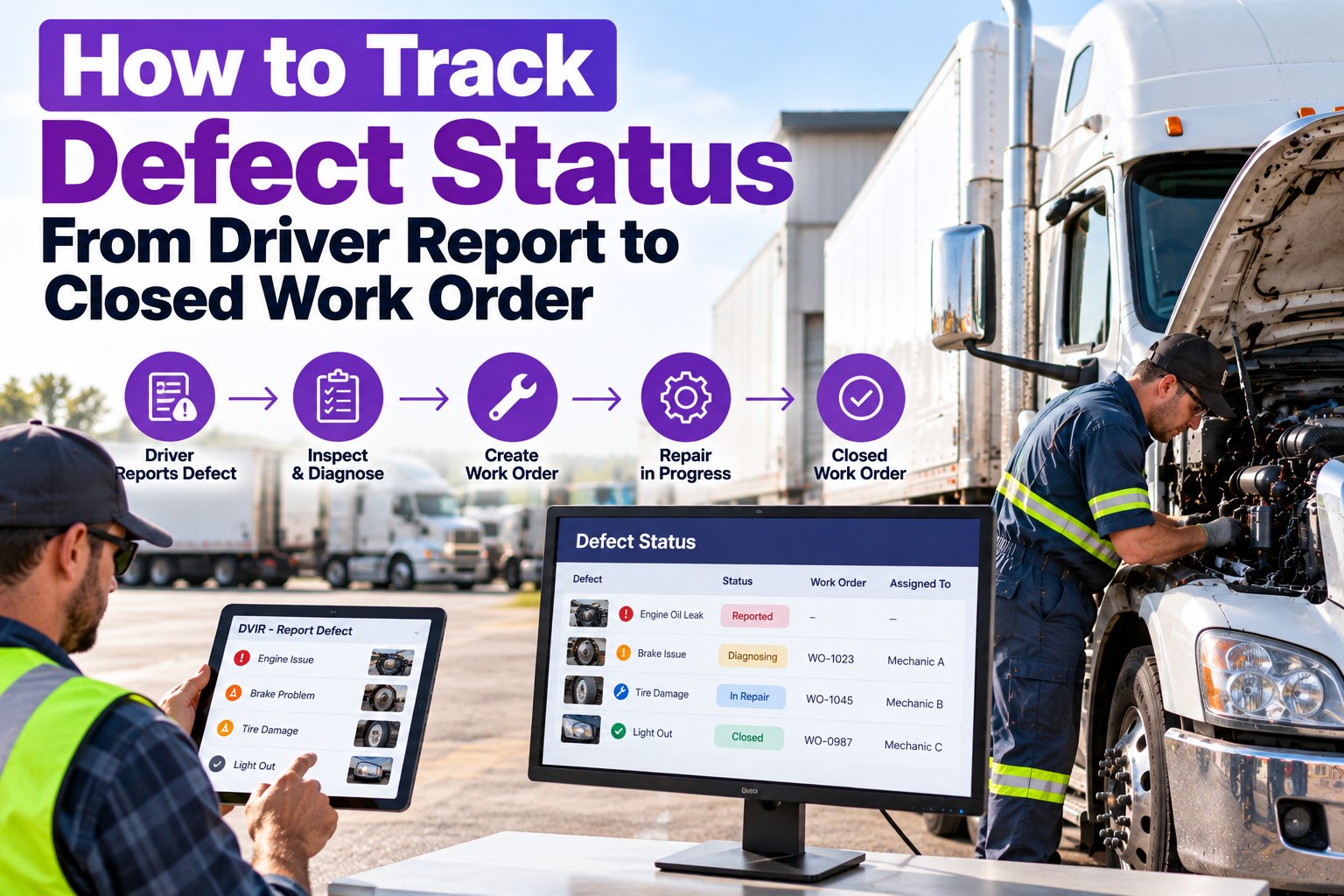
Truck Inspection & Maintenance connects drivers, mechanics, and managers so every DVIR is tied to specific units: the driver picks the tractor and the trailer for the run, logs each defect against the asset it belongs to with a photo, and the work order routes to the shop tagged to that exact unit. A dropped trailer gets its own report automatically. The defect lives on the trailer's record — not the tractor that happened to pull it — so per-asset history stays clean no matter how many times equipment couples and uncouples.
The Drop-and-Hook Trap
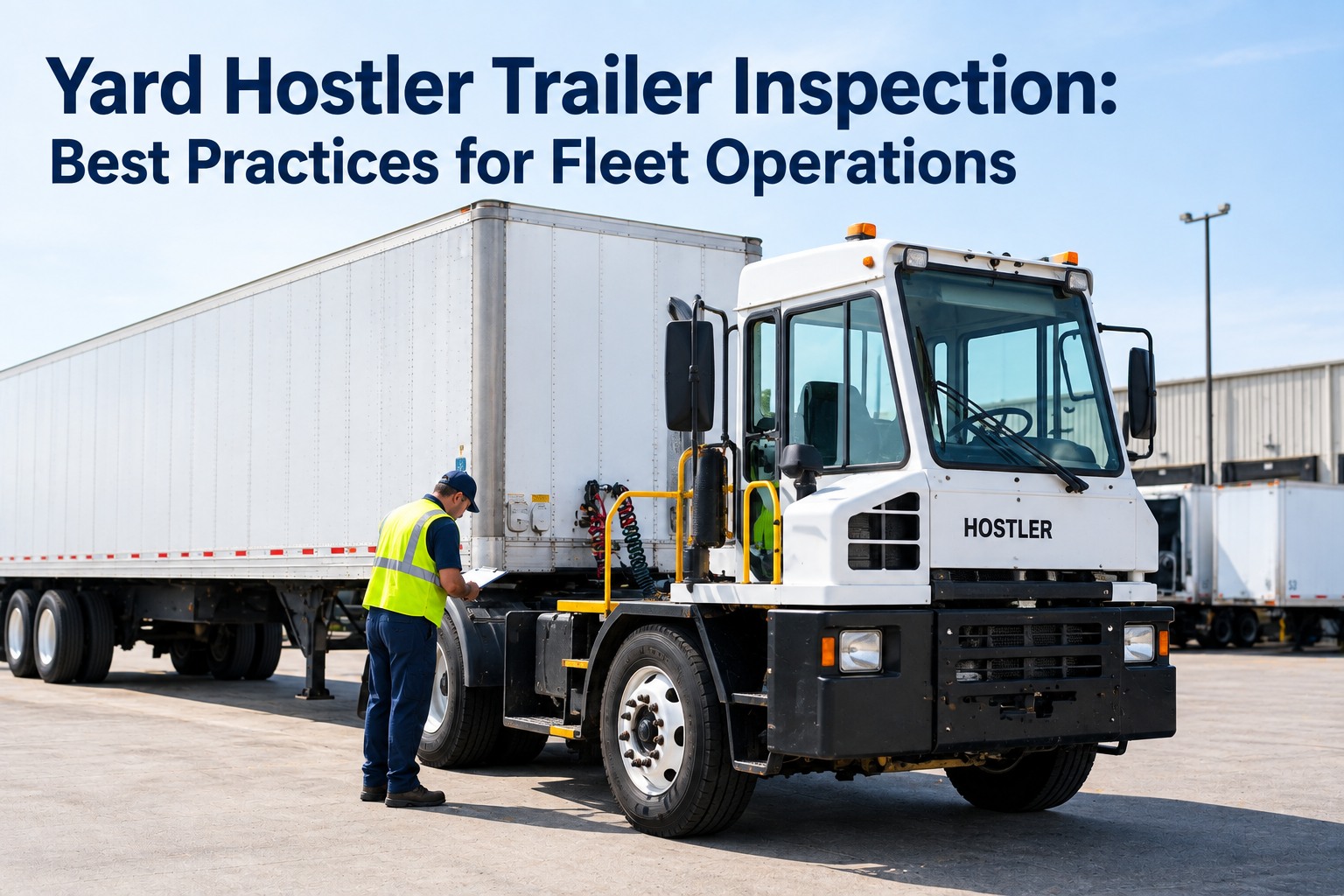
This is where attribution failures do the most damage. A trailer is dropped tonight, hooked to a different tractor tomorrow, and a third one next week — but its defect and repair history has to stay with the trailer through every swap. Miss that and the data unravels fast.
✕ Attribution fails
Trailer defect logged against whatever tractor pulled it
Trailer's own history is blank — the flag is on the wrong unit
Next tractor's driver never sees the open trailer defect
Recurring trailer problem looks like a different tractor each time
✓ Attribution holds
Trailer gets its own DVIR at every drop
Defect and repair history live on the trailer's record
Any tractor that hooks it inherits the open-defect status
A repeat trailer fault shows as a trailer trend, clearly
What Clean Attribution Actually Unlocks
Getting this right isn't just tidy paperwork — it's the foundation every downstream maintenance decision sits on. Attribute correctly and four things become possible that fragmented records make impossible.
Per-asset repair history
Every tractor and every trailer carries its own complete defect-and-repair record, independent of what it was coupled to.
Correct work-order routing
The repair goes to the right unit the first time — no shop guesswork, no chasing a phantom fault on the wrong asset.
Trailer defect trends
A trailer that throws the same fault across three tractors reads as a trailer problem, not three unrelated tractor issues.
Audit-ready, per-unit records
When DOT or an attorney asks for a specific unit's DVIR history, it's retrievable by asset — not scattered across whatever pulled it.
Every fragmented maintenance record traces back to the same root cause: a defect that never got pinned to the right asset. Fix attribution at the point of capture and the whole downstream — routing, history, trends, audits — falls into place.
Start free and give every asset a record that follows it, not the coupling.
Frequently Asked Questions
Can a single DVIR legally cover both the tractor and the trailer?
Yes, in one situation: when a single tractor stays coupled to a single trailer for the driver's entire day, FMCSA guidance (Q&A 5) allows one DVIR to cover the combination. But it must still identify each unit and attribute each defect to the correct one — the allowance reduces the number of reports, not the requirement to say which asset has the problem. The moment you're in drop-and-hook territory, pulling multiple trailers across the day, the single-DVIR allowance no longer applies: each dropped trailer requires its own report. Applying the combination allowance to a drop-and-hook operation is one of the more common attribution mistakes.
Start free and let the system generate the right reports per operation.
Why does it matter which asset a defect is attributed to if it gets fixed anyway?
Because the repair is only half the value of a DVIR — the record is the other half. A defect attributed to the wrong asset corrupts two histories at once: it puts a flag on a unit that never had the problem and leaves the actual faulty unit's record clean. Over time that makes it impossible to see that a specific trailer keeps throwing brake defects, or that one tractor is a repeat offender, because the data is smeared across whatever equipment was coupled at the time. Accurate per-asset history is what powers PM optimization, warranty claims, resale documentation, and litigation defense — and all of it depends on attribution being right at capture.
How should a driver attribute a brake or lighting defect that could be either unit?
By locating the component, not just naming the symptom. "Brakes bad" is useless; "trailer right-rear axle brake grabbing" or "tractor driver-side marker lamp out" tells the shop exactly what and where. For shared systems like the air lines, the driver notes which side of the glad-hand connection the issue is on. The goal is to record the unit number, the axle or position, and the specific symptom — enough that a mechanic can go straight to the component and the record clearly shows which asset carried the fault. A good digital DVIR makes this a structured choice rather than a free-text guess, with the tractor and trailer already identified for the run.
Do intermodal chassis and containers follow the same attribution rules?
Not exactly — intermodal equipment is carved out of the standard rule and handled under §396.11(b), which sets up a different process. Reports on intermodal equipment go to the intermodal equipment provider, cover a specific nine-item list, and require more identifying detail, including the responsible motor carrier's name, both USDOT numbers, a unique identifying number for the equipment, and the date and time of submission. The underlying principle is the same — the defect has to be tied to the specific piece of equipment by its unique number — but the reporting path and content differ. If you run intermodal, build that separate process in deliberately rather than assuming your standard combination DVIR covers it.
Talk to our team about multi-asset DVIR setup on Truck Inspection & Maintenance.
One defect · One asset · Records that follow the unit
Keep Every Defect Tied to the Right Asset
Truck Inspection & Maintenance connects drivers, mechanics, and managers on one mobile-first platform — DVIRs tied to specific tractor and trailer units, defects captured against the asset they belong to with photos, work orders routed to the correct unit, separate reports for every dropped trailer, and audit-ready per-asset history that survives every coupling and uncoupling. Turn fragmented tractor-trailer inspection data into clean, unit-level records.
No credit card required. Free for up to 3 trucks. Built for FMCSA-compliant fleets.