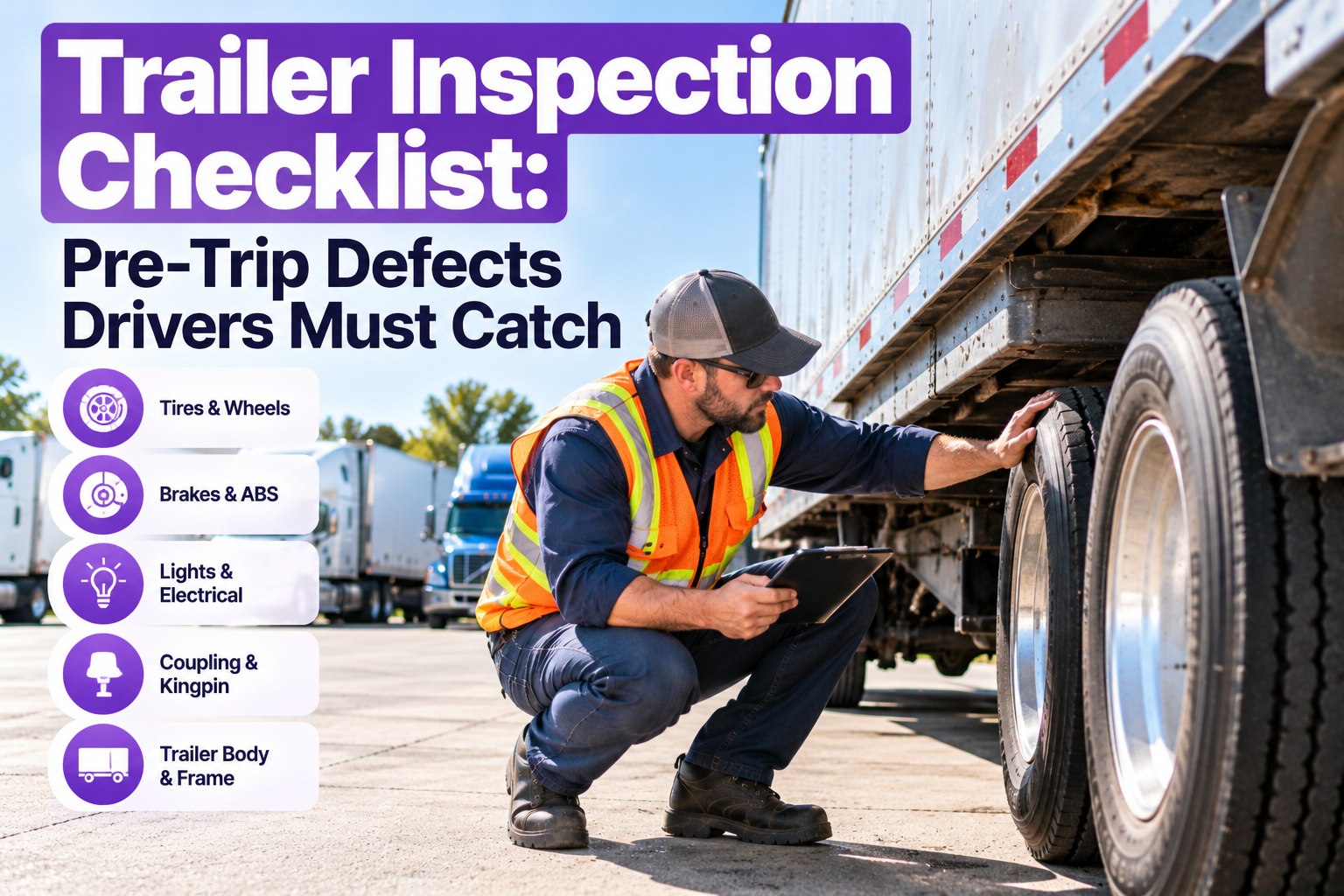
Trailer Inspection Checklist: Pre-Trip Defects Drivers Must Catch
By William Jerry on October 23, 2026
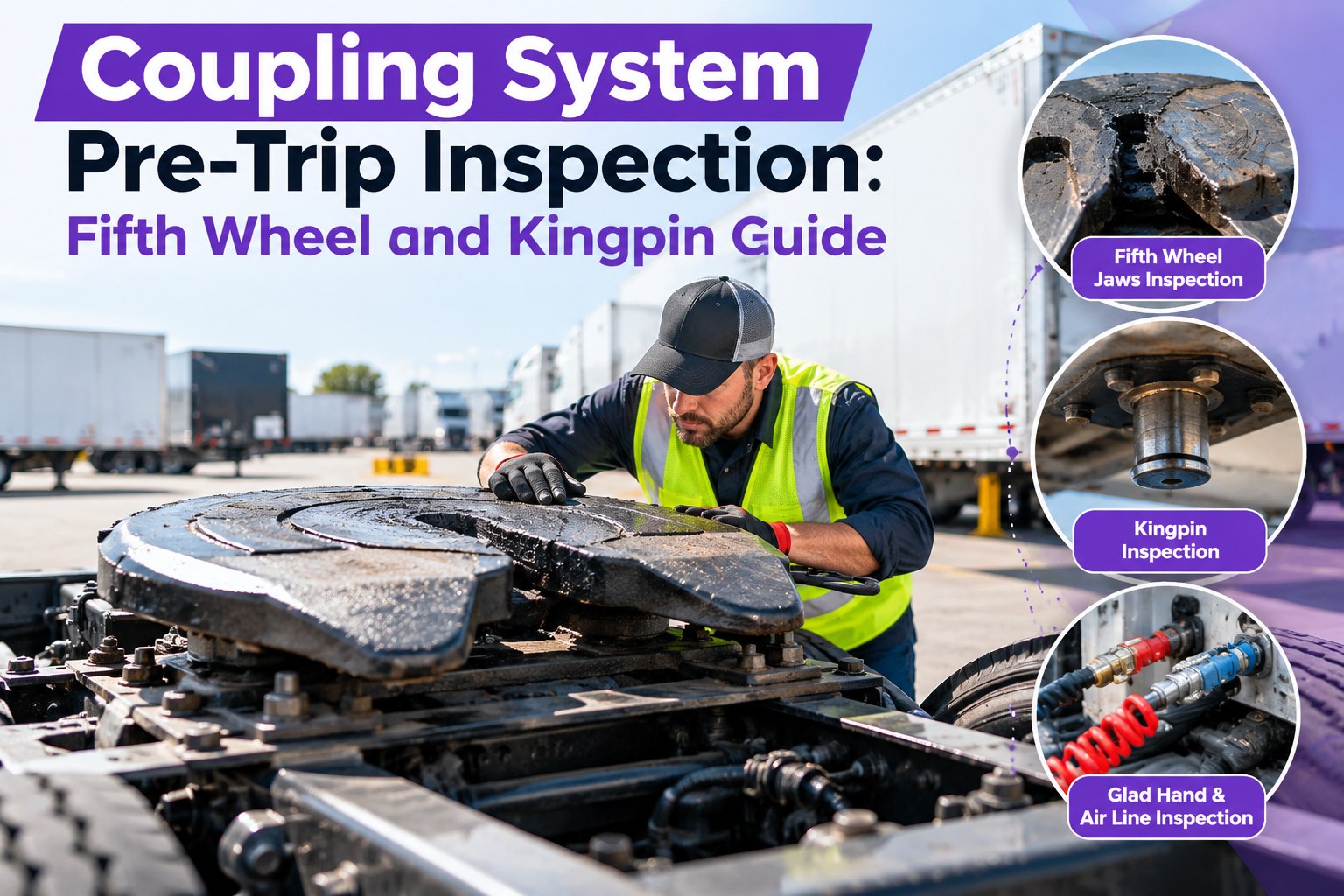
A trailer pre-trip isn't a formality — it's the last chance to catch a defect in the yard instead of at a scale house or on the shoulder. Most of what puts a trailer out of service is visible on a two-minute walk around it: a tire below tread, a lamp that's out, a cracked fifth-wheel plate, brakes out of adjustment. The trick is walking it the same way every time so nothing gets skipped. This checklist follows the driver's walkaround, station by station, and flags the defects that legally park the trailer. Start free and run every trailer pre-trip on TIM.
TIM · Trailer Pre-Trip Walkaround
Trailer Inspection Checklist: Pre-Trip Defects Drivers Must Catch
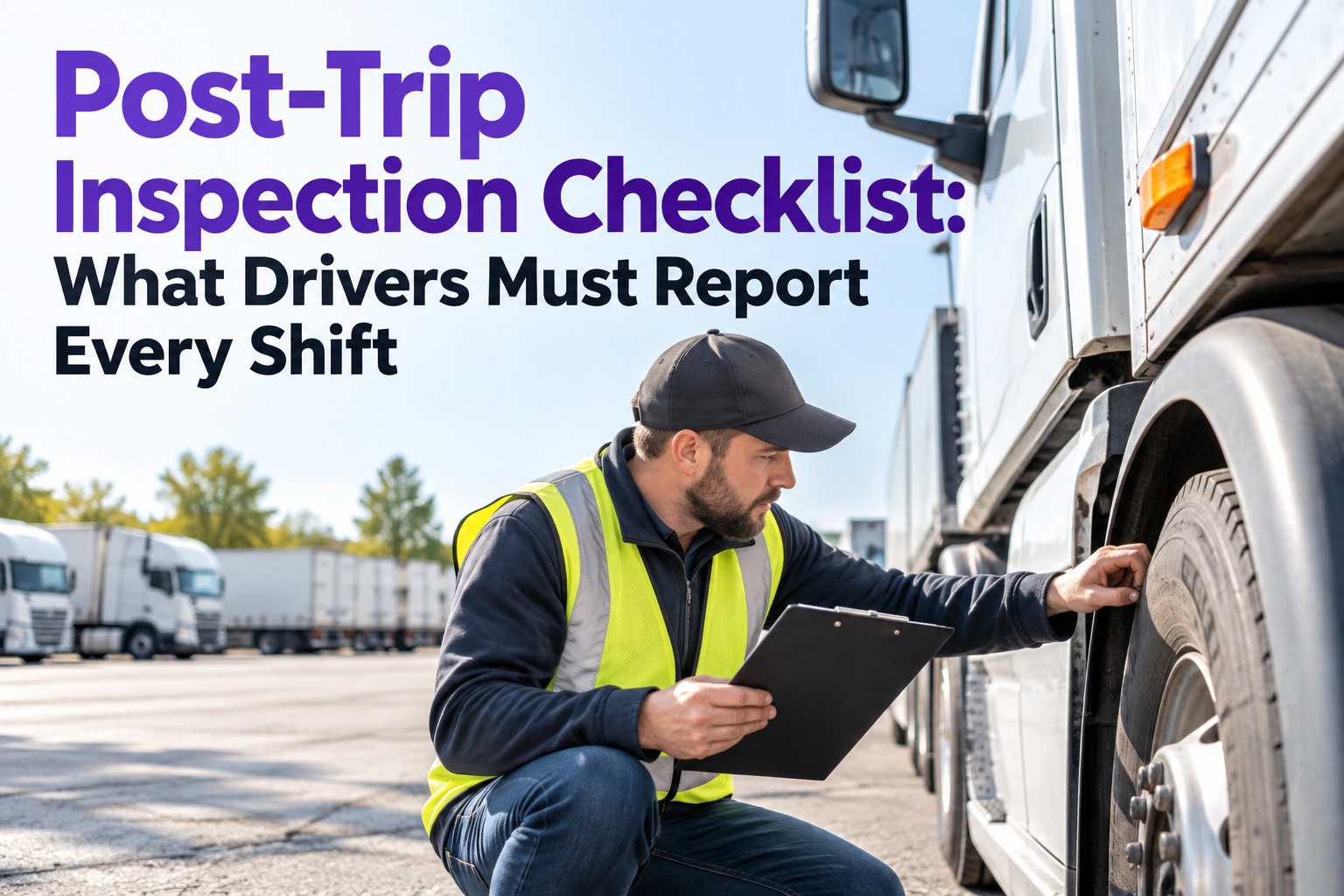
Nearly every trailer out-of-service violation — brakes, tires, lights, coupling — is something a driver can see on a proper walkaround before the wheels turn. The problem is never knowledge; it's consistency, and a verbal "looks fine" that leaves no record. Truck Inspection & Maintenance Management Software (TIM) turns the walkaround into a logged pre-trip: every flagged defect becomes a graded work order, and an out-of-service item keeps the trailer parked until it's fixed.
4-hour first responseEvery pre-trip defect is acknowledged, graded, and assigned within four hours — so a fault caught at the walkaround becomes a tracked repair the same shift.
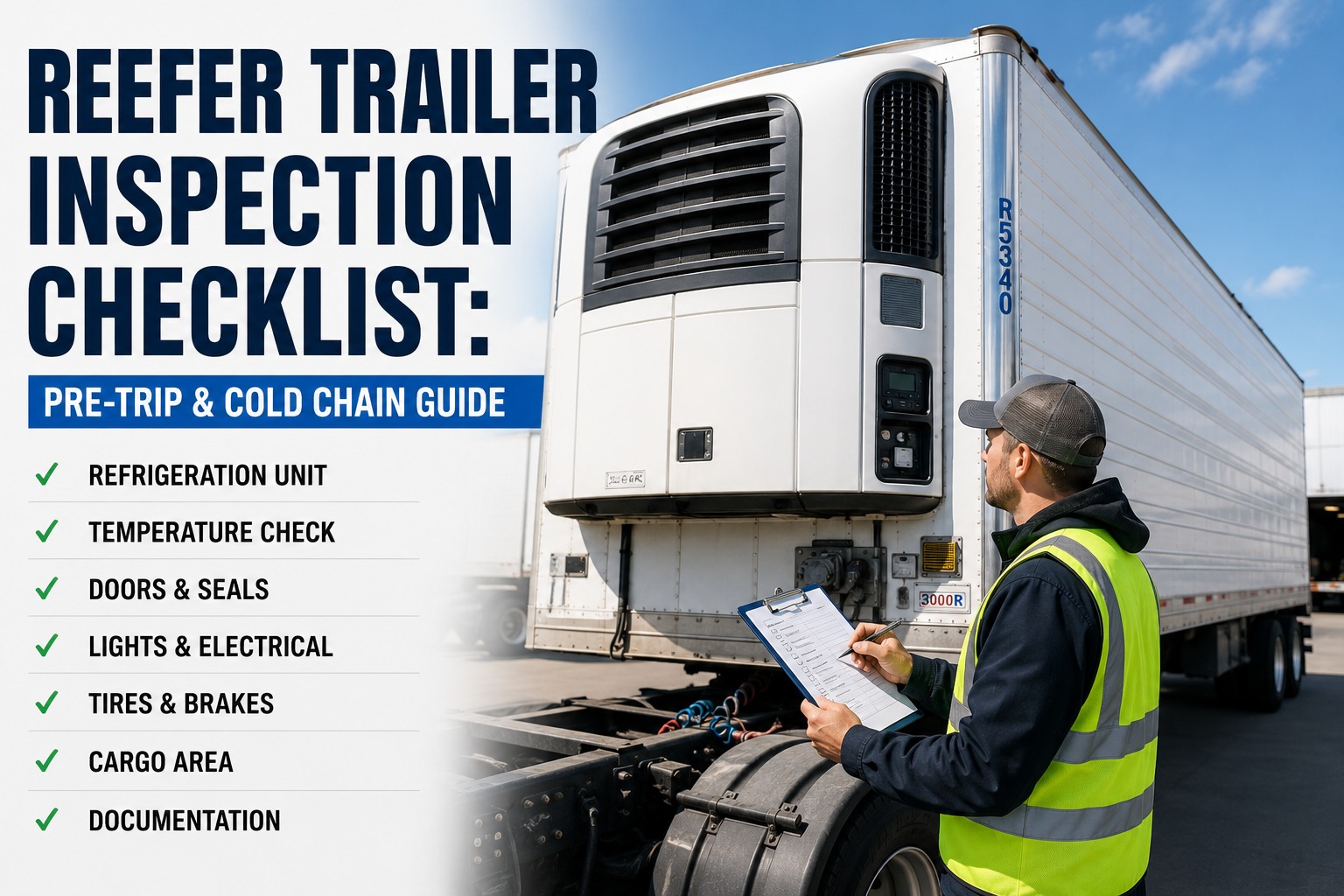
Consistency is what makes a pre-trip reliable. Start at the nose and work a full loop — front and coupling, curb side, rear, road side, then underneath — so every required item gets a look in the same order. Tap each box you clear; anything you can't clear is a defect to log, and the ones marked in the out-of-service list below keep the trailer parked.
Station 1Front & Couplingnose
Station 2Curb Side (Right)right
Station 3Rearrear
Station 4Road Side (Left)left
Station 5Underneath — Brakes & Airunder
Out of ServiceThese Defects Park the Trailer — Don't Roll on Any of Them
CVSA out-of-service criteria are the line between a defect to schedule and a trailer that can't legally move. If a walkaround turns up any of these, the trailer stays put until it's repaired — a roadside inspector will pull it out of service, and so should you.
✕20% or more of the combination's brakes defective or out of adjustment
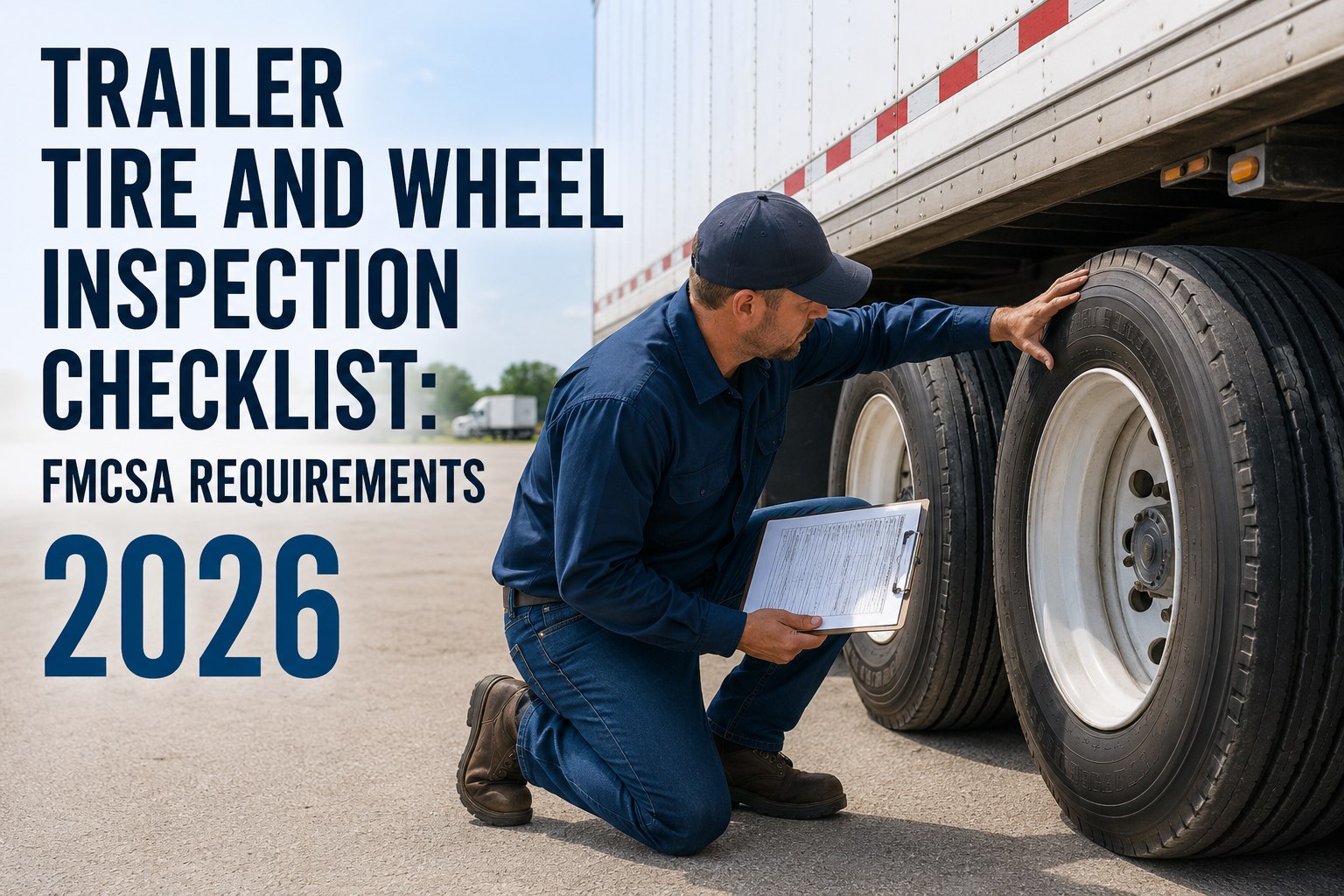
✕A tire below tread minimum, flat, with exposed cord, or under 50% of max inflation
✕A required lamp inoperative — especially any lamp needed for night driving
✕An audible air leak, or pressure falling faster than the allowed rate
✕A broken leaf spring, shackle, or U-bolt, or cargo securement below half the load weight
The 2026 CVSA criteria also tightened a few points — a disconnected service gladhand now counts toward the 20% brake rule rather than parking the trailer on its own, and missing rim material over three inches in the bead area is an automatic pull. Contact our team to benchmark your trailer defects against the OOS line.
A Skipped Pre-Trip Is a CSA Violation Waiting to Happen
Every defect on this walk is also a roadside inspection item. Caught in the yard, it's a quiet repair; found at the scale, it's an out-of-service order, CSA points in the Vehicle Maintenance BASIC, and a load sitting on the shoulder. TIM makes the pre-trip a logged step, turns each defect into a graded work order within four hours, and keeps the out-of-service items from being waved through.
How long should a trailer pre-trip inspection take?
A thorough trailer walkaround runs about five to ten minutes once a driver has the route down — nose, curb side, rear, road side, then a look underneath at the brakes and air. It feels slow the first few times and then becomes muscle memory. That's time well spent against the alternative: a roadside out-of-service order can cost hours on the shoulder plus a CSA hit, so the walk pays for itself the first time it catches a bad brake or a flat inner tire. Start free and time-stamp every trailer pre-trip in TIM.
What trailer defects will put me out of service?
The common ones are brakes, tires, lights, and coupling. If 20% or more of the combination's brakes are defective or out of adjustment, the whole rig is out of service. A tire below tread depth, flat, with exposed cord, or under half its max inflation is OOS. Any required lamp being inoperative, a cracked fifth-wheel plate or worn kingpin lock jaws, an audible air leak, or cargo tied down to less than half the load's weight will also park the trailer. Those are the items worth knowing cold.
What's the difference between a pre-trip and a DOT annual inspection?
A pre-trip is the driver's daily walkaround before operating — a visual and functional check that the trailer is safe to run that day, with any defect reported on the DVIR. The DOT annual (periodic) inspection is a deeper, documented inspection performed by a qualified inspector once every twelve months against the Appendix A standards, with the certificate kept on file. The pre-trip catches day-to-day defects; the annual certifies the trailer's overall condition. You need both, and the daily walk is what keeps a trailer legal between annuals. Contact us about tracking both on one trailer record.
Do drivers need to check the trailer ABS?
Yes — confirm the trailer ABS malfunction lamp works. Air-braked trailers built since the late 1990s carry ABS with an external malfunction lamp, and at start-up that lamp should illuminate briefly and then go out. A lamp that stays on means the ABS has a fault that needs diagnosis. It's a two-second check at the rear of the trailer that's easy to skip, and an inoperative ABS is both a maintenance issue and a roadside inspection flag.
What is the 20% brake out-of-service rule?
CVSA puts a combination vehicle out of service when 20% or more of its brakes are defective or out of adjustment. Because the count is of the whole combination, the numbers are small: a tractor pulling a tandem-axle trailer has ten brakes, so two defective brakes hits the 20% line and parks the rig. That's why trailer brakes matter so much on a pre-trip — a couple of out-of-adjustment chambers you can't see without looking underneath are enough to take the entire combination off the road. Contact our team to track pushrod stroke across your trailers.
Nose · Curb · Rear · Road · Underneath
One Loop, Every Trip, Nothing Skipped
A trailer pre-trip is five minutes and one consistent path: start at the nose, walk the sides, check the rear, and look underneath at the brakes and air. Catch the out-of-service defects in the yard, log what you find, and let TIM turn each one into a tracked repair before the trailer rolls. It's free to start on your first three trailers.