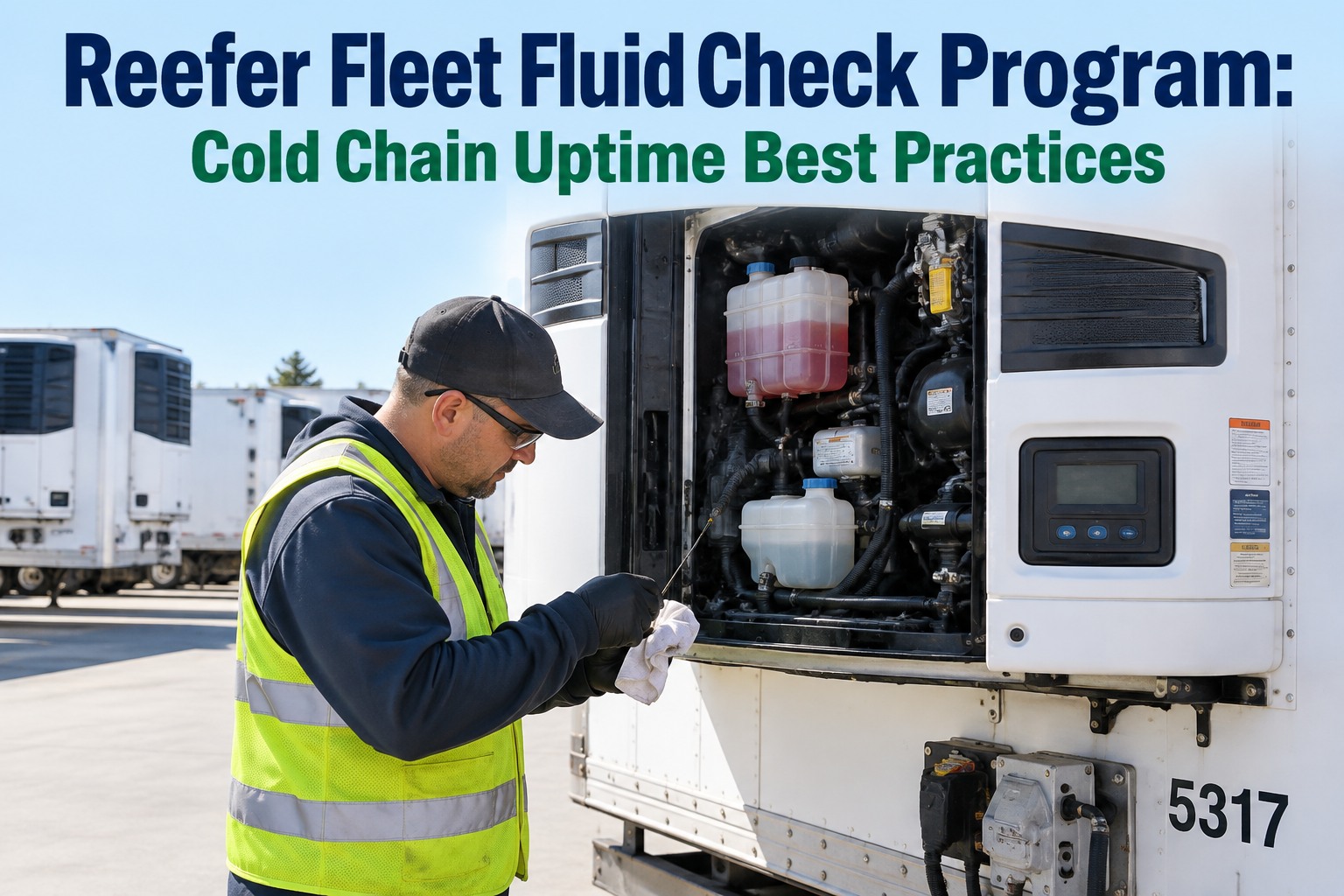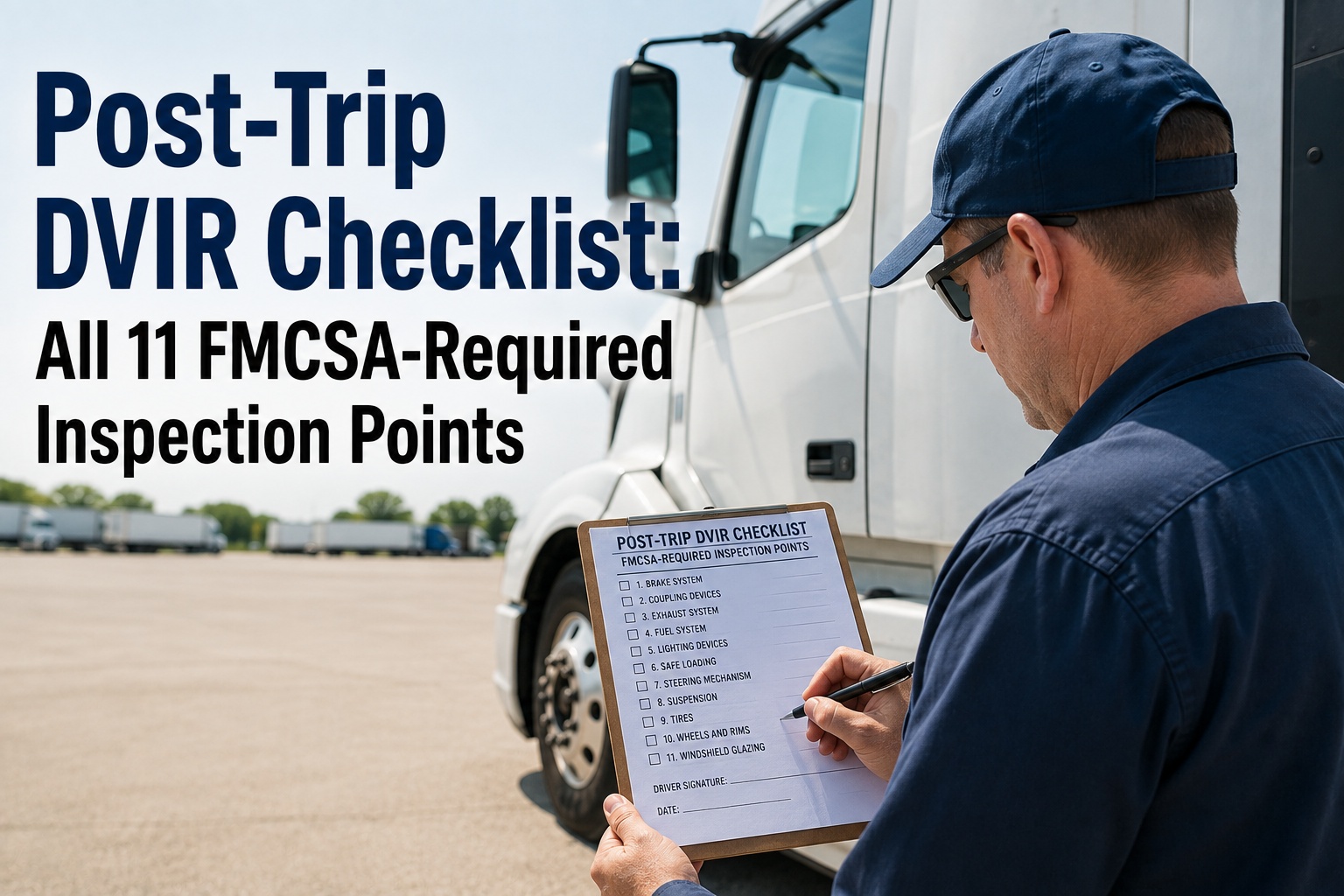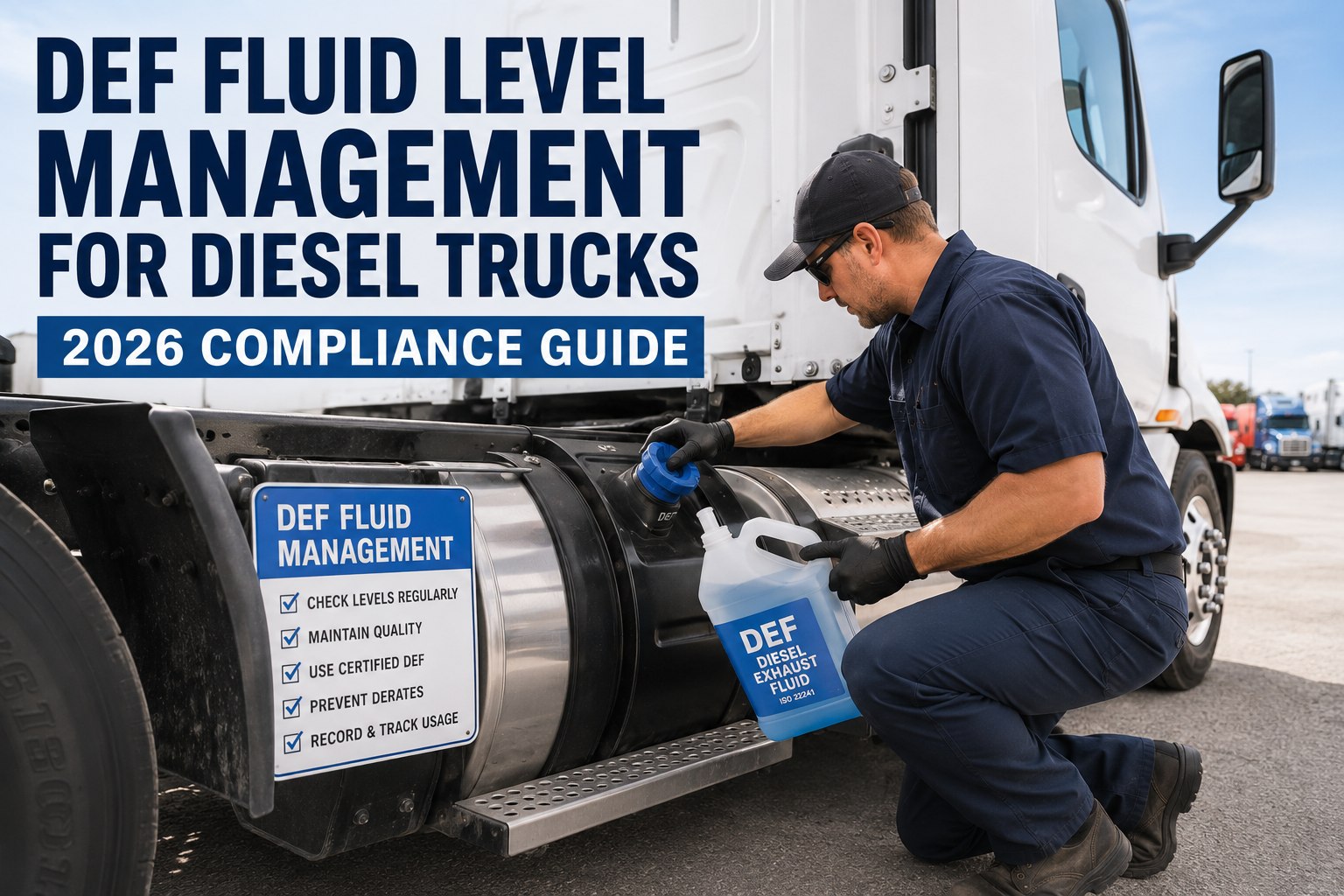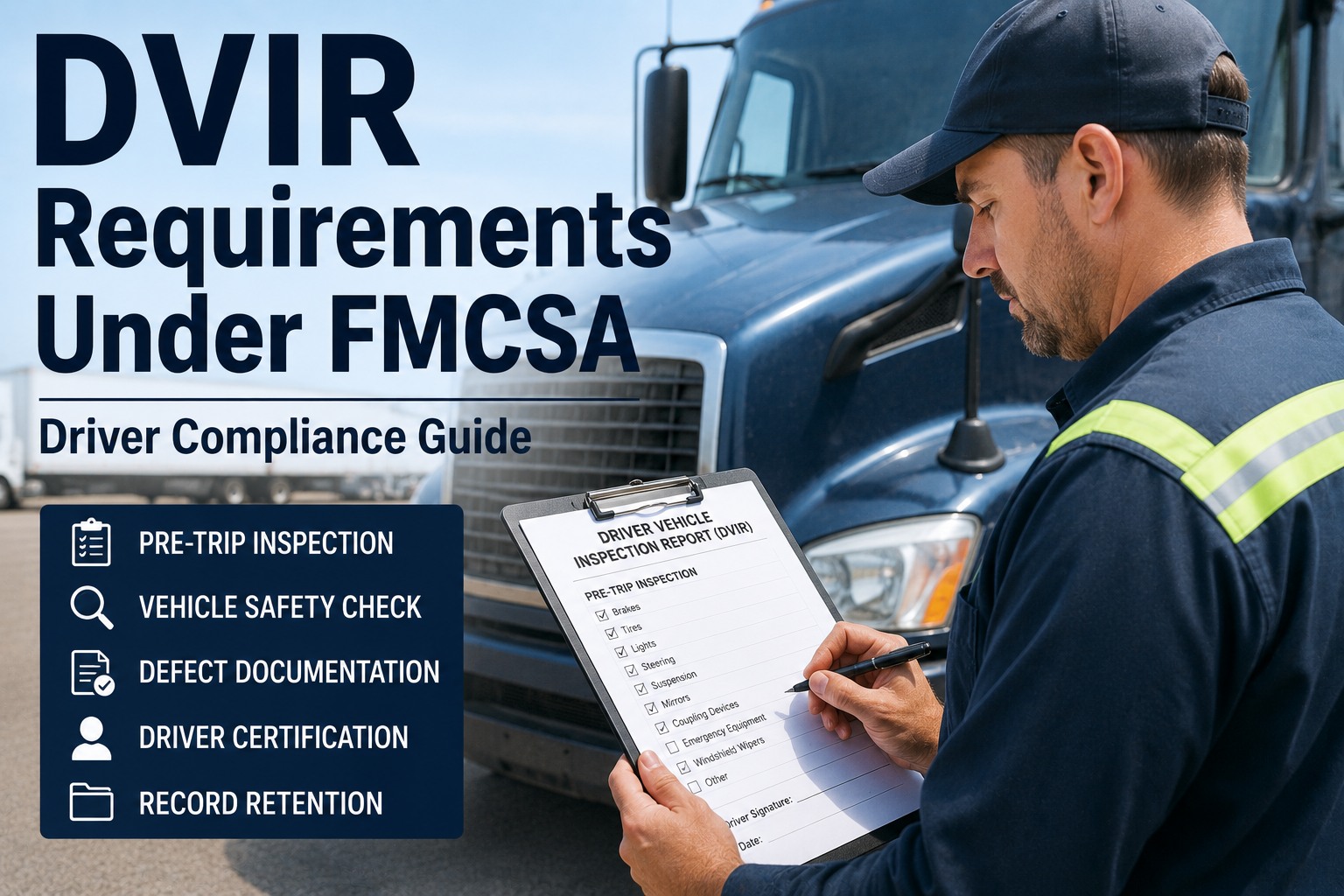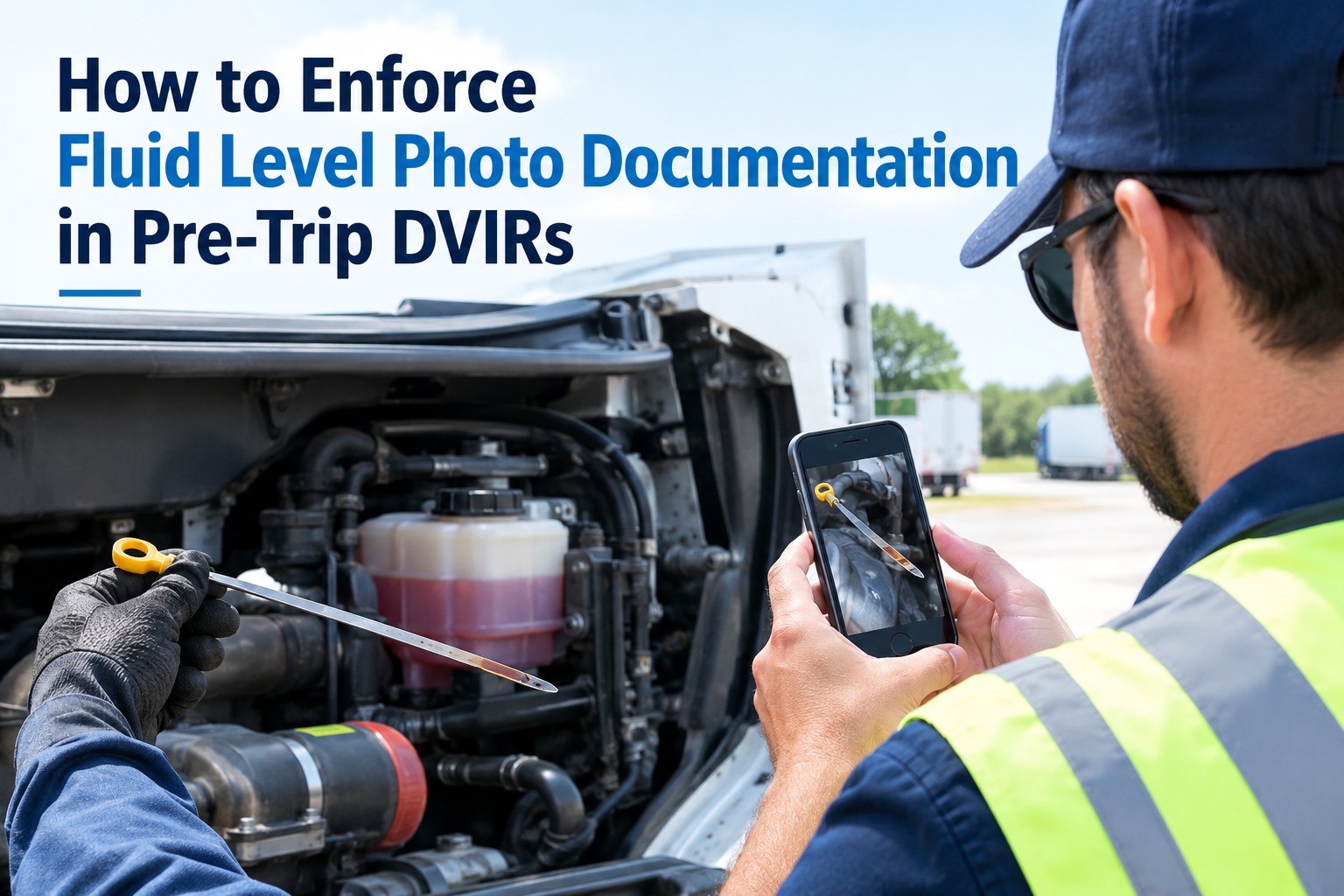
The pre-trip DVIR asks the driver to check engine oil, coolant, and power steering fluid. The driver checks the box. Two hours later the truck is on the shoulder of I-80 with a low-oil derate. Was the fluid low that morning? Nobody knows — the DVIR said it was fine, but there's no evidence the dipstick was ever pulled. This is the enforcement gap every fleet quietly lives with. Mandatory dipstick photos close it in one policy change. This article breaks down how to enforce photo-verified fluid checks without slowing drivers, the rollout playbook that works, and how Truck Inspection & Maintenance makes photo enforcement automatic. Start a free trial to enable photo-required fluid fields today.
How to Enforce Fluid Level Photo Documentation in Pre-Trip DVIRs
The single policy change that ends the "checked but didn't" problem — photo-required fluid dipstick fields in every pre-trip DVIR. Here's the enforcement mechanics, the rollout playbook, and the audit-trail benefits every fleet is discovering in 2026.
The Silent Failure Mode That Photo Enforcement Solves
Every fleet has three kinds of drivers: the diligent ones who actually check fluids, the ones who spot-check some days and skip others, and the ones who mark every DVIR "OK" without leaving the cab. Without evidence, all three look identical on paper. Photo enforcement makes the three visible for the first time.
Behavior: Pops the hood, pulls every dipstick, notes actual levels. Files DVIR with real data.
With photo policy: No change — they were already doing the work.
Behavior: Checks fluids on Mondays and when they feel like it. Rest of the week, "looks fine" from outside the cab.
With photo policy: Photo requirement forces the actual check every day. Compliance jumps to 100% overnight.
Behavior: Marks everything OK from the driver's seat. Never checks anything. Never gets caught until the truck breaks down.
With photo policy: Cannot submit DVIR without photo. Either starts checking or quits. Either outcome is a win.
What Photo-Verified Fluid Documentation Actually Looks Like
The photo requirement is not "take a picture of the engine bay." It's a specific, narrow field capturing the exact fluid indicator being checked. Here's the standard.
The 4-Week Rollout Playbook
Policies fail when they're rolled out as commands. They succeed when drivers understand what's changing, why, and how to make it fast. Here's the 4-week rollout that actually works.
Communication: All-hands meeting or video. Explain the "checked but didn't" problem with specific breakdown data from your fleet. Frame it as protection for drivers, not surveillance.
Training: 10-minute demo showing the exact photos required. Live walkthrough of how to take them in 15 seconds.
Goal: Every driver knows what's coming and why.
Policy: Photos are requested but not required for DVIR submission. Drivers can skip them but should include when possible.
Measurement: Track voluntary photo submission rate per driver. Expect 60-70% adoption.
Feedback loop: Address any technical or process complaints before enforcement begins.
Policy: DVIR cannot be submitted without fluid photos. System blocks submission until all required photos attached.
Support: Dispatch or shop lead available to help any driver having trouble the first 3 days.
Watch for: The 5-10% of drivers who will test whether the enforcement is real.
Random audit: Review 10% of week's photos for actual quality (not just presence).
Coaching: Drivers submitting unclear or non-compliant photos get 1:1 quick coaching, not discipline.
Sustain: Weekly random audit becomes permanent process.
The Time-Cost Reality Every Driver Asks About
The most common driver objection is "this will add 20 minutes to my pre-trip." It doesn't. Here's the actual time math.
The Audit-Trail Benefit Nobody Talks About
Photo-verified fluid checks aren't just about catching the driver who skips inspections. They're also the strongest defense you have when a defect actually is missed — the photo record proves the check was performed.
Insurance investigator asks: "Was the fluid checked?" You say yes. The driver says yes. The DVIR box is checked. No evidence beyond that. Investigator writes: "Documentation insufficient."
Investigator pulls the DVIR. Timestamped photo shows the dipstick at proper level 4 hours before the failure. Investigation shifts from driver blame to component failure. Insurance claim proceeds. Legal exposure eliminated.
Photo Enforcement Built Into the DVIR
Truck Inspection & Maintenance makes photo-required fluid checks a native DVIR field type — set it once per unit class, drivers cannot submit without the photos, all images timestamped and geotagged automatically. Purpose-built for trucking, connecting drivers, mechanics, and managers on one mobile-first platform.
The Fluid Categories to Enforce (Priority Order)
You don't have to enforce photos on every fluid at once. Roll them out in priority order — the ones with the highest breakdown risk first.
Highest ROI. Low oil is the #1 cause of avoidable engine damage. Dipstick photo showing level between MIN and MAX marks.
Second highest. Overheating causes catastrophic engine damage in minutes. Reservoir photo showing level between MIN/MAX lines.
Third priority. Empty DEF triggers 5-mph derate — not damage, but immediate operational failure. Dashboard gauge photo.
Fourth wave. Less critical but part of complete fluid discipline. Reservoir photos.
The Enforcement Mistakes That Kill Photo Policies
Photo enforcement programs fail for predictable reasons. Watch for these five.
Frequently Asked Questions
Modern phones handle low light and weather well; the standard driver-side use case works in almost all conditions. For genuine edge cases (heavy rain, extreme dark), the DVIR should allow a manual override with a required text explanation that gets flagged for shop review. Overrides should be rare — under 2% of DVIRs — and any driver with a high override rate gets coaching. The point isn't zero overrides; it's making the override the exception and photo the rule. Start free and configure override workflow.
Two-thirds accept the policy within a week when it's explained as protection rather than surveillance. About 25% grumble but comply. The remaining 5-10% test whether the enforcement is real. That last group is where the policy is either won or lost — consistent enforcement for the first 30 days is what teaches them the policy sticks. Coaching, then documented warning, then discipline. Compromising during the test period tells everyone the policy is optional.
Photos of engine components aren't a privacy concern. Photos accidentally including the driver or personal items are. Standard DVIR platforms let you configure photo capture to the specific inspection element only. In union environments, notify representatives ahead of rollout — the policy is defensible as a safety measure and typically well-received once the reasoning is explained. Frame it consistently: this protects drivers from being blamed when equipment fails, not the reverse.
Two ROI streams. First, prevented breakdowns: even one avoided engine-damage incident per year across a mid-sized fleet pays for the policy many times over. Second, legal and insurance defensibility: photo evidence of pre-trip inspection substantially strengthens liability defense in any accident involving equipment failure. Fleets report the insurance and legal benefits often exceed the breakdown-prevention benefits within 12 months. Ask about liability defense workflows.
End the "Checked But Didn't" Problem Today
Truck Inspection & Maintenance is the purpose-built fleet platform where photo-required fluid fields, automatic timestamps, geotagging, and duplicate detection are native DVIR features — not add-ons, not workarounds. Every fluid check verified. Every audit trail complete. Every driver protected by their own documentation.