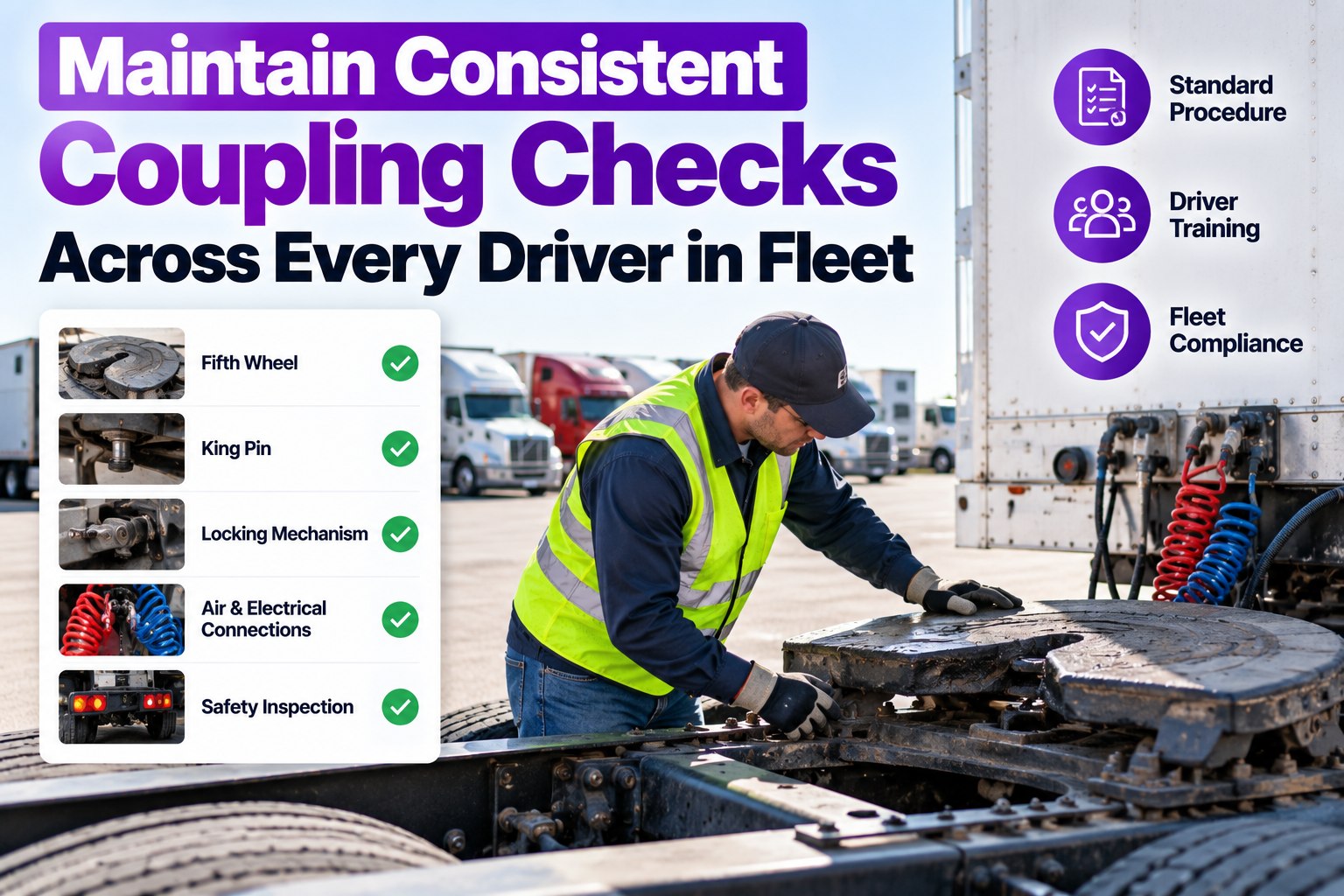
Ask ten drivers how they check a coupling and you may get ten answers — and that variation is the whole problem. A fifth-wheel failure isn't a downtime event; it's a catastrophic separation, a trailer coming off a tractor at speed. The difference between a driver who does a proper tug test and one who "eyeballs it and goes" is the difference between a caught defect and a dropped trailer. One fleet's paper DVIRs let three hand-turnable mounting bolts pass inspection repeatedly — not because drivers were careless, but because "check coupling" meant something different to each of them. Consistency isn't a personality trait you hire for; it's a procedure you enforce. This guide lays out the standardized coupling check every driver should run the same way, and how Truck Inspection & Maintenance Management Software (TIM) makes the same steps mandatory for everyone. Start free and standardize coupling checks across your fleet.
Ten Drivers Shouldn't Check a Coupling Ten Different Ways.
You want the same coupling check from your newest driver and your twenty-year veteran — the visual, the jaws, the tug test, done the same way every time, not left to habit. This guide gives you the standard sequence and shows how a digital DVIR enforces it. TIM makes each step mandatory with photo capture, so "check coupling" stops meaning ten different things. Every defect logged gets a first response within 4 hours — acknowledged, graded, and assigned.
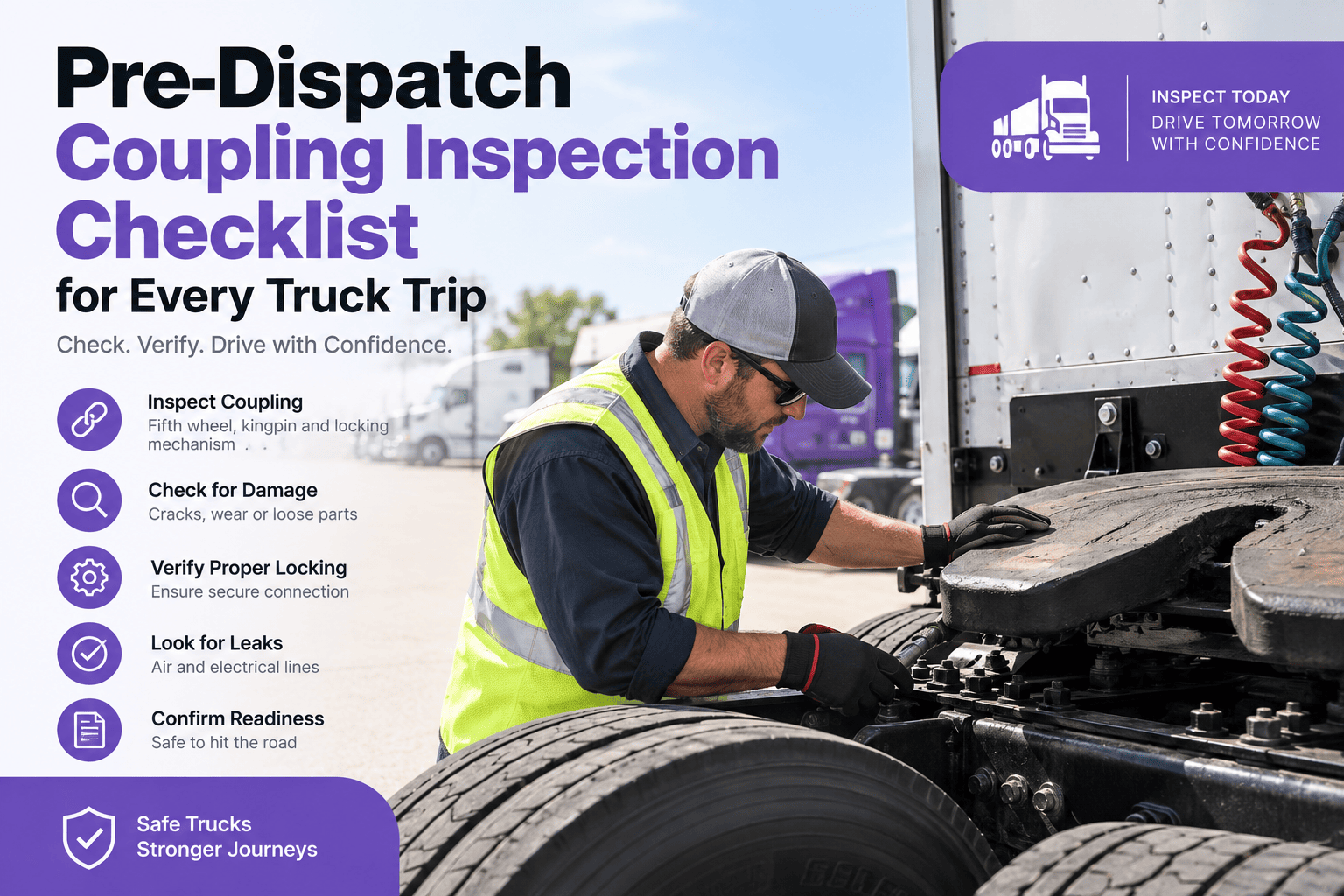
The Standard Coupling Check — Five Steps, Same Order, Every Time
Consistency starts with a fixed sequence. When every driver runs these five in the same order, a coupling check stops depending on who's doing it. This is the procedure to standardize on.
Trailer plate flat against the fifth wheel, no daylight between the plates. A gap over 2 inches is a high-hitch — immediate out-of-service.
Look under: the locking jaws must be fully closed around the kingpin — not above it, not partially engaged.
The release handle sits fully in the locked position — not mid-throw. Engage the secondary safety lock if equipped.
Air lines (glad hands) and the electrical pigtail seated and secure, with no crossed or chafing lines.
Trailer brakes set, pull gently forward in low gear. It must move as one unit — any relative motion means the coupling is incomplete.
What Goes Wrong When the Check Is Skipped or Rushed
Every coupling failure traces back to a step that got glossed over. These are the conditions a rushed or inconsistent check misses — and each one ends the same way.
Jaws close above the kingpin instead of around it. The connection holds until load — then the trailer separates.
Worn or partially closed jaws don't grip the kingpin; the coupling loosens gradually until it lets go.
Hand-turnable fifth-wheel mounting bolts — the exact defect that passes an inconsistent visual check.
Skipping the pull test means an incomplete lock goes undetected until the trailer drops on the road.
How to Make It Consistent — Procedure, Training, Enforcement
Consistency across drivers isn't willpower; it's three things working together. Miss any one and variation creeps back in. This is how a fleet locks the same coupling check into everyone's routine.
One documented coupling sequence — the five steps, in order — that every driver is trained and expected to follow.
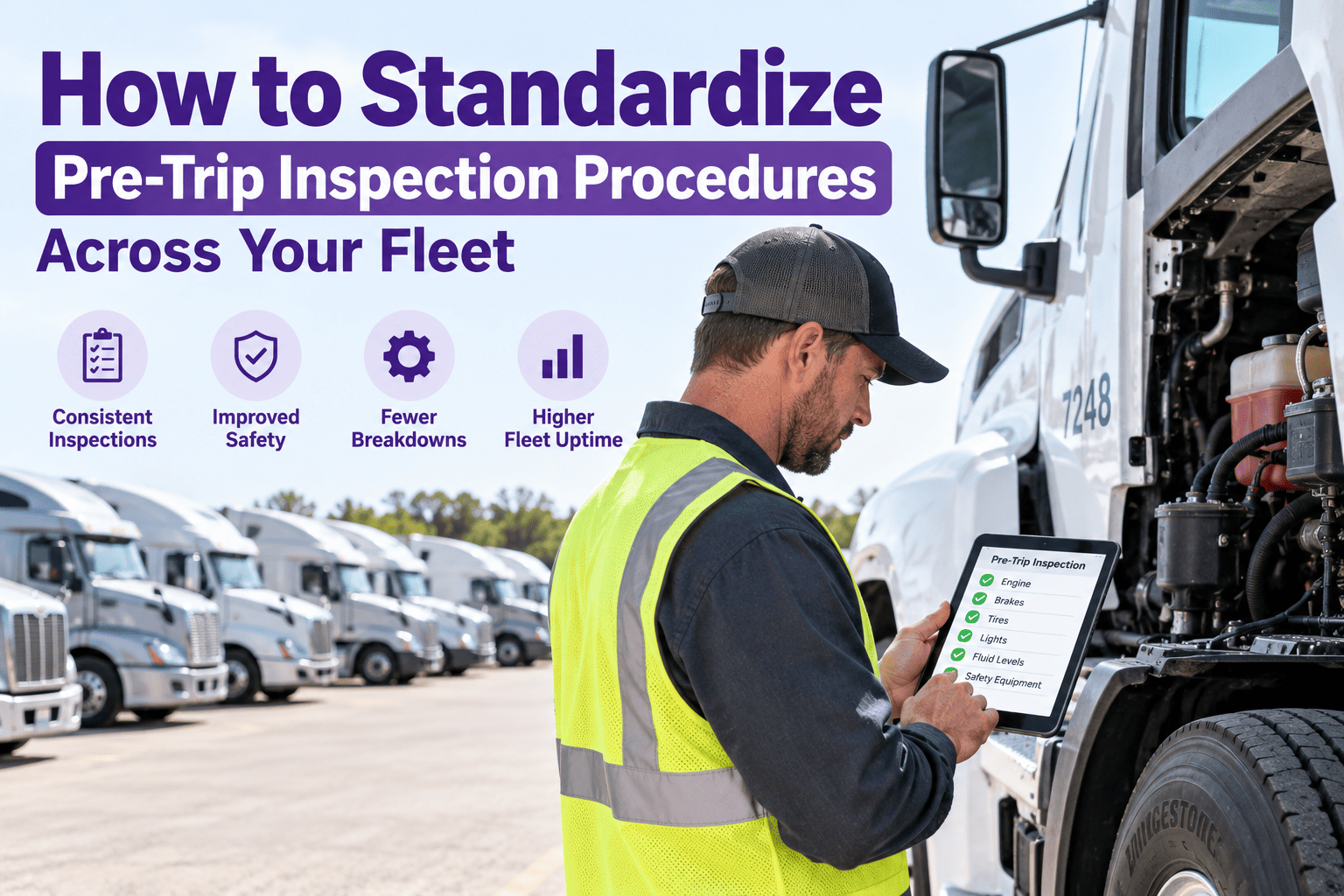
Make each step a discrete, required item — not one "check coupling" line — so no step can be skipped or assumed.
Mandatory photo capture of the mounting bolts and coupling removes the subjectivity that lets defects pass.
See who completes the full sequence and who shortcuts it — coaching where the variation actually is.
The Same Coupling Check From Your Newest Driver and Your Best One
TIM turns the coupling SOP into a DVIR every driver runs identically: each of the five steps is a required item, mounting-bolt and coupling photos are mandatory, and a high-hitch or unlocked-jaw flag opens a work order that holds the unit out of service. Because it's tracked by driver, you can see exactly where the variation is and coach it — instead of finding out on the road. The vague "check coupling" line becomes a procedure no one can shortcut.
Frequently Asked Questions
Make Every Driver's Coupling Check the Same Check
One documented sequence, built into the DVIR as required steps, with mandatory photos and per-driver tracking. TIM turns "check coupling" from a line that means ten things into a procedure no one can shortcut — so a high-hitch or a loose bolt is caught in the yard, not on the road.