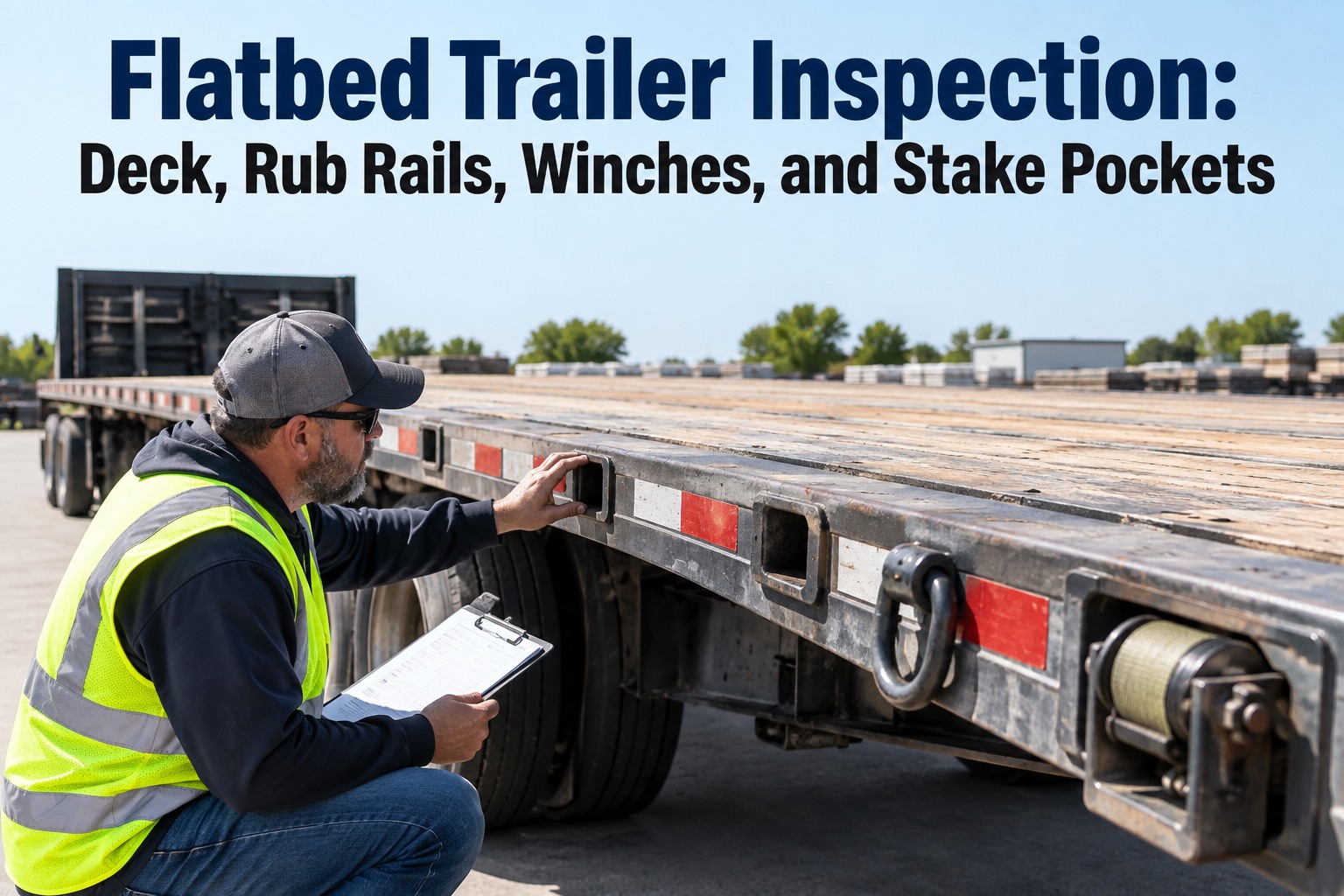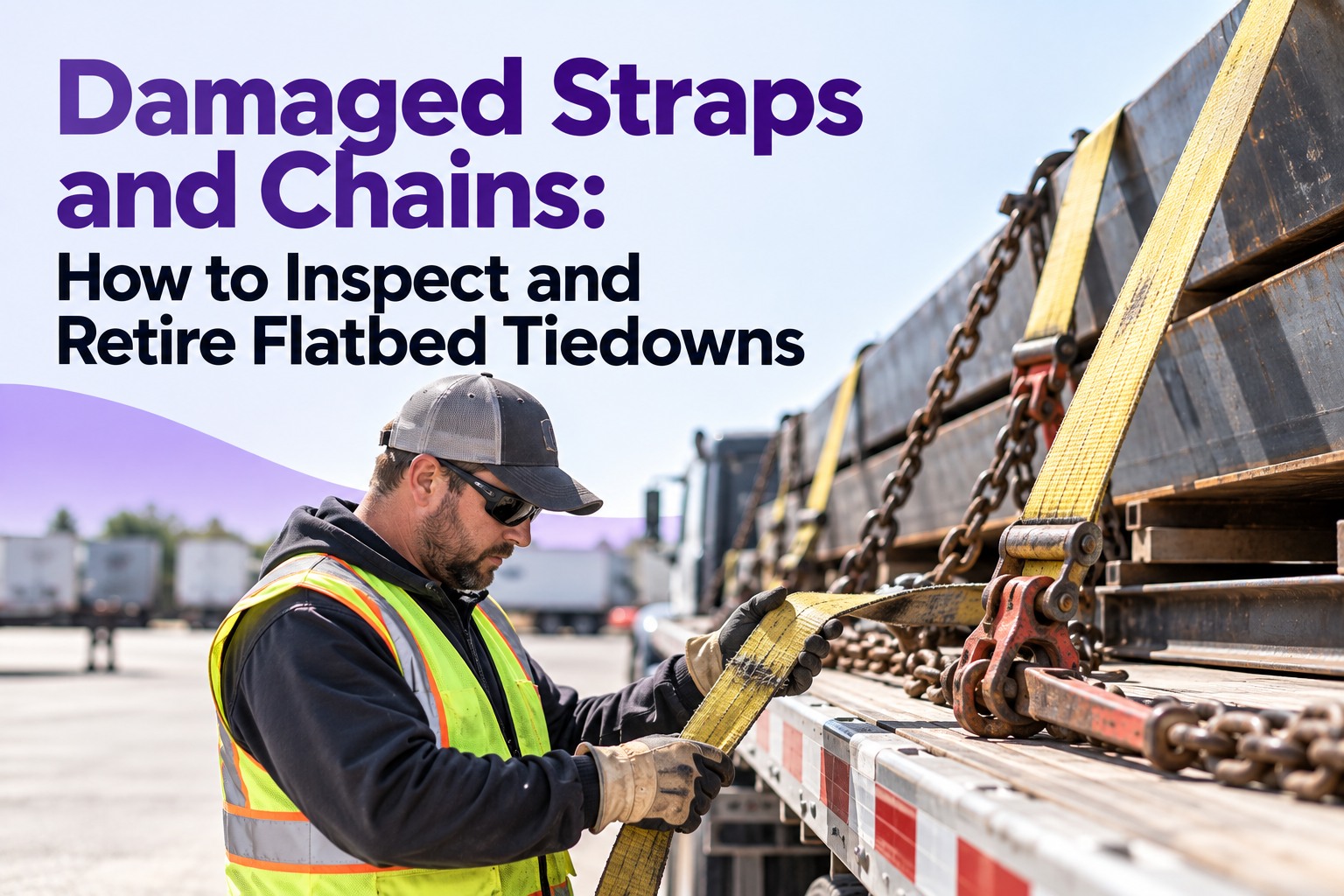
Here's the uncomfortable truth on a flatbed: the strap that fails isn't the one that snapped clean — it's the one that looked fine. A cut across a few load-bearing fibers, a stitch line pulling at the sewn eye, a chain link with a nick you'd need to run a thumbnail over to feel. Damaged tiedowns are consistently among the top securement violations at roadside inspections, and the rule behind them is blunt: under 49 CFR §393.104(b), a tiedown with any damage that reduces its working load limit simply cannot be used — and a damaged strap can't be repaired, only retired. This guide gives you the go/no-go criteria for both straps and chains, the knot rule that trips up drivers, and the documentation that proves you pulled the bad one — and how Truck Inspection & Maintenance Management Software (TIM) logs every retirement so it's on the record. Start free and log every tiedown retirement on any phone.
The Strap That Fails Isn't the One That Snapped. It's the One That Looked Fine.
You want a clear line between a tiedown that's road-legal and one that's scrap — not a judgment call at the roadside with an inspector watching. This guide draws that line for webbing and chain, with the exact damage that forces retirement. TIM keeps it on record: flag a worn strap or a cracked link on a phone, and it opens a work order and logs the removal-from-service. Every defect gets a first response within 4 hours — acknowledged, graded, and assigned.
The One Rule Behind All of It — §393.104(b)
Before the specific criteria, the governing standard: a tiedown and every component must be in proper working order with no damaged or weakened parts — no cracks, cuts, or defects that adversely affect performance or reduce the working load limit. Everything below is that rule applied to what you'll actually see on a strap or a chain. And a knot anywhere in a tiedown is an automatic disqualifier under §393.104(f)(1).
Synthetic Webbing — When to Retire a Strap
Straps take the abuse of edges, weather, and chemicals. Run each one through gloved hands before every load and look for these. Any one of them means the strap comes off the truck — remember, webbing damage can't be repaired, only replaced.
Any cut across load-bearing fibers. Industry practice retires a strap once cuts exceed ~10% of the web width.
Especially at sewn eyes and end fittings — the stitch line is where the working load actually transfers.
Melting, charring, glazing, or weld-splatter burns. Stiff, brittle, or discolored fibers have lost strength.
Chemical burns, staining, or embrittlement from spilled lading or contamination.
A knotted strap is out — full stop — under §393.104(f)(1). Knots gut the rated strength.
Bent hooks, distorted D-rings, or worn ratchet pawls that won't hold tension.
Chain & Hardware — When to Retire a Chain
Chain fails differently — it stretches, gouges, and cracks rather than frays. Transport chain follows the National Association of Chain Manufacturers' welded-steel specs, and these are the conditions that pull a chain out of securement service.
Any crack, break, or fracture in a link. A cracked link is a failed link.
Links that have visibly stretched or pulled longer than their neighbors — a sign of overload.
Worn link surfaces at contact points that thin the metal below its rated section.
Deep gouges, nicks, or weld splatter that create stress risers where a link will fail.
Distorted, bent, or twisted links no longer carry load in line — retire the chain.
Opened throat, bent, or cracked grab/slip hooks and end fittings.
The Go / No-Go Call — and Proving You Made It
Inspection is only half the job; the other half is documentation. When a driver pulls a strap or chain, that decision should leave a record — both to prove the defective device left service and to trend which gear is wearing out fastest.
Run straps through gloved hands; sight chains link by link, before every load, as part of the securement check.
One disqualifying defect = off the truck. No repair, no "one more load." Tag it so it can't be re-used.
Log the removal against the unit, photograph the damage, and pull a rated replacement into service.
"I Pulled That Strap" Isn't a Record. A Logged, Photographed Retirement Is.
TIM makes tiedown inspection part of the securement check on the driver's phone: flag a cut strap or a stretched chain, photograph it, and it opens a work order and records the removal-from-service against the unit. Over time you see which gear wears fastest and where — so you replace on a schedule instead of at a roadside. When an inspector or auditor asks, the retirement record is one search away, not a shrug.
Frequently Asked Questions
Catch the Bad One in the Yard — Not on the Shoulder
Clear go/no-go criteria for webbing and chain, the no-knot and no-repair rules, and a documented retirement that proves the defective device left service. TIM runs the inspection on a phone, logs the removal, and trends which gear wears fastest — so you replace on schedule, not at a roadside.