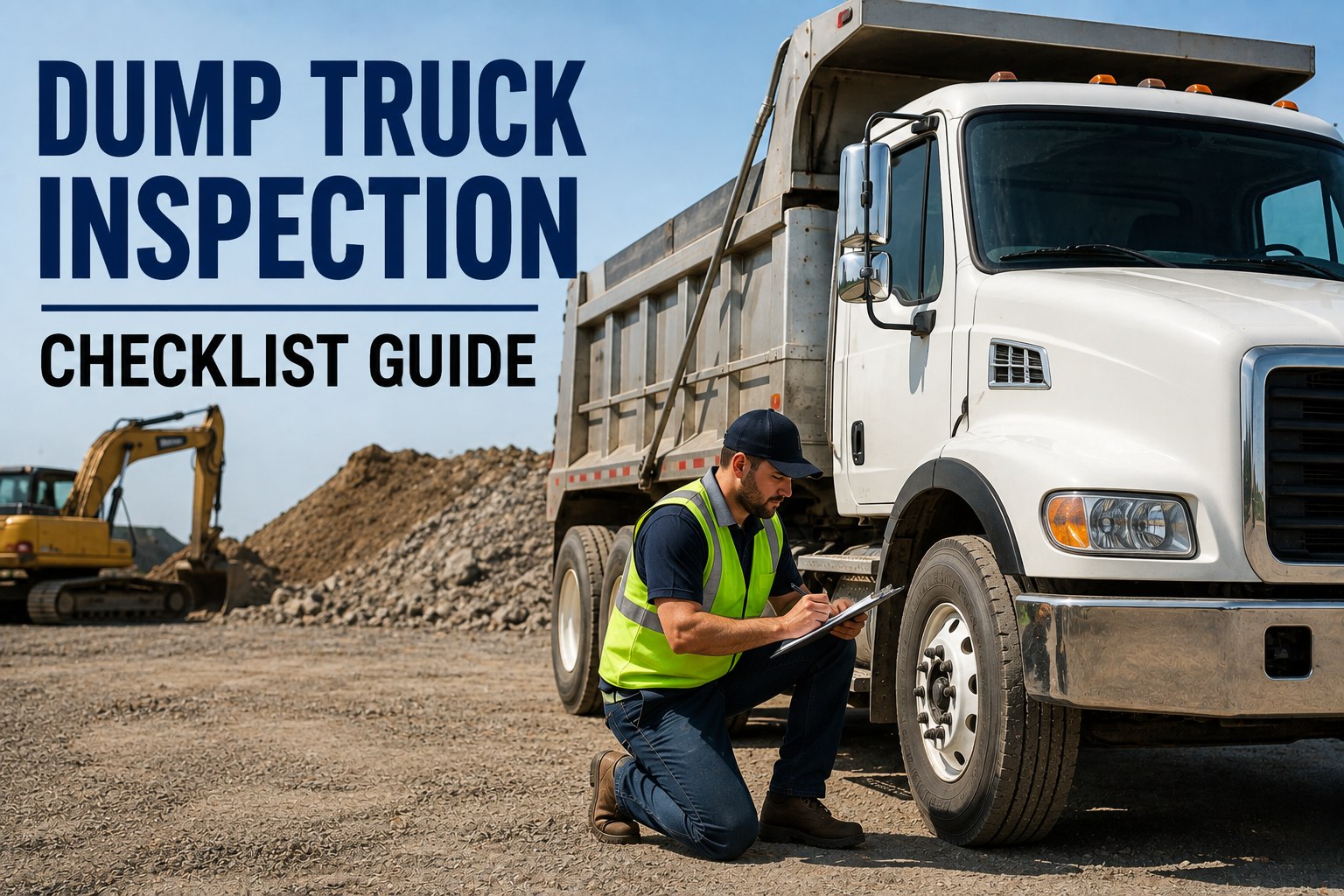
Dump trucks live in the harshest corner of the fleet world — hydraulic systems cycling constantly, aggregate loads punishing suspensions, uneven job-site terrain, and pressurized rams capable of raising 30 tons of material overhead. That combination makes them one of the most dangerous vehicles on the road when a critical system fails. FMCSA data shows mechanical defects contribute to approximately 10% of commercial vehicle accidents — and on dump trucks, roadside inspectors know exactly where to look: brakes, tires, hydraulics, and lighting top the violation list year after year. A proper dump truck inspection catches those failures before the truck leaves the yard, keeps you clean at CVSA inspection stops, and — most importantly — prevents a hydraulic hose burst from dropping the bed onto a mechanic. This guide walks through the complete daily pre-trip inspection covering all 51 critical points, the dump-specific danger zones that generic DOT checklists miss, post-trip and PM intervals, DOT compliance essentials under 49 CFR 396.11 and 396.13, and how Truck Inspection & Maintenance turns paper checklists into digital DVIRs with photo evidence, GPS-tagged timestamps, and automatic defect routing — free forever for up to 3 vehicles.
Dump Truck Inspection Checklist: The Complete 2026 Guide
Every point, every zone, every safety-critical system — the checklist that protects your drivers, your loads, and your CSA score.
Why a Dump Truck Checklist Is Different
A standard DOT DVIR covers the truck as a commercial motor vehicle. Dump trucks need everything on that list PLUS the dump-specific systems that generic checklists ignore. Skip the dump-specific items and you skip the exact components most likely to injure someone or shut you down at a CVSA inspection:
Cab & Chassis
Engine, transmission, cab controls, gauges, safety equipment, mirrors, glass, seat, seatbelt, emergency triangles, extinguisher.
Wheels & Brakes
All tires (tread depth, sidewall damage, inflation), wheel nuts and studs, brakes (drums, shoes, slack adjusters), air system, glad hands.
Hydraulic & Bed
Hoist cylinders, hoses, fittings, PTO, hydraulic reservoir, tailgate latch, body prop, bed condition, hinges, tarp system.
Safety Equipment
All lights, reflective tape, mud flaps, backup alarm, body prop pin, ladder, tarp, DOT-required kit, and jobsite safety gear.
The Complete Pre-Trip Checklist by Category
Work through these seven categories in the same order every time — a systematic clockwise walkaround catches what memory misses. Every item is check-and-log, with defects flagged immediately for shop routing:
Dump-Specific Danger Zones — Don't Skip These
Six items on the checklist above deserve their own callout because they're the difference between generic DOT compliance and dump-specific safety. Missing any one puts a driver, a mechanic, or a jobsite worker at direct risk:
Safety Body Prop
The last line of defense against hydraulic failure dropping the raised body onto a person underneath. Missing or damaged body props are an immediate tag-out condition — do not operate.
Hydraulic Hoses
A burst hose under load = instant loss of pressure = bed drops uncontrolled. Inspect at every pre-trip, especially at flex points and fittings. Heat cycling degrades rubber internally before external signs appear.
Hydraulic Fluid Condition
Contaminated fluid causes 85% of hydraulic pump failures. Check at sight glass daily — cloudy, milky, or dark fluid = shop it. 30-second check that saves thousands in pump repairs.
Tailgate Latch & Chains
A failed tailgate at dump = load spilled uncontrolled + potential injury to workers behind. Verify latching mechanism and safety chains are intact and rated. Never rely on chains alone.
Backup Alarm
Jobsites are chaotic — a working backup alarm is your primary warning to workers on foot. Test it every pre-trip. A non-functional alarm creates OSHA liability the moment the truck moves.
PTO Engagement
PTO must engage completely with clear indicator. Partial engagement damages the transmission and PTO housing. Grinding or hesitation = tag out and diagnose — never force it.
Turn this checklist into a digital DVIR — free for up to 3 vehicles
Truck Inspection & Maintenance replaces paper checklists with FMCSA-compliant digital DVIRs. Every point captured with photo evidence, GPS location, and timestamp. Defects auto-routed to shop as priority work orders. 90-day retention handled automatically. Setup in 10 minutes. Sign up free — no hardware, no contracts.
Post-Trip Inspection Essentials
DOT requires a post-trip inspection when defects are found or suspected. Best-practice fleets do it every trip. Post-trip catches issues while they're fresh in the driver's memory and gives the shop overnight to schedule the fix. Focus on these five areas:
Bed & Load Area
Clean of residual material. Look for structural damage — new cracks or dents from the day's loads. Note any weld separation.
Hydraulic System
Check for new leaks around cylinders, hoses, fittings, and pump. End-of-day heat makes small leaks visible that don't show cold in the morning.
Tires & Wheels
Look for damage from job-site debris — cuts, punctures, embedded stones. Check wheel-nut condition — rust streaks indicate loosening.
Brakes & Air System
Note any brake fade, pulling, or slow response during the day. Air pressure recovery time should be under 45 seconds from 85 to 100 PSI.
Fluids & Leaks
Walk around and look for new spots on the ground under the truck. Note oil, coolant, hydraulic, fuel — any color separately for shop to trace.
DVIR Filed
Sign and file the post-trip DVIR — even if no defects. Record must include date, time, driver signature, and vehicle ID. 90-day retention required.
DOT Compliance — What The Law Actually Says
Every driver, safety manager, and fleet owner should know these specific requirements. Roadside inspectors will. Getting caught unaware doubles fines and adds points to your CSA score:
Post-Trip Inspection Reports
Drivers must prepare a written inspection report at completion of each day's work — noting defects that would affect safe operation. Must be signed by driver. Certified as compliant if next-day inspection shows corrective action.
Pre-Trip Inspection Duty
Driver must be satisfied that the CMV is in safe operating condition, review the last DVIR, and sign to acknowledge that any defects noted have been repaired or determined unnecessary. This is a personal legal obligation.
Annual DOT Inspection
Every commercial vehicle must undergo a comprehensive annual inspection by a qualified inspector. Certificate must be on file. Cannot be operated without valid annual inspection certification.
Electronic DVIRs Compliant
March 23, 2026 final rule (FMCSA-2025-0115) authorized digital DVIRs. Voice-enabled, photo-documented, GPS-tagged electronic reports fully replace paper. Digital signatures replace wet ink. Records must be retained 90 days minimum.
Paper vs Digital DVIR — The Real Difference
Paper checklists still work — they just work against you. Digital DVIRs turn every inspection into structured, searchable, timestamped data. Here's the side-by-side that matters at the next audit or roadside stop:
Traditional Checklist
Truck Inspection & Maintenance
Frequently Asked Questions
How long should a dump truck inspection take?
A thorough daily pre-trip inspection typically takes 5–10 minutes using a digital checklist. The streamlined process covers all 51 critical inspection points including hydraulics, brakes, tires, and safety equipment. Experienced drivers often complete it in under 5 minutes; new drivers may need the full 10. Post-trip inspections are similar — 5 minutes end-of-shift while the truck is still hot.
What's required for DOT compliance in daily inspections?
DOT regulations (49 CFR 396.11 & 396.13) require drivers to complete a pre-trip inspection covering brakes, steering, lighting, tires, horn, wipers, mirrors, coupling devices, and emergency equipment — plus a post-trip inspection at end of each day's work. Records must include driver signature, date, time, and any defects. Records must be retained 90 days minimum. Digital DVIRs meeting FMCSA rule FMCSA-2025-0115 (March 2026) fully replace paper.
What are the most critical dump truck inspection points?
Six items deserve special attention because they're dump-specific safety risks generic checklists miss: the safety body prop (last line of defense against hydraulic failure), hydraulic hoses (burst = bed drops), hydraulic fluid condition (85% of pump failures come from contamination), tailgate latch and safety chains, backup alarm, and PTO engagement. Missing any of these creates direct injury risk to drivers, mechanics, or jobsite workers.
What happens when defects are found during inspection?
Any defect that affects safe operation requires the truck to be taken out of service until repaired. Minor defects (small dents, cosmetic issues) can be noted and monitored. With a digital DVIR system, defects auto-create priority work orders routed to the shop instantly — parts checked, techs assigned, bay time scheduled. Manual coordination between driver and shop is eliminated. Talk to our team about digital defect routing.
Do I need a paper checklist or is digital enough?
Digital is fully sufficient — and better. FMCSA rule FMCSA-2025-0115 (effective March 23, 2026) authorized electronic DVIRs under 49 CFR 396.11 and 396.13. Digital signatures replace wet ink. AI-generated DVIRs with timestamped photos, GPS verification, and complete component checklists actually exceed the minimum FMCSA standard. Records are searchable in seconds when a DOT auditor calls — instead of digging through filing cabinets.
How does Truck Inspection & Maintenance handle dump truck inspections?
Truck Inspection & Maintenance delivers dump-specific digital DVIR templates covering all 51 critical points including the dump-specific danger zones (body prop, hydraulic hoses, tailgate, PTO). Every observation captured with photo evidence, GPS location, timestamp, and driver signature — fully FMCSA-compliant. Defects auto-route to the shop as priority work orders. 90-day retention handled automatically. Free forever for up to 3 vehicles. Sign up in 10 minutes to see it live.
Stop losing DVIRs in the filing cabinet. Start capturing them in the palm of your driver's hand.
Every dump-specific inspection point — including hydraulic hoses, body prop, tailgate, PTO, and backup alarm — captured with photo evidence, GPS location, and timestamp. Defects auto-routed to your shop as priority work orders. 90-day retention handled automatically. Fully FMCSA-compliant. Free forever for up to 3 vehicles with no hardware and no contracts. Set it up in 10 minutes.