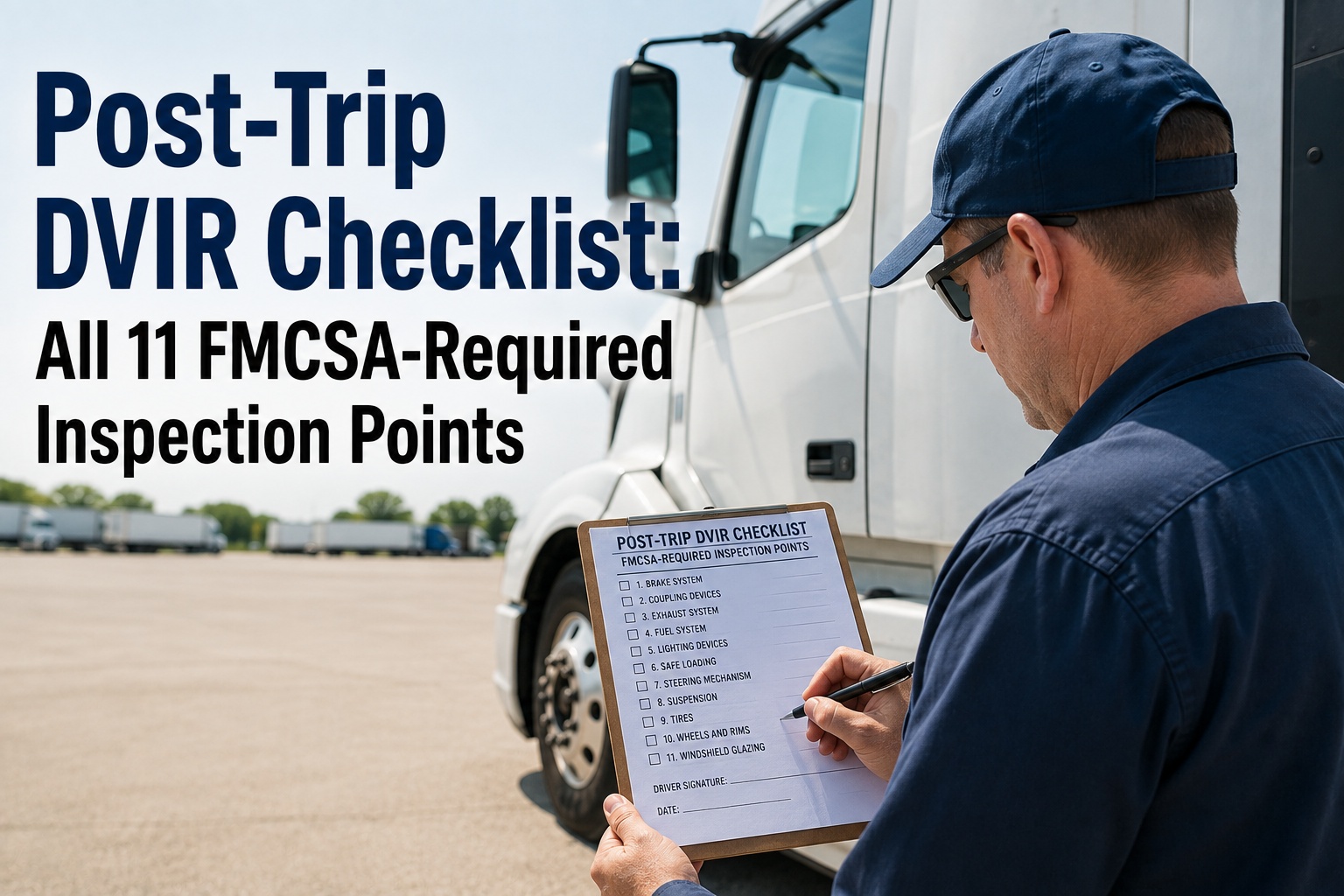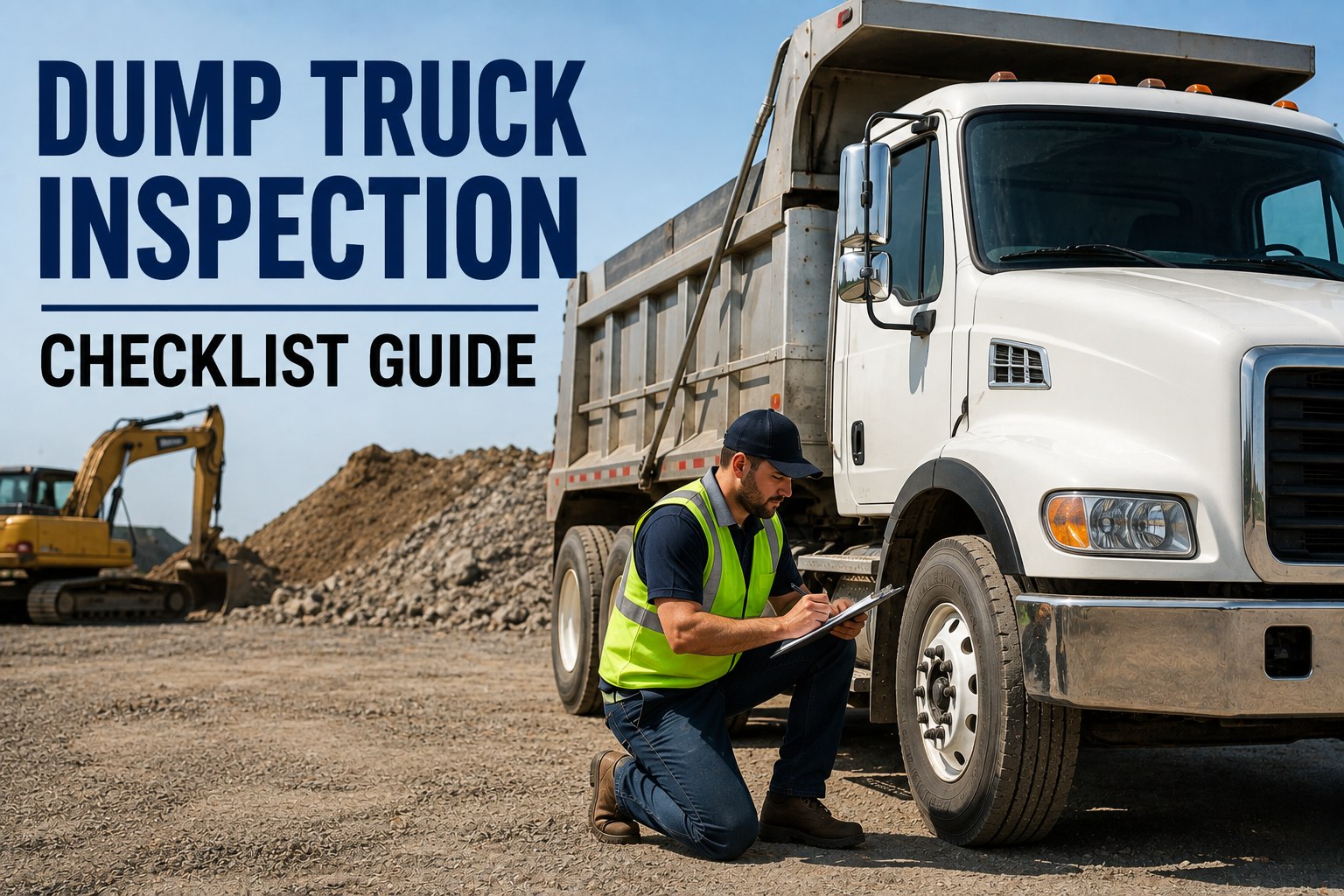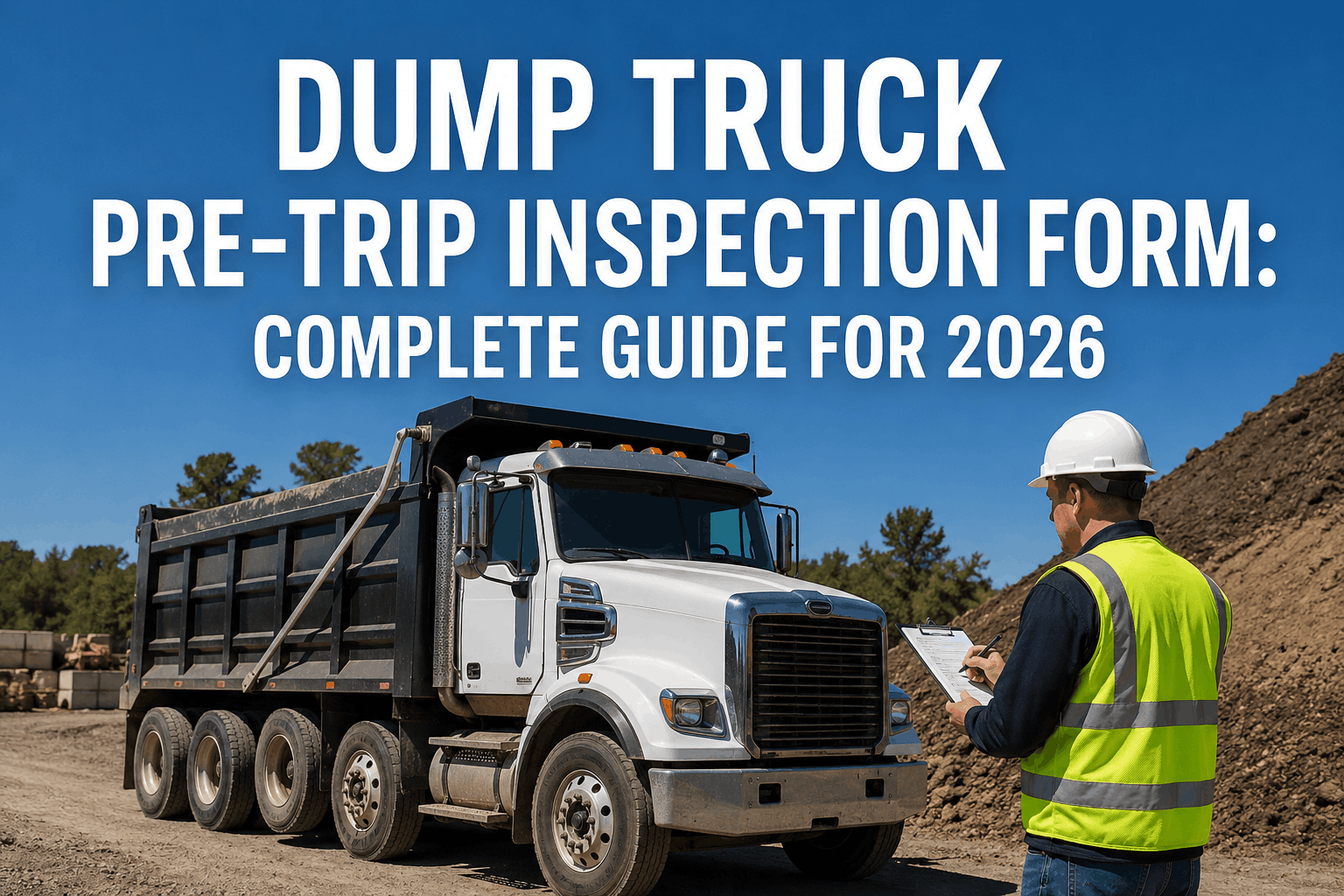
A dump truck is one of the most dangerous vehicles in any fleet to skip an inspection on — it combines highway weight with a hydraulic body that can rise, drop, or spill a load in seconds. That's why the pre-trip isn't just a regulatory box to check: it's the difference between a normal haul and a hydraulic failure with an elevated bed. Federal rules are unambiguous — under 49 CFR 392.7 and 396.13 the driver must inspect before each trip and document defects on a DVIR, and as of the March 23, 2026 eDVIR Final Rule, electronic inspection reports are fully legal for all commercial vehicles. This guide gives you a complete dump truck pre-trip inspection form — every standard FMCSA item plus the dump-specific hydraulic, body, and tailgate checks generic forms miss — that you can run as a printable sheet or a digital DVIR. Truck Inspection & Maintenance turns it into a mobile form your drivers finish in minutes. Talk to our team to deploy it.
Dump Truck Pre-Trip Inspection Form
Every FMCSA item plus the dump-specific checks generic forms skip.
What the Form Has to Cover
A dump truck pre-trip is really a standard FMCSA inspection plus a second layer that ordinary truck forms ignore. The federal items keep you legal; the dump-specific items keep you alive. An inspector checks the standard systems, but the hydraulic hoist, the dump body, and the tailgate are where dump trucks actually hurt people — and where a generic form leaves you exposed.
Standard FMCSA Items
Brakes, steering, tires, lights, mirrors, horn, wipers, coupling, emergency equipment — the systems every CMV pre-trip requires under 392.7.
Dump-Specific Items
Hydraulic hoist & cylinders, dump body structure, hinges/pins, tailgate latch, prop rod, PTO, and the "Body Up" indicator — the high-risk extras.
Part 1 — Standard FMCSA Walk-Around
Work the truck in the same order every time, engine off then on. These are the systems behind the majority of roadside out-of-service orders. Start a free account to put this exact form on every driver's phone.
Brakes & Air
- Air pressure builds & holds; no leaks
- Slack adjuster travel within limits
- Parking brake holds; warning at low PSI
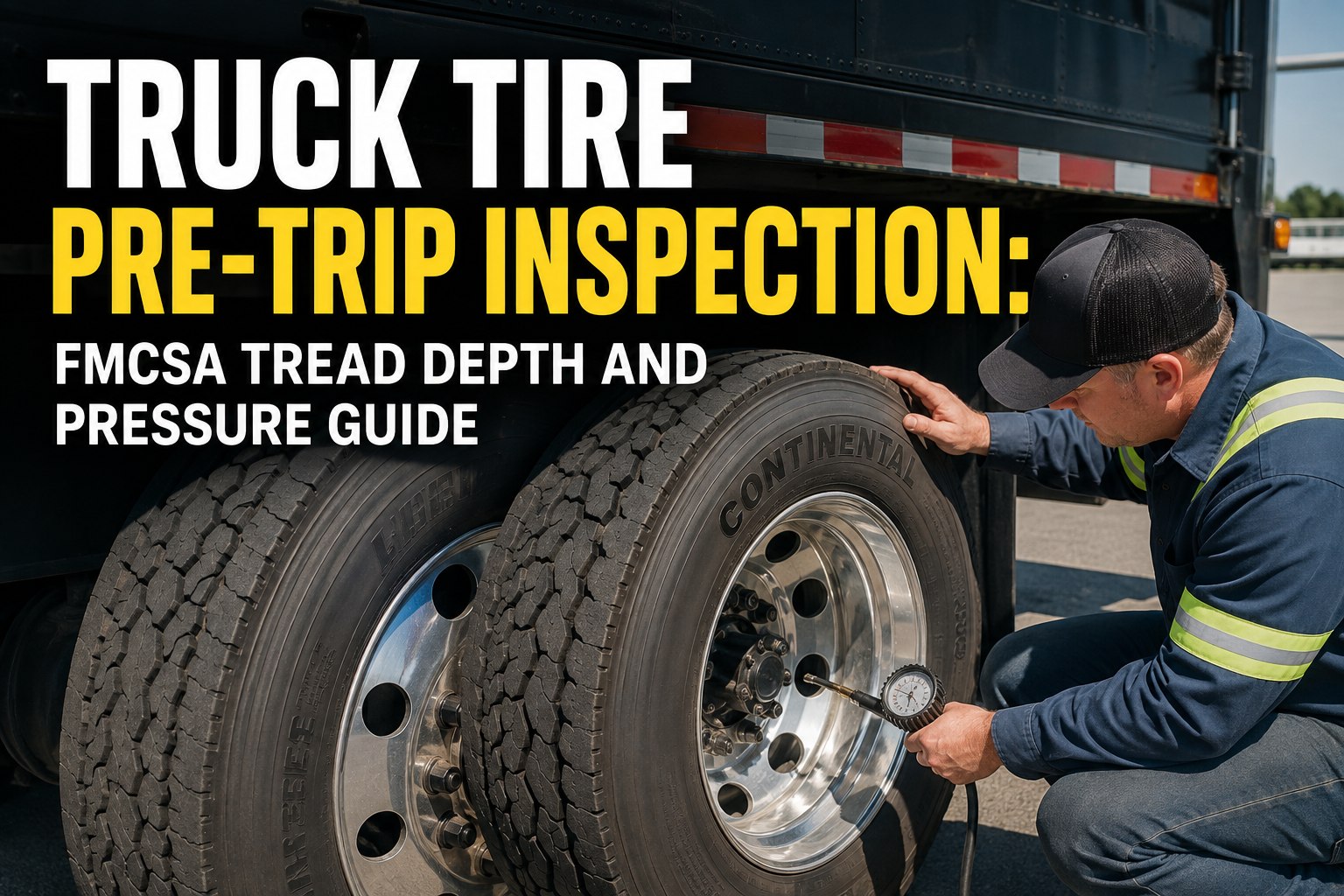
Tires & Wheels
- Tread depth measured, no cuts or bulges
- Correct pressure; duals not touching
- Lug nuts tight, no rust trails
Lights & Signals
- Headlights, brake & turn signals work
- Clearance & marker lights functional
- Backup alarm sounds
Steering & Suspension
- Steering play within limits
- Leaf springs, shocks & hangers sound
- U-bolts tight, no cracks in frame
Fluids & Engine
- Oil, coolant & power steering levels OK
- No leaks pooling under the truck
- Belts & hoses free of cracks
Cab & Emergency Gear
- Mirrors, horn & wipers functional
- Seatbelt latches; gauges read normal
- Triangles & fire extinguisher present
Part 2 — Dump-Specific Inspection
This is the layer that matters most and gets skipped most. Dump truck hydraulic failures are among the most dangerous in trucking because they combine extreme weight with an elevated bed — give the hoist cylinders, pins, and tailgate latch extra scrutiny. A failure here causes a load spill or the body dropping unexpectedly. Reach our team to build dump-specific templates for your whole fleet.
Hydraulic Hoist System
- No active leaks at cylinders, hoses, or fittings
- Hydraulic fluid level correct & not contaminated
- Lift cylinders raise & lower smoothly
- PTO engages and disengages cleanly
Dump Body & Structure
- No cracks or bends at corners & stress points
- Hinges, pins & bushings free of excess wear
- Side boards & bed integrity sound
- Sub-frame free of cracks
Tailgate & Latches
- Tailgate latch locks securely
- Operating mechanism functions properly
- Won't open accidentally in transit
- Tarping system intact (if equipped)
Safety Devices
- Body prop / safety rod present & usable
- "Body Up" indicator works
- Controls return to neutral when released
- Bed cleared of residual material
Print it, or run it as a digital DVIR
Truck Inspection & Maintenance turns this whole form into a mobile pre-trip — photo capture, electronic signature, auto out-of-service tagging, and instant defect routing. Digital DVIRs hit 96% audit pass rates versus 73% for paper. No hardware, no contracts. Sign up free and digitize today.
The Tag-Out List — Stop, Don't Drive
Some defects mean the truck does not move until a qualified mechanic signs off. Under federal rules, any defect that affects safe operation must be noted on the DVIR and repaired before return to service. Train every driver on these automatic tag-outs — most involve the dump system, where the consequences are worst.
Frequently Asked Questions
Is a dump truck pre-trip inspection legally required?
Yes. Under 49 CFR 392.7 and 396.13, the driver — not the fleet manager — must inspect the vehicle before each trip and document any defects on a Driver Vehicle Inspection Report. Motor carriers must repair safety defects before the truck returns to service, and the previous day's report must be kept on the vehicle. It's a driver responsibility, every trip. Start a free account to make compliance automatic.
Can I use a digital form instead of paper?
Yes — and you should. FMCSA's eDVIR Final Rule, effective March 23, 2026, explicitly permits electronic Driver Vehicle Inspection Reports for all commercial vehicles, including dump trucks. Digital DVIRs add timestamps, GPS location, photo evidence, and instant defect routing, and they hit roughly 96% audit pass rates versus 73% for paper. They're the new compliance standard, not just an option.
What dump-specific items do generic forms miss?
The high-risk ones: the hydraulic hoist and lift cylinders, dump body structural integrity (cracks at corners and stress points), hinges/pins/bushings, the tailgate latch, the body safety prop, the PTO, and the "Body Up" indicator. These combine heavy weight with an elevating bed, making them the most dangerous failures on the truck — and they're exactly what a standard CMV form omits. Talk to our team about dump-specific templates.
When must I take a dump truck out of service?
Immediately, for any safety-critical defect: an active hydraulic leak, inoperative "Body Up" indicator, missing or damaged safety prop, dump body cracks, brakes below 60 PSI or inoperative, a tailgate latch that won't lock, a dead horn or backup alarm, or excessive steering play. Document it with photos and notify maintenance — the truck doesn't move until a qualified mechanic repairs and signs off.
Why is hydraulic fluid such a big deal?
Because contaminated hydraulic fluid alone causes around 85% of pump failures — and a pump failure on a dump truck can mean the bed won't lift, or worse, drops unexpectedly. Checking the fluid level and condition takes about 30 seconds during the walk-around and prevents one of the most expensive and dangerous failures on the vehicle. It's the highest-return item in Part 2. Sign up free to track hydraulic checks per truck.
How long should the inspection take?
About five minutes for a trained driver following a structured form — a small investment against a hydraulic failure, a roadside out-of-service order, or an accident. A digital form actually speeds it up by guiding the driver point by point and eliminating the paperwork at the end, while creating a timestamped, photo-backed record automatically. Contact us to see how fast it goes.
Make every trip start with a passed inspection.
Truck Inspection & Maintenance turns this dump truck form into a digital DVIR — standard and dump-specific checks, photo capture, electronic signature, auto out-of-service tagging, and instant work orders. Free for up to 3 vehicles, no hardware, no contracts.