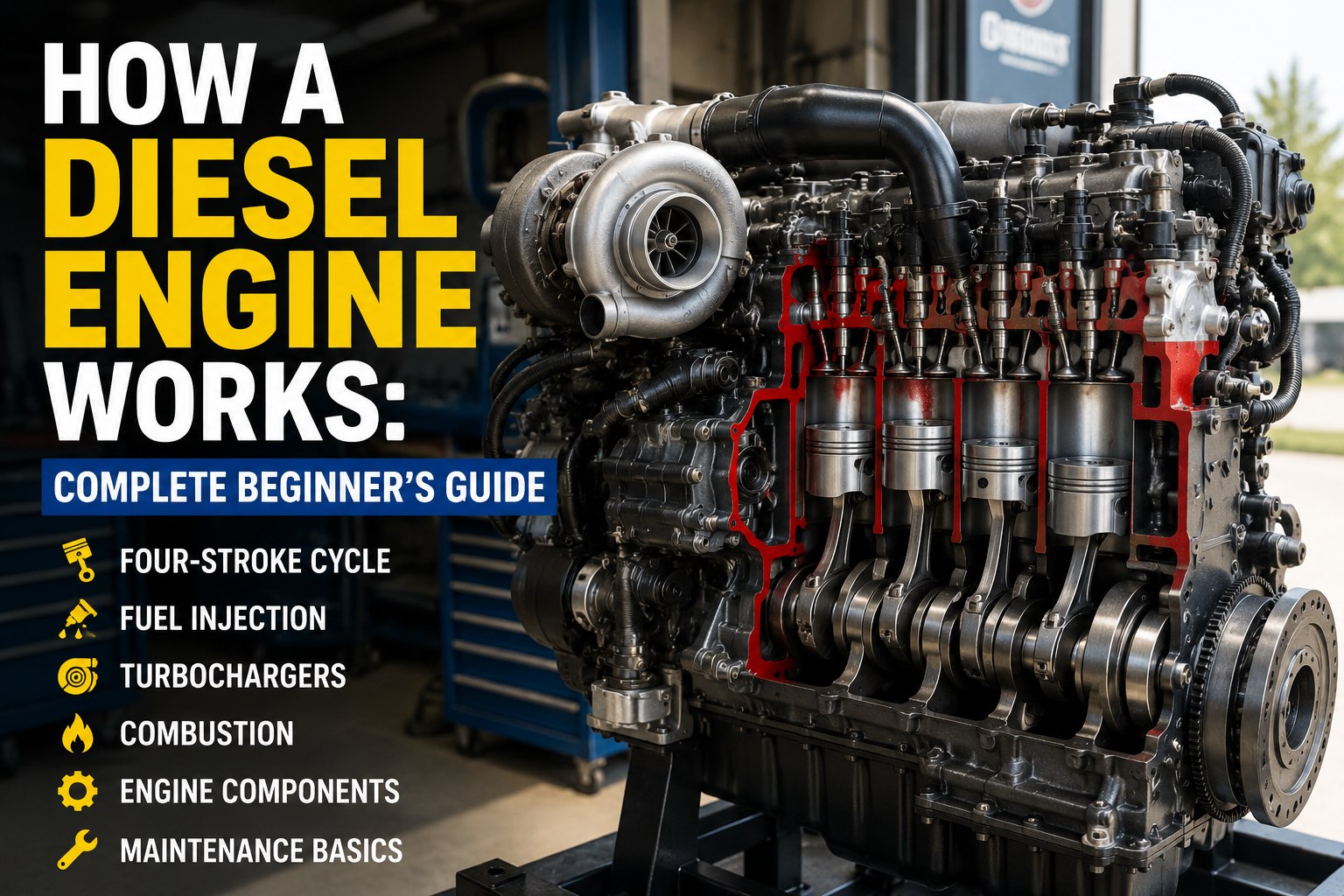
The genius of common rail injection is a single design decision: it separates making the pressure from using the pressure. On older diesel systems, injection pressure rose and fell with engine speed — the faster the engine spun, the harder it could inject. Common rail broke that link. A high-pressure pump charges a shared reservoir — the rail — and holds it at a commanded pressure regardless of what the engine is doing, so the ECU can fire each injector in precisely timed bursts with full authority over timing, duration, and pressure. That's why modern diesels are quieter, cleaner, and more powerful than their mechanical ancestors. But the same precision that makes the system brilliant also makes it fragile: it runs at pressures over 30,000 PSI with tolerances measured in microns, and a speck of water or grit that an old system would have shrugged off can destroy it. This guide covers how the system works, the components and how each fails, why contamination is the number-one killer, the notorious CP4 pump, and how diesel fleet maintenance software protects these expensive parts with cheap, on-time service.
Diesel Engine Guide · Common Rail Injection · 2026
How Common Rail Diesel Injection Works
The shared-rail idea that changed diesel engines, the components that make it work, and why a drop of water is its greatest enemy.
Shared rail
One pressurized reservoir feeds every injector
ECU-timed
Electronic control of every injection event
2,500 bar
Operating pressure — over 36,000 PSI
Water
The single most damaging contaminant
The Big Idea: Pressure and Injection, Separated
To appreciate what common rail does, it helps to know what came before. Older mechanical diesel injection tied everything together — and that was the limitation:
Pressure chained to engine speed
Injection pressure was generated in lockstep with engine RPM, so low speeds meant low pressure and coarser fuel atomization. Timing and pressure couldn't be tuned independently of how fast the engine was turning.
Pressure stored, injection commanded
A pump charges a shared rail and holds it at a target pressure independent of engine speed. The ECU then decides exactly when and how long each injector opens — full authority over timing, duration, and pressure at any RPM.
Why that unlocks everything else: with high pressure available on demand at any engine speed, the ECU can split one combustion event into several precisely timed bursts — a small pilot injection to soften the burn, a main injection for power, sometimes a post injection for emissions. That fine control is what makes modern diesels quieter, cleaner, and more efficient than the mechanical systems they replaced. The rail is the enabler: a reservoir of ready pressure the computer can draw on whenever it likes.
The Fuel's Journey Through the System
Follow a drop of diesel from the tank to the cylinder and the whole architecture makes sense. Each stage hands off to the next:
Lift pump & supply
A low-pressure lift pump draws diesel from the tank and delivers a steady supply toward the high-pressure pump. Its only job is consistent volume — the pressure here has no direct effect on what leaves the nozzle.
Filter & water separator
The fuel passes through a filter and water separator that strip out particulate and water before either can reach the precision components downstream. This cheap stage protects the most expensive parts on the engine.
High-pressure pump
A radial-piston pump, driven by the engine and metered by the ECU, compresses the fuel to rail pressure — supplying only the volume actually needed. The fuel itself lubricates the pump's internals.
The rail accumulator
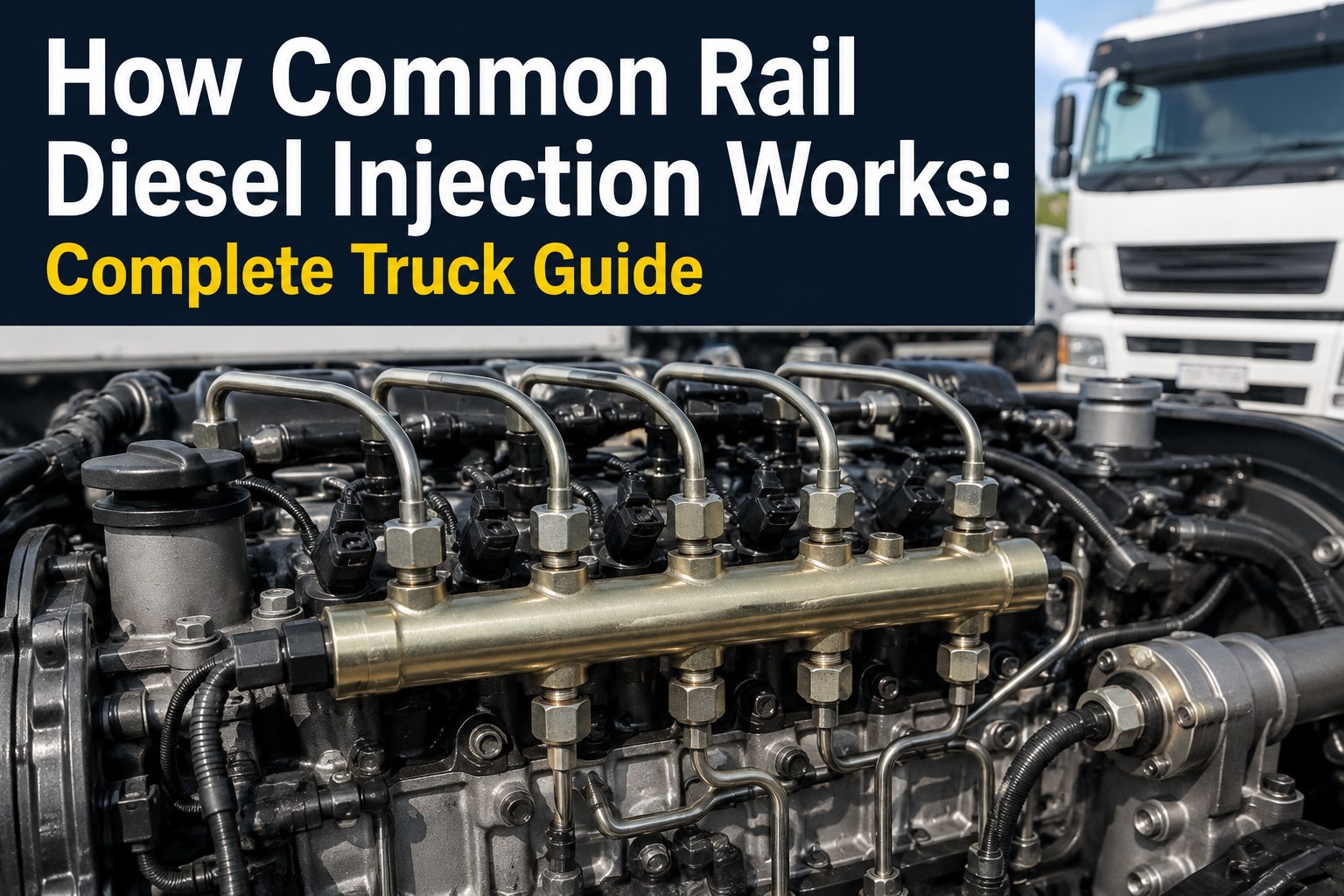
A forged-steel rail stores the pressurized fuel and dampens the pulses created by the pump and by each injection. It's the shared reservoir every injector draws from — one rail on an inline engine, two on a V.
Injectors fire
On the ECU's command, each injector opens for a precisely timed interval and sprays atomized fuel into its cylinder. Pressure sensors feed the ECU continuously so a closed-loop regulator holds the rail exactly on target.
The Core Components
Six parts do the work, and each has its own way of failing. Knowing the failure signature of each is the start of every diagnosis:
Lift / transfer pump
Supplies consistent low-pressure fuel to the HP pump. Fails as: hard starting, power loss, low rail pressure codes.
High-pressure pump
Compresses fuel to rail pressure with an ECU-metered supply. Fails as: pressure codes, whining, metal contamination in the system.
Rail accumulator
Stores pressurized fuel and dampens pressure pulses. Fails as: pressure instability, leaks at high-pressure fittings.
Injectors
Solenoid or piezoelectric, they meter atomized fuel into each cylinder. Fails as: misfires, rough idle, smoke, poor economy.
ECU & sensors
Process pressure feedback and command every injection event. Fails as: erratic behavior, fault codes, incorrect fueling.
Filter & water separator
Removes particulate and water before the HP pump. Fails as: the root cause behind most other failures when neglected.
Contamination is the number-one killer — and water is the worst of it
Ask a common rail specialist what destroys these systems and the answer is usually three words: fuel, fuel, fuel. The tolerances are measured to five decimal places, so a particle that would pass harmlessly through an older mechanical injection system can score the precision surfaces inside an HPCR pump or injector. Water is the single most damaging contaminant of all: it reduces the fuel's lubricity and causes metal-on-metal wear, it corrodes the injector valve seat, and it destroys the precision seal around the roughly one-millimeter check ball. Even small amounts cause premature failure. This is exactly why the fuel filter and water separator — two of the cheapest parts on the truck — are the most important ones you own.
Other Ways Injectors Fail
Water leads the list, but a handful of other mechanisms account for most of the rest:
Heat soak deposits
Fuel left in the injector after shutdown gets baked on by residual engine heat. Over time these deposits clog the nozzle and distort both the quantity and timing of injection.
Pump wear cascade
When pump internals wear or seize, metal debris circulates through the whole fuel system, contaminating the injectors and the rail — one failure becomes many.
Solenoid failure
A short circuit from a faulty ECU, damaged wiring, or water ingress can kill an injector solenoid, stopping it responding to commands correctly.
Poor installation
Incorrect torque or a missing or misseated sealing ring introduces leaks and uneven wear — a repair that creates the next failure.
Free · Up to 3 Vehicles
Protect a $6,000 injector set with a $40 filter
Diesel fleet maintenance software schedules fuel filter changes and water separator drains on the intervals that keep contamination out — and logs every hard start, power loss, and rough idle from the driver's phone the day it appears, the earliest and cheapest point on any common rail failure curve. Every filter change, drain finding, code, and repair lives against the truck's history. Sign up free for up to 3 vehicles and stop small contamination from becoming total fuel system failure.
The CP4 Pump Problem
No discussion of common rail reliability is complete without the high-pressure pump that made owners nervous. Understanding it matters because its failure mode is uniquely destructive:
Why the CP4 earned its reputation
The CP4 is a lightweight, fuel-lubricated radial-piston pump whose internals rely on the diesel itself for lubrication. When lubrication falls short and a component wears or seizes, it doesn't just fail — it sheds metal debris that circulates through and contaminates the entire fuel system. Best case, you replace the pump; worst case, the whole system. That cascading behavior is why it became so unpopular.
CP3 versus CP4
Both are radial-piston high-pressure pumps, but they differ in design robustness and failure behavior, with the earlier CP3 widely regarded as the more durable of the two. A failing pump of either type typically shows hard starting, low rail pressure codes, poor power, rough running, and extended crank times — symptoms worth confirming with a proper flow test rather than guesswork.
Symptoms and Diagnostics
The system announces trouble through drivability changes, and confirms it through a few specific tests rather than assumptions:
What you'll notice
Hard starting and extended crank times
Power loss and rough idle
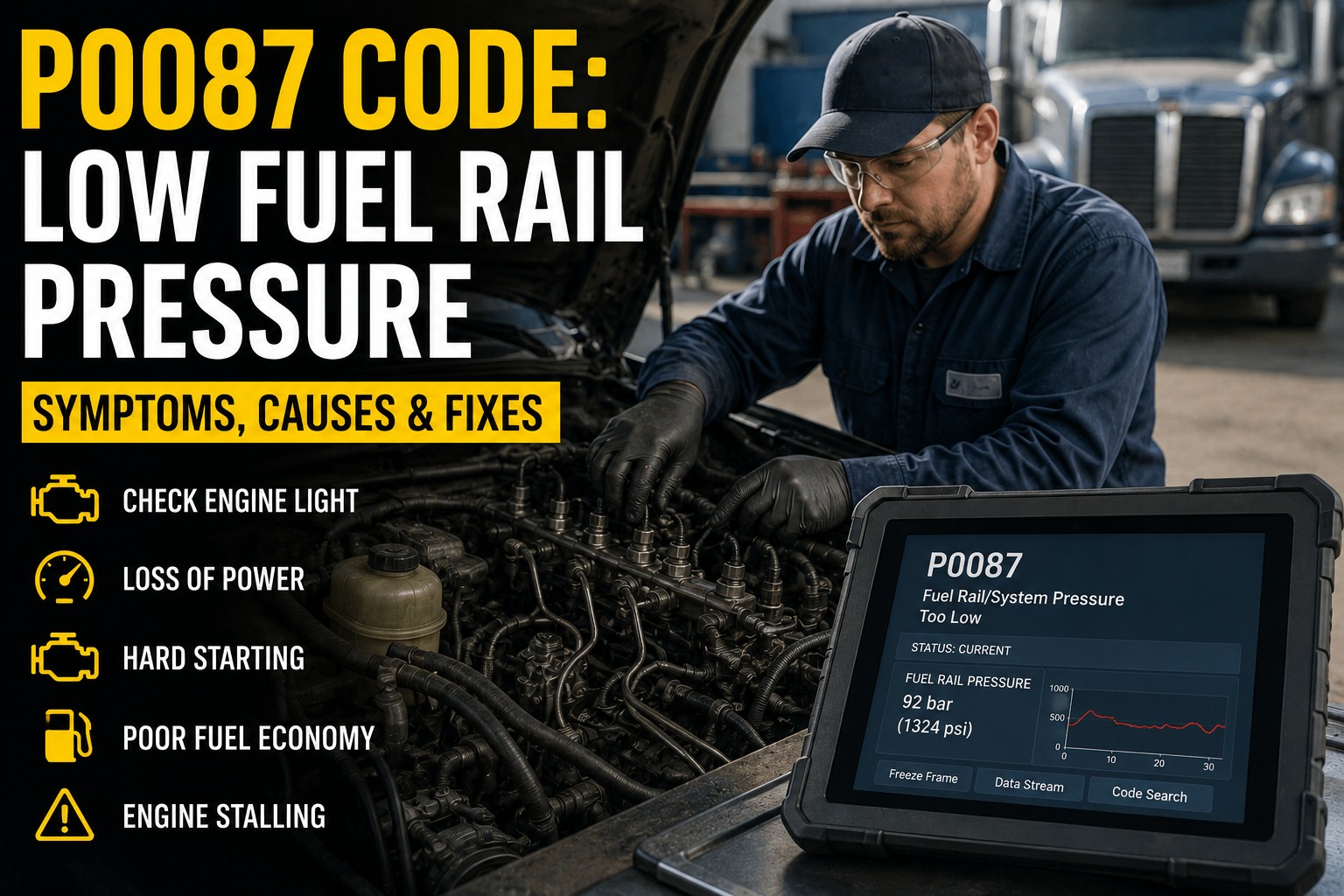
Low rail pressure fault codes
Smoke, misfires, and poor fuel economy
A whining noise from the high-pressure pump
How it's confirmed
Rail pressure testing against target values
Injector back-leak checks on the return line
Pump flow test over timed crank cycles
Fault code and electrical fault isolation
Confirming the cause before replacing costly parts
Diagnose before you buy: injectors are expensive — often several hundred dollars each and a full set for a six-cylinder engine running into the thousands — and ignored symptoms can cascade into engine damage many times that within weeks. A back-leak test that shows excessive return flow points to a worn high-pressure seal before you spend on a full set, and professional rebuilding of existing injectors is often a cost-effective alternative to replacement. The precision that makes these parts costly is exactly why guessing is the expensive path.
Protecting the System
Common rail maintenance is a story of cheap components defending expensive ones. These are the highest-return habits there are:
Change the fuel filter on schedule
The single most important cheap component on the truck. On-time filter changes keep the particulate that scores precision surfaces out of the pump and injectors.
Drain the water separator
Empty it on a routine, and act on any water finding immediately. Water is the worst contaminant there is, and the separator is your first and cheapest line of defense.
Control fuel quality
Source clean fuel, store and handle it correctly, and treat suspect fuel with caution. Strict fuel quality control is the highest-return investment for protecting these components.
Act on symptoms early
A hard start or a rough idle logged the day it appears is the cheapest point on the failure curve. Waiting turns a filter-and-drain job into a pump-and-injector one.
Frequently Asked Questions
How does a common rail system work?
A high-pressure pump compresses diesel and charges a shared reservoir — the rail — holding it at a commanded pressure independent of engine speed. The rail acts as a hydraulic accumulator that every injector draws from, and the ECU commands each electronically controlled injector to fire in rapid, precisely timed bursts. Pressure sensors feed the ECU continuously so a closed-loop regulator keeps the rail exactly on target, giving full electronic control over injection timing, duration, and pressure.
What makes common rail different from older diesel injection?
It decouples pressure generation from the injection event. Older mechanical systems tied injection pressure to engine speed, so pressure rose and fell with RPM. Common rail stores pressure in the rail and lets the ECU decide when and how long each injector opens, independent of engine speed. That allows multiple precisely timed injections per combustion cycle, which is why modern diesels are quieter, cleaner, and more efficient. Contact our team about protecting your fuel systems.
Why is water so damaging to a common rail system?
Because the tolerances are measured in microns. Water reduces the fuel's lubricity and causes metal-on-metal wear, corrodes the injector valve seat, and destroys the precision seal around the roughly one-millimeter check ball. Even small amounts cause premature injector failure. A particle or droplet that an older mechanical system would have shrugged off can score the precision surfaces inside a high-pressure pump or injector — which is why the water separator and fuel filter matter so much.
What are the symptoms of a failing injector or pump?
Hard starting and extended crank times, power loss, rough idle, low rail pressure fault codes, smoke, misfires, poor fuel economy, and sometimes a whining noise from the high-pressure pump. Because these symptoms overlap, they're confirmed with specific tests — rail pressure testing, injector back-leak checks on the return line, a pump flow test over timed crank cycles, and fault code analysis — rather than replacing parts on a guess.
What's the concern with the CP4 pump?
The CP4 is a fuel-lubricated high-pressure pump that became known for a particularly destructive failure mode: when an internal component wears or seizes, it sheds metal debris that circulates through and contaminates the entire fuel system, often turning a pump failure into a whole-system failure. The earlier CP3 is generally regarded as more robust. Either way, keeping clean, water-free fuel flowing is the best protection, since lubrication failure is central to the problem.
How do I protect a common rail system?
Cheap parts defending expensive ones. Change the fuel filter on schedule, drain the water separator routinely and act on any water finding, and control fuel quality through clean sourcing and proper storage. Catch symptoms like hard starts and rough idle early, when the fix is still a filter and a drain rather than a pump and a set of injectors. These are the highest-return maintenance investments on a common rail engine. Sign up free to keep fuel system service on schedule.
Cheap Parts, Expensive Protection
Keep contamination out and the rail on target.
Diesel fleet maintenance software schedules the filter changes and water separator drains that defend a common rail system, captures early symptoms from the driver's phone, and keeps every service and repair against the truck's history. The difference between a $40 filter and a $6,000 injector set is a maintenance interval that actually gets done. Free for up to 3 vehicles. Works with your existing fleet, no contracts.