Most fleets don't have a maintenance program — they have a habit of reacting. A truck breaks down, someone fixes it, and the cycle repeats until the next surprise on the side of the highway. A real fleet maintenance program flips that script: it's a structured system that catches problems before they become breakdowns, keeps you audit-ready, and turns maintenance from an unpredictable cost center into a planned, measurable operation. The payoff is concrete — unplanned repairs cost three to nine times more than planned work, and brake, tire, engine, and battery failures (the most common breakdown causes) are almost entirely preventable. This guide walks you through building a program from scratch in seven steps, the maintenance types you'll blend, the KPIs that prove it's working, and the mistakes that quietly sink most programs. Truck Inspection & Maintenance gives you the execution layer for every step. Talk to our team to map a program to your fleet.
How to Build a Fleet Maintenance Program
From reactive chaos to a planned, measurable system — in seven steps.
Program vs Plan vs Schedule — Get the Layers Right
Before you build, understand the three layers people constantly mix up. A program is the whole structured system — policy, people, process, and technology. A plan is the strategy inside it: what tasks get done, on which assets, how often. A schedule is the execution layer — the actual calendar of when each service happens and who's responsible. Build them in that order, top down, and every piece has a home.
Program
Policy, roles, process & tech that govern all maintenance activity.
Plan
What tasks, on which assets, at what intervals.
Schedule
The dated calendar — when, where, and who.
The 7 Steps to Build Your Program
Every effective program follows the same backbone. Work through these seven steps in order — each one builds on the last, and skipping any of them is where programs develop the cracks that show up as roadside failures and failed audits. Start a free account and you can build each step directly in the platform as you go.
Set up your data foundation
Before anything else, establish how you'll collect, store, and analyze fleet data — vehicle history, service records, vendors, parts. Clean data flow is what makes every later decision fast and accurate.
Write a maintenance policy
Document the purpose — prevent failures, extend asset life, meet safety standards — and assign clear roles. Drivers do daily checks, technicians do scheduled service, managers approve work orders and track results.
Build PM intervals from OEM + usage
Map service intervals for each asset using OEM guidance blended with real usage patterns. Don't forget upfitted equipment — lifts and PTOs often aren't covered by base OEM schedules.
Create inspection checklists
Your checklist is the program's most vital resource. Itemize every task per vehicle type — engine oil, transmission fluid, cooling, fuel, brakes, tires. Drivers are your first line of defense, so make daily checks simple.
Stand up work order management
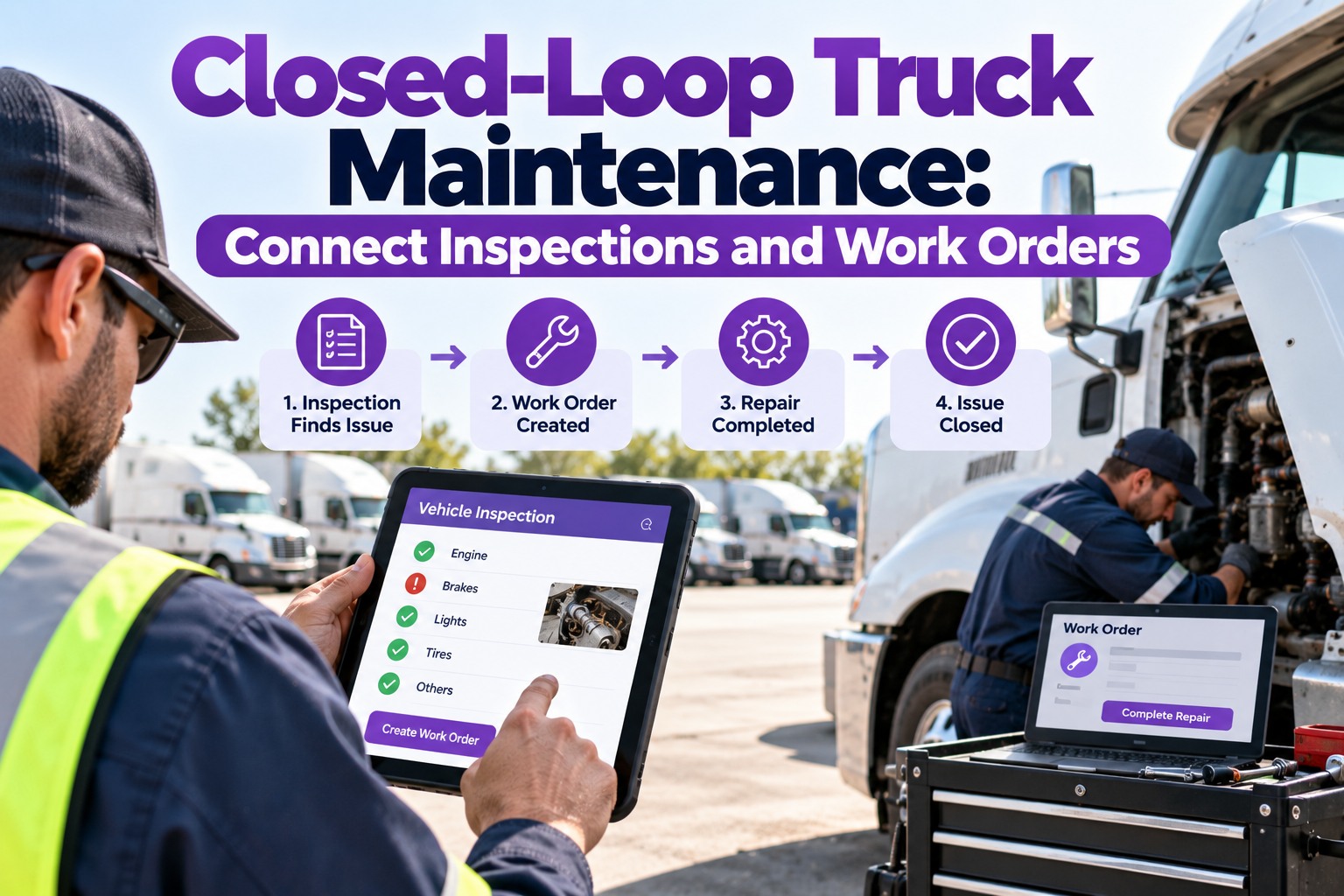
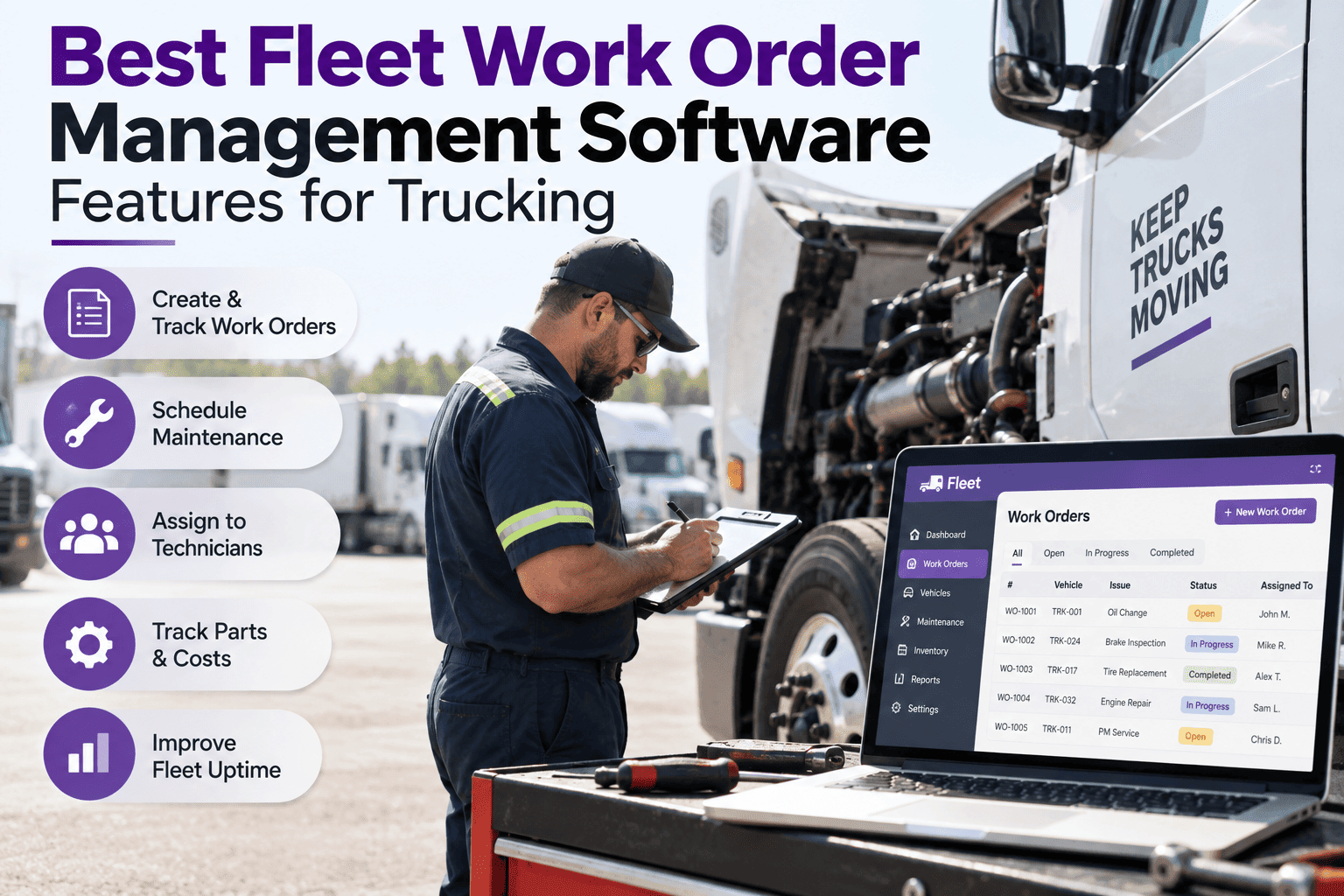
Connect inspections to action: a defect should auto-route into a work order, get assigned, and link to the parts and labor it consumed. Tying work orders to approvals also keeps spend controlled.
Stock parts & schedule smartly
Keep critical spares on hand and stagger service dates for similar assets so you never lose multiple units at once. Service vehicles during downtime to minimize operational disruption.
Measure, review & improve
Set measurable goals, review service data regularly, and gather driver and technician feedback. A program should never stand still — recurring issues signal where schedules need adjusting.
The Maintenance Spectrum — Blend All Three
A mature program isn't just preventive; it strategically blends three approaches. The goal is to push as much work as possible from reactive toward predictive, where you fix components on your schedule instead of the breakdown's. Here's how they differ and where each belongs.
Reactive
Unavoidable for true surprises, but the most expensive mode — 3–9x the cost of planned work. The goal is to shrink it.
Preventive
Routine service at set mileage, hours, or calendar intervals. The backbone of every program — catches the predictable failures early.
Predictive
Telematics and real-time data forecast when a part will fail and trigger service first. The next level — fewer emergencies, longer asset life.
Build your whole program in one place
Truck Inspection & Maintenance turns these seven steps into a working system — digital inspections, auto-routed work orders, PM scheduling, parts tracking, and audit-ready records. No hardware, no contracts. Sign up free and stand up your program in an afternoon.
The KPIs That Prove It's Working
A program you can't measure is just a hope. These are the metrics that tell you whether your maintenance dollars are working — track them from day one and review them monthly. The most successful fleets tie the policy directly to these numbers so every decision has a target. Reach our team to set up dashboards around the KPIs that matter to your operation.
5 Mistakes That Sink Programs
Most maintenance programs don't fail loudly — they erode. Watch for these five common traps that quietly turn a good program back into reactive firefighting.
Frequently Asked Questions
What's the difference between a maintenance program and a schedule?
A program is the entire system — policy, roles, process, and technology. A plan is the strategy within it (what tasks, which assets, how often). A schedule is the execution layer: the dated calendar of when each service happens and who does it. You build them top-down, program first, so every task traces back to a clear purpose. Start a free account to build all three layers in one place.
How do I set preventive maintenance intervals?
Start with OEM-recommended intervals, then adjust for how the vehicle is actually used — a truck running heavy urban routes needs more frequent service than the manual assumes. Blend mileage, engine hours, and calendar triggers, and remember that upfitted equipment like lifts and PTOs often isn't covered by base OEM schedules and needs its own intervals.
Do I really need software, or can I start with spreadsheets?
You can start anywhere, but spreadsheets create invisible gaps that surface at the worst time — a roadside inspection or a breakdown. Software automates PM reminders, routes defects into work orders, tracks parts, and keeps audit-ready records, removing the human error that sinks manual systems. For more than a handful of vehicles, it pays for itself fast. Talk to our team about making the switch.
Who should be responsible for what?
Clear roles are the heart of a good policy. Drivers handle daily pre/post-trip checks and report issues immediately. Technicians complete scheduled service and repairs. Fleet managers monitor progress, approve work orders, and track performance against goals. Uniform, documented responsibilities keep results consistent across every site and shift.
How long until a new program shows results?
Faster than most expect. Because the most common breakdowns — brakes, tires, engine, battery — are highly preventable, even a basic PM program starts cutting roadside events within the first few months. The first prevented breakdown alone often covers months of software cost, since reactive repairs run 3–9x planned ones. Sign up free to start measuring from day one.
How do I keep the program from going stale?
Build review into the rhythm. Look at service data monthly for recurring issues, and treat driver and technician feedback as essential — their real-world experience reshapes checklists and schedules. As telematics data accumulates, shift toward predictive maintenance to forecast failures before they happen. A program that evolves with your fleet stays effective; one that's frozen drifts back to reactive.
Your maintenance program, built and running this week.
Truck Inspection & Maintenance gives you every layer — policy, plan, and schedule — with digital inspections, auto-routed work orders, PM triggers, parts tracking, and audit-ready records in one platform. Free for up to 3 vehicles, no hardware, no contracts.