Every Class 8 tractor runs the same three-tier PM rhythm: a light, frequent A-service, a deeper B-service at roughly triple the interval, and a comprehensive C-service that folds in the annual DOT prep. The trick is knowing exactly which tasks belong to which tier — and that a C-service isn't a separate visit but a superset that includes every A and B item in one shop stop. This is the field-ready task list for all three, with mileage triggers, labor hours, and the parts each tier consumes. Truck auto-schedules every tier on whichever trigger hits first and routes any defect straight to a work order — start a free trial or contact our team.
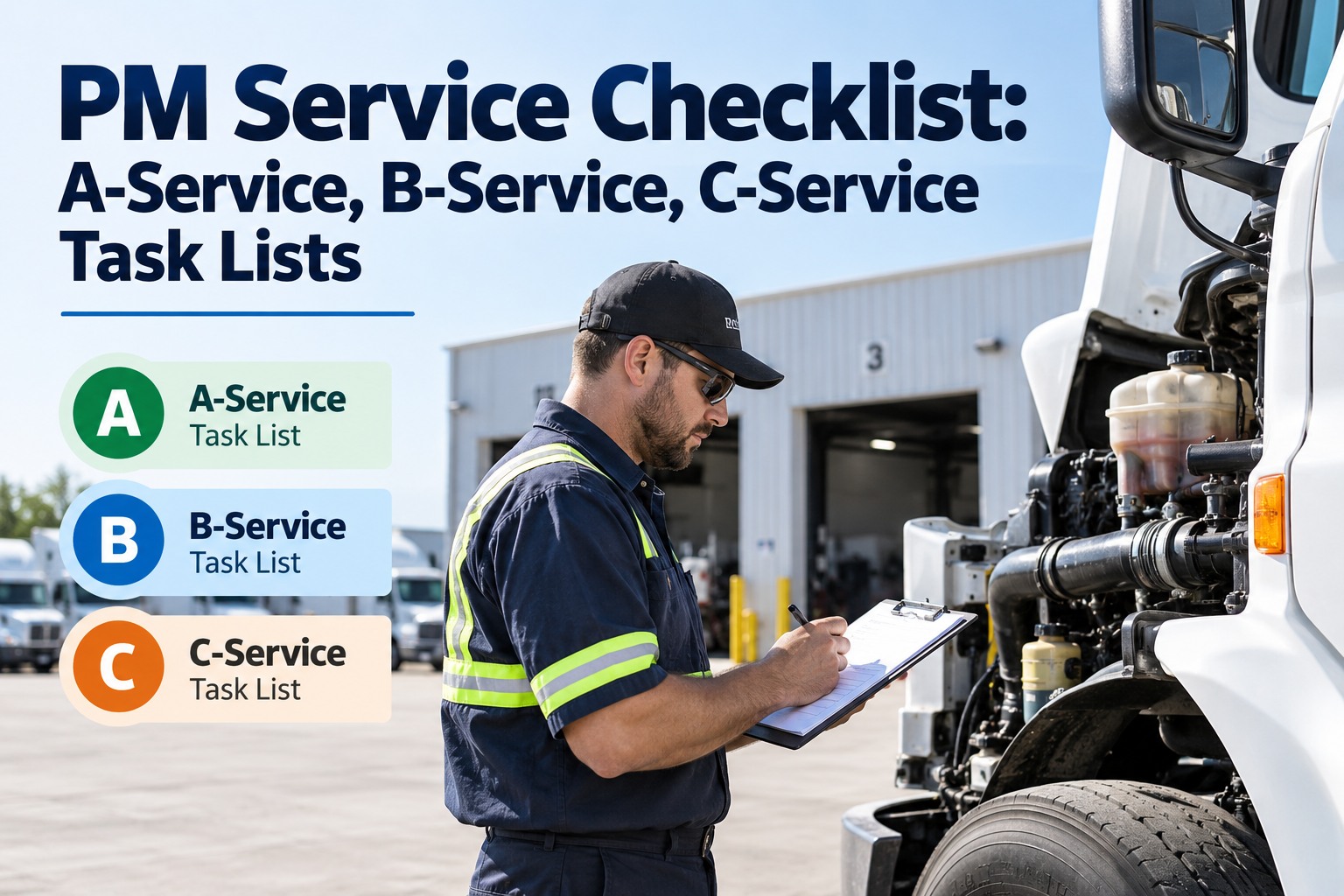
PM Service Checklist: A-Service, B-Service & C-Service Task Lists
Three tiers, one nested rhythm. Each level builds on the last — and a C-service sweeps up every A and B task in a single shop visit.
A-Service — The Light, Frequent PM
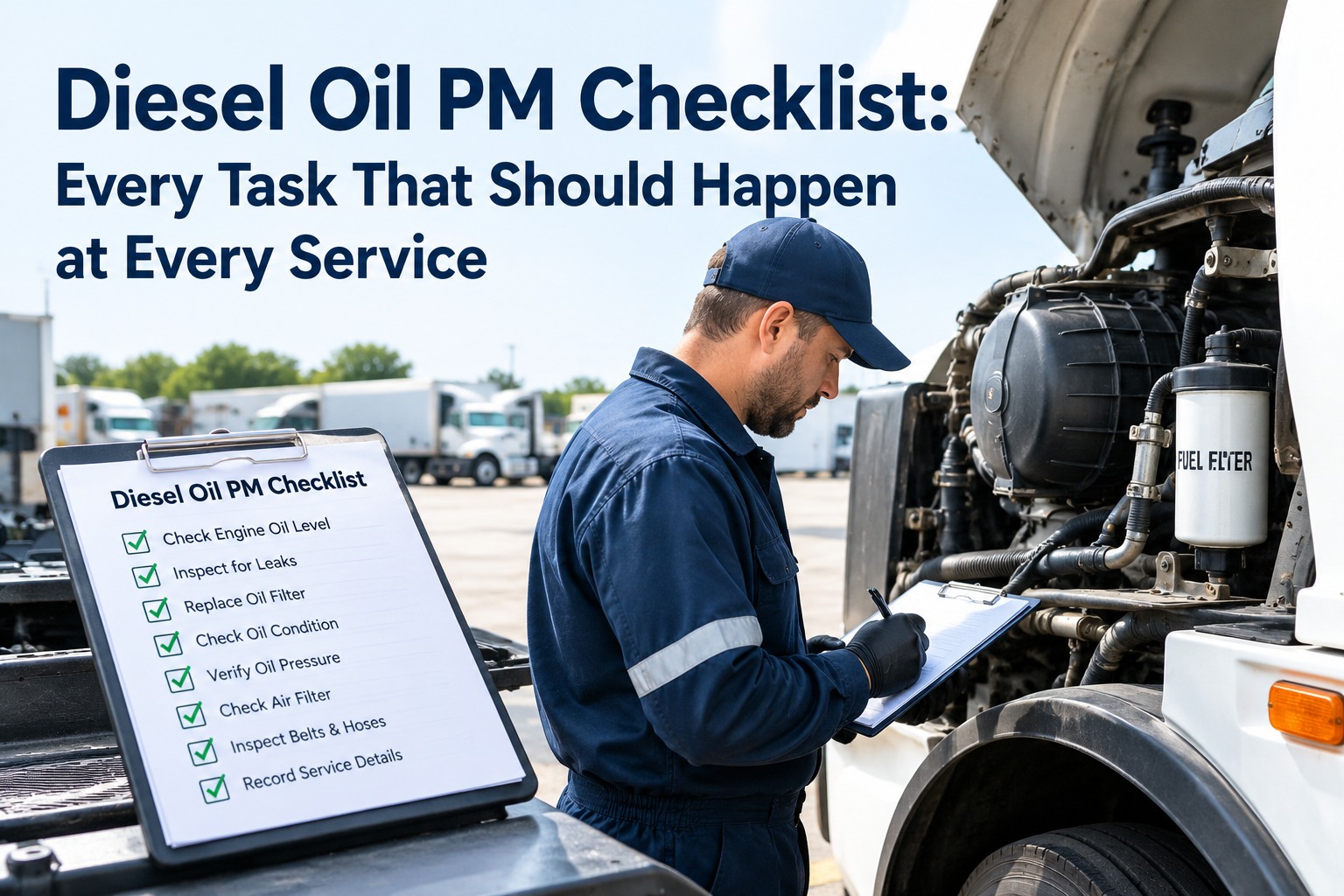
The workhorse interval. Run every 15,000–25,000 miles (or ~250 engine hours, whichever comes first) — the foundation every other tier builds on.
B-Service — Everything in A, Plus the Wear Items
Run every 45,000–75,000 miles — roughly every third A-service. It includes all A tasks, then adds the wear-component work.
C-Service — The Comprehensive Tier & DOT Prep
Run every 100,000–150,000 miles. This is the deep service — it sweeps in every A and B task and adds the major-system work plus annual DOT preparation.
The Nesting Rule — When a C Is Due, It Absorbs the A and the B
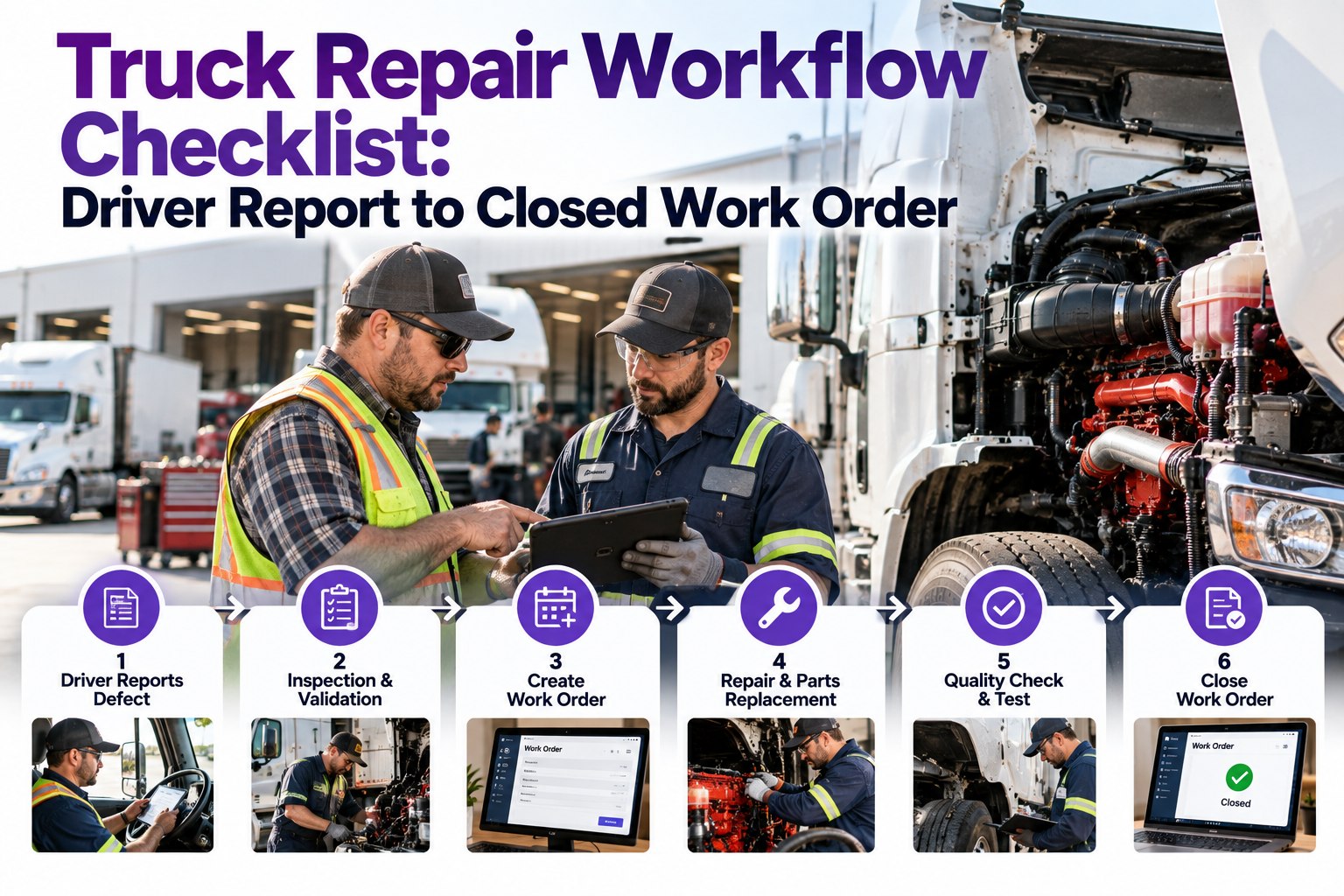
The three tiers aren't separate appointments — they're nested. Every B includes the full A checklist; every C includes the full B (and therefore the A). So when a truck hits its C-service mileage, the shop performs all three levels in one visit: the C-specific work plus every A and B task, on a single work order. That's the whole point of the tiered design — it maximizes shop efficiency and minimizes how many times a truck has to leave the road. A schedule that fires them separately doubles the downtime for no benefit. Start a free trial and let the system nest and generate the combined work order automatically.
Interval Quick-Reference
The full three-tier pattern for a typical long-haul Class 8 tractor, side by side:
Intervals are typical long-haul baselines. Tighten 15–20% for severe or idle-heavy duty cycles, and always validate against your own maintenance history and OEM spec.
Load these task lists once, and every truck fires the right tier automatically — with A, B, and C nested into one work order when they land together.
Truck gives dispatch, drivers, and the shop one system for inspections, PM, and repair tracking — auto-scheduling A/B/C on whichever trigger hits first, routing defects to work orders, and keeping every record DOT-ready. Start a free trial or talk to our team.
Frequently Asked Questions
What's the difference between A, B, and C service?
They're nested tiers by depth and interval. A-service is light and frequent (oil, filters, DVIR, lights, fluids) every 15K–25K miles. B adds brakes, tire rotation, chassis lube, and filter changes every 45K–75K. C adds coolant, transmission, fifth wheel, air dryer, and DOT prep every 100K–150K — and includes all A and B tasks.
Does a C-service replace the A and B?
It absorbs them. When a truck reaches its C-service mileage, the shop performs the C-specific work plus every A and B task in one visit on a single work order — you don't run them separately. This nesting is what makes the tiered system efficient.
Should PM trigger on mileage or engine hours?
On whichever comes first — mileage, engine hours, or a calendar backstop (typically 6 months). Idle-heavy duty cycles accumulate engine wear the odometer never sees, and rubber and fluids degrade with time even on parked trucks, so the first-to-occur rule catches every dimension of wear.
Where does the annual DOT inspection fit?
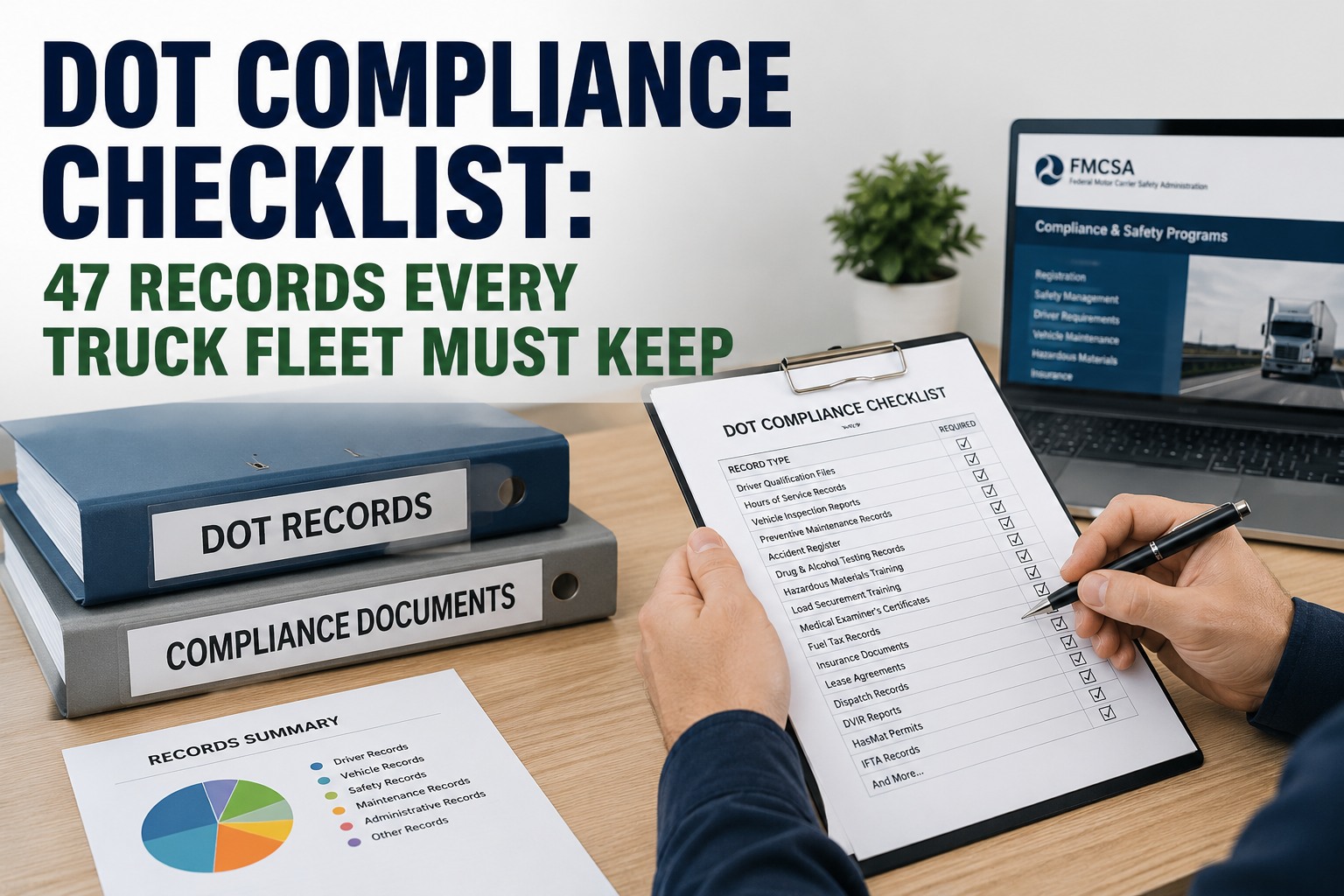
It rides with the C-service prep but has its own hard deadline: under 49 CFR §396.17 the annual inspection must happen no later than the previous year's anniversary date — one calendar year, no grace period. Records are retained 14 months and the sticker goes on the vehicle.
How many PM events does a Class 8 tractor generate a year?
A truck running ~120,000 miles a year generates roughly 22 PM events across all tiers. Miss or mistime a few and the resulting failures average thousands more than the planned service — which is why automated triggers that lift compliance from ~62% to 94%+ pay for themselves fast.
How does Truck handle A/B/C scheduling?
It stores the task list for each tier, auto-schedules them per truck on whichever trigger hits first, nests A and B into the C work order when they land together, routes DVIR defects to work orders, and keeps DOT-ready records — so no PM or inspection ever slips. Start a free trial or contact us.
Three tiers, one nested rhythm — loaded once and fired automatically, so the right tasks hit the right truck at the right mile.
A-service through C-service with mileage triggers, labor hours, and parts per tier — auto-scheduled, nested into combined work orders, with defects routed and DOT records kept audit-ready in one platform.