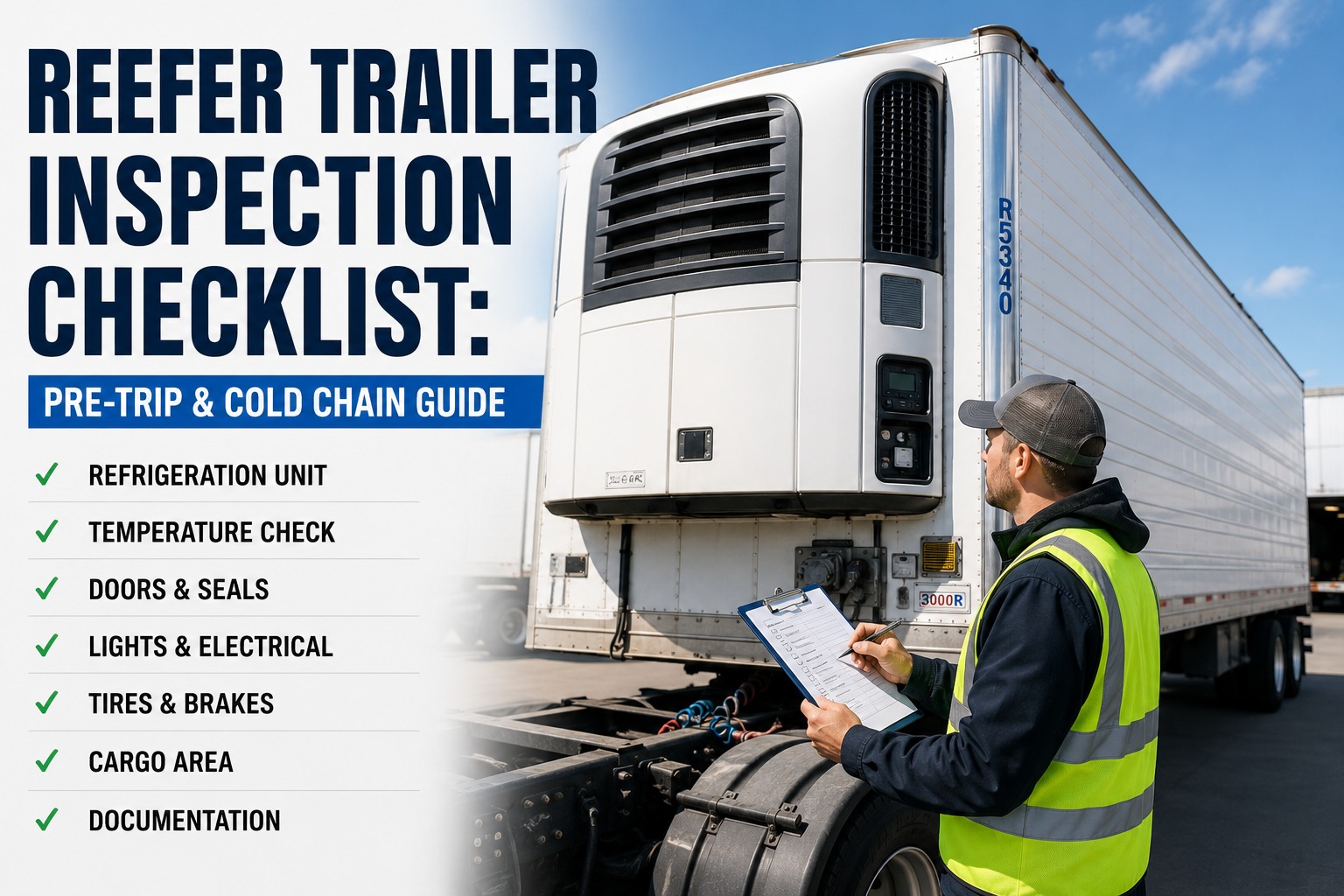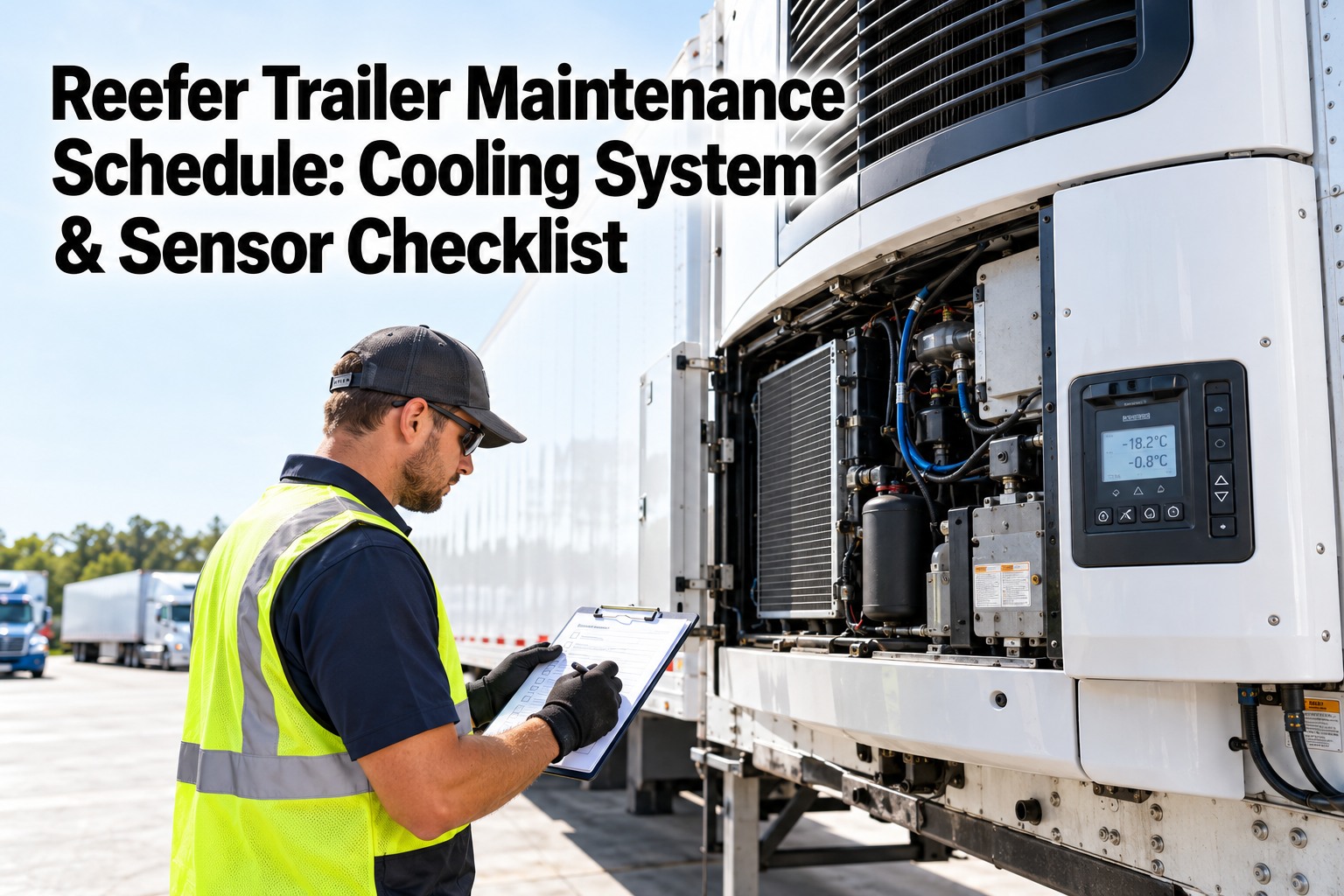
A reefer doesn't owe you a warning before it fails — it just stops holding temperature, and by the time the driver notices, a 53-foot load of frozen product may already be a $85,000 write-off. The refrigeration unit is a diesel engine, a compressor, and a sensor package all working together, and each wears on its own clock. A reefer maintenance schedule isn't paperwork; it's the difference between replacing a belt on a Tuesday and losing a load on the highway. Here's how to build one around run-hours, not guesswork. Start free and run every reefer on an hour-based PM schedule.
Reefer Trailer Maintenance Schedule: Cooling System & Sensor Checklist
Reefers wear by run-hours, not calendar days, so the schedule has to follow the hour meter. Truck Inspection & Maintenance Management Software tracks each unit's run-hours, fires the next PM before it's due, and logs every coil-clean, calibration, and alarm test against the trailer — so a drifting sensor or a glazed belt becomes a work order, not a cargo claim.
Schedule by Run-Hours, Not the Calendar
A reefer that runs 18 hours a day ages three times faster than one that runs six — so a date-based schedule either over-services the light unit or lets the hard-worked one fail. The fix is to tie PM to the hour meter. Two units, same age, can sit a full service apart on the clock.
The Reefer PM Calendar — Interval by Interval
Layer the schedule so quick checks happen often and deep service happens on the hour meter. Each tier catches what the one below it can't — the pre-trip finds the obvious, the hour-based PM finds the wear.
- Pre-cool the box and confirm the unit pulls down to setpoint before loading
- Check fuel level, oil and coolant sight glasses, and for visible leaks under the unit
- Listen and look during a running cycle — abnormal noise, vibration, or smoke
- Scan the controller for active fault codes and confirm setpoint matches the load
- Inspect condenser and evaporator coils for debris; clear airflow paths
- Check belts for cracks, glazing, and fraying; look for ice build-up on the evaporator
- Paper-test rear door seals and check the nose-mount seal and air chute
- Confirm the data logger is recording and the display reads cleanly
- Reefer engine service — oil, filters, fuel filter, coolant freeze protection at winter PM
- Clean condenser coil, straighten fins; check compressor sight glass and amp draw
- Test defrost heaters, every fan motor, and verify suction/discharge pressures to the PT chart
- Calibrate the controller and probes; download the logger; retrieve all fault codes
- Full refrigerant system check — charge, leaks, and Section 608-certified work only
- Insulation and floor-drain inspection; structural seal and door-hardware service
- Full sensor recalibration against a reference and alarm end-to-end test
- Archive temperature and calibration records for the retention window
Cooling System — The Pass/Fail Numbers That Matter
"Check the condenser" means nothing without a threshold. These are the measured limits a reefer PM is really testing against — the line between a unit that holds temperature and one that's quietly losing capacity.
The Sensor & Alarm Side — Where Compliance Lives
The cooling system keeps the load cold; the sensors prove it. A reefer can be running perfectly and still fail an audit if the probe reading the box has drifted — so the schedule treats calibration as seriously as the compressor.
Check the controller against a reference thermometer every PM. In spec at ±1°F; recalibrate at 2–3°F drift; over 2°F is out of service and over 3°F is non-compliant.
Return-air and discharge-air probes are tested and recorded independently — a healthy average can hide one bad probe reading the box wrong.
Trigger the high-temp alarm at 3°F above setpoint and confirm it fires the remote notification — an alarm nobody receives isn't protection.
Pull the data logger each PM and compare it to controller history; retrieve all fault codes, including passive ones that don't show on the display.
Software Built to Run the Schedule for You
Helping with exactly this is the job. Truck Inspection & Maintenance Management Software reads each reefer's run-hours and fires the 250 or 500-hour PM before it comes due — not a calendar reminder that ignores how hard the unit worked. Every coil-clean, amp-draw reading, calibration, and alarm test logs against the specific trailer, with the pass/fail limits attached, and a failed check opens a dated work order. The temperature and calibration records build themselves into a retrievable trail, so an FDA request is a filter, not a scramble.
What a Missed Interval Actually Costs
Every skipped PM has a price, and it's rarely the part. Here's what the small neglected things turn into on a reefer.
Frequently Asked Questions
Run Every Reefer on the Hour Meter, Not a Guess
Truck Inspection & Maintenance Management Software tracks each reefer's run-hours, fires the 250 and 500-hour PM before it's due, and logs every cooling and sensor check against the trailer with its own pass/fail limit. Fleets run it to keep loads cold, records audit-ready, and a $85K failure off the schedule.