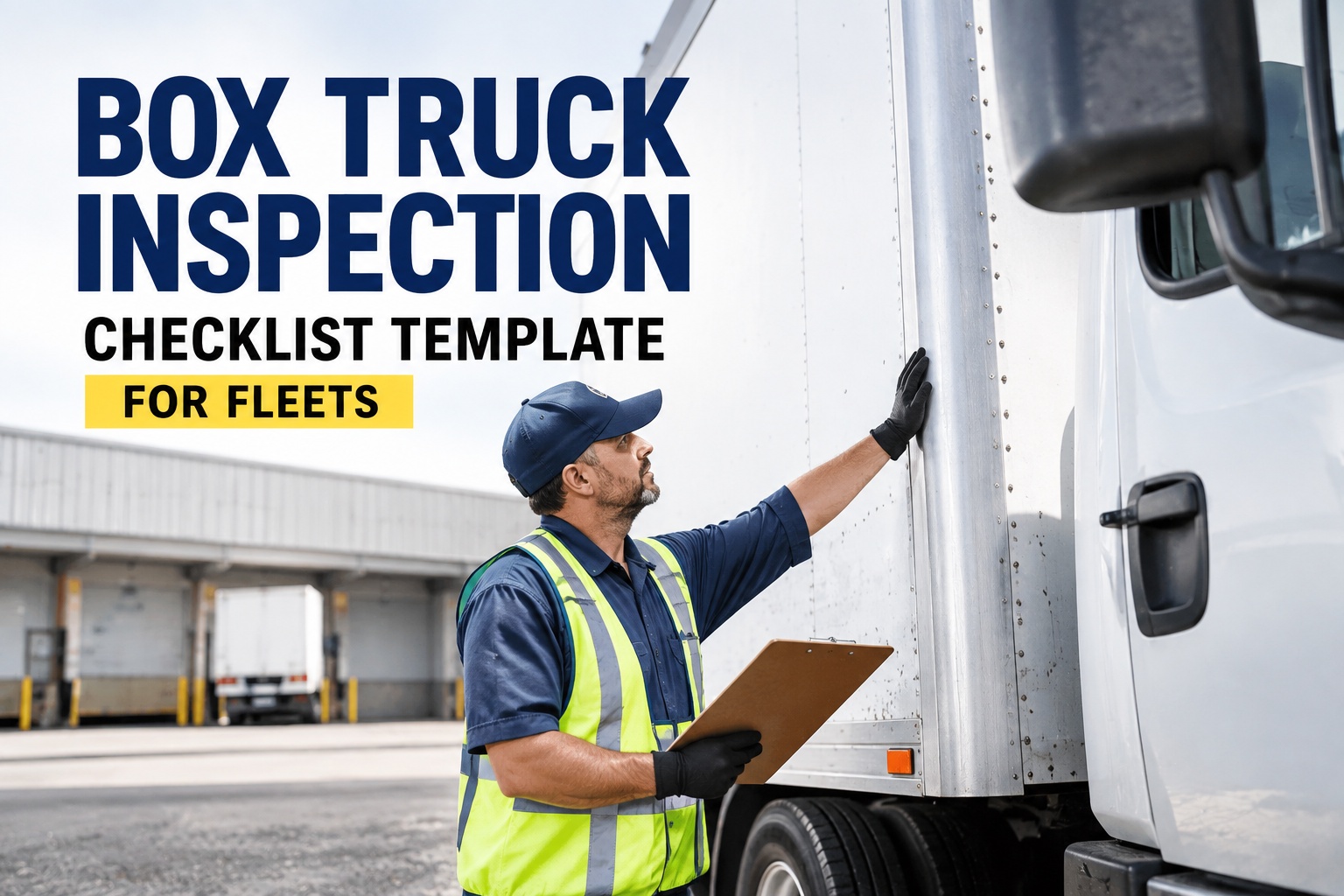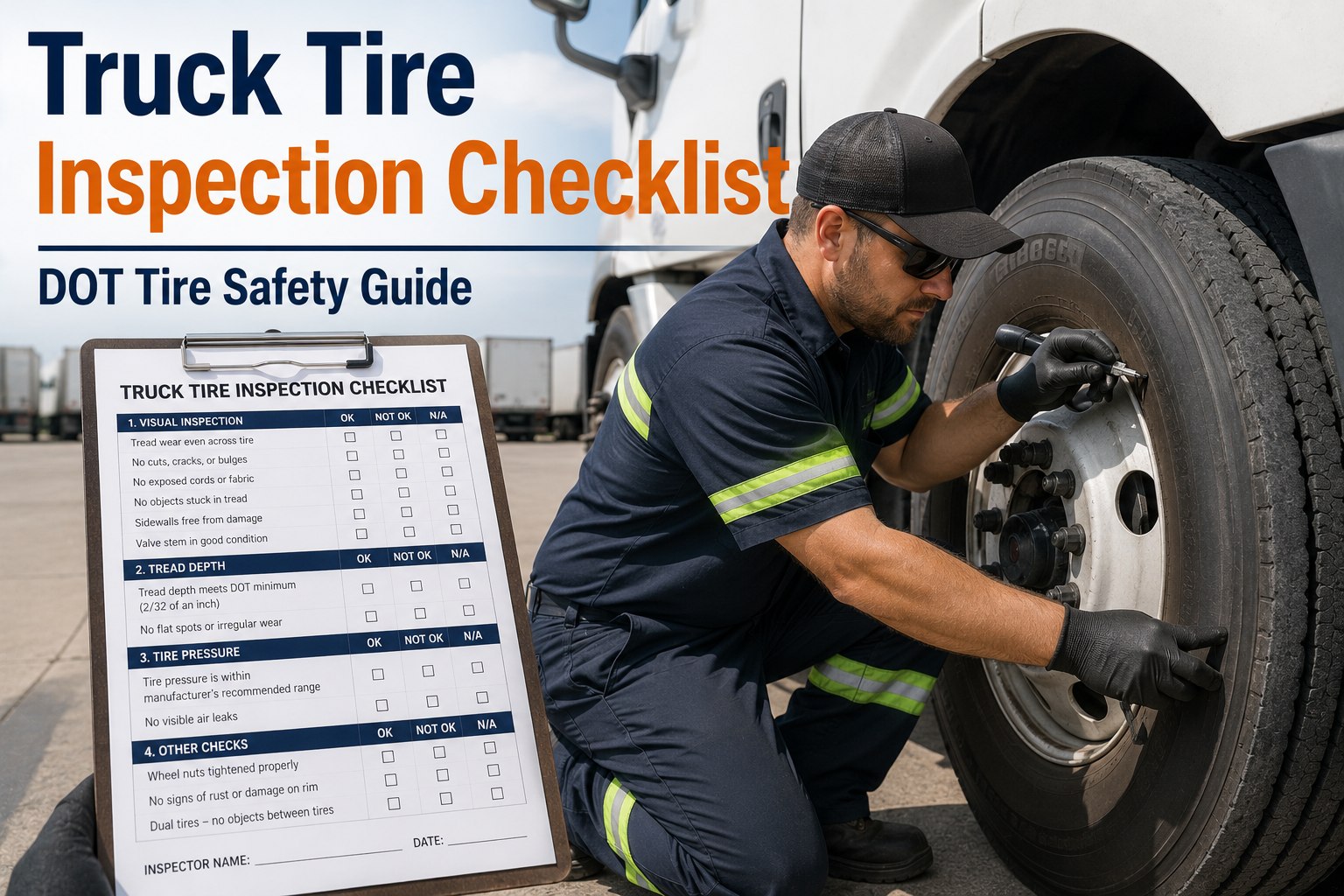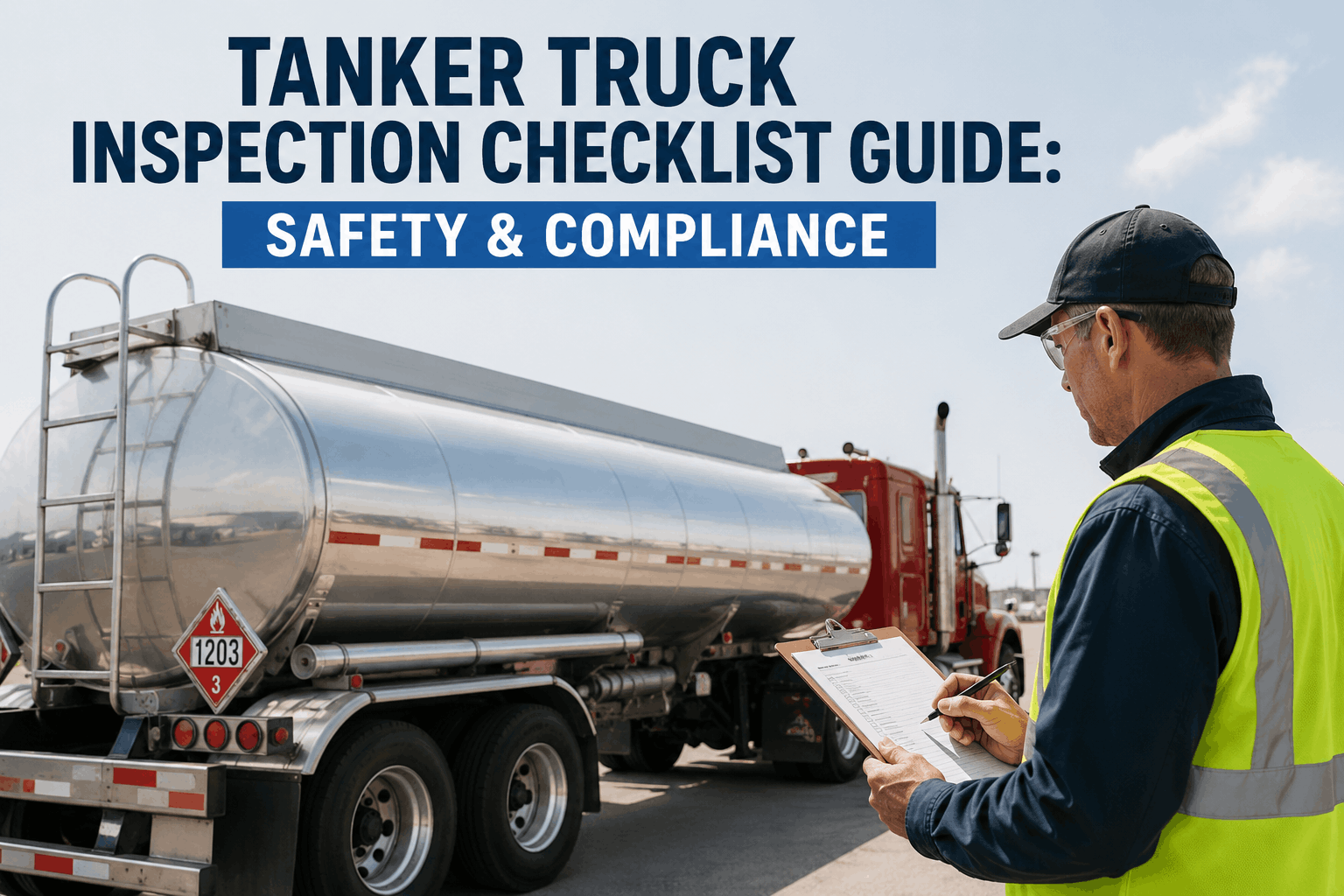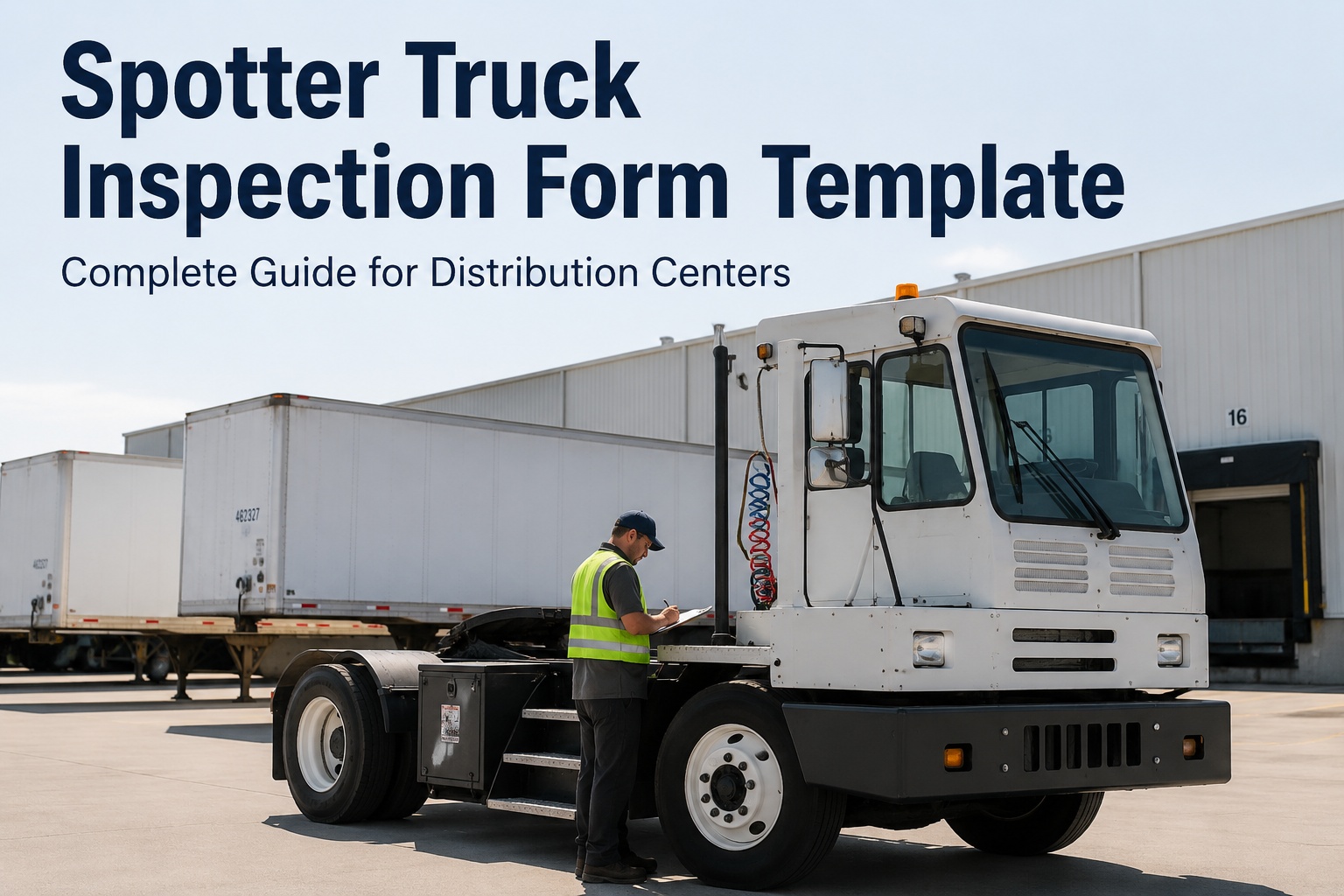
Spotter trucks — known equally as yard tractors, terminal tractors, yard goats, shunt trucks, or mules — do the heaviest single-day duty cycle of any vehicle in a distribution center. A single Capacity, Kalmar Ottawa, Autocar, or TICO spotter moves three trailers in the time a regular tractor moves one, hooks and unhooks 80-120 times per shift, and racks up the air system, hydraulic fifth wheel, drum brakes, and tires far harder than mileage alone suggests. Yet most fleets inspect them with a generic OTR DOT form that misses the components that actually fail on yard trucks. The hydraulic lift fifth wheel, the boom cylinder, the air supply running 4-5x harder than highway service, the constant-turn tire wear, the 360-degree mirror system — none of that gets a dedicated checkbox on a standard DVIR. This guide gives you the complete spotter-specific inspection form template (61 inspection points across 9 sections), the OOS criteria distribution centers should enforce, and the digital DVIR workflow that turns the paper checklist into work orders, photos, and PM scheduling. Start your free trial and run spotter inspections on software built for them.
Spotter Truck Inspection Form Template
Complete 9-section, 61-point pre-shift inspection checklist built for distribution-center yard operations.
Why Spotter Trucks Need a Different Inspection Form
Generic DOT pre-trip forms are built around highway duty cycle: long miles, few couplings, primary risk in lighting, brakes, and tires. Spotter trucks invert that profile. The risk concentrates in the hydraulic fifth wheel, the air supply, and the high-cycle wear components. A proper form recognizes the difference:
Built for OTR Tractors
Built for Yard Operation
The Complete Spotter Truck Inspection Form — 9 Sections, 61 Points
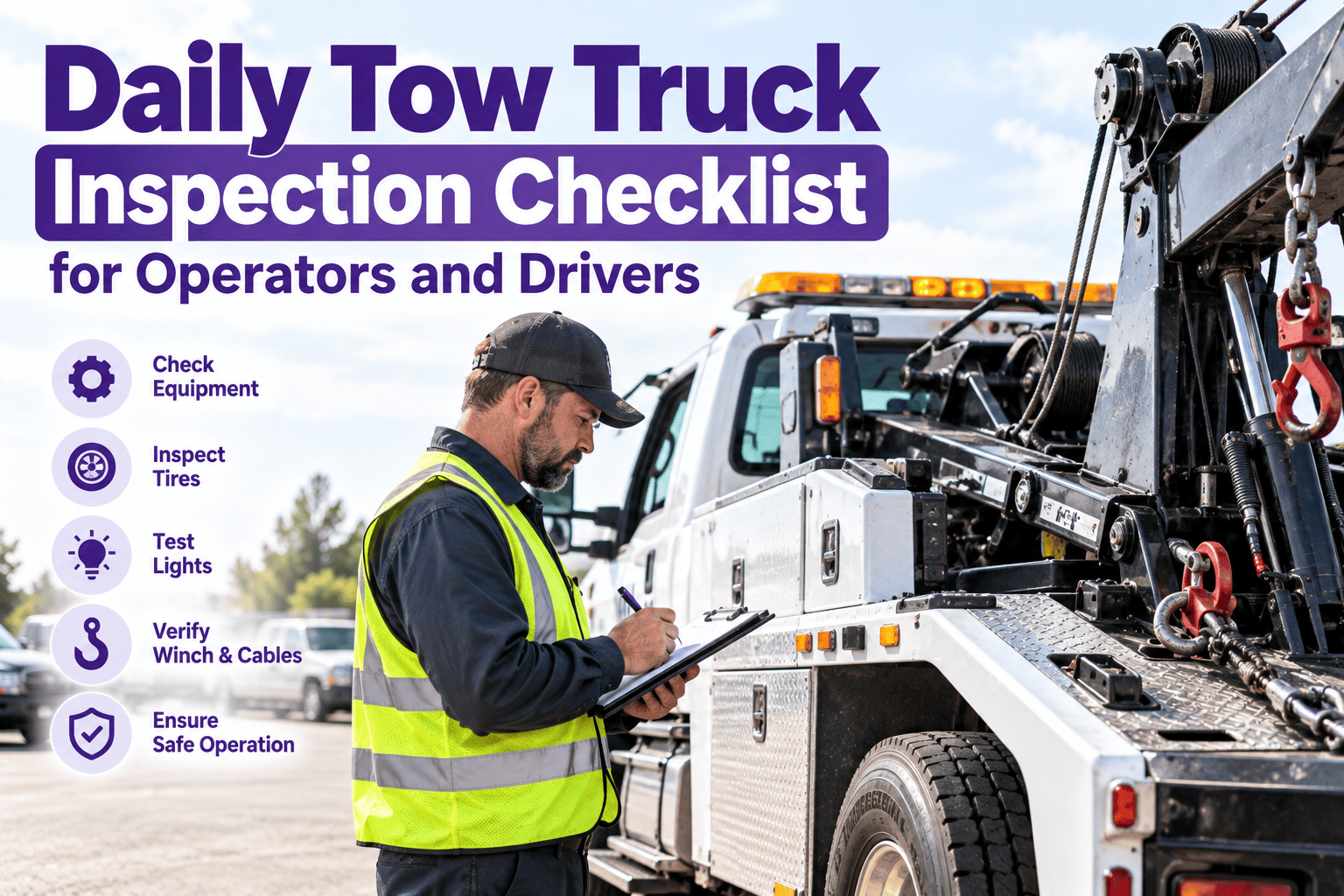
Here is the full pre-shift inspection form template. Print it for paper use or import the structure directly into Truck Inspection & Maintenance for guided digital DVIRs with photo capture per defect. Every section maps to a real failure mode seen on Capacity, Kalmar Ottawa, Autocar, and TICO yard tractors:
Hydraulic Fifth Wheel System
Air Supply & Brake System
Lighting & Yard Visibility
Tires, Wheels & Rear Axle
Cab, Mirrors & Controls
Engine & Fluids
Glad Hands & Electrical Pigtail
Frame, Underbody & Walkaround
Safety Equipment & Documentation
Hydraulic Fifth Wheel — The Component That Fails First
The hydraulic fifth wheel and lift boom is the single highest-failure system on a spotter truck and the one that paper inspections most often miss. It does what no OTR fifth wheel does — lift the loaded trailer 12-18 inches and lower it, 80-120 times per shift. Truck Inspection & Maintenance flags every hydraulic warning sign before it becomes a yard incident:
Slow Lift Response
Lift cycle taking longer than 4-5 seconds = low fluid, worn pump, or bypass valve failing. Catch early to avoid mid-shift failure with trailer attached.
Cylinder Weeping
Visible fluid on boom cylinder rod or at seal = seal failure imminent. Common after 18-24 months of yard duty. Photo-document and schedule rebuild.
Hose Abrasion
Hoses rubbing on frame or routing brackets show wear marks. Once outer braid is exposed, hose failure is a matter of weeks under cycling pressure.
Jaw Won't Lock
Fifth wheel jaw failing to close fully around kingpin = lockout immediately. This is the criticalest single-point failure on a yard tractor.
Pump Whine / Cavitation
Audible whine during lift cycle = air in hydraulic system or impending pump failure. Often precedes lift loss by 2-3 weeks.
Drift Under Load
Fifth wheel slowly lowering with trailer attached = internal cylinder leak. Safety-critical: trailer can settle onto landing gear with operator out of cab.
Turn the paper form into a digital spotter DVIR.
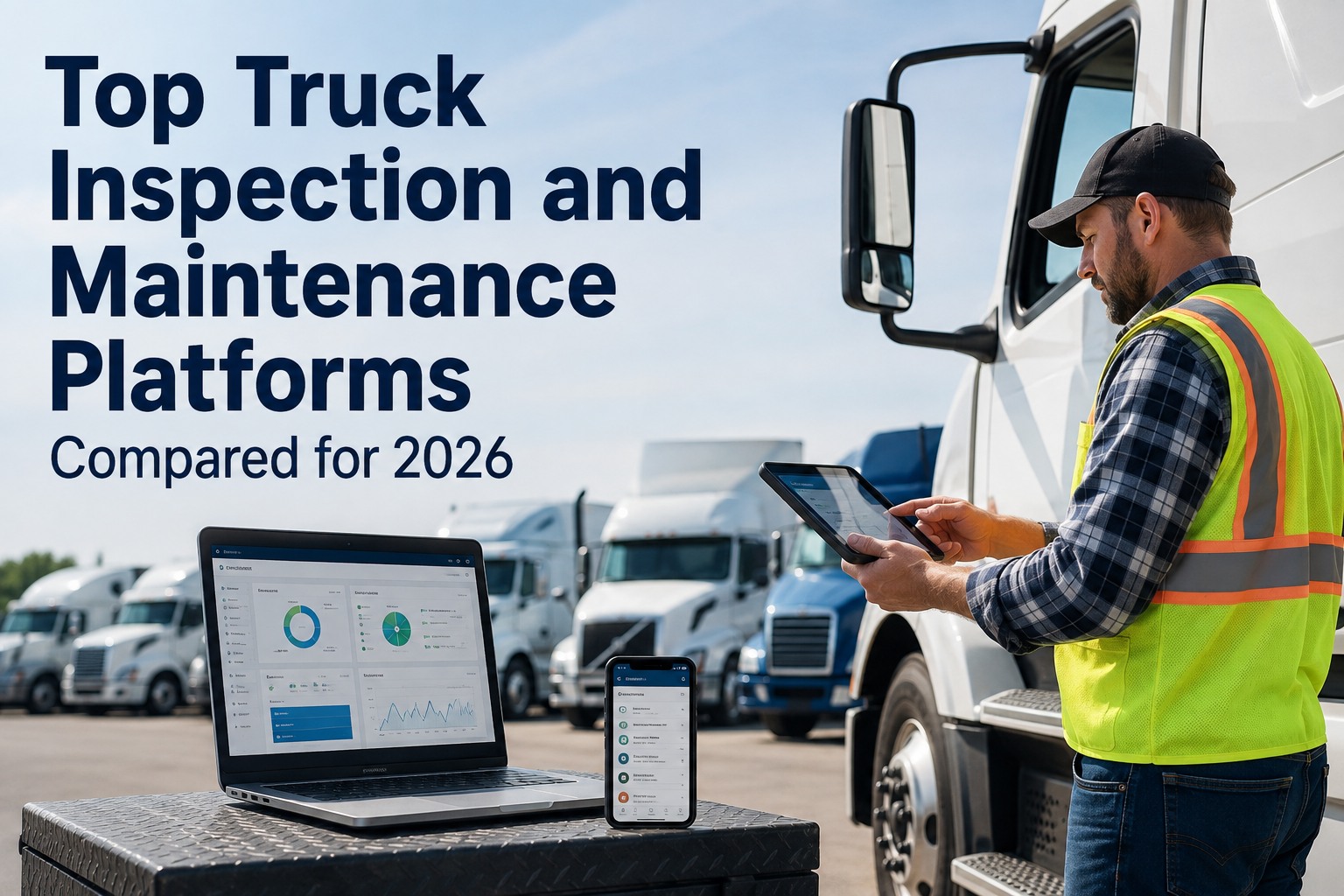
Truck Inspection & Maintenance imports the 61-point spotter checklist as a guided workflow with photo capture per defect, GPS timestamps, automatic work order creation, and PM scheduling by hours and cycles. Free for up to 3 vehicles. Contact support to load your spotter fleet.
Spotter Truck PM Schedule — Hours, Not Just Miles
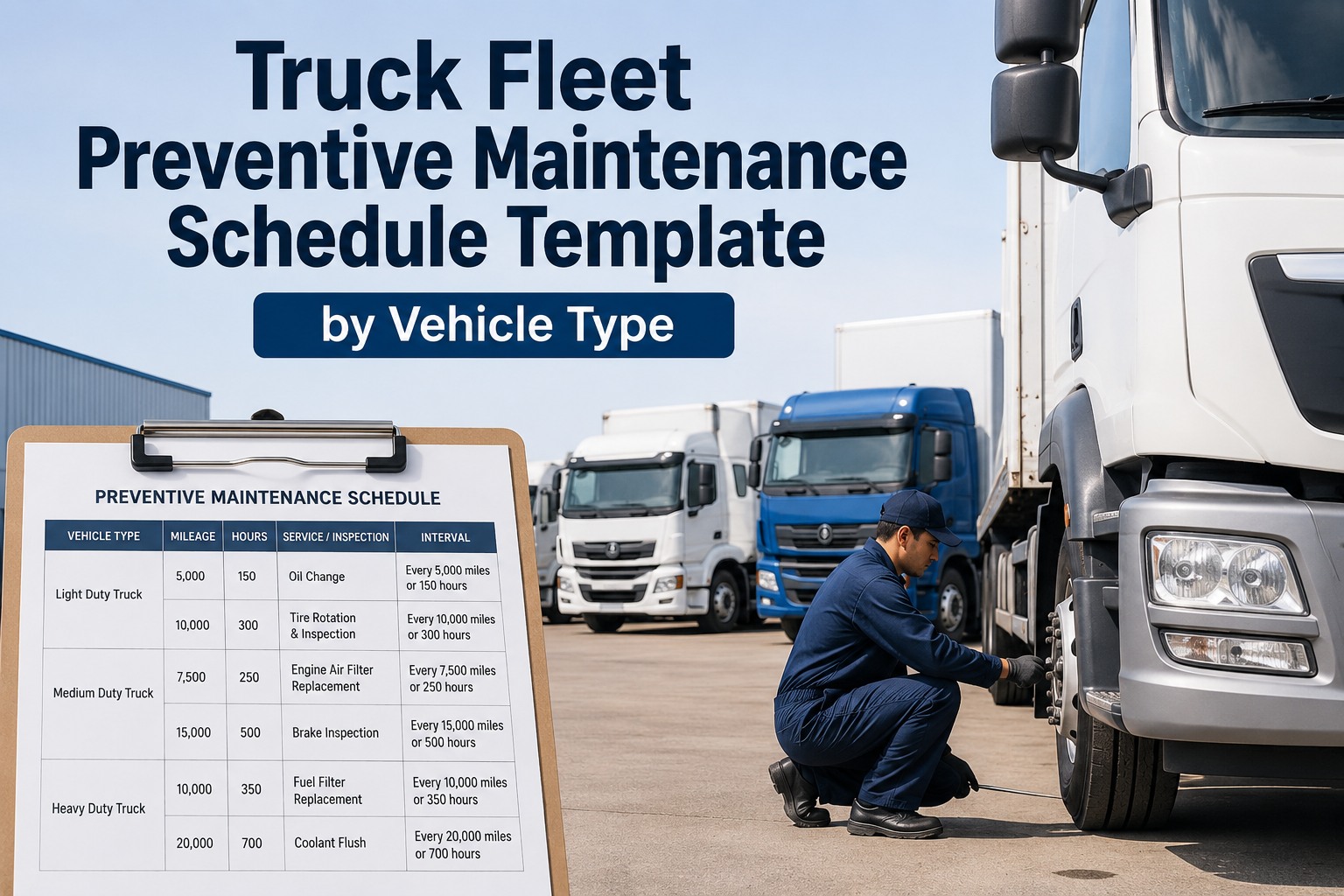
Spotter trucks barely register mileage but rack up engine hours and hydraulic cycles fast. A spotter doing 200 miles a month may be running 2,200 engine hours a year — comparable to a long-haul tractor at 110,000 miles. PM intervals must reflect duty, not distance:
Paper Inspection vs Digital DVIR — Side-by-Side for Spotter Fleets
The 61-point form works on paper. It works dramatically better digital. Below is the same workflow on each medium — and why distribution centers running 5+ spotters move to digital within months:
Paper Form Workflow
Digital DVIR Workflow
The Distribution Center ROI — 8 Spotter Trucks, Year 1
Distribution centers running 5-15 spotter trucks see fast, measurable ROI on digital inspections. The math below is for an 8-spotter DC running 2 shifts/day, 6 days/week — typical for mid-size fulfillment operations:
Frequently Asked Questions
Do spotter trucks require DOT inspections?
Depends on usage. Off-highway spotters operating exclusively inside private facilities (distribution centers, warehouses, intermodal yards) generally don't require annual DOT inspections — though OSHA still mandates pre-shift inspections. DOT-licensed spotters that drive on public roads (even shuttle moves) require annual DOT inspection, a VIN, license plates, and full FMCSA compliance.
How is a spotter truck inspection different from a DOT pre-trip?
The systems are different. Spotter forms cover hydraulic fifth wheel lift/lower, boom cylinder, hydraulic fluid and hoses, yard strobe, backup alarm, glad hand wear (80-120 cycles/shift), offset cab and step rails, and cab-tilt locking. Standard DOT pre-trip forms cover mechanical fifth wheel only and assume highway lighting and duty cycle. Using the wrong form misses the components that actually fail. Sign up free to load the spotter-specific form.
How long should a spotter inspection take?
6-8 minutes with a guided digital checklist, 18-25 minutes on paper. The digital workflow is faster because operators tap through items rather than write, photos replace lengthy defect descriptions, and trailer/unit info auto-populates from the QR scan instead of being copied by hand.
Do operators need CDLs to drive spotter trucks?
For off-highway operation inside private facilities — no, federal regulations don't require a CDL. Many distribution centers still require their operators to hold CDLs as company policy. For DOT-licensed spotters operating on public roads, the standard CDL rules apply based on GVWR and trailer combination.
What's the most critical inspection point on a spotter truck?
The hydraulic fifth wheel lock. A failure here means a trailer can disengage during a yard move or settle onto landing gear with the operator outside the cab. The form template above puts it as the first section for that reason. The tug test after every coupling — even with hydraulic lift — is the discipline that prevents the worst-case incident.
How does the digital DVIR integrate with our maintenance team?
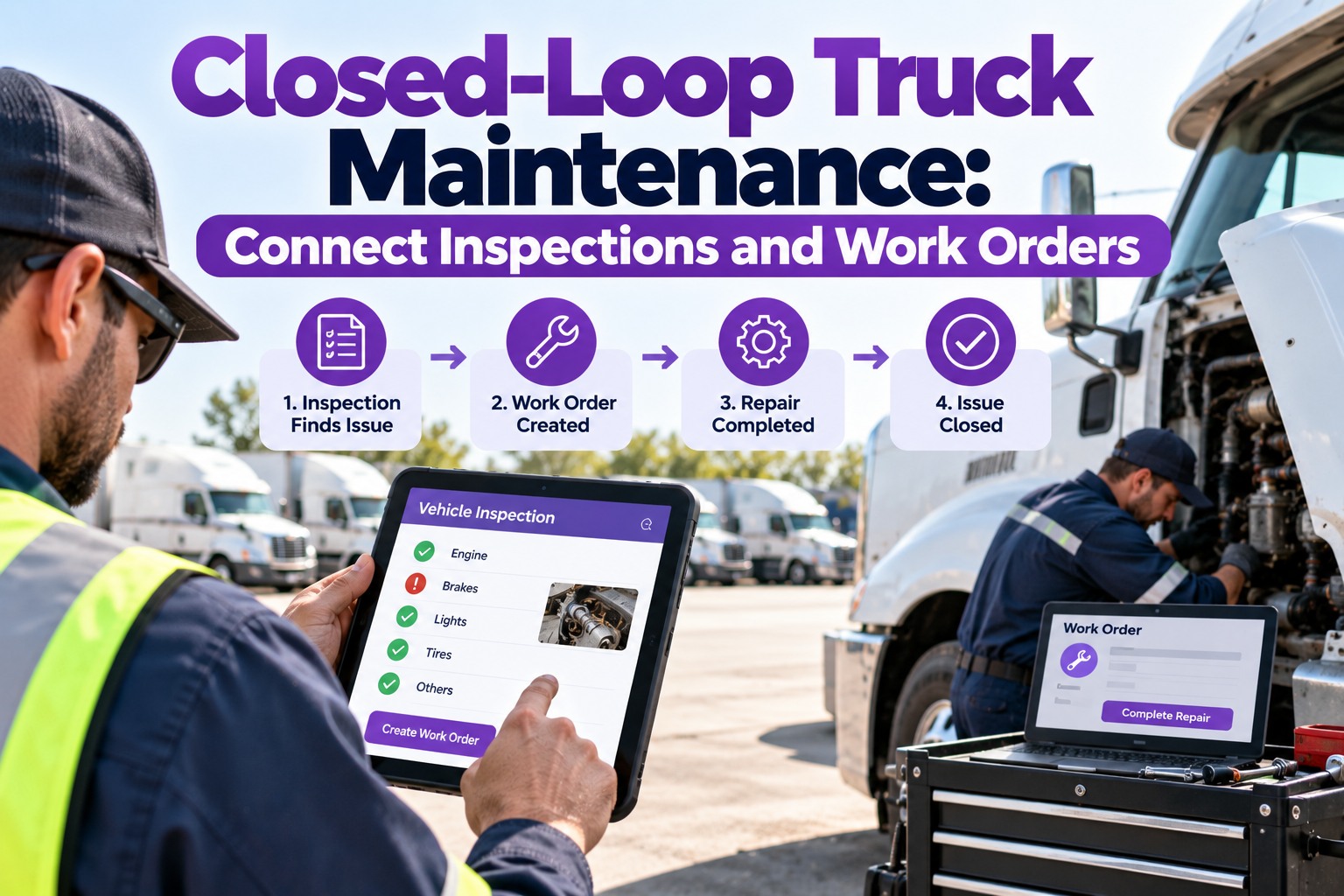
Defects flagged during inspection auto-route to the maintenance manager with photo, GPS, time stamp, and operator name. A work order is created instantly, queued by severity, and assigned to the next available technician. The spotter is flagged as "do not dispatch" if any safety-critical defect is logged until repair completes and re-inspection passes. Talk to our team for a DC-specific workflow walkthrough.
Run the 61-point spotter inspection on software built for it.
Truck Inspection & Maintenance imports the full template, runs guided digital DVIRs in 6-8 minutes, routes defects to maintenance instantly, and schedules PM by engine hours instead of meaningless mileage. Free for up to 3 vehicles. No hardware. No contracts.