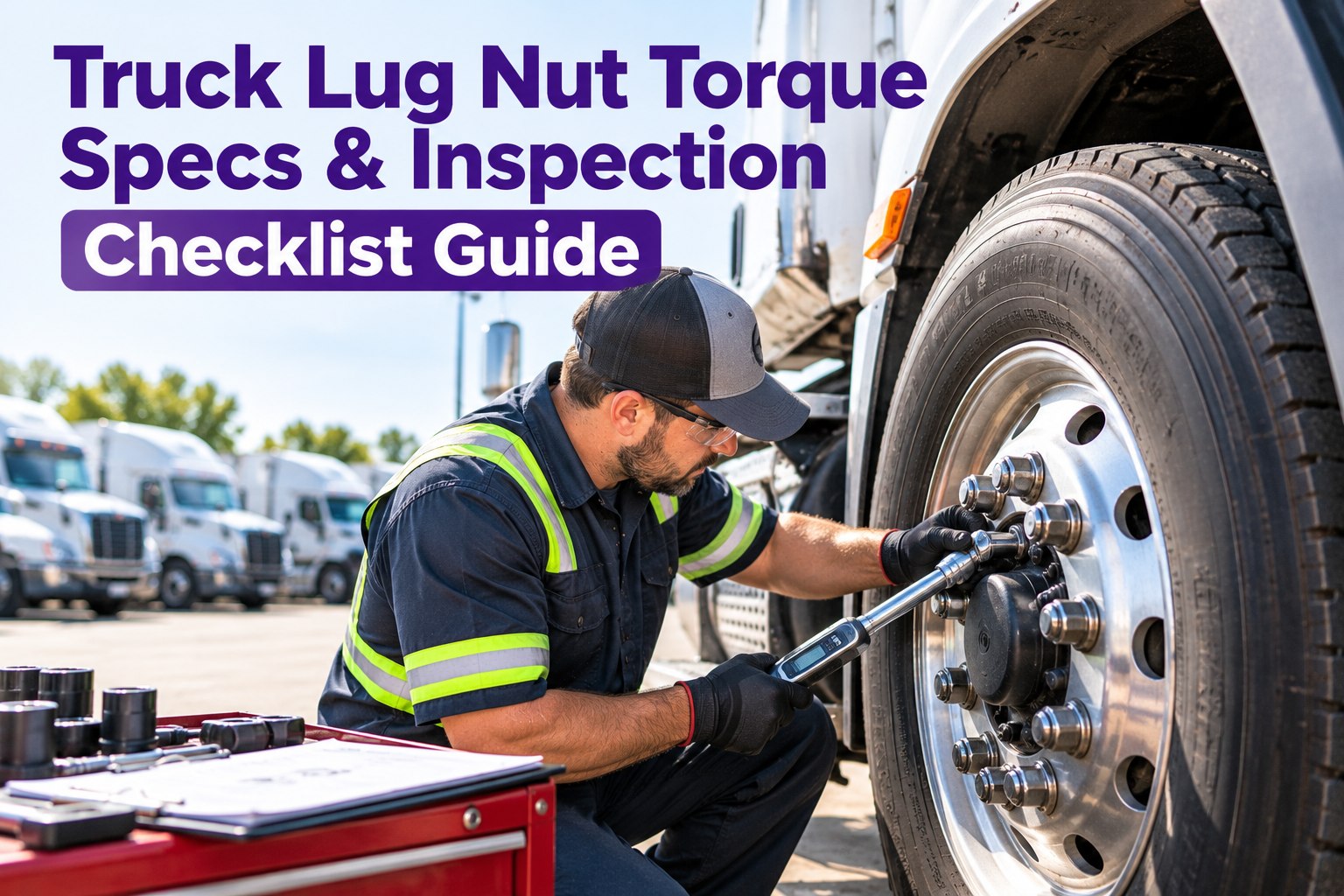
A wheel doesn't come off a truck without warning — it comes off because the lug nuts were torqued wrong, or never rechecked after the last service. Too little clamping force and the wheel works loose; too much and the studs stretch until they snap. There is a narrow correct window, and a recheck that most shops skip. This guide covers the specs, the pattern and the retorque rule that keep wheels on. Start free and log every torque and retorque on the record.
Truck Lug Nut Torque Specs & Inspection Checklist Guide
The Spec Depends on the Wheel Type
Before you touch a torque wrench, know which wheel system you have — because the two are torqued differently, and getting it backwards is a common cause of failure. Hub-piloted wheels are oiled; stud-piloted are dry. Use the wrong one and the clamping force is off even when the wrench reads correct.
- Two-piece 33 mm flange nuts, straight bolt holes
- M22 × 1.5 studs torqued to 450–500 ft-lbs
- A small amount of 30-weight oil on studs and nut contact
- The modern standard on most heavy trucks
- Inner and outer cap nuts, ball-seat design
- No lubricant on studs or nuts — torqued dry
- Torque varies by design; check the manufacturer spec
- Older system, still on many trailers and trucks
Torque in a Star Pattern, With a Calibrated Wrench
How you tighten matters as much as the final number. Working around the circle in order warps the wheel against the hub and leaves some studs loaded more than others. The star pattern seats the wheel evenly.
Why Both Too Loose and Too Tight Fail
There's a reason torque has a window, not a minimum. Miss it on either side and the joint fails — just by a different mechanism and on a different timeline.
Not enough clamping force. The wheel works against the hub, the nuts back off, and the studs take a battering load until they shear. This is the classic wheel-off.
The studs are stretched past their limit. They may hold at first, then fatigue and snap one by one — and a stud stretched once is weakened for good.
Fresh after a wheel is fitted, the mating surfaces settle and the clamp load eases as the joint beds in and heats on that first run. A wheel torqued perfectly in the bay can be loose by the next morning. Retorquing after 50–100 miles — some makers say as early as 5–50 — catches that settling before it becomes a loose wheel. Skip it and the best torque job in the shop still fails on the road.
The Retorque Nobody Remembers, Flagged Automatically
Truck Inspection & Maintenance Management Software logs the torque at service, then schedules the 50–100 mile retorque as its own task — so the recheck that prevents wheel-offs happens every time, on the record, instead of being forgotten in the yard.
Catch a Loose Wheel on a Walkaround
Between torque checks, the warning signs are visible if you know what to look for. These are what a driver or technician should scan on every walkaround.
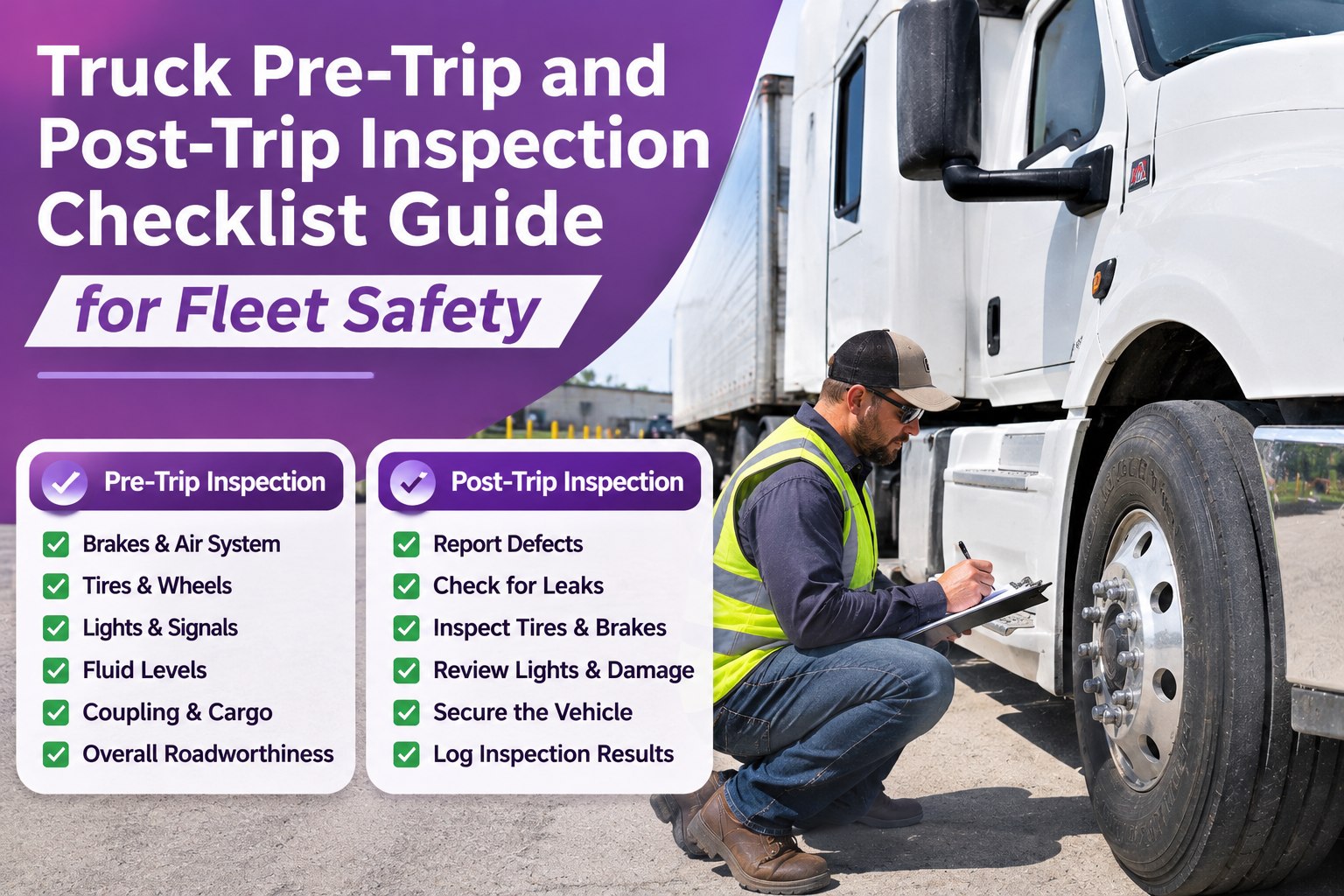
The Lug Nut Torque & Inspection Checklist
Work the groups in order. Tick each item as you confirm it — Truck Inspection & Maintenance Management Software keeps the completed check, the torque value and the retorque due-date on the truck's record.
A Wheel-Off Is Always Traced Back to a Record
After an incident, the first question is whether the wheel was torqued and retorqued to spec — and whether you can prove it. Truck Inspection & Maintenance Management Software keeps the torque value, the pattern check and the retorque on every wheel service, so the proof is there.
Why Fleets Track Wheel Torque in Software
A torque value chalked on a tire is gone by the next wash. A logged value with a scheduled retorque is a safety record you can stand behind. Start free and make the retorque impossible to forget.
Frequently Asked Questions
Torque It Right, Then Retorque It — Every Wheel
Give technicians a guided wheel-torque check with the right spec, the star pattern and the 50–100 mile retorque flagged automatically — so a loose wheel is caught in the yard, not on the highway.