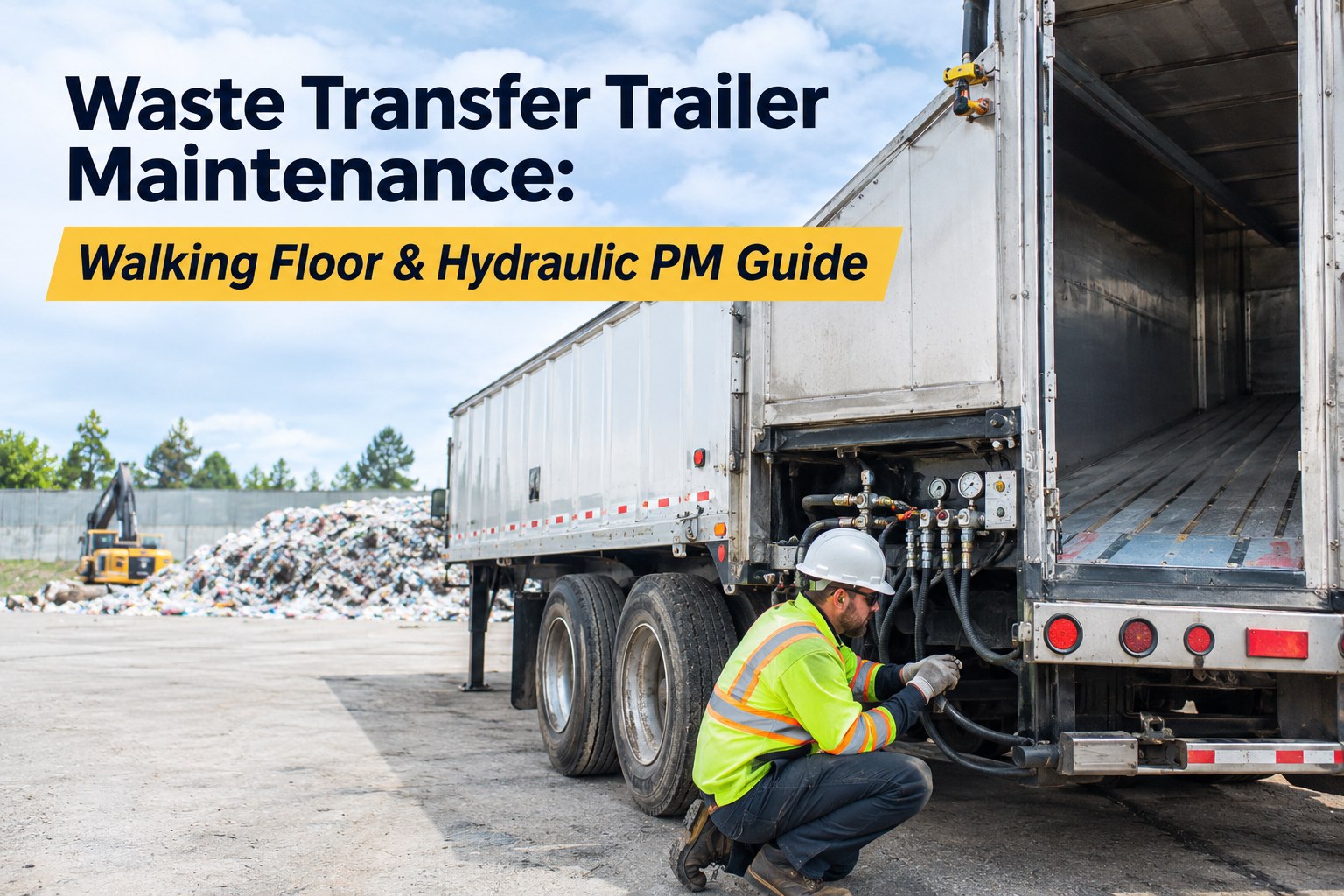
A walking floor that stalls at the tipper, a hydraulic hose that lets go on the way to the landfill, or leachate dripping onto the road. Each of these started as a small finding that nobody scheduled. This guide breaks a waste transfer trailer into the four zones that matter, shows what to check in each and gives a PM rhythm your yard can follow. It also shows how Truck Inspection & Maintenance Management Software turns inspection findings into assigned work orders. Start free and put every trailer on a PM schedule.
Inspect → Defect → Work Order → PM
Waste Transfer Trailer Maintenance: Walking Floor & Hydraulic PM Guide
Floor stalls, hydraulic leaks and leachate drips are costly because they happen loaded. Truck Inspection & Maintenance Management Software lets drivers log what they see at the pre-trip, grades each defect, creates the work order and keeps the PM schedule running for every trailer.
Floor stallsHydraulic leaksLeachate on the road
Our promise on this page: floor, hydraulic and containment findings get an owner, a priority and a due date before the next load.
Know Your Trailer: Four Zones That Fail
Think of the trailer as four zones. Each has its own wear patterns and its own inspection points.
AHydraulic drive
BFloor system (slats or chains)
CRear door & ejector
DLeachate containment
A · Hydraulic drive- Pump, motor and cylinders for leaks and noise
- Hoses, fittings and guards for rubbing or cracking
- Fluid level, color and filter condition
B · Floor system- Slat condition, bearings, seals and fasteners
- Chain wear, tension and sprockets on chain floors
- Debris packed under or between moving parts
C · Rear door & ejector- Door latches, hinges and gaskets
- Ejector blade condition and travel on push-out trailers
- Alignment, damage and cracked welds
D · Leachate containment- Floor seams, welds and corners
- Door seals and gasket compression
- Drains, valves and collection points
How the software helps: Each zone becomes a section of your digital inspection form. Drivers pick the part, add a note or photo, and the finding goes straight to that trailer’s record.
Symptom Decoder: From Complaint to First Check
Floor is slow or won’t unload→Check hydraulic fluid, filters, hose restrictions, then floor binding or debris
Jerky or uneven floor movement→Check for air in the system, cylinder condition and worn or damaged slats
Hot hydraulic components→Check fluid level, contamination, relief settings and cooling
Wet spots under the trailer→Identify hydraulic fluid or leachate first, then trace to fitting, seam or gasket
Door won’t seal or latch→Check gaskets, latch wear, hinge alignment and door damage
Hydraulic Health: Normal, Watch or Act
Most hydraulic failures give early signs. A quick visual check each shift can separate normal wear from a job for the shop.
Fluid levelNormal: within marksWatch: slowly droppingAct: sudden loss
Fluid lookNormal: clear for its typeWatch: dark or cloudyAct: milky or metal flecks
Hoses & fittingsNormal: dry, secureWatch: seepage, scuffingAct: bulging, active leak
FilterNormal: in service lifeWatch: indicator at limitAct: bypass or restriction
Use your OEM manual for fluid type, filter intervals and pressure specifications.
The PM Rhythm
Every shift- Walk-around for leaks
- Door seal and latch check
- Floor test run empty if practical
Weekly- Hoses, fittings, guards
- Fluid level and color
- Clean packed debris
Monthly- Floor bearings, seals, fasteners
- Chain tension if equipped
- Seam and weld inspection
Per OEM interval- Filter and fluid service
- Cylinder and pump review
- Ejector blade and rail check
How the software helps: Set recurring PM tasks by days, miles or hours for each trailer. Open defects and due services show in one list, so the shop sees what is next instead of guessing.
One Workflow for the Yard
1Driver inspectsLogs a leak, noise or damage with notes
2Defect gradedSafety and downtime impact decide priority
3Work order assignedThe right tech, with parts status visible
4History recordedEvery repair stays on the trailer record
Keep Every Trailer Loading, Hauling and Unloading
Truck Inspection & Maintenance Management Software connects inspections, defects, work orders and recurring PMs, so hydraulic and floor issues are found early and handled in the shop.
Frequently Asked Questions
What should be on a walking floor trailer inspection checklist?
Hydraulic fluid and filter, hoses and fittings, pump and cylinders, slats or chains, bearings and seals, door and ejector components, and leachate seals and seams. Follow your OEM manual for intervals.
Start free and turn it into a digital checklist.
How can we reduce hydraulic leaks on waste trailers?
Inspect hoses and fittings often, protect them from rubbing and heat, replace damaged parts early and keep the system clean. Track leaks as defects so repeat locations stand out.
Why does leachate containment matter?
Leaks from floors, seams or doors can create environmental, safety and compliance issues. Check seals and seams routinely and record repairs. Follow the rules that apply in your area.
Can software help with trailer PM?
Inspect · Schedule · Repair · Record
Stop Finding Problems at the Tipper
Give your drivers a digital inspection, your shop a ranked work list and every trailer a PM schedule, all in one place.
No credit card required. Free for up to 3 trucks.