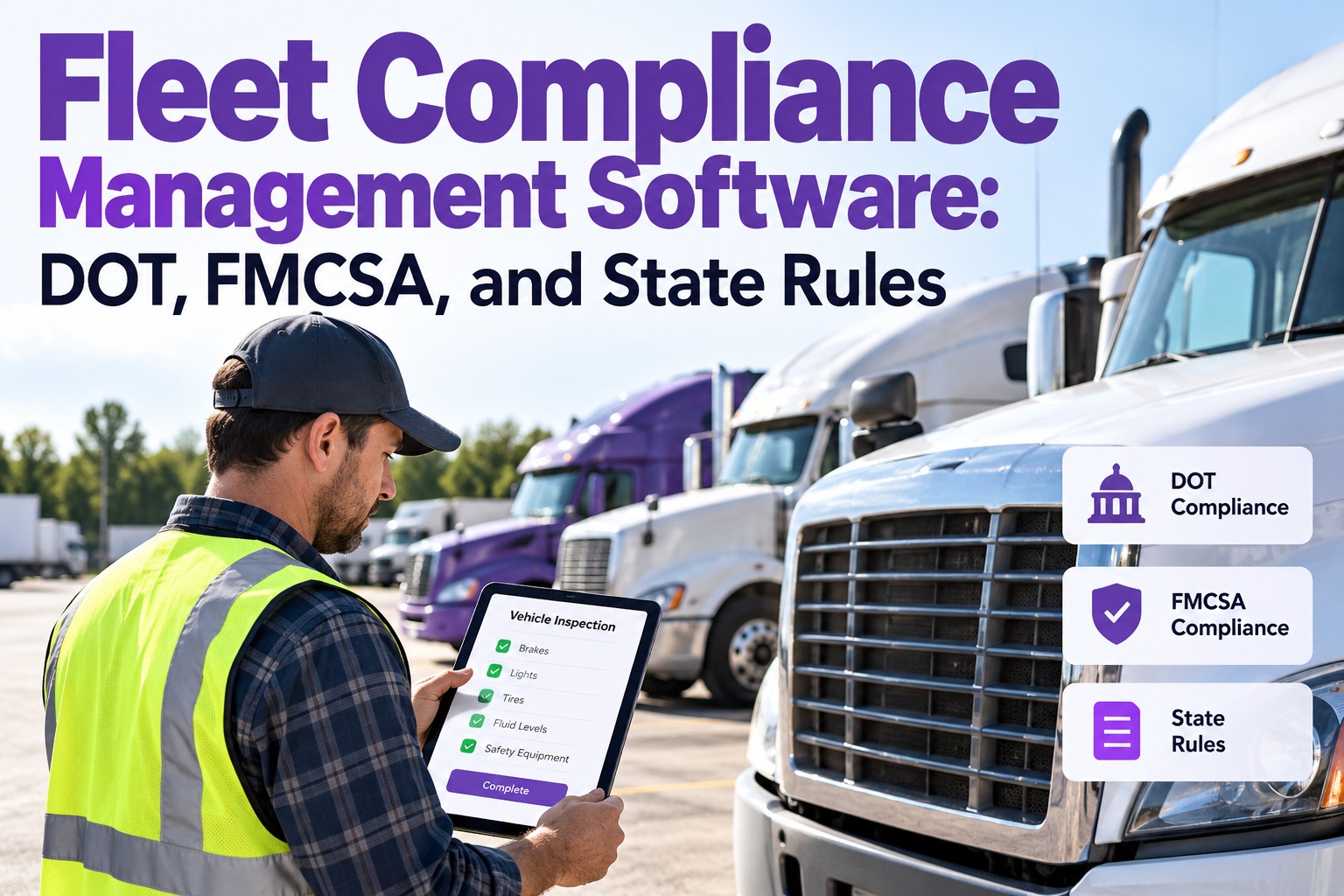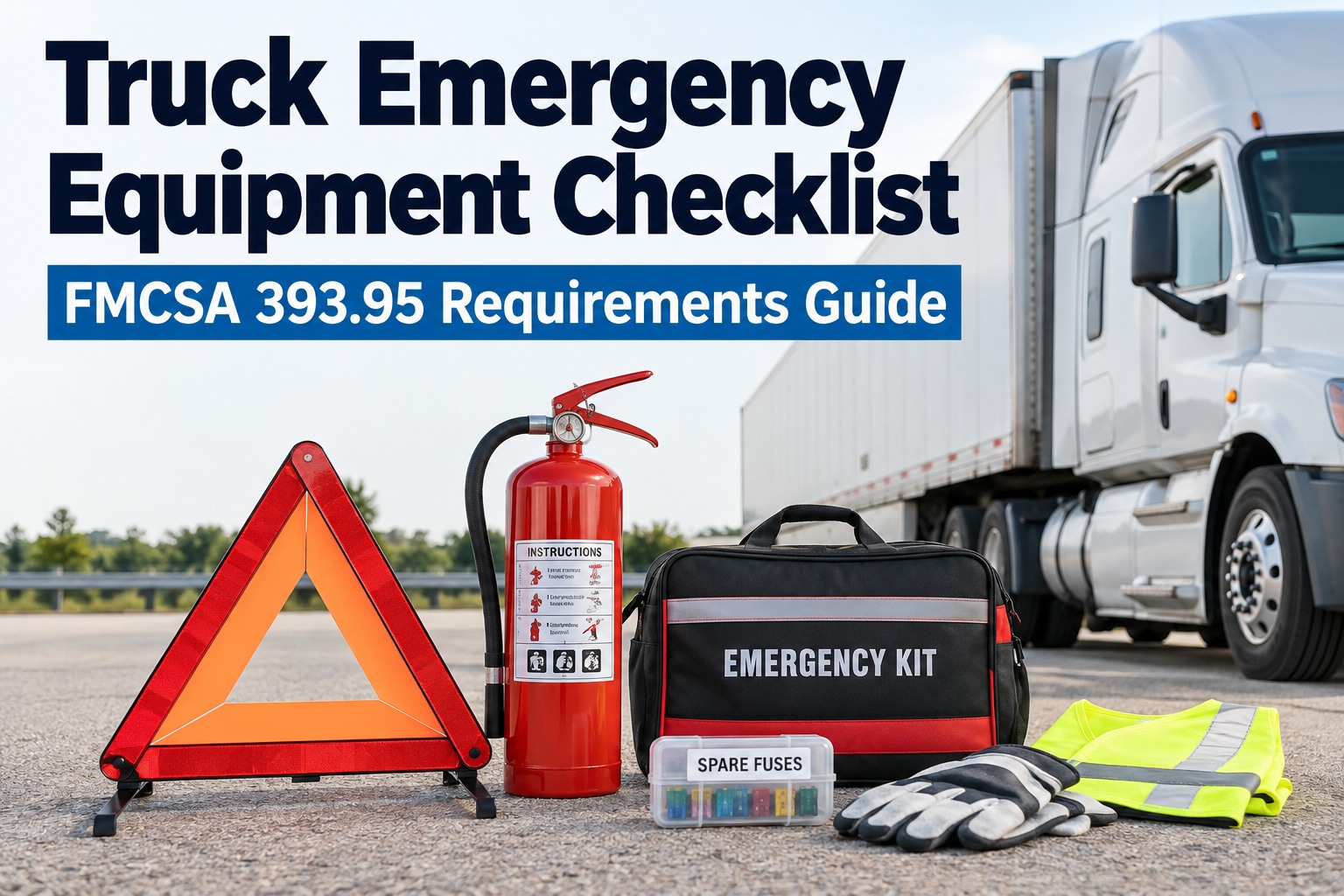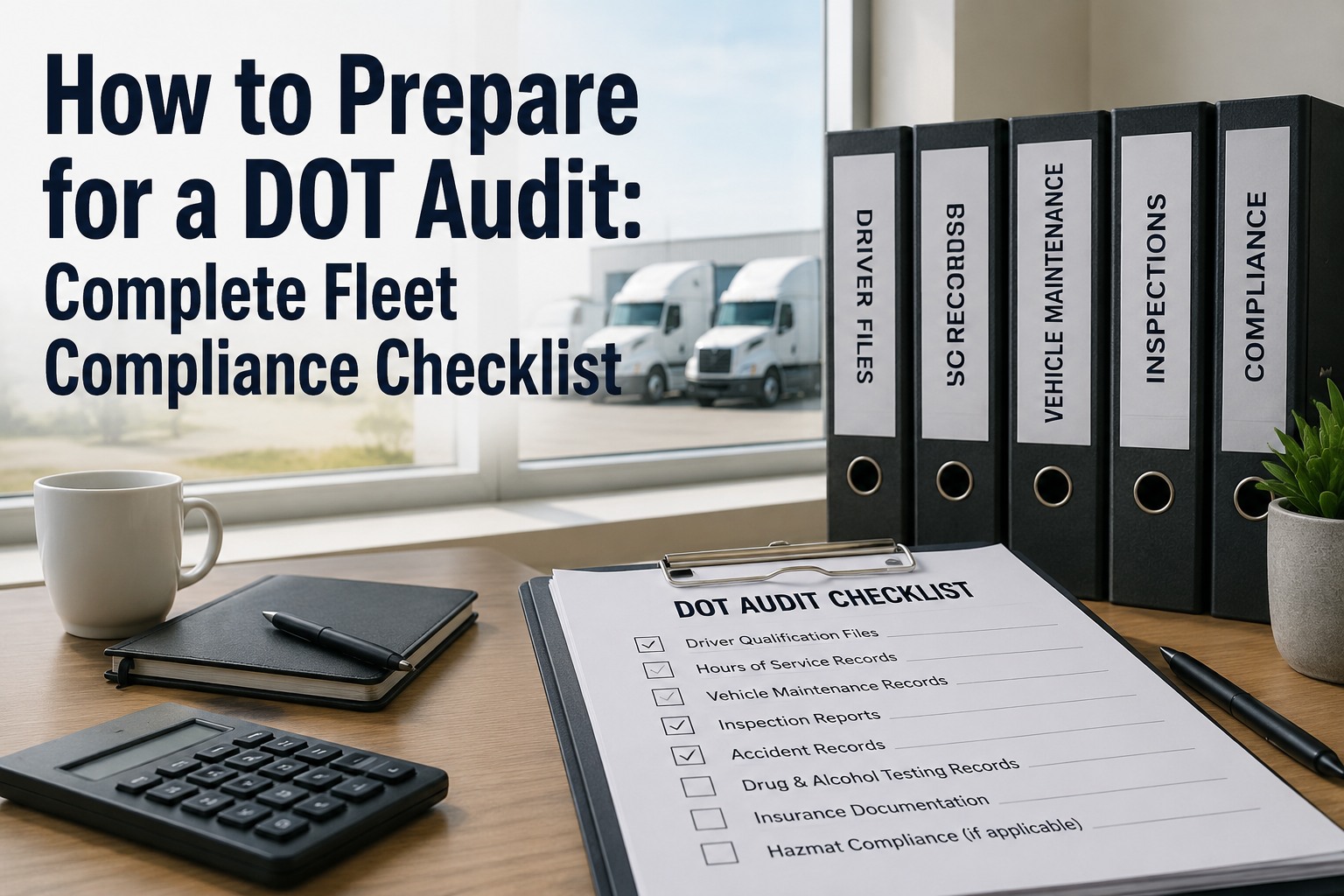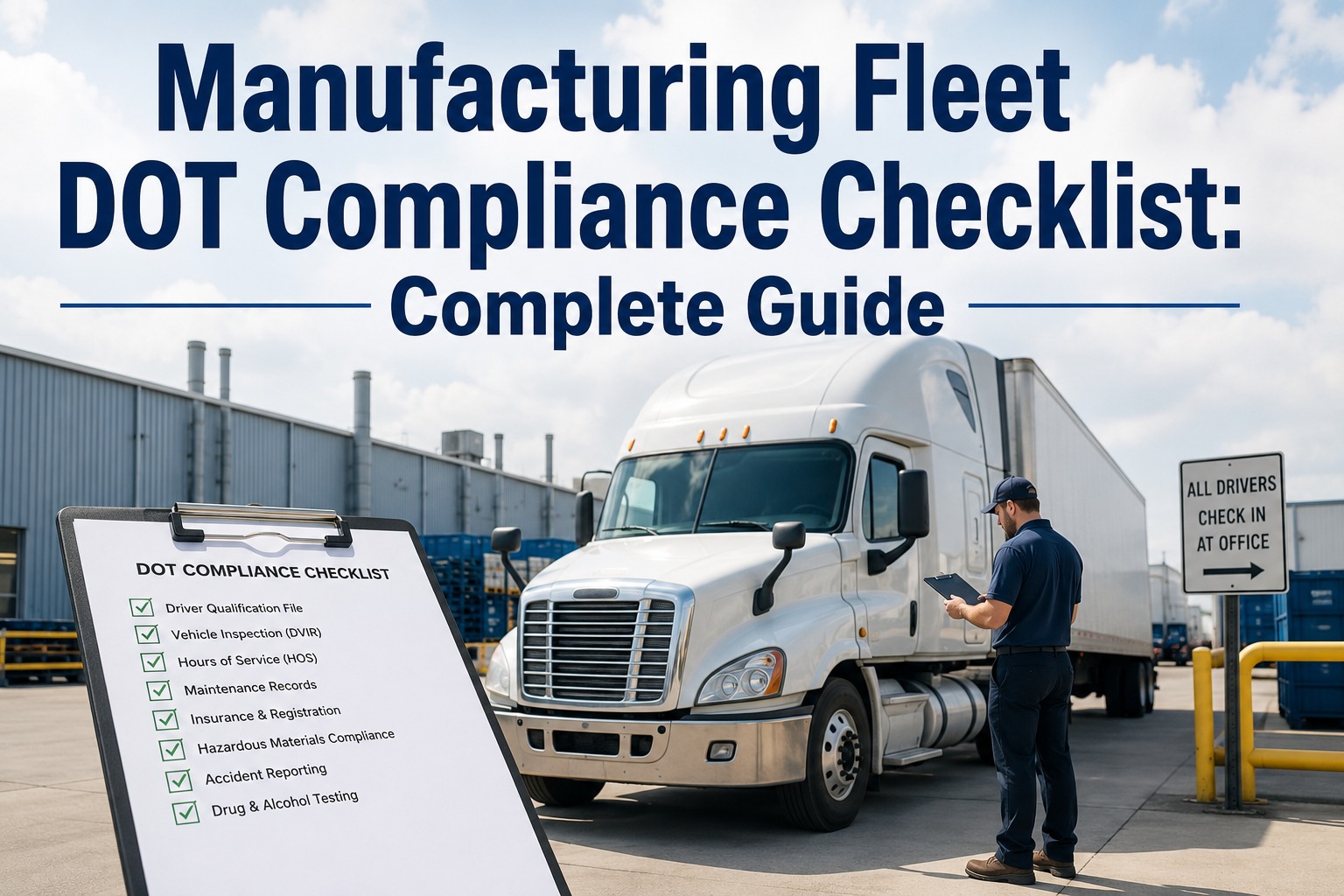
Here's the trap that catches plant transportation managers off guard: you don't have to be a trucking company to be a motor carrier in the eyes of the FMCSA. If your facility runs its own trucks to move outbound product across state lines, you're a private carrier — subject to the same Driver Qualification Files, Hours of Service rules, DVIRs, and audits as any for-hire fleet. Many manufacturers run for years assuming those rules are "the carrier's problem," right up until a compliance review notice lands and there's no organized paperwork to hand over. Get your plant fleet audit-ready free. Only about 7% of carriers pass a DOT audit with zero violations — and the other 93% face fines, out-of-service orders, and CSA damage that raises insurance and strains shipper relationships. This guide is the complete DOT compliance checklist for manufacturing fleets: the six categories auditors examine, the retention windows that trip people up, the 2026 changes already in effect, and how to be ready before the call comes.
Manufacturing Fleet DOT Compliance Checklist: The Complete Guide
A plant-transportation-manager's guide to FMCSA compliance — driver qualification files, Hours of Service, DVIRs, drug & alcohol testing, maintenance records, and audit prep, with the 2026 rule changes and retention windows that decide whether you pass.
Yes — Your Plant Fleet Is a Motor Carrier
The first compliance gap is a mindset one. Manufacturers running outbound trucks often assume FMCSA rules don't apply to a "non-trucking" business. They do — and the reasons are worth being clear-eyed about.
Hauling your own product in interstate commerce makes you a private motor carrier. The FMCSRs apply the same way they do to a for-hire fleet — no exemption for making the freight yourself.
A crash, a pattern of roadside violations, or a complaint can trigger a compliance review with little warning — and most carriers get roughly two weeks to produce records.
HOS violations can reach $19,277 each and maintenance violations run far higher. Beyond fines, CSA damage raises insurance and can restrict shipper access.
The Six Categories Every Audit Examines
An FMCSA compliance review isn't a mystery — it checks the same six areas every time. Knowing exactly what each one requires is how you turn an audit from a scramble into a routine document pull.
Application with 3-year employment history, valid CDL, MVR, medical examiner's certificate, prior-employer safety check, and annual review. The most frequently cited documentation deficiency.
FMCSA-registered ELD, the four HOS clocks tracked, malfunction protocol, and supporting documents — BOLs, fuel and toll receipts — that corroborate the logs.
Daily driver vehicle inspection reports with defect and repair certification, plus the annual periodic inspection certificate for every truck and trailer.
Pre-employment and random testing, the Clearinghouse pre-employment and annual queries, a written policy, and return-to-duty/SAP records where applicable.
A systematic inspection, repair, and maintenance program with PM schedules and repair orders per vehicle — the direct evidence your safety controls actually operate.
Current USDOT number displayed, MCS-150 biennial update filed, proof of insurance, and the accident register for all DOT-recordable crashes.
Retention Windows That Trip People Up
Half of all audit failures aren't missing records — they're records purged too early or kept in a form nobody can produce. These are the windows auditors check, and the ones plant fleets most often get wrong.
Turn Six Categories Into One Dashboard
Truck Inspection & Maintenance tracks DVIRs, maintenance, inspections, and driver credentials in one place, alerts you before medical certs and annual inspections expire, auto-generates compliant DVIRs from every walkaround, and produces a clean, searchable record the moment an auditor asks — so plant fleets stay audit-ready year-round.
What Changed for 2026
2026 brought the biggest wave of FMCSA change since the ELD mandate. If your compliance program was built a few years ago, these updates are already in effect — and fleets still running the old way are quietly accumulating violations.
Audit Day: The Order Auditors Ask
Compliance reviews follow a predictable sequence. Knowing the order lets you prepare the right files first — and the driver qualification files are the gateway test that sets the tone for everything after.
Frequently Asked Questions
Yes. If your plant operates trucks to move product in interstate commerce, you're a private motor carrier and subject to the Federal Motor Carrier Safety Regulations — driver qualification files, Hours of Service, DVIRs, drug and alcohol testing, vehicle maintenance, and audits — the same as any for-hire fleet. Making the freight yourself doesn't create an exemption. Many manufacturers discover this only when a compliance review notice arrives, which is exactly when you don't want to find out. Start a free trial to get organized now.
Driver qualification files, Hours of Service and ELD records, DVIRs and vehicle inspections, the drug and alcohol testing program including Clearinghouse queries, vehicle maintenance records, and proof of operating authority and insurance including the accident register. Every document must be retrievable within about 48 hours for an off-site review. Auditors typically start with driver files as a gateway test — if those are incomplete, the review deepens across all the other categories.
The windows vary: HOS/ELD records and their supporting documents for 6 months; DVIRs for a minimum of 3 months, with 12 months as best practice; annual periodic inspection reports for 14 months; driver qualification files for the duration of employment plus 3 years after separation; the accident register for 3 years; and most drug and alcohol testing records for 5 years. Purging any of these early creates an immediate violation gap, so a retention calendar with automated alerts matters. See how automated retention tracking works.
In order of frequency: missing or expired medical examiner's certificates, incomplete driver qualification files, expired annual inspections or unretained inspection reports, HOS records that aren't accessible for the full retention period, and a Clearinghouse query not run before first dispatch. Every one of these is fully preventable with a documented tracking system and automated expiry alerts. The failure is almost never that records were never created — it's that they can't be produced in time.
Yes. FMCSA accepts electronic driver qualification files, maintenance records, and DVIRs provided the system maintains record integrity, prevents unauthorized alteration, and produces legible records on demand. As of the March 23, 2026 final rule, electronic DVIRs with timestamps, GPS, and photo evidence have standing equal to paper. The key requirement is that records be "readily available" — a system that takes significant time or technical help to retrieve may not meet that standard, which is why a purpose-built platform matters. Start free and digitize your records.
Be Ready Before the Audit Notice Arrives
Truck Inspection & Maintenance gives manufacturing and plant fleets one platform to run compliant DVIRs, schedule and document maintenance and inspections, track driver credentials and expirations, and produce every record in seconds when FMCSA asks — so your outbound fleet passes reviews, protects its CSA score, and keeps product moving without compliance surprises.