A $40 hydraulic fitting is not a $40 problem when it is missing. The moment a truck needs a part that isn't on the shelf, a 30-minute repair becomes a multi-day wait — emergency shipping at 3–5x cost, overtime labor, a rental to cover the gap, and a revenue truck sitting dead. A single critical stockout routinely runs $10,000 to $20,000 in total impact. The strategy that prevents it isn't stocking everything; it's stocking the right things, and the right things are written in your own failure history. This guide shows how to build a spare parts inventory strategy around criticality and past failures, so the parts that prevent downtime are waiting before the breakdown happens. Build your critical spares list free.
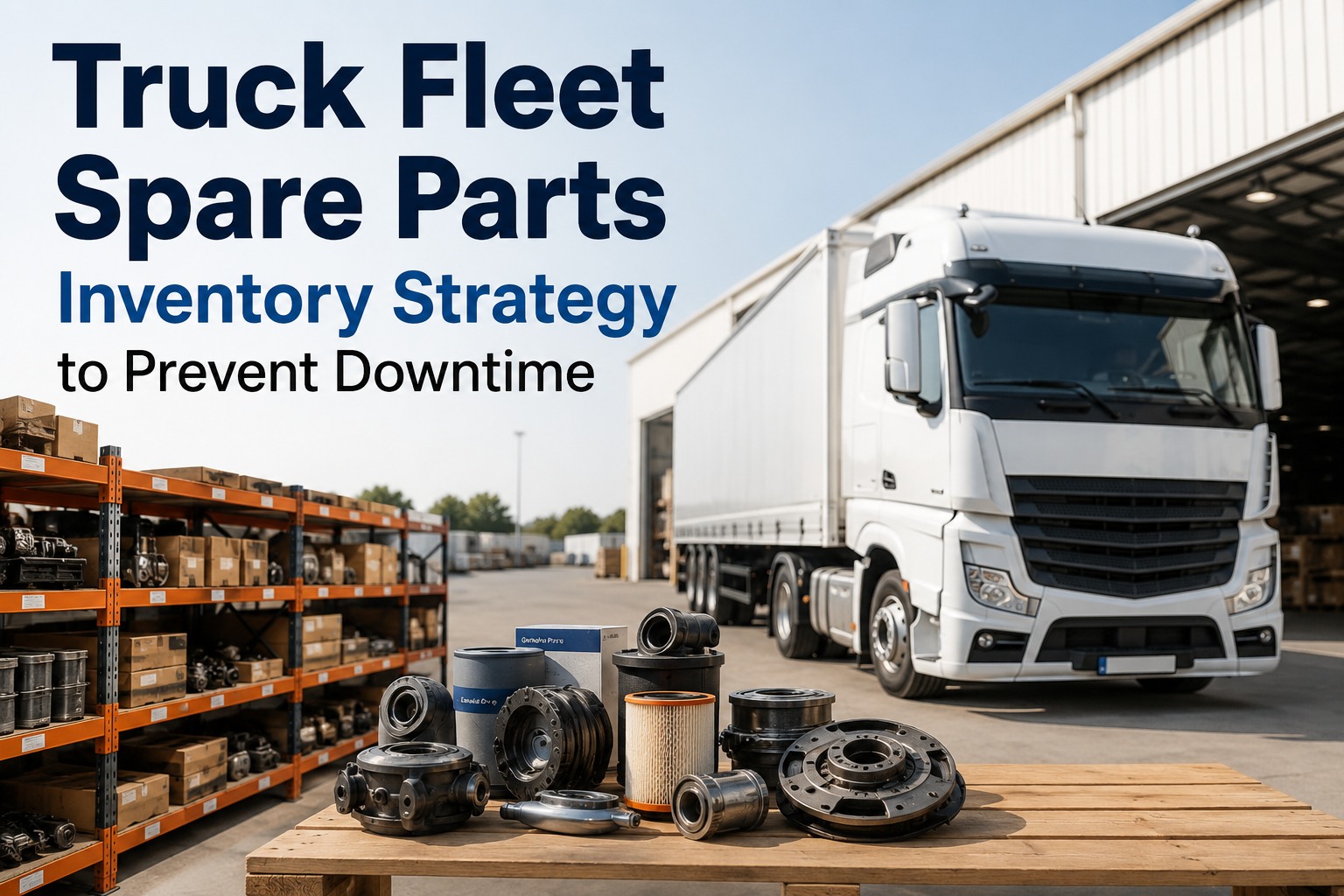
Truck Fleet Spare Parts Inventory Strategy to Prevent Downtime
A stockout turns a quick fix into a multi-day delay. Link failure history to parts so the spares that prevent downtime are on the shelf — without overstocking the ones that don't.
Why "Stock Everything" Fails
The instinct after a painful stockout is to over-order. But spare parts are not production materials — their consumption is event-driven and irregular, so blanket stocking just traps capital on shelves while the parts you actually need still go missing. The real failure is treating every part the same. Two opposite mistakes drain the same budget.
Capital frozen in parts that haven't moved in years. Warehousing, insurance, and obsolescence costs pile up on inventory that may never be used.
The one critical part you skipped to save cash is the one that idles a truck for a week. Emergency premiums and lost revenue dwarf the saving.
The fix sits between them: stock by criticality, not by habit or by price. See how criticality stocking works on your fleet.
Classify Every Part by Criticality
ABC criticality analysis ranks each part by the consequence of not having it — not by what it costs or how familiar it is. It's the single most impactful framework for cutting stockout risk and carrying cost at the same time. Three tiers, three stocking rules.
Absence stops a truck or creates a safety risk. Often long lead times. This is insurance inventory.
Stockout causes delay, not shutdown. Medium lead times. Managed with reorder points.
Low failure impact, easy to substitute or source locally. Bulk stock, minimal tracking.
Let Your Parts Catalog Classify Itself
Truck Inspection & Maintenance scores every part by consumption history and asset criticality — so your A, B, and C lists build automatically from real data, not guesswork.
The Secret: Your Failure History Is the Shopping List
You don't have to guess which parts to stock — your trucks already told you. The parts that broke last year are the parts most likely to break this year. The single most powerful move in spare parts strategy is linking failure history to your stocking list.
typically cover roughly 80% of all unplanned demand. Stock those, keep them at A-class levels, and you've eliminated the majority of parts-related downtime before it happens.
Mind the Lead Time
Criticality tells you what to stock; lead time tells you how much. A part that takes weeks to arrive needs a deeper buffer than one a local distributor delivers tomorrow — because the buffer is the only thing standing between a failure and a parked truck.
Know If It's Working: The KPIs
A spare parts strategy is only as good as the numbers it produces. Track these monthly, and segment them by criticality — a 3% stockout rate on commodity parts is fine, but the same rate on critical spares is a crisis.
Frequently Asked Questions
Start with criticality, not price. Classify parts into three tiers — critical spares that stop a truck, PM consumables that cause delays, and commodity items that are easy to substitute. Then layer in your failure history: the top 20 failure parts from the last 12 months usually cover about 80% of unplanned demand and should never be out of stock.
Far more than the part. A $40 fitting can idle a truck at $2,000+ a day, and once you add emergency shipping at 3–5x normal cost, overtime labor, rental coverage, and knock-on schedule disruption, a single critical stockout commonly reaches $10,000–$20,000 in total impact. That's the math that justifies holding critical spares.
A common guideline is 2–4 weeks of supply for Class A critical spares, 1–2 weeks for Class B consumables, and bulk stock for Class C commodities. Adjust by lead time — a hydraulic pump that takes 2–4 weeks to arrive needs a deeper buffer than a filter you can get in two days. The rule that never bends: no Class A part at zero.
Only if you stock indiscriminately. Criticality-based stocking actually reduces carrying cost — typically 20–40% — because you stop over-buying low-impact parts and concentrate the budget where downtime risk is highest. For a part whose stockout means a week of lost revenue, the holding cost is a rounding error against the downtime it prevents.
It connects every part consumed to the work order and truck that used it, so your failure history and consumption data build automatically. Truck Inspection & Maintenance uses that to classify parts by criticality, surface your true top-failure list, and trigger reorders before shortages occur — turning a manual guessing game into a data-driven stocking plan.
Stock the Spares That Actually Prevent Downtime
Truck Inspection & Maintenance links every failure to the part that fixed it, classifies your catalog by criticality, and keeps critical spares on the shelf with reorders that fire before you run out — so the next breakdown is a same-day repair, not a multi-day delay.